

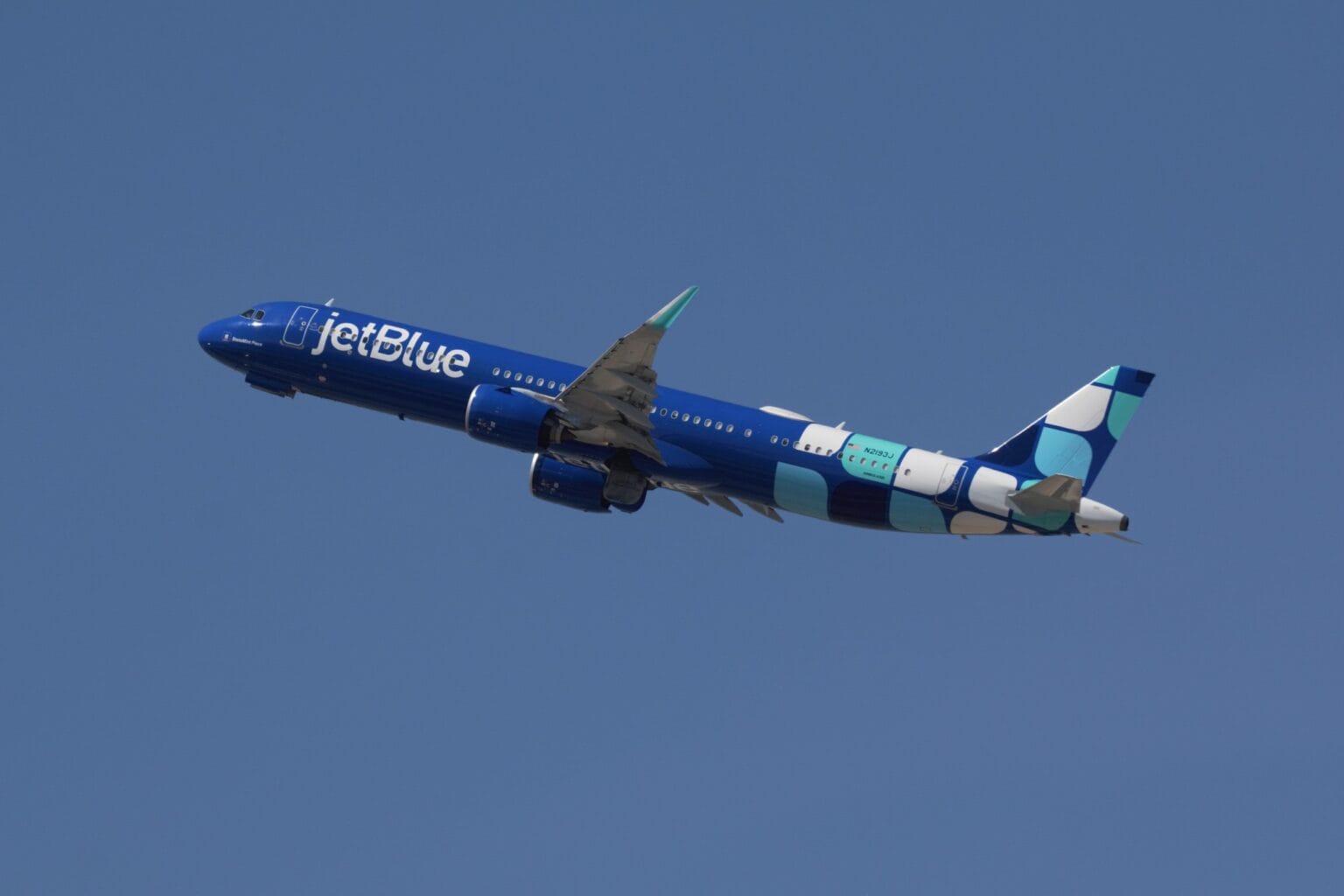
JetBlue flight B61187 from Boston struck its tail on the runway during a go-around at Los Angeles International Airport late on Sunday, November 22, 2026. The Airbus A321neo, registered N2193J, climbed away and landed on its second approach about 16 minutes later.
An FAA preliminary incident entry, as quoted by The Aviation Herald, reads in full capitals: “AIRCRAFT EXECUTING A GO-AOUND AND INCURRED A TAILSTRIKE.” The typo is in the FAA’s text.
What happened on runway 25L
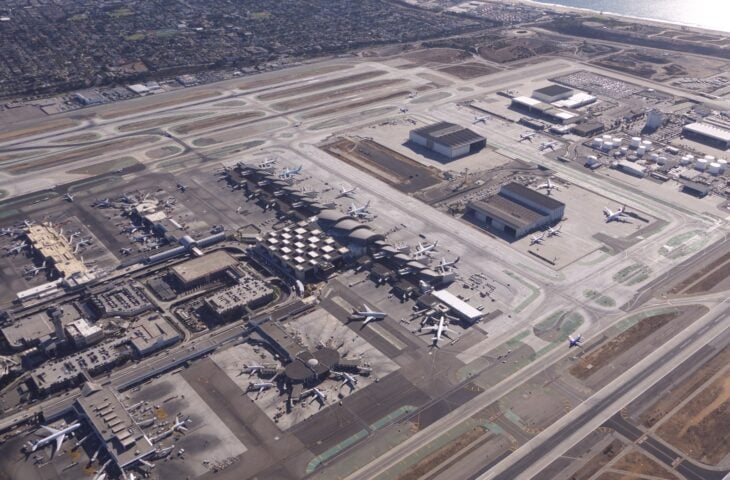
According to The Aviation Herald, the jet was landing on runway 25L at about 11:44 p.m. local time when the crew began a go-around and the tail contacted the runway surface. The crew then flew another approach to the same runway and landed without further trouble.

Flightradar24’s history for N2193J shows flight JBU1187 taking off from Boston at 8:46 p.m. Eastern time and landing at Los Angeles at 12:01 a.m. Pacific time. FlightStats logs the jet at the gate at 12:21 a.m., 22 minutes late.
The weather was not obviously against the crew. The LAX observation at 11:53 p.m. recorded a light, variable wind of 6 knots and 10 miles of visibility, with rain that had stopped at 11:18 p.m. and showers reported to the northeast.
The FAA aircraft registry lists N2193J as an A321-271NX built in 2024, with Pratt & Whitney PW1133GA-JM engines, registered to JetBlue Airways. It received its airworthiness certificate on December 7, 2024, so it is less than two years old.
Damage, people on board and the jet’s status
The number of passengers and crew has not been published, and neither the FAA text nor The Aviation Herald mentions injuries. AeroCorner found no public statement from JetBlue about the flight at the time of writing.
The extent of the damage is also unknown. The Aviation Herald reported that the aircraft was still on the ground in Los Angeles about 34 hours after landing, and Flightradar24’s history, last updated on Monday afternoon, showed no flight for N2193J after the Boston leg.
Whether the event is classed as an accident depends on that damage. Under federal rules, damage that adversely affects an aircraft’s structural strength and would normally need major repair is “substantial damage”, and that would make it an accident under the same rules.
As of November 24, the NTSB’s public case database listed no investigation for N2193J. A case can appear there days after an event, so that may change.
Preliminary information
The FAA entry is an early notice, not a finding. No cause has been published, and the damage, the number of people on board and any investigation are still unconfirmed.
JetBlue’s second A321neo go-around tail strike this year
LAX is not the first time this has happened to a JetBlue A321neo in 2026. On February 9, JetBlue flight 2233, the A321-271NX registered N2188J, struck its tail while going around after touchdown on runway 28L at San Francisco.
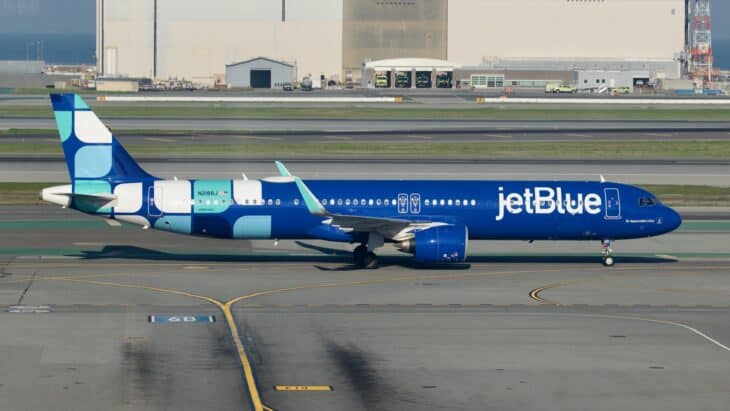
The NTSB’s final report on that event, published July 16, found substantial damage to the lower fuselage and no injuries among the 154 people on board. The jet had bounced after touching down, which the first officer likely did not notice.
About 3 seconds after the bounce, the first officer pulled the sidestick fully aft for 2 seconds as the thrust levers went to takeoff/go-around (TOGA) power. Pitch rose from 5.4 to 15.4 degrees while the wheels were still near the runway, and airspeed fell about 12 knots below the target approach speed.
The NTSB also noted that the A321’s anti-tailstrike protection, which limits the commanded pitch rate after touchdown, switched off as designed when TOGA power was selected. Its probable cause was the first officer’s excessive aft sidestick input combined with decaying airspeed during the go-around.
Why a go-around close to the ground is risky
A go-around is a routine maneuver and the right call whenever a landing is not working out. The risk grows when it starts very close to the ground, during the flare or after a bounce.
In a 2019 Frontier A321 tail strike at Orlando, the NTSB noted that the engines needed time to spool up after TOGA was set, and the airplane lost height before it began to climb. It blamed gusty conditions and a go-around at low altitude with an excessive rotation rate.
November has already brought two similar events. British Airways flight BA431, also an A321neo, struck its tail going around after touchdown at Heathrow on November 12, and the UK’s Air Accidents Investigation Branch is investigating.
An FAA entry also says American Airlines flight AA806, a 737 MAX 8, struck its tail during a go-around at Santa Ana on October 29. Earlier, the NTSB blamed Delta DL1181’s tail strike at LaGuardia on too much nose-up input after a bounce.
No cause has been published for B61187, and nothing yet ties it to the San Francisco sequence beyond the aircraft type and the go-around.
Sources and references used for research and fact-checking.
Get the Newsletter
The latest aviation news and stories sent to your inbox.
About the Author
AeroCorner News is the aviation news desk of AeroCorner.com. It covers accidents and incidents, safety rulings, airline and airport disruption, and new aircraft. It works from primary sources such as the NTSB, FAA, EASA and the manufacturers' own announcements.