

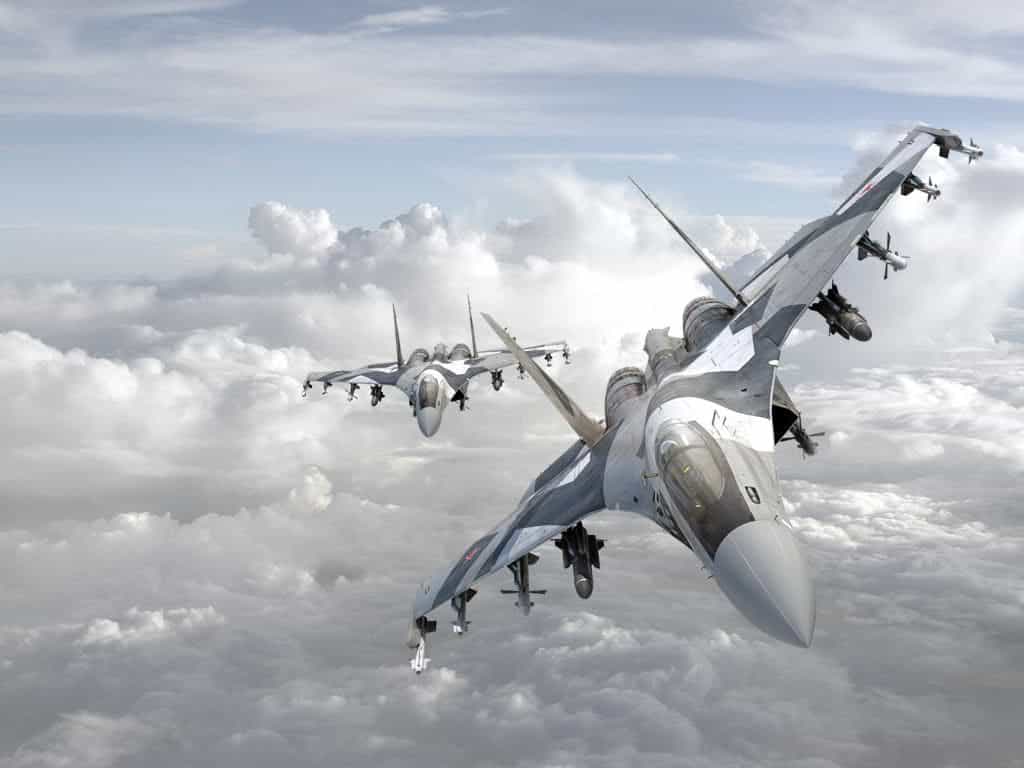
Somewhere between 19 and 20 Sukhoi Su-35 fighters built for Iran are complete and in storage in Russia, according to open-source defense reporting current as of July 2026. The aircraft have not been handed over, and the reason given is not sanctions or payment but construction work at the Iranian air base meant to receive them.
Treat these numbers as estimates
Neither Moscow nor Tehran has confirmed a delivery schedule, an aircraft count, or a contract value. Every figure below comes from leaked industrial documents, sources described as close to the Iranian air force, and satellite imagery analysis. The direction of travel is well corroborated. The specific numbers are not.
What the reporting says
The Su-35 order traces back to a Russia-Iran defense agreement initiated in 2021, reported to be worth somewhere between $6 billion and $6.5 billion and to cover up to 48 Su-35s alongside a smaller batch of Su-30SM2s. It would be Iran’s largest combat aircraft purchase in decades.
The running tally published by Defence Security Asia puts 16 airframes finished by March 2026, one more in April, and 19 or 20 by July, with roughly 30 expected to be complete by early 2027.
None of that is the same thing as delivery. Built, accepted, and flown by an Iranian squadron are three separate milestones, and the reporting only supports the first.

Why an air base is the bottleneck
A fighter fleet is infrastructure before it is aircraft. Hamadan, the base reported to be the Su-35 hub, needs shelters sized for the type, intact runways and taxiways, weapons and fuel storage, maintenance hangars, test equipment, and simulators, all in place before the first jet is useful.
Hamadan has been hit repeatedly. Satellite imagery analyst Brady Africk documented patched runways and taxiways at Hamadan and Tabriz in February 2026, after an earlier round of strikes, alongside fresh construction next to the repaired tarmac.
Later imagery analysis reported new hardened aircraft shelters at the base, described as roughly 25 by 30 meters (82 by 98 feet) each and dimensioned for the Su-35. Building those is a multi-year job, not a season of work.
There is a colder logic underneath the construction schedule. Flying several billion dollars of Flankers onto an open ramp within reach of the same weapons that cratered that runway would be an expensive way to lose them.
What Iran flies in the meantime
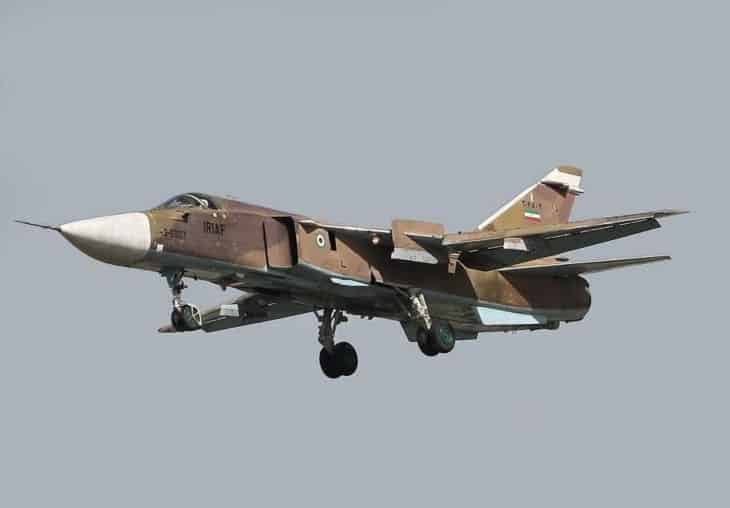
The Iranian air force still operates a fleet assembled largely before the 1979 revolution: F-14 Tomcats, F-4 Phantoms, and F-5s, supplemented by Soviet-era MiG-29s and Su-24s acquired later.
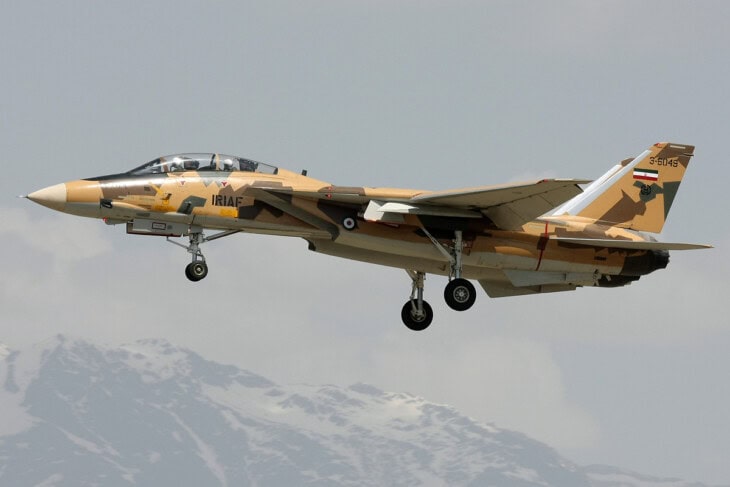
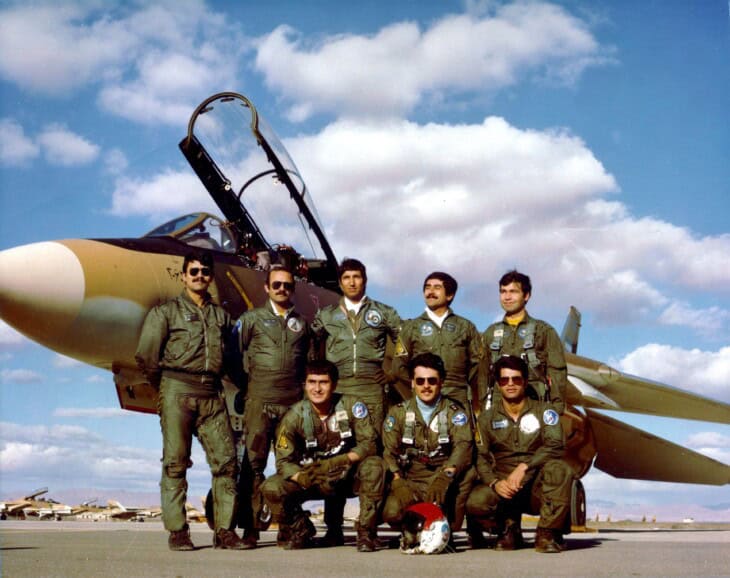
Iran flies the last operational Tomcats in the world, kept alive for four decades under an arms embargo. That is an impressive feat of improvised maintenance and a terrible position to defend a country from.
Thirty Su-35s would be a genuine step up, but a narrower one than the headline suggests. The Su-35 is a capable 4.5-generation fighter with a strong radar and excellent maneuverability, and it is not stealthy.
Against the fifth-generation aircraft and standoff weapons Iran has actually faced, an aircraft that has to be detected before it can be engaged is a different proposition from one that gets to choose the fight. Numbers alone will not close that gap.
The civil side of the same problem
The military and civil halves of Iranian aviation are stuck on the same rock. Decades of sanctions have left the country patching old airframes and building domestic aircraft of its own because buying new ones is not an option.
The airspace above it reflects the same standoff. EASA has told European operators to stay out of Iranian airspace at all altitudes through at least August 31, 2026, so the Su-35s, whenever they arrive, will be flying over skies most of the world’s airlines are avoiding.
Sources and references used for research and fact-checking.
Get the Newsletter
The latest aviation news and stories sent to your inbox.
About the Author

Tim is the owner and lead editor of AeroCorner since 2019, overseeing aviation content covering aircraft, airlines, airports, and the broader aviation industry. Through years of researching, writing, editing, and publishing aviation-focused content, he has developed extensive practical knowledge of commercial aviation and air travel. Based in Asia and a frequent traveler himself, Tim also brings firsthand passenger experience to AeroCorner’s coverage. Outside of publishing, he has also explored aviation firsthand through hands-on flight training in New Zealand.