

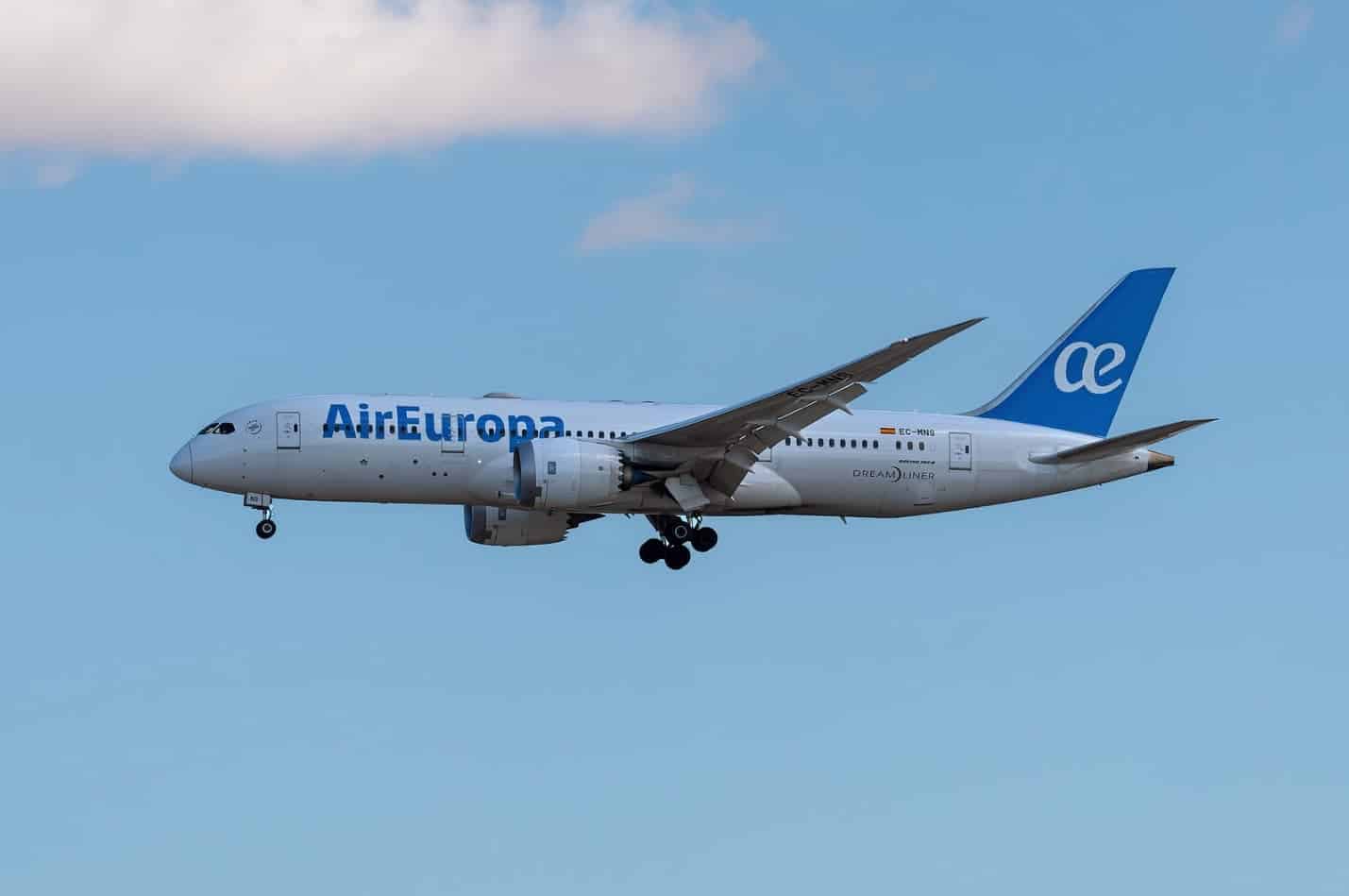
Spanish investigators are examining how two airliners full of passengers ended up flying toward each other at the same altitude over the Atlantic. On July 10, 2026, an Iberia Airbus A321XLR and an Air Europa Boeing 787 came close enough that their onboard collision-avoidance systems ordered both crews to break away.
Neither aircraft was damaged and none of the people on board were hurt. But the loss of separation on a busy oceanic route has opened a formal safety investigation, first reported by FlightGlobal.
What happened over the Atlantic
The conflict developed at around 01:22 UTC, in darkness, roughly 70 nautical miles off the coast of Western Sahara. Both jets were in the oceanic airspace of the Canaries upper flight information region, on the same airway, N857, between the reporting points ETIBA and BIPET.
The Iberia aircraft was an A321XLR, registered EC-OLE, operating flight IB140 northeast from Recife, Brazil, toward Madrid. The Air Europa jet was a Boeing 787-9, EC-NBM, flying UX57 in the opposite direction from Madrid to Sao Paulo.
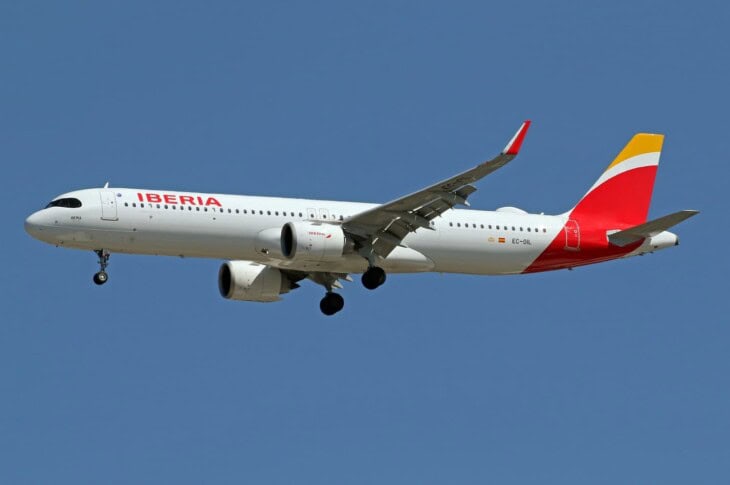
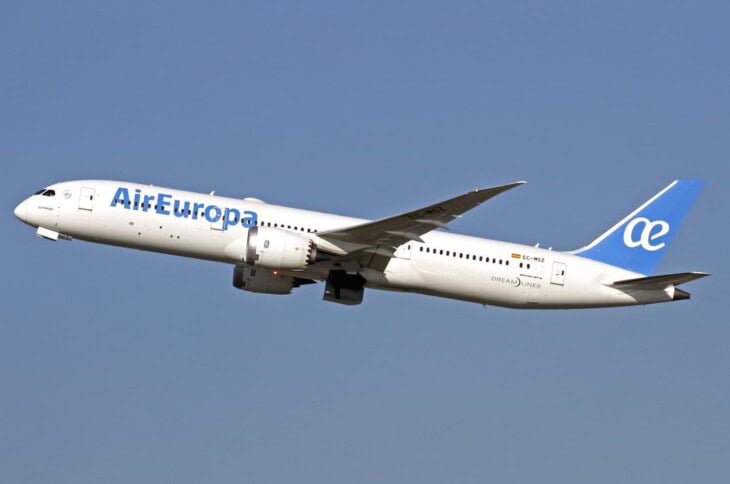
According to the Spanish accident investigation body CIAIAC, both aircraft were cleared to the same cruising altitude, 36,000 feet, while converging head-on. That left the two aircraft closing on each other with no vertical gap between them.
The situation was resolved by the collision-avoidance systems on both jets. The Iberia crew descended by 500 feet and the Air Europa crew climbed by 400 feet, opening the vertical separation needed to pass safely.
The last line of defense worked
With 454 passengers and 18 crew across the two aircraft, no one was injured. The jets resumed normal flight and landed at their destinations after the automated resolution split them apart vertically.
Why this happened where radar cannot see
The near-miss occurred over open ocean, where controllers cannot rely on the continuous radar coverage used over land. In this kind of oceanic airspace, aircraft are separated by assigned routes, altitudes and time, and crews report their positions as they pass fixed waypoints.
That procedural system depends on every clearance being correct. When two aircraft on the same airway are both told to hold the same flight level in opposite directions, the layers of protection that keep them apart have already been eroded before anyone in a cockpit sees a problem.
The final safeguard is the Traffic Collision Avoidance System, or TCAS. It works independently of ground control, tracking nearby transponder-equipped aircraft and issuing a resolution advisory that tells one crew to climb and the other to descend. That is the automated system that pulled these two jets apart.
Investigators will now try to establish why the conflict arose at all. The CIAIAC said it is analyzing the flight data recorders, cockpit voice recorders and air traffic control recordings from the oceanic sector to trace the chain of human, technical or procedural factors behind the loss of separation.
Investigation ongoing
No cause has been determined. The CIAIAC has opened the inquiry but has not yet published findings, and the account of how both aircraft came to share a flight level remains provisional until the investigation concludes.
Get the Newsletter
The latest aviation news and stories sent to your inbox.
About the Author

Tim is the owner and lead editor of AeroCorner since 2019, overseeing aviation content covering aircraft, airlines, airports, and the broader aviation industry. Through years of researching, writing, editing, and publishing aviation-focused content, he has developed extensive practical knowledge of commercial aviation and air travel. Based in Asia and a frequent traveler himself, Tim also brings firsthand passenger experience to AeroCorner’s coverage. Outside of publishing, he has also explored aviation firsthand through hands-on flight training in New Zealand.