

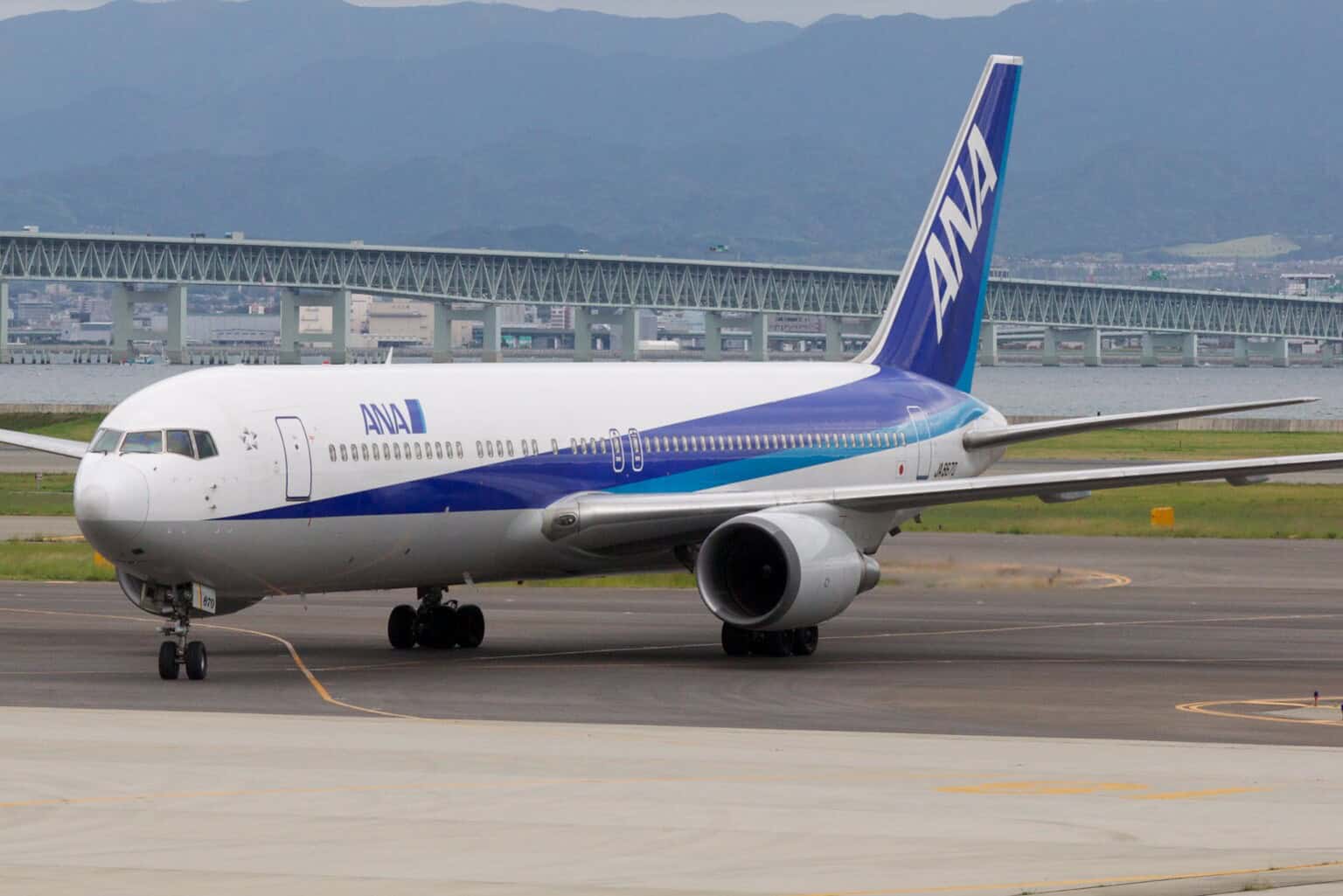
On August 4, 2026, an All Nippon Airways widebody broke off its landing at Tokyo Haneda after its collision avoidance system ordered the crew to climb. A Japan Civil Aviation Bureau flight inspection jet had turned across the airliner’s descent path moments after taking off from a different runway.
Flight NH968 had left Shanghai overnight and was descending toward Runway C at Tokyo Haneda with 197 passengers and crew aboard. The alert sounded at about 5:44 a.m. local time, roughly a minute before the flight was due at the gate.
The crew abandoned the approach, climbed away, and came back around. According to Japan’s Ministry of Land, Infrastructure, Transport and Tourism, the Boeing 767-300 landed safely at 6:10 a.m. with no injuries.
What the two aircraft were doing
The second aircraft was not an airliner. It was a Cessna Citation CJ4 operated by the Civil Aviation Bureau and nicknamed “Doctor White,” one of the small jets Japan uses to calibrate the navigation aids and approach systems that everyone else depends on.
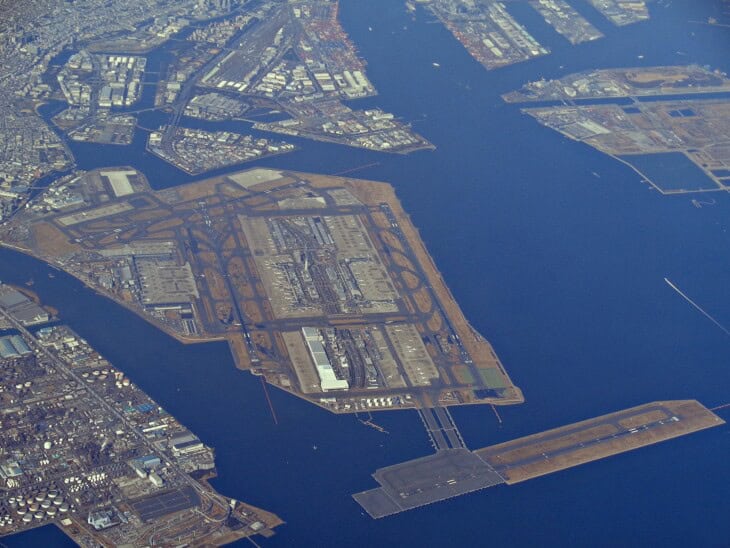
It departed from Runway D, the offshore runway, and turned. That turn carried it through the final approach path for Runway C, which the ANA jet was already descending along.
Reporting by Simple Flying, drawing on flight tracking data, puts the two aircraft within about 70 feet of each other vertically as both passed 1,000 feet, and identifies the inspection jet as JA010G using the call sign Checkstar 10.
The ministry said the inspection aircraft received no avoidance instruction from its own equipment, a detail first carried in Japan by the Asahi Shimbun. It has not said why. The investigation is ongoing.
Treat the separation figure as provisional
The 70-foot number comes from public flight tracking data reported by news outlets, not from the ministry or an accident investigation. Transponder altitude is rounded and does not capture horizontal distance, so the official figure may differ once investigators pull the radar and recorder data.
Why only one aircraft was told what to do
Not every aircraft carries the same collision avoidance equipment, and the difference decides who gets a command and who gets a hint. The system splits into two tiers, and only the upper tier tells a pilot to climb or descend.
TCAS I shows nearby traffic and issues a traffic advisory: look out the window, something is close. TCAS II goes further and issues a resolution advisory, an explicit instruction to climb or descend, and when both aircraft have it the two units negotiate so one goes up and the other goes down.
Airliners are required to carry the second kind. Smaller business jets frequently carry the first. The ministry has not said which system was fitted to the inspection aircraft, and that answer will shape the investigation.
It is worth being clear about where in the safety chain this alert sits. A resolution advisory is not a routine warning. It is the last automated layer, firing only after controller separation and visual lookout have already failed to keep two aircraft apart.
The alert outranks the controller
Pilots are required to follow a resolution advisory even when it contradicts an air traffic control instruction. Japan learned that lesson the hard way in January 2001, when a JAL 747 out of Haneda followed a controller’s descent order instead of its own climb command and passed within seconds of a DC-10 near Yaizu, injuring dozens aboard.
The same runway as 2024
Runway C is 34R in its northerly direction, which is the runway a Japan Airlines A350 was landing on in January 2024 when it struck a Japan Coast Guard turboprop that had entered without clearance. Five of the six crew aboard the Coast Guard aircraft died. All 379 people on the airliner escaped.
The two events are not the same kind of failure. One was a runway incursion on the ground, this one a conflict in the air, and nobody was hurt this week.
What they share is the harder problem underneath: state-operated aircraft flying government missions mixed into one of the world’s densest airline operations, at an airport running four runways in close quarters. Japan tightened ground procedures and controller monitoring after 2024. This one happened in the air.
It also lands in a season of similar saves elsewhere. Days earlier a regional jet taxied onto a runway at Reagan National with a 737 on short final, and that conflict ended the same way this one did, with a go-around.
That is the system working, but only at its final layer. Investigators in Tokyo now have to explain why the last layer was the one that had to hold.
Sources and references used for research and fact-checking.
Get the Newsletter
The latest aviation news and stories sent to your inbox.
About the Author

Tim is the owner and lead editor of AeroCorner since 2019, overseeing aviation content covering aircraft, airlines, airports, and the broader aviation industry. Through years of researching, writing, editing, and publishing aviation-focused content, he has developed extensive practical knowledge of commercial aviation and air travel. Based in Asia and a frequent traveler himself, Tim also brings firsthand passenger experience to AeroCorner’s coverage. Outside of publishing, he has also explored aviation firsthand through hands-on flight training in New Zealand.