

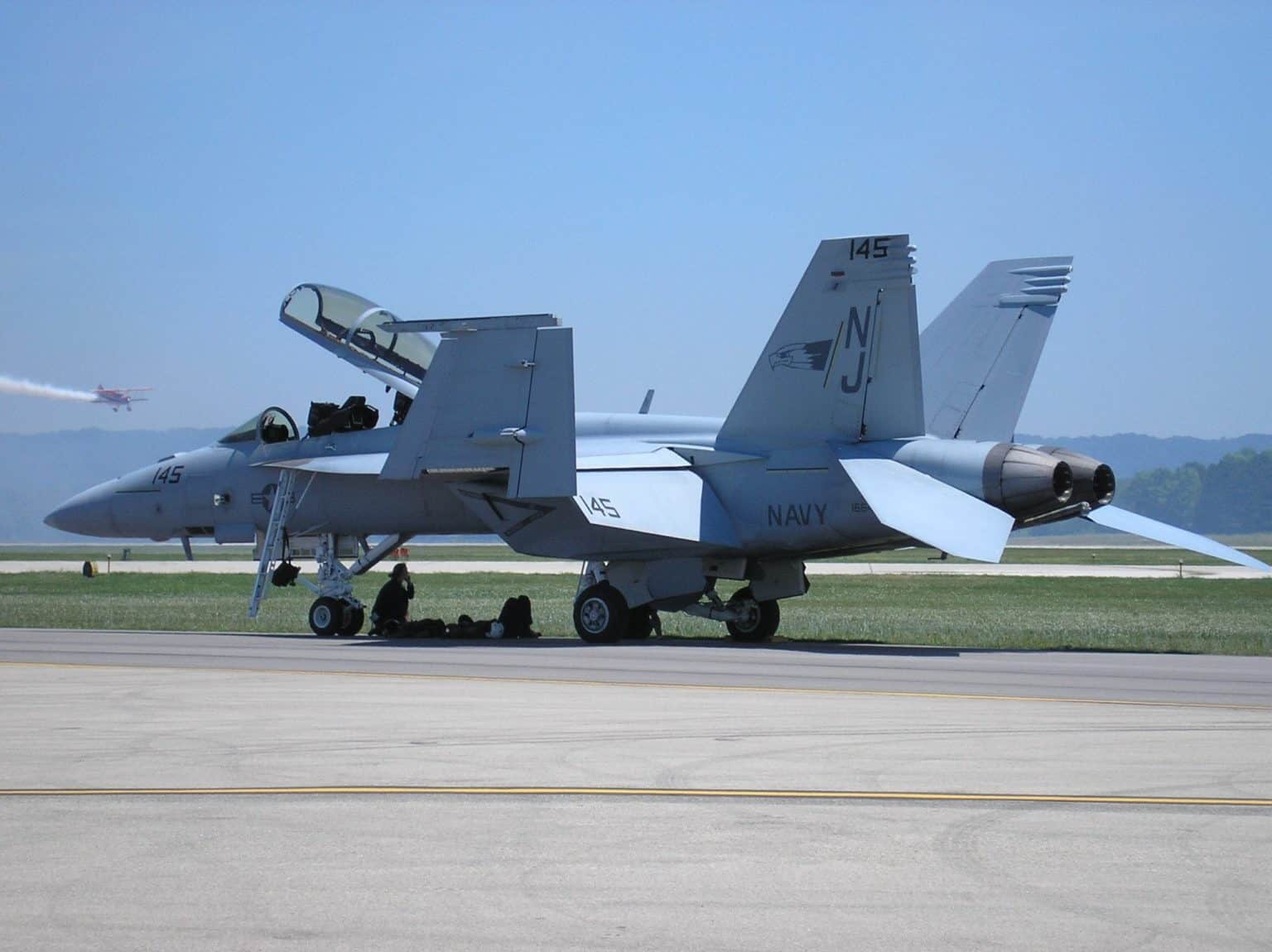
On September 1, 2026, the US Navy awarded GE Aerospace a performance-based logistics contract worth up to $2.87 billion to sustain the F414 engines that power its F/A-18E/F Super Hornet and EA-18G Growler fleets.
What the Contract Covers
The five-year deal, contract N00383-26-D-UA01, runs through August 2031 with no option periods, Breaking Defense reported, drawing on the Pentagon’s daily contract announcement. It covers 17 F414 engine components and came with an initial delivery order of about $198 million.
Work is split between Lynn, Massachusetts, which handles 90 percent, and Jacksonville, Florida, with the remaining 10 percent. GE is the sole manufacturer of the F414.
Under a performance-based logistics arrangement, GE is paid for keeping engines available and spare parts on the shelf when squadrons need them, rather than for each part the Navy orders. The Navy uses these contracts to hold a supplier accountable for fleet readiness, not just for deliveries.
GE Aerospace said it has powered the Super Hornet and the EA-18G Growler with the F414 for more than 20 years. Each of those jets carries two F414-GE-400 engines, so the fleet accounts for well over a thousand engines in service.
The F414 is a roughly 22,000-pound-thrust afterburning turbofan derived from the F404 that powered the original Hornet. Versions of it also fly on Sweden’s Gripen E, South Korea’s KF-21 and India’s Tejas Mk2.
Why the Navy Is Locking In Support Now
Boeing plans to build its last new Super Hornet in 2027, closing a St. Louis production line that has turned out F/A-18s since the 1990s. After that, the roughly 575 Super Hornets and 160 Growlers already in service have to carry the load.
The F/A-XX, the next-generation carrier fighter meant to succeed them, has slipped repeatedly. That leaves the Super Hornet and Growler as the backbone of the Navy’s carrier air wings well into the 2030s, with the Growler still the only carrier-based radar jammer in US service.
To stretch the airframes, the Navy is running Super Hornets through a Service Life Modification program that adds about 4,000 flight hours along with Block III upgrades, work expected to keep them flying into the 2040s. A long engine-support contract is the propulsion side of the same plan.
The award also lands as the US military reconsiders its fighter-engine supplier base. For now, GE’s F414 and Pratt & Whitney’s F135 are the only production engines powering American fighters, a concentration the Air Force has said it wants to break.
A ceiling, not a guaranteed spend
The $2.87 billion figure is the maximum value of the contract. Only about $198 million was obligated at award, and the rest depends on annual delivery orders the Navy funds year by year through 2031.
Sources and references used for research and fact-checking.
Get the Newsletter
The latest aviation news and stories sent to your inbox.
About the Author

Tim is the owner and lead editor of AeroCorner since 2019, overseeing aviation content covering aircraft, airlines, airports, and the broader aviation industry. Through years of researching, writing, editing, and publishing aviation-focused content, he has developed extensive practical knowledge of commercial aviation and air travel. Based in Asia and a frequent traveler himself, Tim also brings firsthand passenger experience to AeroCorner’s coverage. Outside of publishing, he has also explored aviation firsthand through hands-on flight training in New Zealand.