

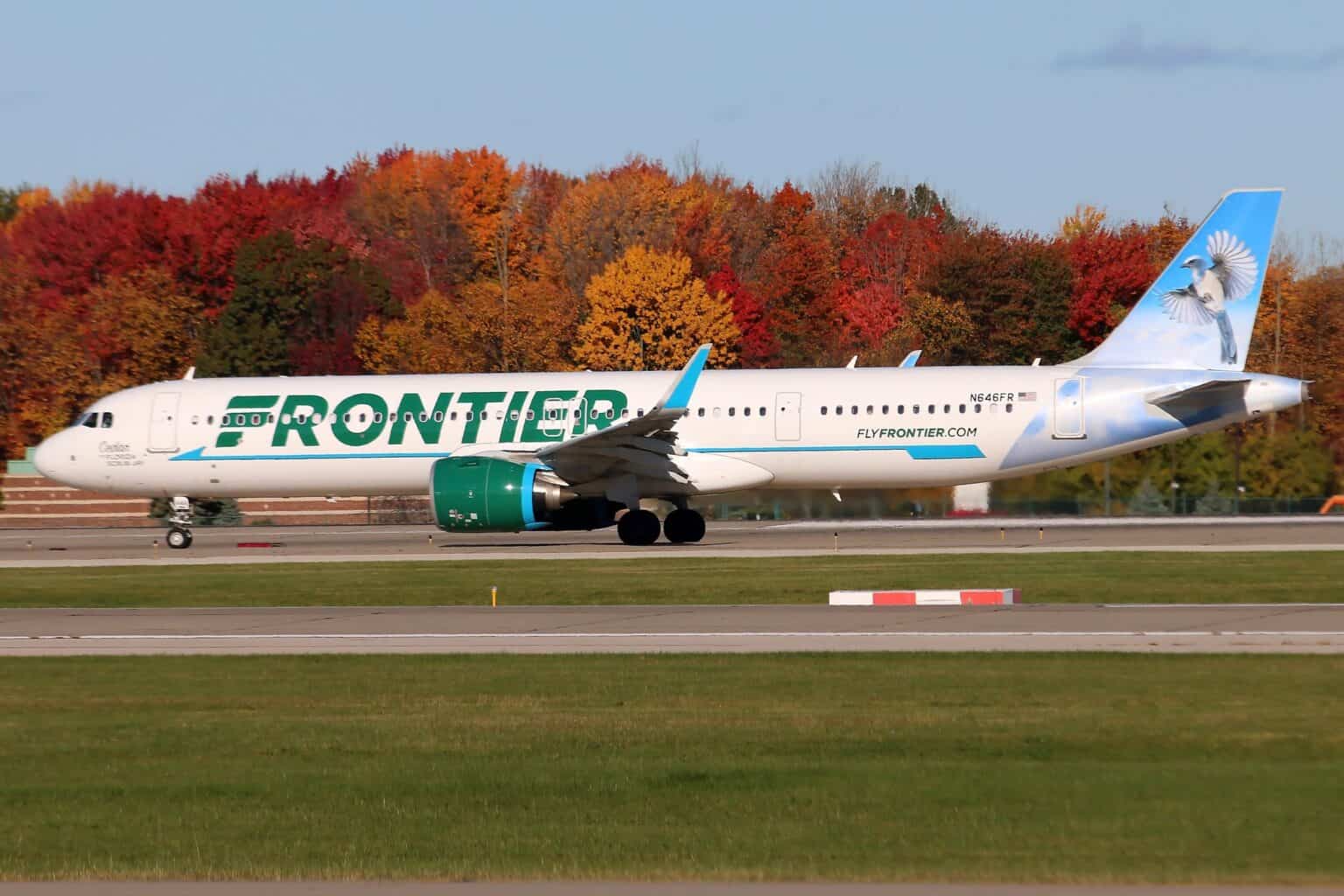
More than 70 passengers and crew members from Frontier Airlines Flight 4345, along with an air traffic controller, are suing the City of Denver over the night of May 8, 2026, when the jet struck a man on a runway at Denver International Airport. The suit was filed on September 17 in Denver District Court and became public in late September.
It also brings a wrongful death claim for a passenger who died eight days after the flight. The city denies responsibility.
What happened on Runway 17L
Flight 4345, bound for Los Angeles with 224 passengers and seven crew, was rolling for takeoff on Runway 17L at about 11:19 p.m. when it struck a person crossing the runway, the airport said that night. The man had climbed the perimeter fence about two minutes earlier.
The aircraft was an Airbus A321neo registered N646FR, delivered to Frontier in 2024, according to Flightradar24. Its tracking data shows the jet reached 127 knots before the crew braked to a stop.
An engine caught fire, smoke filled the cabin, and passengers evacuated down the emergency slides onto the runway. The airport said 12 people reported minor injuries and five were taken to hospitals.
The man was later identified as Michael Mott, 41, and his death was ruled a suicide. The National Transportation Safety Board said on May 10 that it was gathering information about the evacuation “to determine if it meets criteria for a safety investigation,” Denverite reported.
What the lawsuit claims
The 56-page complaint, filed by Ramos Law and Watts Law Firm, argues that three separate safeguards failed at once. Its central airport claim concerns the ground sensors that alarmed at around 11:10 p.m., which an operator reviewed and put down to a herd of deer outside the fence, as airport CEO Phil Washington said in May.
Had Denver responded to its own surveillance and intrusion-detection systems with reasonable care, the suit says, it could have alerted air traffic control and Frontier and halted operations on Runway 17L, Westword reported. It also blames Covenant Aviation Security, the contractor Denver used for perimeter patrol, for failing to detect the intrusion.
The complaint says at least eight trespassers have breached the airport’s perimeter or warehouse-area fences since January 2023, citing police records. The third failure it alleges sits outside the airport: the behavioral health operators responsible for Mott under a court-ordered outpatient placement, who are also named as defendants.
The wrongful death claim concerns Silva Ermelinda de Cervantes, a passenger who had a stroke and died on May 16. The suit attributes her death to inhaling smoke and toxic fumes during the evacuation.
The Weld County Coroner’s Office reviewed her death and determined the manner was natural, with her primary care clinician attributing it to natural disease, CPR News reported. No autopsy was performed.
“This incident was terrible and tragic, but it is not one that the city bears legal responsibility for,” the Denver City Attorney’s Office said. The claims are allegations that have not yet been tested in court.
Why the suit focuses on the alarm, not the fence
Denver’s airport covers 53 square miles (137 square km) behind 36 miles (58 km) of perimeter fence, figures CNN reported from the airport. The more perimeter an airport has to defend, the more chances for unauthorized entry, Florida Institute of Technology adjunct professor William Rankin told CNN.
The reasons Denver needed so much land are their own story, covered in why Denver’s airport is so big. FAA guidance describes airport security fencing as a way to slow pedestrians and vehicles, and the TSA does not require airports to install perimeter intrusion detection systems, Metropolitan State University of Denver aviation professor Jeffrey Price told CNN.
That is why the suit turns on the alarm rather than the fence. On the times reported, roughly nine minutes passed between the first sensor alarm at about 11:10 p.m. and the collision at about 11:19 p.m., while Mott spent about two minutes inside the fence.
A detection system only helps if the person who sees an alert can get word to the tower before a takeoff begins, and whether that was possible here is a question for the court. The airport said in May that it would carry out an incident analysis and after-action review that includes its perimeter security program.
Get the Newsletter
The latest aviation news and stories sent to your inbox.
About the Author

Tim is the owner and lead editor of AeroCorner since 2019, overseeing aviation content covering aircraft, airlines, airports, and the broader aviation industry. Through years of researching, writing, editing, and publishing aviation-focused content, he has developed extensive practical knowledge of commercial aviation and air travel. Based in Asia and a frequent traveler himself, Tim also brings firsthand passenger experience to AeroCorner’s coverage. Outside of publishing, he has also explored aviation firsthand through hands-on flight training in New Zealand.