

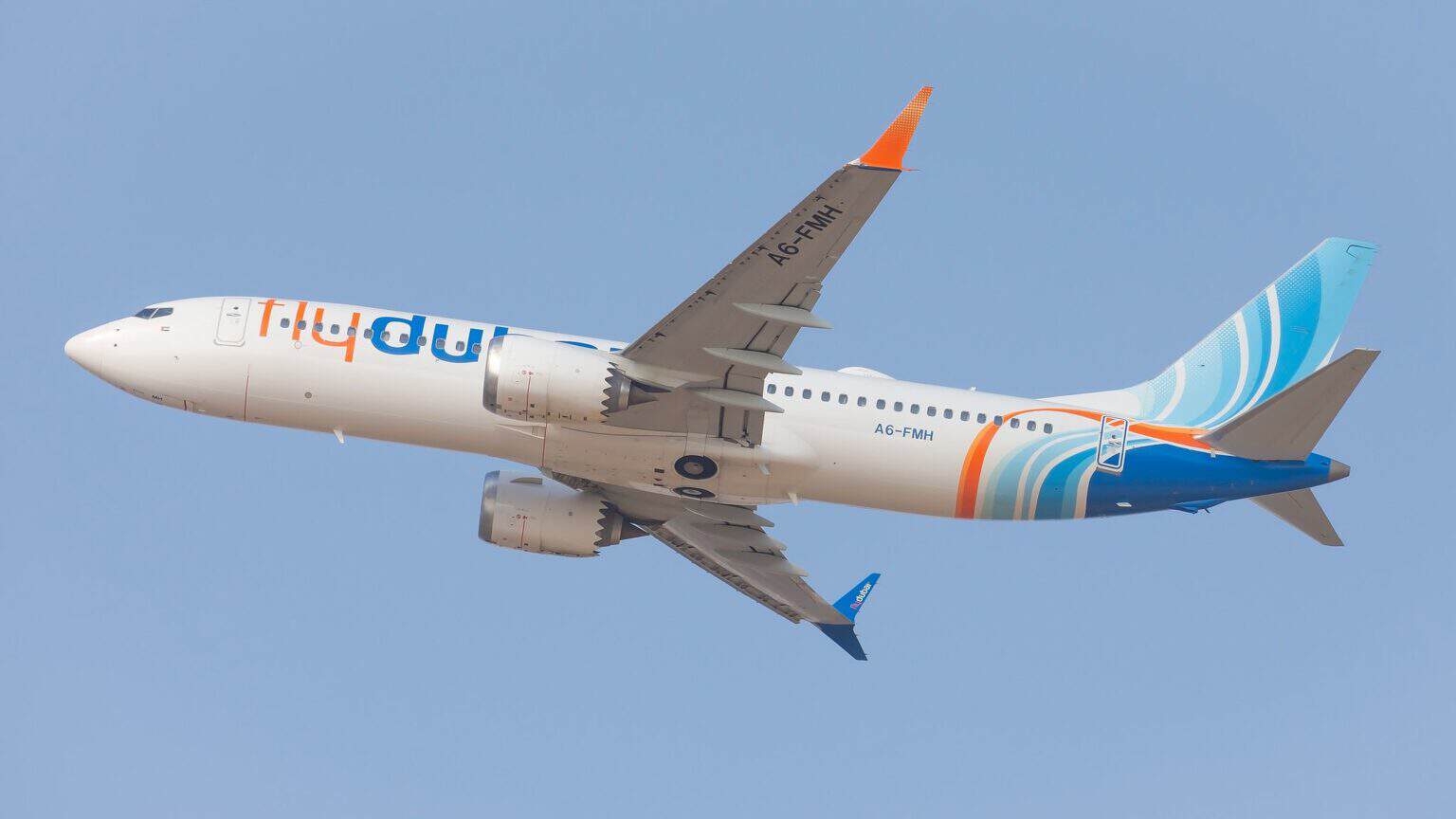
Flydubai flight FZ1073 from Dubai to Tel Aviv broadcast a general emergency code and then the code for unlawful interference on Wednesday, September 30, 2026, before turning around and landing at Tabuk in Saudi Arabia. Israel scrambled fighter jets, and Israeli security sources later said the incident was not a hijacking.
Flydubai had not publicly explained the codes or the diversion at the time of writing, and no statement on the flight appeared in its online newsroom.
What FZ1073 Did
The flight left Dubai at 7:05 a.m. and was due at Ben Gurion Airport at about 9:30 a.m. Israel time, according to Ynetnews, which put the number on board at 174 passengers, including 27 children. Other Israeli outlets gave a rounder figure of about 180.
Citing Flightradar24 data, Calcalist identified the aircraft as a Boeing 737 MAX 8 registered A6-FKF. It reported that the jet crossed into Jordanian airspace, made a U-turn back toward Saudi Arabia and descended to about 15,000 feet.
The transponder first showed 7700, the general emergency code, and then 7500 a short time later, according to flight tracking data cited by The Times of Israel. The outlet added that the aircraft then dropped off flight tracking sites.
Ynetnews quoted an unnamed Israeli security official during the event as saying there was “no definitive information about a hijacking” but that authorities could not reach the pilot. Israel Hayom reported that the aircraft later resumed contact with Saudi aviation authorities and landed at around 9:50 a.m. Israel time.
The Times of Israel named the airport as Tabuk, in northwestern Saudi Arabia.
Israel’s Response
An Israel Defense Forces spokesperson told CNN that fighter jets were scrambled after the emergency message was sent. Ynetnews put the number at two.
Prime Minister Benjamin Netanyahu and Defense Minister Israel Katz held a security consultation while the aircraft was still in the air, Ynetnews and CNN reported. Israeli police set up a joint command center with other security agencies, according to Ynetnews.
What Is Known About the Cause
After the landing, The Times of Israel cited Israeli security sources as saying the signals were apparently due to an altercation between the pilots. Ynetnews reported the Israeli assessment more loosely, as a violent incident aboard the plane rather than a hijacking.
That account comes from unnamed Israeli sources, and flydubai had not confirmed it at the time of writing. Israel Hayom noted it was unclear whether the hijack code was sent deliberately.
Still unconfirmed
At the time of writing on September 30, flydubai had not said why FZ1073 transmitted 7700 and 7500 or why it diverted. The pilot altercation account rests on unnamed Israeli security sources. The reports reviewed gave no details on the condition of those on board or their onward travel.
What Squawk 7500 Means
A transponder squawk code is a four-digit number the crew dials in so radar can identify the flight. A handful are reserved: the FAA’s Aeronautical Information Manual lists 7700 for an emergency and 7500 with the meaning “I am being hijacked/forced to a new destination.”
The code lets a crew raise the alarm without speaking. Under the FAA procedure, a controller who sees it asks the pilot to verify the code, and if the pilot confirms or does not answer, the controller asks nothing further and notifies the appropriate authorities.
That is why a 7500 paired with a crew that cannot be reached is taken seriously. On FZ1073, the code, the reported loss of contact and the unplanned turn all arrived together on a flight bound for Israel.
Reports of a 7500 are not always borne out. Earlier this month, reports that a Ryanair flight had squawked 7500 on a return to Porto were contested.
On the reporting so far, the explanation offered for FZ1073 is a confrontation inside the cockpit rather than a threat from the cabin. Confirming that will take a statement from flydubai or from the aviation authorities involved.
Sources and references used for research and fact-checking.
Get the Newsletter
The latest aviation news and stories sent to your inbox.
About the Author

Tim is the owner and lead editor of AeroCorner since 2019, overseeing aviation content covering aircraft, airlines, airports, and the broader aviation industry. Through years of researching, writing, editing, and publishing aviation-focused content, he has developed extensive practical knowledge of commercial aviation and air travel. Based in Asia and a frequent traveler himself, Tim also brings firsthand passenger experience to AeroCorner’s coverage. Outside of publishing, he has also explored aviation firsthand through hands-on flight training in New Zealand.