

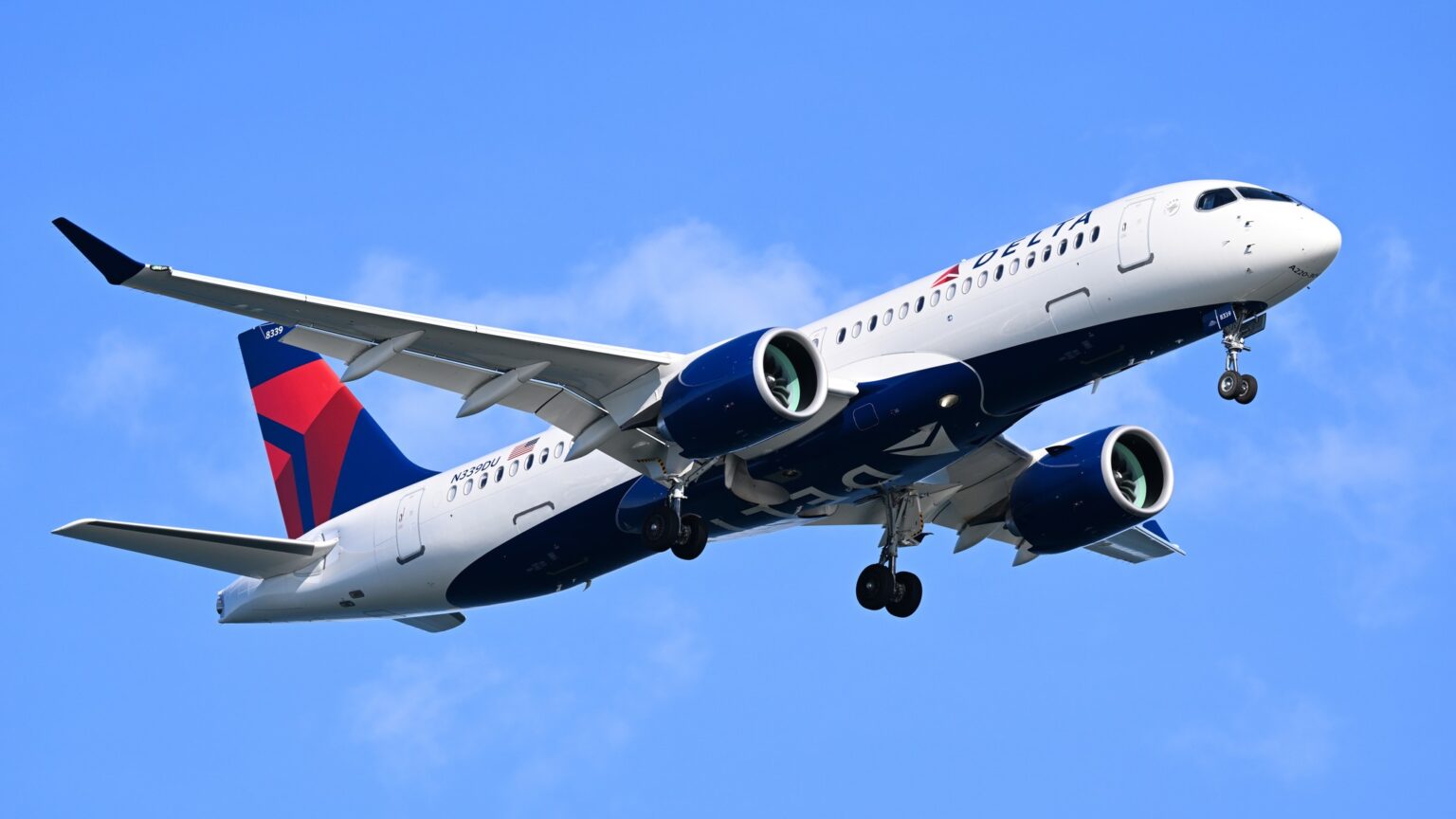
The FAA published an airworthiness directive on November 25, 2026, that orders new engine bleed valves on Airbus A220 jets after what it calls multiple in-service failures of the original part. AD 2026-24-03 takes effect on December 30, 2026, and the agency estimates it covers 112 US-registered aircraft.
The part is the pressure regulating shutoff valve, or PRSOV, one on each engine. Until it is replaced, the rule also bars some A220s from flying into known or forecast icing when they are dispatched with one of those valves already broken.
What the directive requires
The FAA rule adopts Transport Canada AD CF-2025-20, issued on April 15, 2025, because Canada certified the jet, which began life as the Bombardier C Series. It applies to the BD-500-1A10 and BD-500-1A11, the type designations of the A220-100 and Airbus A220-300.
It has three parts. First, owners of early-build aircraft (serial numbers 50001 to 50045 and 55001 to 55059) must add revised “L BLEED LEAK” and “R BLEED LEAK” caution procedures to the flight manual within 60 days.
Those procedures tell pilots to pull the thrust lever back, or shut the engine down, when a BLEED LEAK caution message stays on. Transport Canada’s directive says these steps date from Issue 012 of the A220’s master flight manual, published in July 2019.
Second, from the day the rule takes effect, an aircraft still fitted with the original valve, part number 70115B010001, gets a new limit under its minimum equipment list. If it is dispatched under item 36-12-01 with one PRSOV inoperative, it must not be flown in known or forecast icing conditions.
Third, both engines’ valves must be replaced with a redesigned PRSOV, part number 70115C010001, within 9,350 flight hours of December 30, 2026. The job also swaps the valve’s precooler sense hose for a new part, following Airbus Canada service bulletin BD500-361001.
The FAA puts the cost at up to 13 work-hours and up to $30,156 in parts per aircraft, or up to $31,261 each. Across the 112 US jets, that comes to up to about $3.5 million.
Why a stuck valve matters
A jet engine’s compressor supplies hot, high-pressure “bleed” air to the aircraft’s pneumatic systems, and the PRSOV is the valve that regulates that flow and can shut it off. AeroCorner’s explainer on the bleed air system covers how that air is used.


When sensors detect a leak, the valve is what isolates it. The FAA says a valve that fails to close, combined with a leak on the same side, could let hot air damage nearby structure and systems.
The agency lists what could be lost: assisted engine start, cabin pressurization, fuel tank inerting and wing anti-ice. In the worst case, it says, the aircraft might not be able to continue safe flight and landing.
The new cockpit procedure follows from that. If the valve cannot cut off the hot air, reducing thrust or shutting the engine down removes the source.
The icing limit has a similar logic. Transport Canada notes that A220s may be dispatched with one PRSOV inoperative, and that with the old valve’s high failure rate, the remaining one could also fail, leaving no bleed air at all.
Wing anti-ice runs on that air. Losing it in icing conditions is the scenario the restriction is designed to rule out.
For a sense of scale, 9,350 flight hours works out to roughly two and a half years for a jet flying 10 hours a day. Actual timing depends on each airline’s utilization.
What changed after Delta’s comments
The FAA proposed the rule on March 24, 2026. The Air Line Pilots Association backed it without changes, and Delta Air Lines, a US A220 operator, asked for several.
The agency agreed that the 9,350-hour clock counts hours flown by the aircraft from the effective date, not since delivery. It also added a table matching Transport Canada’s MEL items to the FAA’s own master list.
It also accepted a second route to compliance: swapping in an engine that already carries the redesigned valve. The FAA refused Delta’s broader request to allow replacement by unspecified “approved procedures”, calling that language too vague.
The rule overlaps with a second A220 bleed-air directive. In June 2026 the FAA issued emergency AD 2026-13-52 after a repair shop found missing or broken butterfly clips in the jet’s high pressure valves.
That emergency AD suspended dispatch under several bleed-related MEL items, including the PRSOV item 36-12-01. Delta said it was seeking an alternative method of compliance (AMOC), a case-by-case FAA approval, to use that item again.
The FAA said operators must meet the stricter of the two rules. Until an AMOC is approved, an A220 should not be dispatched under item 36-12-01 at all, and once one is, the new icing restriction will still apply.
It is the second bleed-valve dispatch limit the FAA has written this fall, after a rule that keeps Trent-powered 787s on the ground with a failed engine bleed valve.
Sources and references used for research and fact-checking.
- Federal Register (FAA), Airworthiness Directives; Airbus Canada Limited Partnership Airplanes (AD 2026-24-03, final rule, Nov 25, 2026)
- Transport Canada, Airworthiness Directive CF-2025-20: Pneumatic, Engine Bleed PRSOV Failure
- Federal Register (FAA), Airworthiness Directives; Airbus Canada Limited Partnership Airplanes (NPRM, Mar 24, 2026)
- Federal Register (FAA), Airworthiness Directives; Airbus Canada Limited Partnership Airplanes (AD 2026-13-52, Jul 7, 2026)
Get the Newsletter
The latest aviation news and stories sent to your inbox.
About the Author

AeroCorner News is the aviation news desk of AeroCorner.com. It covers accidents and incidents, safety rulings, airline and airport disruption, and new aircraft. It works from primary sources such as the NTSB, FAA, EASA and the manufacturers' own announcements.