

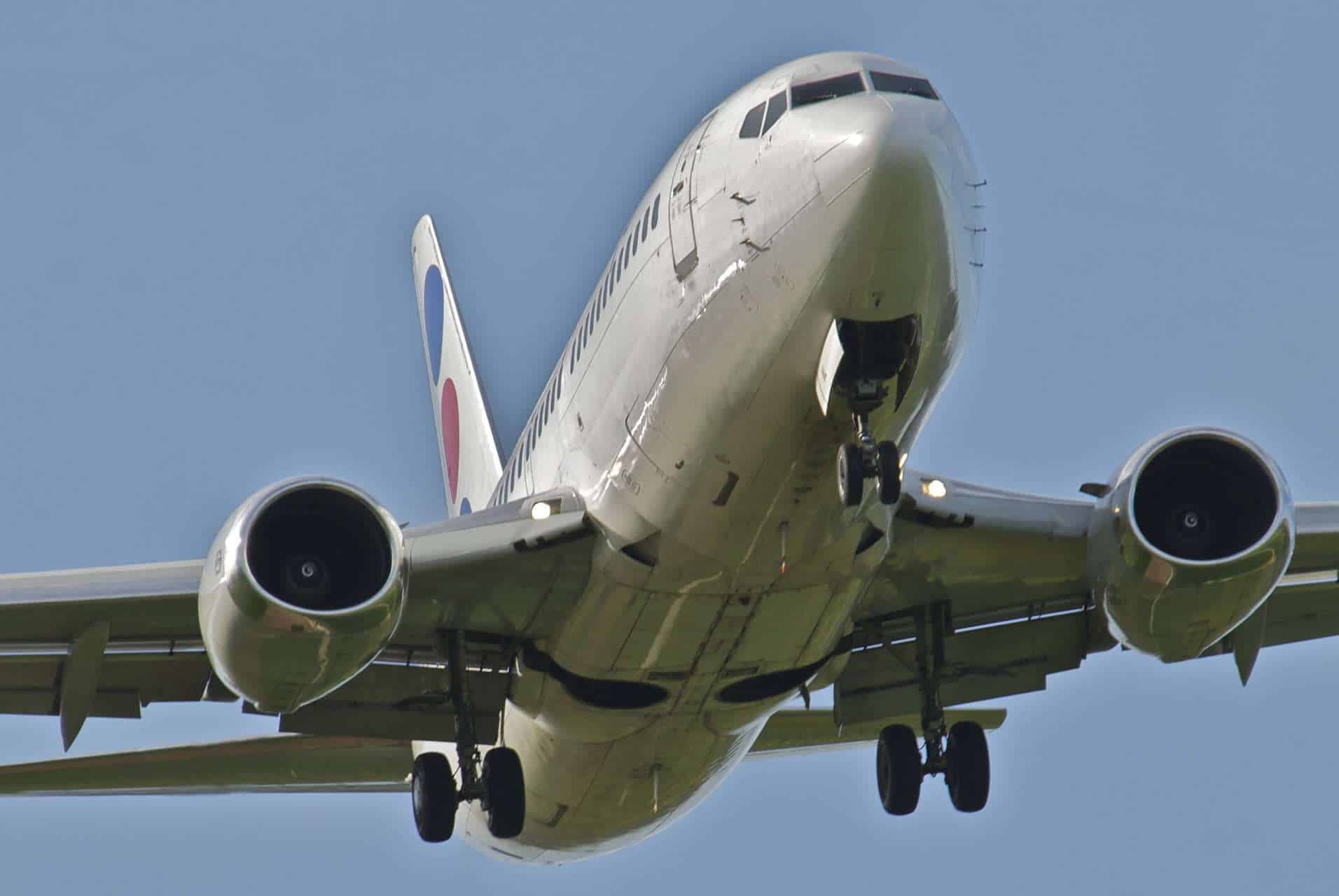
On August 18, 2026, the FAA proposed a new airworthiness directive requiring heater upgrades on the angle-of-attack sensors of about 133 U.S.-registered Boeing 737-300, -400, and -500 airplanes. The agency wants to stop a known failure: sensor vanes that freeze in flight and set off a false stall warning.
What is going wrong with the sensors
An angle-of-attack sensor is a small vane on the fuselage that measures the angle between the wing and the oncoming airflow, the core input for the airplane’s stall warning system. On these older 737-300, -400, and -500 airplanes, the FAA says some sensors carry insufficient heating, letting moisture collect and freeze inside the vane pivot.
The agency said in the proposal that operators have reported “nuisance stick shaker activation” while the airplane accelerates to cruise speed at the top of a climb, the exact moment a frozen vane tends to bind. The stick shaker is the control column vibration that warns pilots of an approaching stall, and it was firing with no stall underway.
Why a false alarm still counts as a safety issue
The FAA’s stated concern is not the nuisance itself but what a stuck, iced-over vane implies about the sensor’s reliability. Left unaddressed, the agency wrote, the condition “could lead to failure of the stall warning system and result in a loss of continued safe flight and landing.”
A sensor that fails by shaking the controls when it shouldn’t is the same sensor that could fail to shake them when a stall is real. Crews trained to expect false alarms on a given airplane also have less reason to trust the system the one time it matters.
Not the MAX's angle-of-attack problem
This proposal covers the 737-300, -400, and -500, the 1980s and 1990s-era ‘Classic’ generation that predates the 737NG and MAX. It is unrelated to the MCAS angle-of-attack disagreements that grounded the MAX in 2019. Most Classics have left mainline passenger service and now fly mainly for cargo, charter, and government operators.
What the fix requires
The proposed directive, drawn from Boeing‘s Alert Requirements Bulletin 737-30A1081 RB, Revision 1, would require operators to install new external case heaters on both the left and right angle-of-attack sensors. It also calls for related work: a new junction box, added wiring, replacing an insulation blanket, circuit breaker changes, and updated sensor labels, followed by repetitive functional tests.
The FAA estimates the work will cost U.S. operators about $14.9 million altogether, roughly $112,000 per airplane, covering parts, wiring, and testing across the affected fleet.
The proposal in numbers
About 133 U.S.-registered 737-300, -400, and -500 airplanes are covered, at an estimated cost of roughly $14.9 million for the fleet, or about $112,000 per airplane.
It is a smaller and more contained action than the fuselage-crack directive the FAA finalized for the newer 737 MAX earlier this month, but it follows the same pattern: an in-service problem on one part of the 737 family prompts a fleet-wide inspection and repair mandate.
Still a proposal, not a final rule
This is a Notice of Proposed Rulemaking, docket FAA-2026-7237. The FAA is accepting public comments through October 2, 2026, before it adopts a final directive, and the requirements could change before then.
Sources and references used for research and fact-checking.
Get the Newsletter
The latest aviation news and stories sent to your inbox.
About the Author

Tim is the owner and lead editor of AeroCorner since 2019, overseeing aviation content covering aircraft, airlines, airports, and the broader aviation industry. Through years of researching, writing, editing, and publishing aviation-focused content, he has developed extensive practical knowledge of commercial aviation and air travel. Based in Asia and a frequent traveler himself, Tim also brings firsthand passenger experience to AeroCorner’s coverage. Outside of publishing, he has also explored aviation firsthand through hands-on flight training in New Zealand.