

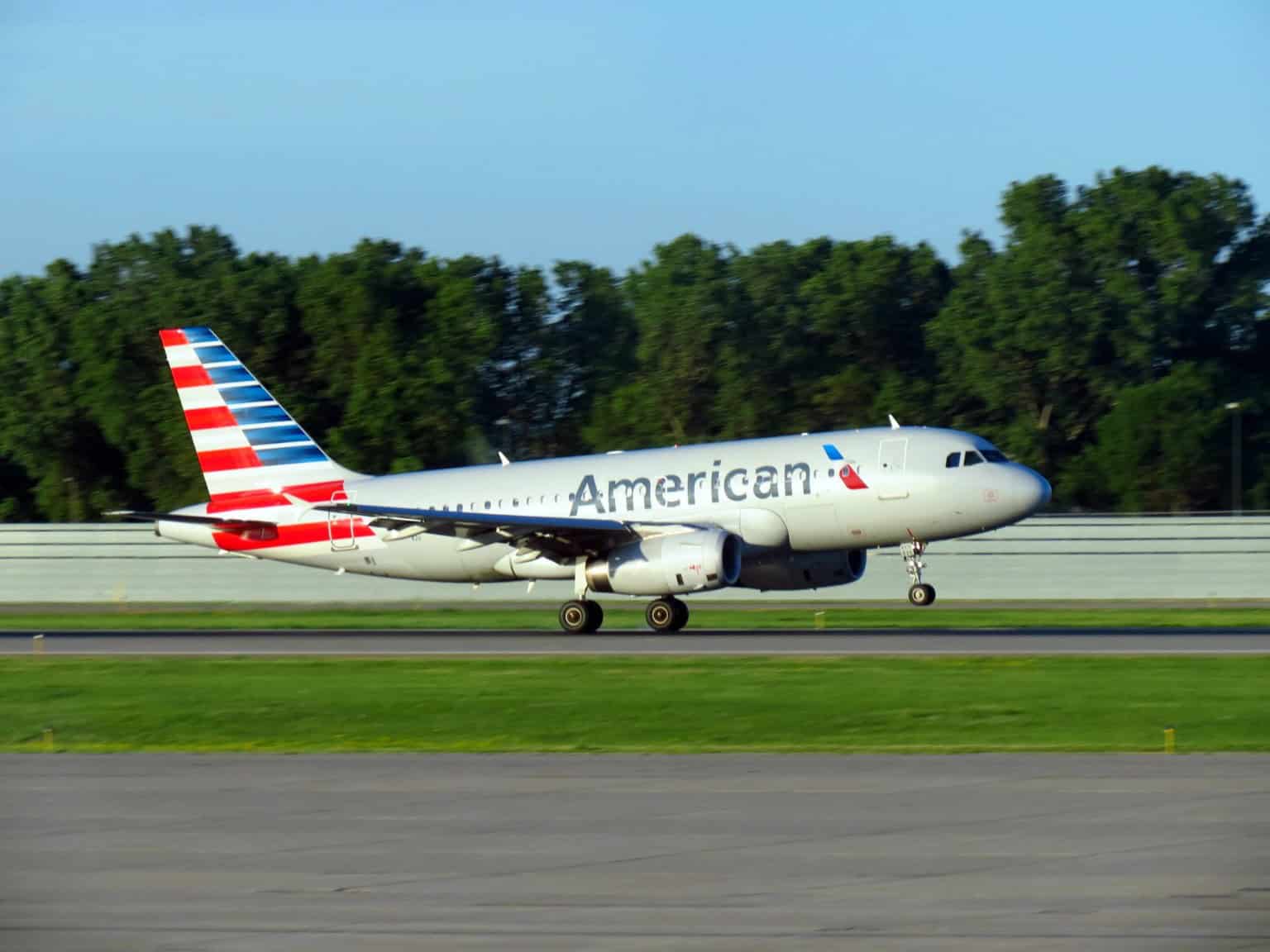
Air traffic control at Atlanta cancelled the takeoff clearance of American Airlines flight 1428 on September 13, 2026, after the captain asked for more time behind a departing Boeing 757. The controller then gave the crew a possible pilot deviation notice and a phone number to call.
The Airbus A319, registered N812AW, was departing runway 27R at Hartsfield-Jackson Atlanta for Philadelphia. The exchange was reported by One Mile at a Time, and no one was hurt. Neither the FAA nor American Airlines has commented publicly.
What was said on the frequency
According to the recording published by View from the Wing, the crew told the tower, “we need a little bit more time for that separation.” The controller cancelled the takeoff clearance and sent the jet off the runway at taxiway Mike 20.
The captain later said the crew does not carry the controller’s separation manuals, and that the A319 had been cleared “behind a 757 with winds calm.” The captain added: “I don’t think that’s a proper separation for wake turbulence.”
The controller replied, “There is no wake turbulence separation, man.” One Mile at a Time reports the jet ahead was a Delta 757, and that the controller said: “Next time you need more than standard separation you need to notify us prior to taking the runway.”
Who was right? On paper, both of them
The controller’s line sounds strange, but it matches the rulebook. The FAA sorts aircraft into nine wake turbulence categories, lettered A to I, and the 757 has one to itself: Category E. The A319 sits in Category F, the upper large jets.
For departures from the same runway, FAA order JO 7110.65 requires a 2-minute gap behind a Category E aircraft only when the follower is Category I, the lightest small aircraft. A Category F jet like the A319 gets no mandatory wake interval behind a 757.
The pilots’ side is written down too. The FAA’s Aeronautical Information Manual says pilots may request additional wake separation, and that “this request should be made as soon as practical on ground control and at least before taxiing onto the runway.”
That is the point the controller was making. The captain’s request came after the takeoff clearance, with the jet already on the runway.
Federal rules also make the pilot in command “the final authority as to the operation of that aircraft,” under 14 CFR 91.3. A captain can decline a takeoff they judge unsafe. The dispute in Atlanta was about when to ask, not whether the crew was allowed to wait.
Why pilots treat the 757 differently
The Boeing 757 is a single-aisle jet, yet pilots know it for an unusually strong wake. On December 15, 1993, an IAI Westwind business jet crashed on a night approach to John Wayne Airport in Santa Ana, California, after meeting the wake of a 757 ahead of it. All five people on board died, according to the NTSB.
AirlineGeeks notes that a 1992 accident near Billings, Montana, had already killed eight people aboard a Cessna Citation trailing a 757, and that the FAA tightened separation behind the type after the Santa Ana crash.
Today’s rules still single it out, but mainly to protect the lightest aircraft. A small plane departing behind a 757 gets a guaranteed 2-minute gap, while an airliner the size of an Airbus A319 does not, which leaves the judgment to the crew.
Calm air is where that judgment matters most. The AIM tells pilots to be “particularly alert in calm wind conditions,” because vortices that sink close to the ground move sideways at only 2 or 3 knots on their own, with no wind to carry them clear of the runway.
A possible deviation is not a finding
JO 7110.65 tells controllers to notify a pilot when it appears a pilot deviation has occurred, workload permitting. Whether the FAA takes any further action against the crew is a separate process, and none has been announced. The recording also does not show exactly how long after the 757’s departure the A319 was cleared.
Sources and references used for research and fact-checking.
- FAA, Order JO 7110.65, Section 3-9: Departure Procedures and Separation (paragraph 3-9-6, same runway separation)
- FAA, Order JO 7110.65, paragraph 2-1-27: Possible Pilot Deviation Notification
- FAA, Order JO 7110.126B, Consolidated Wake Turbulence (CWT)
- FAA, Aeronautical Information Manual, Chapter 7 Section 4: Wake Turbulence
- U.S. Code of Federal Regulations (via Cornell LII), 14 CFR 91.3, Responsibility and authority of the pilot in command
- NTSB, LAX94FA073: IAI 1124A Westwind wake turbulence encounter from B757, John Wayne Airport, December 15, 1993
Get the Newsletter
The latest aviation news and stories sent to your inbox.
About the Author

Tim is the owner and lead editor of AeroCorner since 2019, overseeing aviation content covering aircraft, airlines, airports, and the broader aviation industry. Through years of researching, writing, editing, and publishing aviation-focused content, he has developed extensive practical knowledge of commercial aviation and air travel. Based in Asia and a frequent traveler himself, Tim also brings firsthand passenger experience to AeroCorner’s coverage. Outside of publishing, he has also explored aviation firsthand through hands-on flight training in New Zealand.