


Military aircraft enthusiasts are always eager to debate the merits of one fighter jet over another. In this blog post, we will take a look at two of the most popular aircraft in their class – the F35 vs MiG 25. We will compare their specs and features, and see which comes out on top. Stay tuned!
The F-35 Lightning II
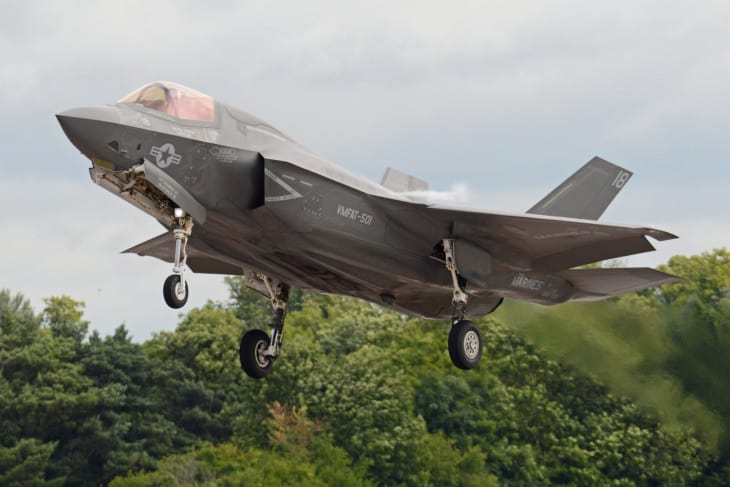
The F-35 is a single-seat, single-engine, all-weather stealth multirole fighter. The F-35 is designed to perform ground attack and air defense missions. It has three main models: the F-35A conventional takeoff and landing (CTOL) variant, the F-35B short take-off and vertical-landing (STOVL) variant, and the F-35C carrier-based Catapult Assisted Take-Off But Arrested Recovery (CV/CATOBAR) variant.
The F-35’s airframe incorporates materials such as titanium, carbon fiber composites, and aluminum alloys. The fighter has an advanced avionics suite that integrates sensor data with computer systems to provide pilot situational awareness. It also has direct voice input (DVI) for entering commands.
Why was the F-35 developed & designed?
The F-35 aircraft was designed to replace the F-16 Fighting Falcon and F/A-18 Hornet aircraft. It is a multi-role fighter that can perform air-to-air combat and air-to-ground attacks. The F-35 has many advanced features that make it a more effective fighting machine than its predecessors. Some of these features include a GPS-guided bomb system, an infrared search and track system, and a helmet-mounted display system.
In addition, the F-35 is equipped with stealth technology that makes it difficult for radar to detect. The F-35 is also faster and more maneuverable than the F-16 and F/A-18. It can reach speeds of over Mach 1.6, and its engines produce 43,000 pounds of thrust.
What is the purpose of the F-35 aircraft?
The F-35 aircraft is a state-of-the-art fighter jet that serves multiple purposes in the military. It is designed to perform air-to-air and air-to-ground combat, as well as intelligence, surveillance, and reconnaissance missions. The F-35 is a versatile and powerful aircraft that can be deployed in a variety of settings, making it an essential part of the military’s arsenal.
The F-35 has numerous advanced features that make it a key asset in the military, such as its stealth technology, which allows it to evade detection; its advanced sensors, which provide unparalleled situational awareness; and its ability to fly at supersonic speeds without using afterburners, making it difficult for enemy forces to track and engage.
The MiG-25 Foxbat
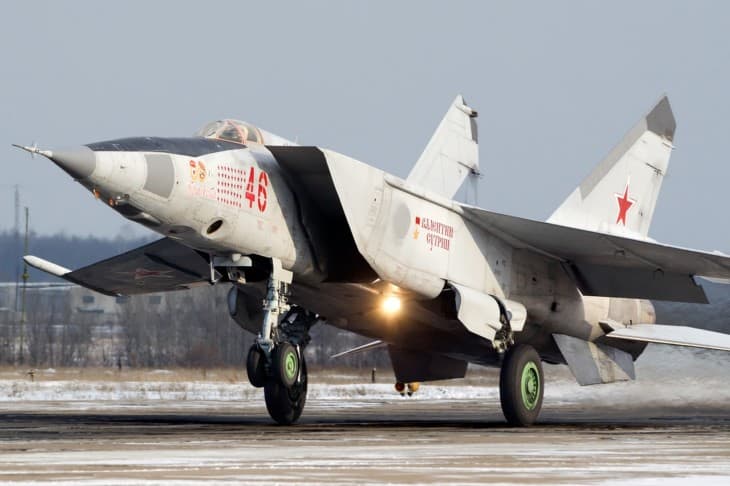

The MiG-25 is a high-speed interceptor jet aircraft designed by the Mikoyan-Gurevich Design Bureau in the Soviet Union. It was MiG’s first foray into Mach 3+ aircraft, and its design was heavily influenced by intelligence gathered about the Lockheed SR-71 Blackbird.
The MiG-25 made its maiden flight in 1969 and quickly entered service with the Soviet Air Forces. It has been in service for over 40 years and is still being operated by several nations, including Russia, India, and Japan. MiG-25 has a maximum speed of Mach 3.2 and can reach altitudes of up to 85,000 feet. It is armed with a twin-barrel 23mm cannon and can carry a variety of air-to-air and air-to-ground missiles.
Why was the MiG-25 developed & designed?
The MiG-25 was developed in response to the perceived threat of high-speed US aircraft such as the Lockheed SR-71 Blackbird. The MiG-25 was designed to be an interceptor aircraft that could reach Mach 3+ speeds and also had a powerful radar system. The MiG-25 first flew in 1964 and entered service with the Soviet Air Force in 1970. The MiG-25 quickly became one of the most feared aircraft in the world due to its speed and firepower.
However, the MiG-25 was also difficult to fly and maintain, which limited its operational use. In recent years, the MiG-25 has been replaced by newer aircraft such as the MiG-31 in Russian service.
What is the purpose of the MiG-25 aircraft?
The MiG-25 is a Soviet interceptor and reconnaissance aircraft that was among the fastest military aircraft to enter service. It was designed as a response to the American Lockheed SR-71 Blackbird, and its first flight was in 1964. The MiG-25 quickly became one of the most iconic Soviet aircraft, with its sleek design and powerful engines.
In addition to its roles in interception and reconnaissance, the MiG-25 was also used as a test platform for the MiG-31 interceptor, which is still in service today. While the MiG-25 is no longer in active service, it remains an important part of Soviet military history.
Differences between the F-35 & MiG-25
For starters, the F-35 is a 5th-generation jet while the MiG-25 is a 4th-generation jet. This means that the F-35 is more advanced than the MiG-25 in terms of technology and capabilities. The F-35 is also stealthier than the MiG-25, making it more difficult to detect on radar. Additionally, the F-35 has better sensors and avionics than the MiG-25.
The F-35 can carry more weapons than the MiG-25. The F-35 can carry up to 8,000 pounds of weapons while the MiG-25 can only carry 6,000 pounds of weapons. Additionally, the F-35 has a better range than the MiG-25. The F-35 has a range of 1,200 nautical miles while the MiG-25 has a range of 800 nautical miles.
The F-35 is more expensive than the MiG-25. The F-35 costs approximately $98 million per jet while the MiG-25 costs approximately $15 million per jet.
Similarities between the F-35 & MiG-25
For starters, both the F-35 and MiG-25 are designed for air-to-air combat. This means that they are both equipped with powerful radar systems that allow them to track and target enemy aircraft. Additionally, both jets are equipped with advanced missiles that are designed to take down enemy aircraft. Furthermore, both the F-35 and MiG-25 have been designed to avoid detection by enemy radar systems. This allows them to get close to their targets without being detected, giving them a significant advantage in battle.
F-35: What’s Better
The F-35 has much more advanced avionics and sensors, including a powerful AESA radar. This allows the F-35 to detect and engage targets at long range, even in bad weather or electronic warfare conditions.
The F-35’s stealth technology makes it much harder to detect and track than the MiG-25. This gives the F-35 a significant advantage in combat situations.
The F-35 has more powerful engines than the MiG-25, giving it better performance in both horizontal and vertical flights. This makes the F-35 much more maneuverable than the MiG-25.
The F-35 is armed with more sophisticated weapons than the MiG-25, including precision-guided munitions. This means that the F-35 can engage targets with greater accuracy and effectiveness, even in defended areas.
MiG 25: What’s Better
MiG-25 has set and held several world records for both altitude and airspeed including the absolute altitude record of 37,650 meters (123,520 ft) erected in 1977 by Lt. Viktor Belenko as well as multiple Mach 2.83+ speed records.
The MiG-25 was designed as a response to the American Lockheed SR-71 Blackbird reconnaissance aircraft. The MiG-25’s massive size and weight placed it among the largest and heaviest fighter aircraft ever built.
The MiG-25 is one of the few aircraft to utilize environmentally controlled cockpit pressurization which keeps the pilot comfortable at high altitudes. Another MiG-25 strength is its large internal fuel capacity which gives MiG-25 a greater range than most other fighter jets in its class. MiG-25’s avionics suite includes a built-in radar warning receiver that alerts pilots to incoming enemy missile launches as well as an onboard jammer to help MiG-25 evade enemy radar-controlled air defenses.
MiG-25’s armament includes four R60 air-to-air missiles carried on board MiG-25’s underwing pylons.
Conclusion: F35 vs MiG 25
The F-35 is a more advanced and expensive jet than the MiG-25. The F-35 is stealthier and can carry more weapons than the MiG-25. Additionally, the F-35 has better sensors and avionics than the MiG-25. However, the MiG-25 is faster and has a greater range than the F-35. Ultimately, the F-35 is the better jet for air-to-air combat.