



Table of Contents
| Measure | Airbus A350-900 | Airbus A330-300 |
|---|---|---|
| Role | Long-haul twin-aisle airliner | Medium- to long-haul twin-aisle airliner |
| First flight | June 14, 2013 | November 2, 1992 |
| Service entry | January 15, 2015, Qatar Airways | January 1994, Air Inter |
| Typical economy layout | Nine across, 3-3-3 | Eight across, 2-4-2 |
| Engine choice | One: Rolls-Royce Trent XWB | Three: GE CF6-80E, Pratt & Whitney PW4000 or Rolls-Royce Trent 700 |
| Structure | About 53% composites, with a carbon-fiber wing and fuselage | Aluminum fuselage, with a composite tail and control surfaces |
| Newer re-engined version | None yet | A330neo, in service since December 2018 |
How we compare the A350-900 and the A330-300
Each type is a family. We compare the A350-900 with the A330-300, the most common version of each.
The spec widget above sets out the dimensions, weights, range and speeds. This page covers what it cannot: how the two are built, how the cabins differ, which one is still in production and who flies them.
Full specifications for the Airbus A350-900 and the Airbus A330-300 sit in our aircraft database.
A generation apart
The A330-300 first flew on November 2, 1992 and entered service in January 1994. The A350-900 first flew on June 14, 2013 and entered service on January 15, 2015. That is more than two decades between first flights.
Which is bigger, the A350 or the A330?
The A350-900. It is the longer aircraft, with the wider fuselage and the wider wing, and it is built for longer routes. The widget shows every figure.
The A330-300 is the smaller twin. Airbus later added a lower-weight A330 Regional version for busy domestic routes in high-growth markets.
The pairing is not perfectly even. The A350-900 is a size up, so airlines often weigh it against the A330neo instead.
Where the A350-900 wins
A wider cabin
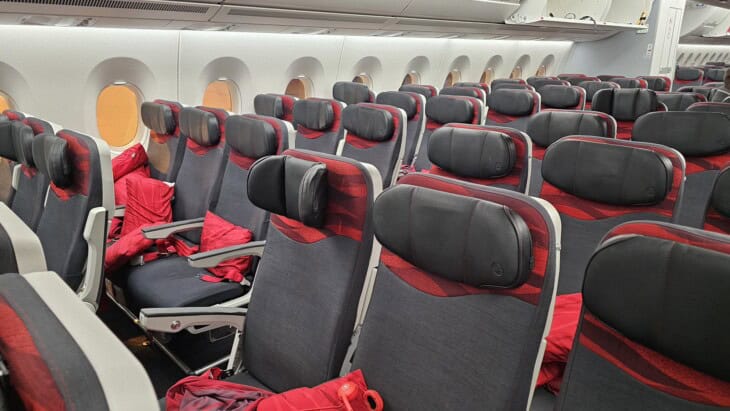
The A350 has a double-lobe fuselage with a wider cross-section than the A330. That lets airlines fit a standard 3-3-3 nine-across economy layout.
The A330 fuselage is based on the A300-600. Its usual economy layout is eight across, 2-4-2.
Wikipedia, citing Airbus, puts the A350 seat in the nine-across layout at 18 inches (45 cm), about 1.5 inches (3.9 cm) wider than a seat in the equivalent A330 layout.

Newer materials and a longer reach
The A350 is the first Airbus aircraft largely made of carbon-fiber-reinforced polymers. Its airframe is about 53% composites, including the wing, tail and fuselage skin.
The A330 uses composites for the fin, rudder, elevators and other surfaces, about 10% of its structure weight. The fuselage is metal.
The A350 also reached its type certificate with 370-minute ETOPS approval, which lets a twin fly more than six hours on one engine.
Where the A330-300 wins
Engine choice
Airlines can order the A330-300 with General Electric CF6-80E, Pratt & Whitney PW4000 or Rolls-Royce Trent 700 engines. That lets a fleet match the engines it already maintains.
The A350-900 has one engine family, the Rolls-Royce Trent XWB.
A proven, smaller workhorse
The A330 has been flying since 1994. Airbus says the global A330 fleet has passed 74 million flight hours.
Its smaller size suits routes where an A350 would have more seats than the route needs. Airbus also sells an A330 Regional version with seating for up to around 400 passengers, built for busy domestic routes.

The A330neo changes the comparison
The A330-300 is no longer built. The last one went to Aer Lingus on March 4, 2020. Airbus now sells the A330neo, which comes as the -800 and the -900.
The A330-900 keeps the A330-300 fuselage dimensions and adds Rolls-Royce Trent 7000 engines and new winglets. Airbus says it burns up to 14% less fuel per seat. It entered service with TAP Air Portugal on December 15, 2018.
On Wikipedia’s figures the A330-900 flies 7,350 nautical miles (8,460 mi, 13,610 km) with 287 passengers. See the Airbus A330-900neo page for its own specifications.
Myth check: the A350 replaced the A330
It did not. The A350 succeeded the four-engine A340. Airbus kept building the A330 and re-engined it as the A330neo, so both are on sale today.
Who flies them
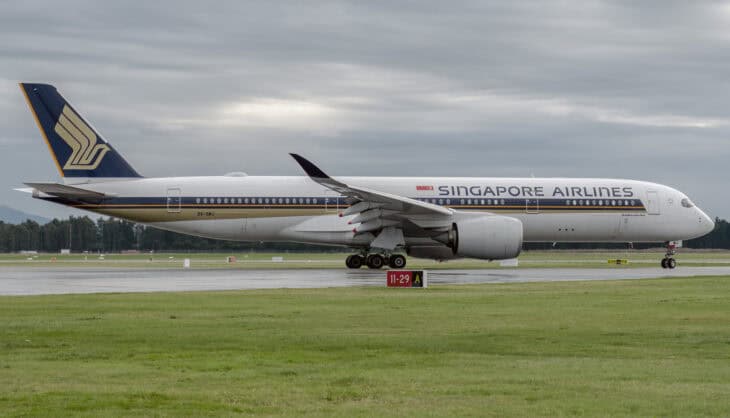
The A350-900 entered service with Qatar Airways. Airlines in our photo database that fly it include Singapore Airlines, Turkish Airlines, Cathay Pacific, Finnair and Lufthansa.
The A330-300 started with Air Inter. Operators in the database include Lufthansa, Turkish Airlines, EVA Air and Garuda Indonesia.
Delta Air Lines is the largest A330 family operator, with 81 aircraft as of September 2026. The lists are not complete. They only show which airlines appear in our photo galleries.
Orders and fleet
Airbus has taken 2,005 orders for the A330 family, and 1,674 have been delivered. The A350 family has 1,624 orders and 737 deliveries.
So the A330 is far more common today. The A350 is the faster-growing fleet.
Safety record
The A350 has had no passenger or crew deaths. Its one hull loss was the January 2, 2024 runway collision at Tokyo Haneda, in which a Japan Airlines A350-900 hit a Japan Coast Guard Dash 8. All 367 passengers and 12 crew survived, and five people on the Coast Guard aircraft died.
The A330 family has a longer record. As of June 2024 Wikipedia counts 14 hull losses, 10 from flight accidents and 4 from armed-conflict strikes, with 339 deaths in all. It has flown far more hours.
The two records are not comparable on counts alone. The A330 has had three decades of service, and the A350 a decade.
How to tell them apart from the outside
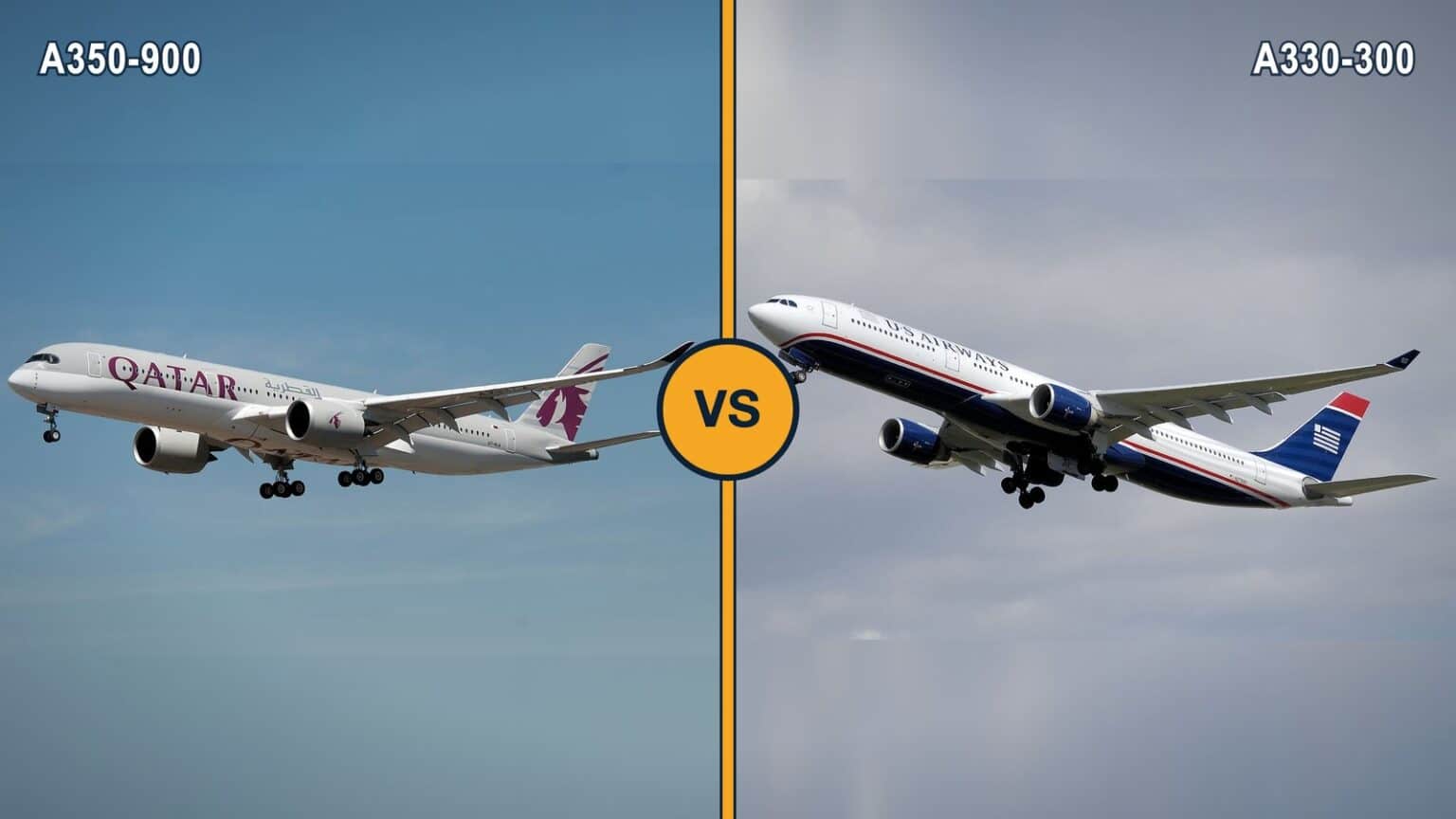
Start with the wing tips. The A350 has blended, curved wing tips, and the A330-300 has no winglets, the plain tip shown in the spec panel. The A330neo adds sharklets.
Next look at the nose. The A350 flight deck has a six-panel windscreen, and its nose is derived from the A380.
Finally look at the engines. A Trent XWB on an Airbus widebody means an A350.
A350 vs A330: the verdict
Pick the A350-900 for the wider cabin, the newer materials and the longer routes. Pick the A330 for the smaller size and the engine choice.
If you are choosing a seat, the A350 is the more comfortable cabin by a small margin. To see who flies the wider seats, see our ranking of the best economy class airlines.
FAQ
Sources and references used for research and fact-checking.
About the Author

Tim is the owner and lead editor of AeroCorner since 2019, overseeing aviation content covering aircraft, airlines, airports, and the broader aviation industry. Through years of researching, writing, editing, and publishing aviation-focused content, he has developed extensive practical knowledge of commercial aviation and air travel. Based in Asia and a frequent traveler himself, Tim also brings firsthand passenger experience to AeroCorner’s coverage. Outside of publishing, he has also explored aviation firsthand through hands-on flight training in New Zealand.