


Table of Contents
Airbus is winning, and it is not close on the measure that decides the airliner business: aircraft actually handed to airlines. Airbus has outdelivered Boeing every year since 2019, and through the first eight months of 2026 it was ahead again, 475 jets to 418.
The order book is more lopsided still. Airbus logged 1,157 gross orders to the end of August 2026 against Boeing’s 498, and carries a backlog of 9,362 aircraft to Boeing’s 6,748.
Boeing has one answer, and it is a real one: it is the larger company by revenue, because it also builds fighters, satellites and tankers. But in commercial aviation alone, the lead Boeing held for fifty years is gone, and in October 2025 the A320 family passed the 737 as the most-delivered jetliner in history.
| Measure | Airbus | Boeing | Leader |
|---|---|---|---|
| Deliveries, Jan to Aug 2026 | 475 | 418 | Airbus |
| Gross orders, Jan to Aug 2026 | 1,157 | 498 | Airbus |
| Backlog, end of August 2026 | 9,362 aircraft | 6,748 aircraft | Airbus |
| Deliveries, full-year 2025 | 793 | 600 | Airbus |
| Revenue, full-year 2025 | €73.4 billion | $89.5 billion | Boeing |
| Market value, September 2026 | about $176 billion | about $157 billion | Airbus |
| Best-selling family | A320 family | 737 family | Airbus since Oct 2025 |
What “winning” actually means here
Most arguments about Boeing and Airbus go nowhere because the two sides are measuring different things. There are four honest scoreboards, and they do not all point the same way.
Deliveries are the one that matters most. A jet is not fully paid for until it is handed over, so deliveries are revenue, and they measure whether a company can actually build what it sold.
Orders measure demand, but they are the softest number. A headline order can be cancelled or converted later, which is why gross orders and net orders differ.
Backlog measures how many years of work is already banked. Revenue and market value measure the whole company, including defense work that has nothing to do with airliners.
How we are ranking them
This article ranks primarily by commercial aircraft deliveries, because that is the number both companies are judged on by their own customers and investors, and it cannot be inflated by an announcement. Where a different measure gives a different winner, we say so rather than picking the one that suits the verdict.
Boeing vs Airbus: who is winning in 2026
Airbus delivered 793 commercial aircraft in 2025, made up of 607 A320-family jets, 93 A220s, 57 A350s and 36 A330s. Boeing delivered 600, its highest annual total since 2018.
That 193-aircraft gap is the story of the whole rivalry in one line. Boeing is recovering, genuinely and measurably, and is still losing.
2026 has followed the same shape. Airbus reached 475 deliveries by the end of August against a full-year target of roughly 870, a target it is now unlikely to hit without an extraordinary final quarter. Boeing reached 418, its best eight-month run since 2018.
On orders the gap is far wider than on deliveries, and that is the number that should worry Boeing most. It describes the next decade, not this one. We track the running totals in our coverage of the 2026 order and delivery race.
The record that finally fell in October 2025
On October 7, 2025, an A320neo handed over to Saudi carrier flynas took the A320 family to 12,260 deliveries and past the Boeing 737, making it the most-delivered jetliner in history. The 737 had held that record since it entered service with Lufthansa in 1967, and it took Airbus 37 years to catch it.
Why Airbus pulled ahead
Airbus did not win by out-engineering Boeing across the board. It won by making one decision earlier.
In 2010 Airbus committed to re-engining the A320 rather than designing a clean-sheet replacement. The A320neo gave airlines a large fuel saving with no new pilot type rating, and it sold immediately.
Boeing had intended to build an all-new narrowbody and was forced to match the neo instead, quickly, with the 737 MAX. The MAX kept a fuselage design whose landing gear was sized in the 1960s, which is why its engines sit so far forward on the wing.
That engine position changed the aircraft’s pitch behavior, which is what the MCAS software was added to mask. Two crashes followed, Lion Air 610 in October 2018 and Ethiopian 302 in March 2019, killing 346 people between them and grounding the worldwide fleet for 20 months.
Then, on January 5, 2024, a door plug blew out of an Alaska Airlines 737 MAX 9 in flight. Nobody died, but the FAA capped Boeing’s 737 production rate, and a capped production rate is a capped delivery count.
Airbus spent those six years building. That is the entire mechanism behind the numbers at the top of this page.
Where Boeing is still ahead
Boeing reported $89.5 billion of revenue for 2025 against Airbus’s €73.4 billion, and it is genuinely the bigger business. The reason is that Boeing’s total includes Defense, Space and Security, a division with no Airbus equivalent at that scale.
Boeing also returned to profit in 2025, reporting net earnings of $2.238 billion. That figure deserves an asterisk: it was helped by a $9.6 billion gain on the sale of its Digital Aviation Solutions business, not by selling more aircraft.
The stronger Boeing argument is the 787. The Dreamliner owns the mid-size widebody market it invented, and Boeing’s commercial backlog is worth $567.3 billion across more than 6,100 aircraft.
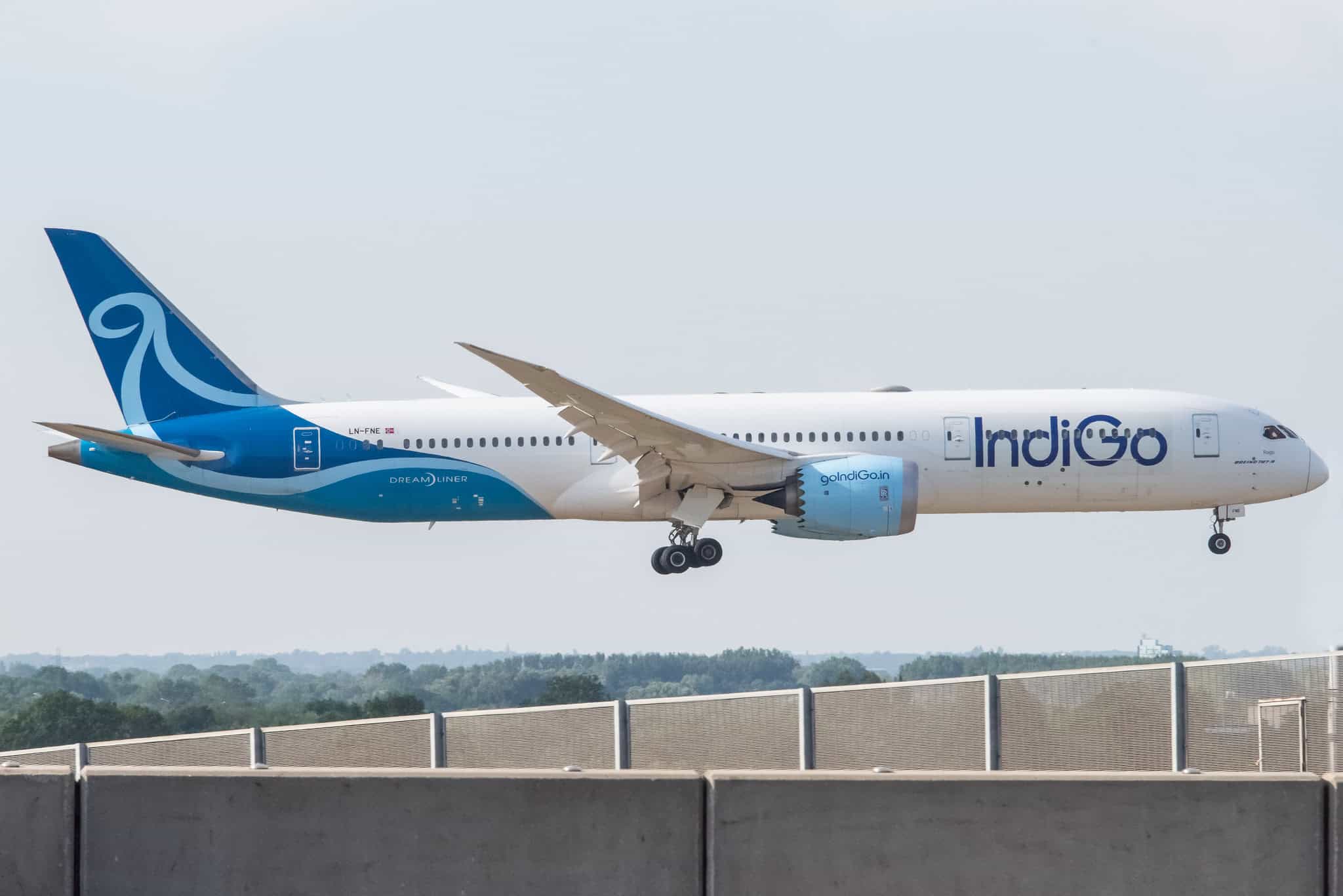
Boeing is not a company in decline. It is a company that lost six years and is now trying to build its way back with an order book that is still one of the largest in manufacturing.
"Buy American" does not mean buy Boeing
Airbus has built A320-family jets in Mobile, Alabama since 2015 and opened a second final assembly line there in October 2025, doubling its US capacity. The site also assembles the A220. A US airline buying an Airbus narrowbody may well be buying an aircraft finished in Alabama by American workers.
How to tell a Boeing from an Airbus
From a terminal window, four details will name almost any airliner you see. None of them requires reading the tail.
The nose
Boeing noses are pointed, with a defined break where the nose meets the fuselage. Airbus noses are rounder and more bulbous, curving smoothly back into the body.
The cockpit windows
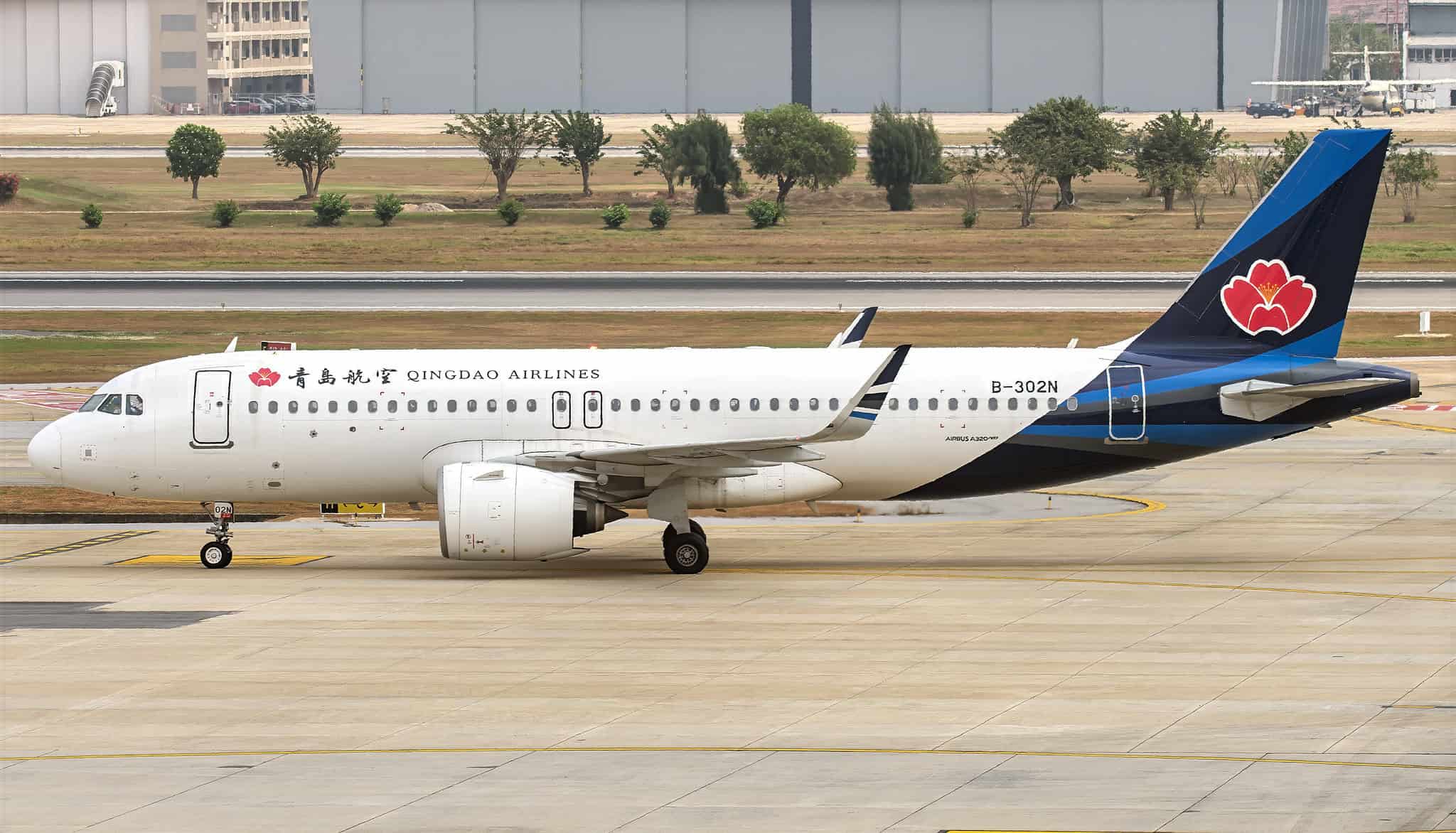
This is the most reliable tell. Boeing’s side cockpit windows come to a pronounced V at the bottom, a shape carried down from the 707.
Airbus windows have a flat lower edge with a notch cut from the top corner. On the A350 the whole window group sits inside a painted black mask, which is unmistakable at any distance.

The wingtips
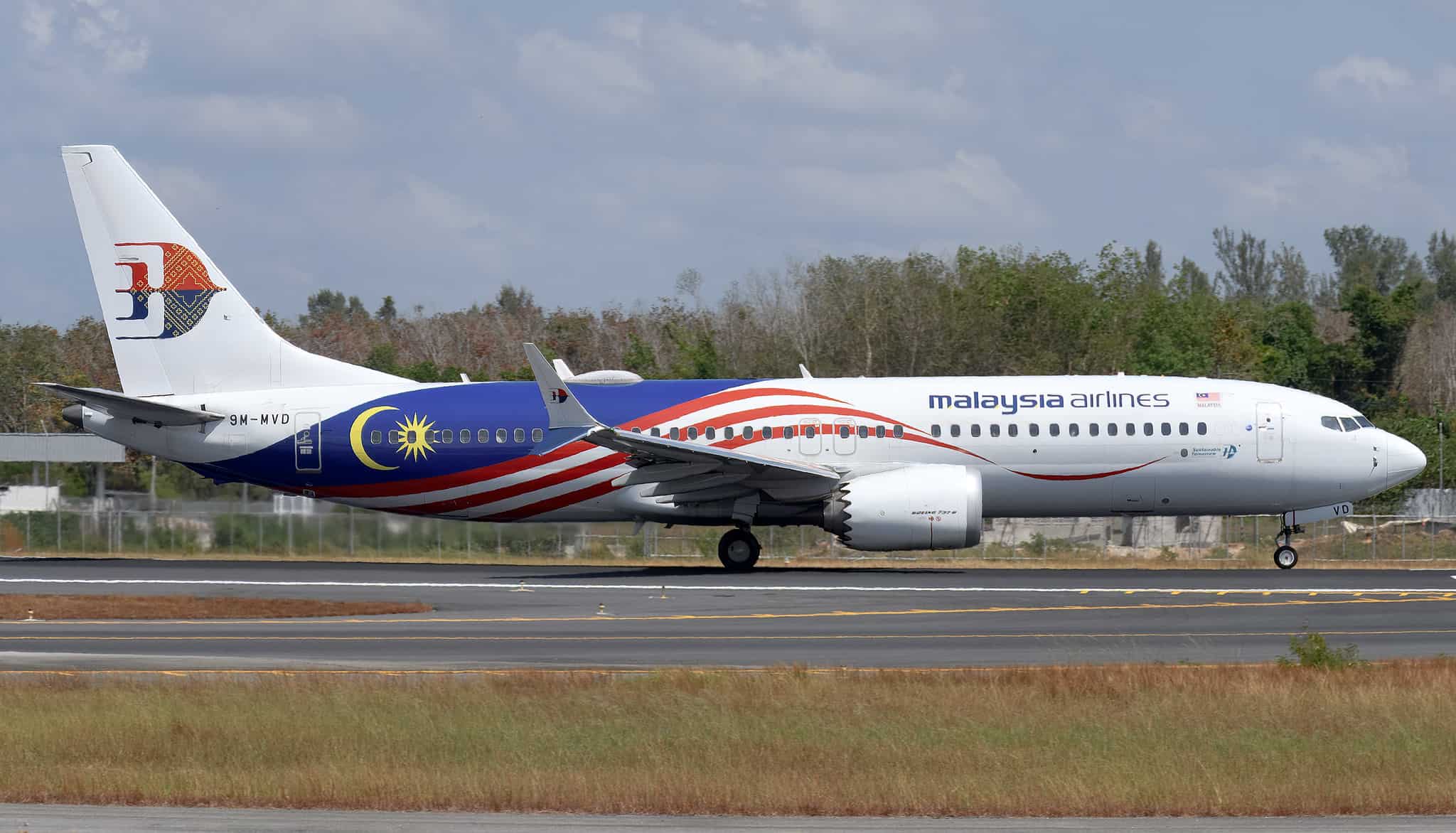
Airbus calls its wingtip devices sharklets, and they sweep up in one continuous curve. Boeing’s 737 MAX uses a split-tip winglet that points up and down at the same time, which nothing in the Airbus range does.
The 787 and 777 use no winglet at all. Their wingtips simply rake back to a point.
The engines and the tail
The 737 sits low to the ground, so its engine nacelles are visibly flattened at the bottom. The A320 sits higher and keeps round nacelles.
At the back, the A320 family has a long tapering tail cone. Older 737s end in a short stub. If the numbering itself confuses you, we explain why every Airbus model starts with a 3.
The real difference is in the cockpit
The deepest split between the two companies is not visible from outside. It is a disagreement about who gets the final say, the pilot or the computer.
Airbus flight decks use a sidestick beside each pilot and what engineers call hard envelope protection. Pull the sidestick fully back in a normal flight control law and the aircraft will not stall, no matter how hard you pull.
Boeing keeps a conventional control column and uses soft limits. As the aircraft approaches its structural or aerodynamic edge the controls push back, and the crew feels resistance, but a pilot who keeps pulling can go past it.
Neither philosophy has been shown to be safer than the other in service. They are two defensible answers to the same question, and pilots argue about them with real feeling.
One practical consequence: the Airbus sidesticks are not mechanically linked, so one pilot cannot feel what the other is doing with the controls. A Boeing yoke moves in both pilots’ hands at once.
Which is safer, Boeing or Airbus?
Neither, in any way a passenger would ever notice. Both companies’ current aircraft families sit in the safest tier of machines ever built.
The comparison usually goes wrong because people count crashes. Raw crash totals are meaningless without exposure: an aircraft that has flown for 50 years will out-crash one that launched in 2016 even if it is safer per flight.
Boeing’s own annual Statistical Summary of Commercial Jet Airplane Accidents, now in its 57th edition and covering 1959 to 2025, measures accident rates per million departures for exactly this reason. Departures correlate with accidents better than flight hours or any other exposure measure.
On that basis, the honest answer is that current-generation Boeings and Airbuses are separated by numbers too small and too noisy to rank. A single accident moves a modern type’s rate more than a decade of safe flying does.
What is fair to say is that the 737 MAX is the only current-generation airliner family to have suffered fatal crashes, and that both happened before 2020. It has flown since late 2020 without a fatal accident.
If you want the type-level detail, we rank the safest commercial aircraft flying today.
Which is more comfortable to fly in?
On single-aisle flights, Airbus, and the reason is fixed in metal rather than decided by the airline.
The A320 cabin is about 12 feet 2 inches (3.70 m) across. The 737 cabin is about 11 feet 7 inches (3.54 m). Both fit six seats per row, so the A320’s extra 7 inches goes into the seats and the aisle.
In practice that means roughly 17.5 to 18.5 inches of seat width on an A320 against about 17 to 17.5 inches on a 737, depending on the airline. It is a small number that you feel for five hours.
Legroom is not part of this. Seat pitch is chosen by the airline, not the manufacturer, and a budget carrier will squeeze either aircraft equally.
On widebodies the advantage flips to Boeing in one specific way: the 787 holds a lower cabin altitude and higher humidity than older metal jets, which is the thing people describe as arriving less tired. The A350 does the same, so on the newest widebodies it is close to a draw.
Model against model
The rivalry is really five separate contests, and Boeing is only clearly winning one of them.
| Segment | Airbus | Boeing | Who leads |
|---|---|---|---|
| Small narrowbody | A220 | 737-7 | Airbus, clearly |
| Core narrowbody | A320neo | 737 MAX 8 | Airbus on orders |
| Large narrowbody | A321neo and A321XLR | 737 MAX 10 | Airbus, decisively |
| Mid-size widebody | A330neo | 787 | Boeing |
| Large widebody | A350 | 777X | Airbus while the 777X waits |
The large-narrowbody row is where the rivalry was decided. The A321neo and the longer-range A321XLR opened a market for thin long-haul routes flown by a single-aisle jet, and Boeing has nothing in production that matches them.
Boeing’s answer, the 737 MAX 10, is still not certified. The MAX 7 finally received its FAA type certificate on August 3, 2026, after a campaign that began in 2018. For the head-to-head on the core matchup, see our full A320neo vs 737 MAX 8 comparison.
At the top of the range, both companies have already retired their giants. Airbus handed Emirates the final A380, the airline’s 123rd, in December 2021, and Boeing delivered the last 747 to Atlas Air on January 31, 2023, ending a 1,574-aircraft production run. Neither will be replaced, as we explain in our look at the largest commercial airplanes ever built.
What decides the next round
Both companies now sell more aircraft than they can build. Airbus ended August 2026 with 9,362 jets on order and Boeing with 6,748, which is roughly a decade of production each at current rates.
That means the contest has stopped being about winning orders and become a contest about factory output and suppliers. Airbus is targeting 75 A320-family aircraft a month in 2027, which would be the highest airliner production rate in history.
Boeing’s recovery depends on lifting its own 737 rate under FAA oversight, certifying the MAX 10, and finally delivering the 777-9. Boeing now targets first 777-9 delivery in 2027, roughly seven years behind the original plan.
So the verdict, as of September 2026: Airbus is winning the airliner business and has been for seven years. Boeing is the bigger company, is building again at a rate it has not managed since 2018, and holds a backlog deep enough that it cannot be counted out.
What has genuinely changed since the last time anyone argued about this is that Boeing is no longer the default. It is the challenger.
FAQ
Sources and references used for research and fact-checking.
- Forecast International, Airbus and Boeing Report August 2026 Commercial Aircraft Orders and Deliveries
- Airbus, Airbus reports Full-Year (FY) 2025 results
- Boeing, Boeing Reports Fourth Quarter Results
- Boeing, Statistical Summary of Commercial Jet Airplane Accidents, Worldwide Operations 1959-2025
- The Globe and Mail, Airbus A320 overtakes Boeing 737 for most deliveries in history
- Airbus, Ramping up A320 Family production
- Wikipedia, Competition between Airbus and Boeing
- Boeing, Boeing, Atlas Air Celebrate Delivery of Final 747
- AeroTime, Emirates receives final A380 manufactured by Airbus
- Boeing, U.S. FAA certifies new Boeing 737-7 airplane
- Airways Magazine, Seven years on: Boeing 777X Certification Delay Pushes Toward 2027
- Simple Flying, Here's How Much Wider The Airbus A320neo's Cabin Is Compared To The Boeing 737 MAX
- Simple Flying, Why Do Airbus And Boeing Jets Have Completely Different Cockpit Philosophies?
Get the Newsletter
The latest aviation news and stories sent to your inbox.
About the Author

Tim is the owner and lead editor of AeroCorner since 2019, overseeing aviation content covering aircraft, airlines, airports, and the broader aviation industry. Through years of researching, writing, editing, and publishing aviation-focused content, he has developed extensive practical knowledge of commercial aviation and air travel. Based in Asia and a frequent traveler himself, Tim also brings firsthand passenger experience to AeroCorner’s coverage. Outside of publishing, he has also explored aviation firsthand through hands-on flight training in New Zealand.