

Table of Contents
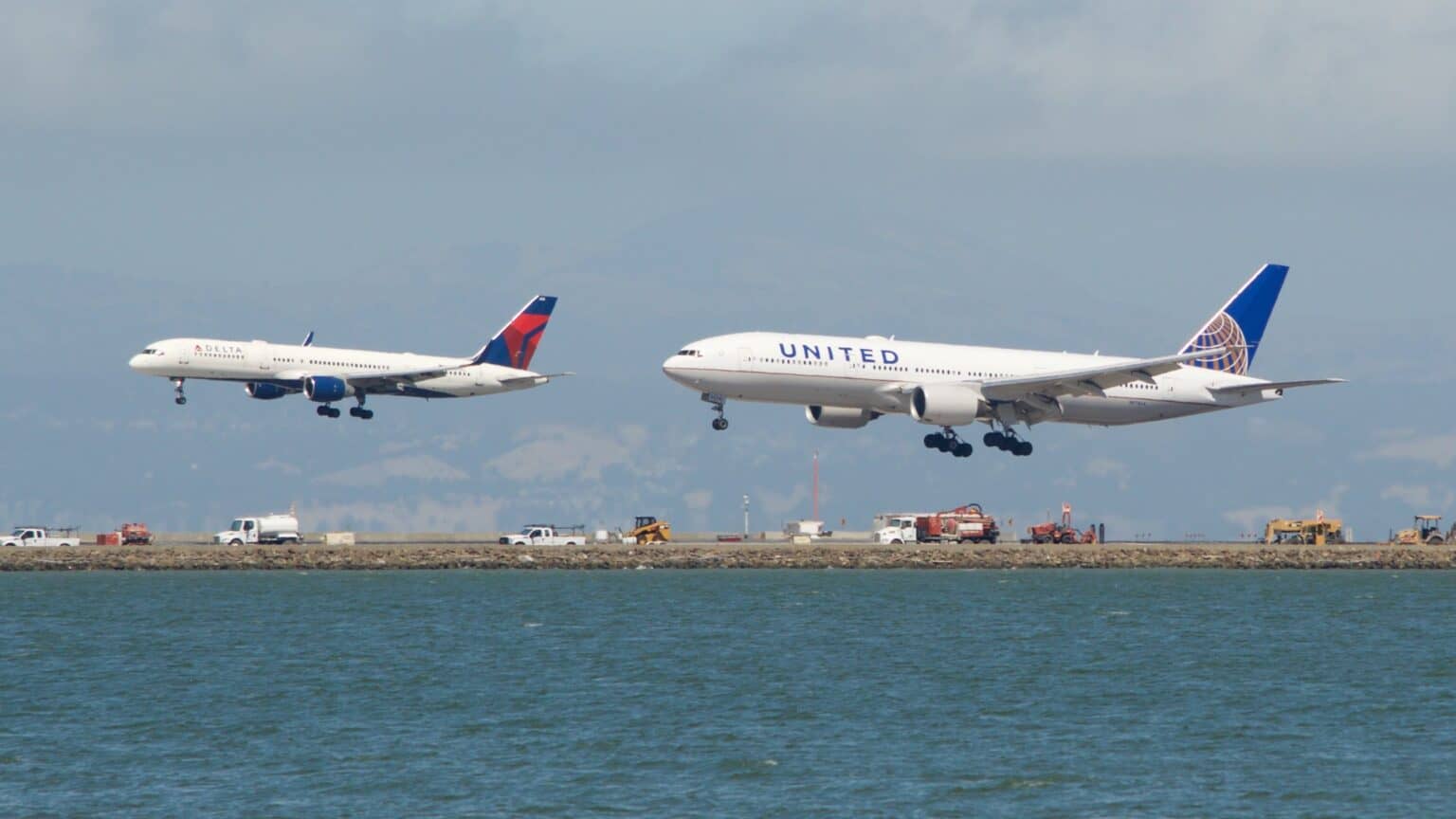
United Airlines sold more than Delta Air Lines this summer. Delta kept more of what it sold, and the gap comes down to what each airline earns per seat and what it pays for fuel.
On Oct. 20, United Airlines reported third-quarter 2026 revenue of $17.9 billion, up 17.4% and an all-time quarterly record. Its adjusted pre-tax profit was $1.109 billion.
Delta Air Lines reported its September quarter on Oct. 9: $17.6 billion of airline revenue and $1.497 billion of adjusted pre-tax profit. That is about $290 million less revenue and 35% more profit on the adjusted pre-tax measure both airlines report.
The 35% figure was first worked out by View from the Wing. We recomputed it from both companies’ SEC filings, and it holds on an adjusted basis. On reported GAAP numbers, the story flips, which we get to below.
Why Delta earns more from a smaller airline
United is the bigger flying operation. It flew 88.5 billion available seat miles in the quarter, against Delta’s 79.3 billion, so it offered about 12% more seat capacity for under 2% more revenue.
That means Delta squeezes more money out of every seat it flies. Its adjusted total revenue per available seat mile was 22.18 cents. United’s was 20.19 cents, about 9% lower.
Delta also filled its planes fuller. Its load factor was 86%, against 83.9% at United, on capacity that Delta held flat while United grew 1.3%.
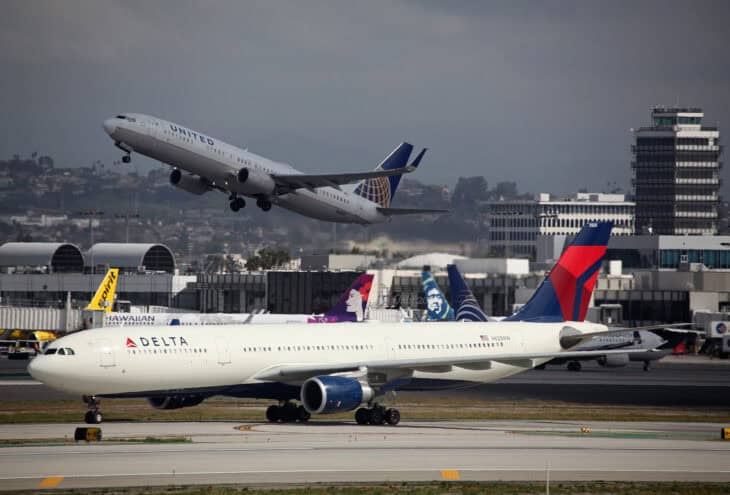
Much of Delta’s edge sits outside the main cabin. Premium tickets brought in $6.8 billion, up 18%, and Delta says premium products and its other diverse revenue streams made up 61% of the quarter’s revenue.
Then there is the credit card. Delta’s payments from American Express grew 15% in the quarter, and the airline expects them to pass $9 billion for 2026. Loyalty revenue overall rose 18%.
United is growing the same streams at almost the same pace. Its premium revenue rose 17%, loyalty revenue 17% and contracted business revenue 26%. The difference is the base Delta grows from, not the speed.
The fuel bill that decided the quarter
Jet fuel did most of the damage at both airlines. United’s fuel expense rose 62% to $4.84 billion, an increase of $1.85 billion from the third quarter of 2025.
United paid an average of $3.90 a gallon across 1.24 billion gallons. Delta reported $3.80 a gallon on 1.15 billion gallons, or $3.61 after it strips out $208 million of hedge losses at its refinery subsidiary.
Delta owns a refinery. Monroe Energy, a wholly owned subsidiary, runs the Trainer refinery, and Delta credits it with a 13-cent-per-gallon benefit in the quarter.
Our arithmetic: a 29-cent gap on United’s 1.24 billion gallons is about $360 million. Delta’s lead in adjusted pre-tax profit was $388 million. Most of the gap traces to the fuel line.
Non-fuel costs were not the difference. United’s cost per seat mile excluding fuel and special items rose 7.8%, and Delta’s rose 7.3%, so both airlines absorbed similar cost inflation outside the fuel tank.
The year-over-year direction tells the same story. Delta’s adjusted pre-tax profit edged up from $1.477 billion to $1.497 billion. United’s fell 8.7%, from $1.215 billion, even as its revenue grew $2.65 billion.
Read the GAAP lines and United wins
The 35% uses each airline’s adjusted figures, which strip out items the companies treat as outside normal flying, and both adjustments move the result. On the reported GAAP figures the SEC requires, United earned $1.311 billion before tax and Delta earned $1.074 billion.
The 35% depends on which profit you read
Adjusted pre-tax profit: Delta $1.497 billion, United $1.109 billion. Reported GAAP pre-tax profit: United $1.311 billion, Delta $1.074 billion. Same quarter, opposite winner.
Delta’s GAAP profit carries $218 million of mark-to-market losses on its investments and $208 million of hedge losses. It excludes both from the adjusted figure, which is how $1.074 billion becomes $1.497 billion.
United goes the other way. Its GAAP profit includes $215 million of net special credits, mostly $294 million of gains from selling aircraft and leasing them back. Stripping those out, and adding back a $13 million investment loss, takes it to $1.109 billion.
Revenue has the same wrinkle. Delta’s GAAP revenue was $20.2 billion, bigger than United’s, because it includes $2.6 billion of refinery sales to third parties. The $17.6 billion figure is the airline alone.
The adjusted view is the fairer test of which airline makes more from flying people, since investment swings and one-off aircraft sales say little about the operation. It is still an adjustment, and each company draws its own line.
Cash is less ambiguous. Delta generated $463 million of free cash flow in the quarter. United’s free cash flow was negative $1.84 billion, as capital spending outran the $465 million its operations brought in.
What United is buying with the spending
United’s answer is that the investment wins customers who stay. Its fleet grew 6% to 1,575 aircraft, and in September it put the Airbus A321XLR into domestic service under the name “Born to Explore.”
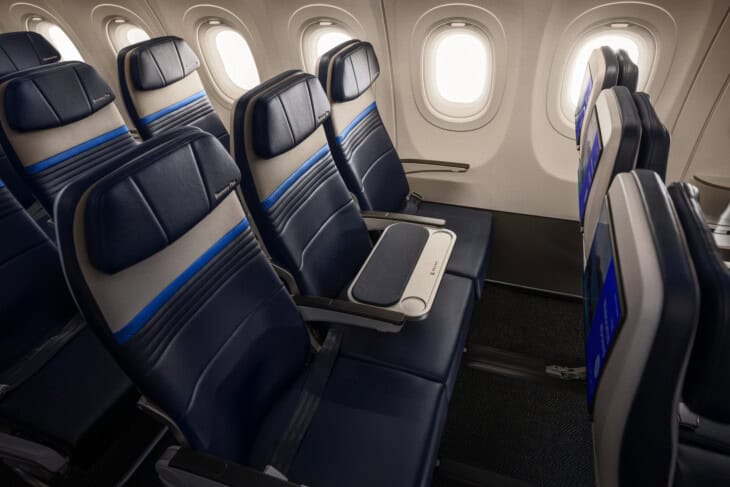
Starlink Wi-Fi is the other pillar. It is now on more than 640 United aircraft, about half of all United flights, with the whole fleet targeted by the end of 2027. Delta passed on Starlink and is betting on a different system.
Delta is spending too, on a slower curve. It took 13 aircraft in the quarter, including the Airbus A350-900, while paying down debt.
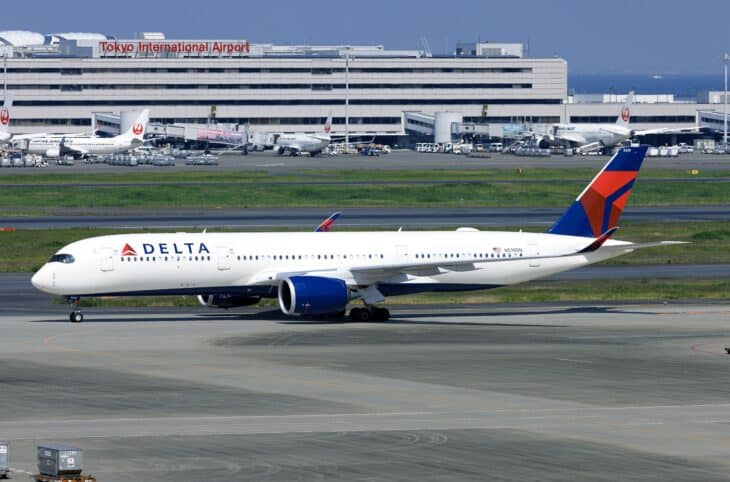
Our Delta vs United vs American comparison covers how the three networks and cabins stack up for passengers. This quarter is the money side of that rivalry.
The fourth quarter is priced at $4.80 fuel
The gap may widen before it closes. United guided fourth-quarter adjusted earnings of $0.50 to $1.50 a share, assuming fuel at about $4.80 a gallon. It says every cent on that price moves earnings by about 2.5 cents a share.
Delta’s own guidance, issued with its Oct. 9 results, assumes about $4.25 a gallon for the same quarter, including a refinery benefit of roughly 40 cents. It expects $1.15 to $1.65 a share.
Both airlines expect revenue to keep climbing: more than 20% at United, about 20% at Delta. On sales, United has already passed Delta’s airline business.
On profit, the open question is whether Starlink, the new jets and United’s sale-leaseback gains can outrun a refinery. For now, Delta is earning more by flying less.
Sources and references used for research and fact-checking.
- United Airlines Holdings, via SEC EDGAR, United Delivers Record 17% Revenue Growth in Q3 (Exhibit 99.1, Form 8-K)
- United Airlines Holdings, via SEC EDGAR, United Airlines Investor Update, Oct. 20, 2026 (Exhibit 99.2, Form 8-K)
- Delta Air Lines, via SEC EDGAR, Delta Air Lines Announces September Quarter 2026 Financial Results (Exhibit 99.1, Form 8-K)
- View from the Wing, United Airlines Reports Earnings: Record Revenue, But Delta Made 35% More Profit On Lower Sales
Get the Newsletter
The latest aviation news and stories sent to your inbox.
About the Author

Tim is the owner and lead editor of AeroCorner since 2019, overseeing aviation content covering aircraft, airlines, airports, and the broader aviation industry. Through years of researching, writing, editing, and publishing aviation-focused content, he has developed extensive practical knowledge of commercial aviation and air travel. Based in Asia and a frequent traveler himself, Tim also brings firsthand passenger experience to AeroCorner’s coverage. Outside of publishing, he has also explored aviation firsthand through hands-on flight training in New Zealand.