

Table of Contents
Late on the afternoon of May 9, 1926, a three-engine Fokker came back over King’s Bay, Spitsbergen, after almost 16 hours over the Arctic ice. Among the first to reach it as it skidded to a stop was Roald Amundsen, the conqueror of the South Pole, who embraced the navigator.
That navigator was Richard E. Byrd, a 37-year-old U.S. Navy officer who said he had just made the first flight over the North Pole. America gave him a ticker-tape parade and the Medal of Honor.
Seventy years later, archivists found the notebook he carried on that flight, with an erased sextant reading still legible on the page. This is the story of the man, the flight that may have fallen short, and the polar first nobody disputes.
Who Was Richard E. Byrd?
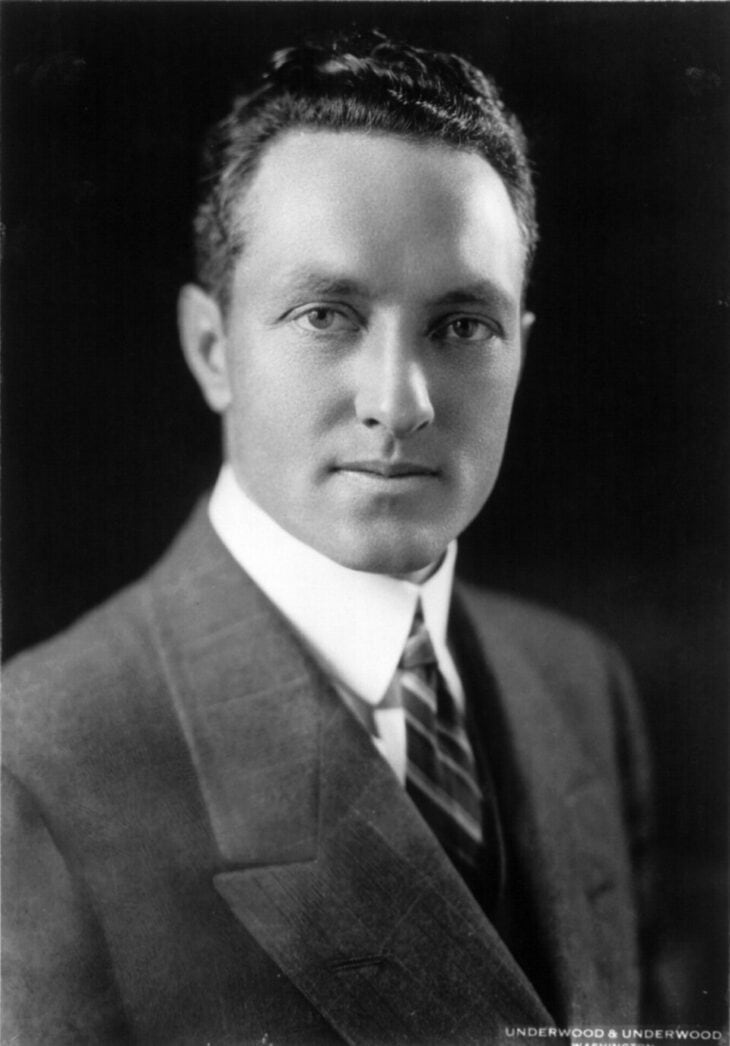
Richard Evelyn Byrd Jr. (1888 to 1957) was an American naval officer, aviator and polar explorer, born in Winchester, Virginia. He led flights across the Arctic Ocean, the Atlantic and the Antarctic plateau, and five expeditions to Antarctica.
He was mostly a navigator and an organizer, not the man at the controls. Floyd Bennett flew him toward the North Pole, and Bernt Balchen flew him to the South Pole.
Richard E. Byrd at a glance
Born October 25, 1888, in Winchester, Virginia. Naval aviator number 608 (1918). Claimed the first flight over the North Pole on May 9, 1926, a claim most polar historians now reject. Led the first flight over the South Pole on November 28 to 29, 1929, which is not in dispute. Promoted to rear admiral at 41. Died March 11, 1957, in Boston, aged 68.
A Navy Navigator Who Was Told He Could Not Fly the Atlantic
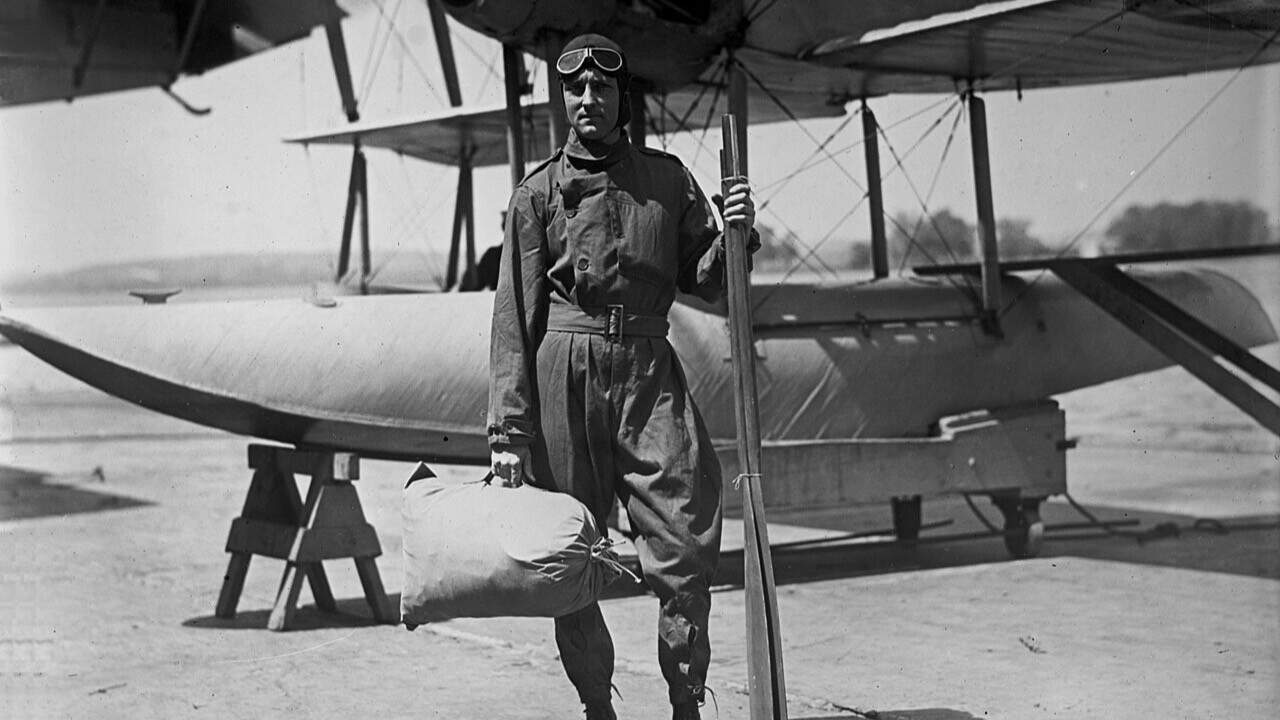
Byrd graduated from the U.S. Naval Academy in 1912 and was medically retired in 1916 after an ankle injury. The First World War brought him back, and he qualified as naval aviator number 608 at Pensacola in June 1918.
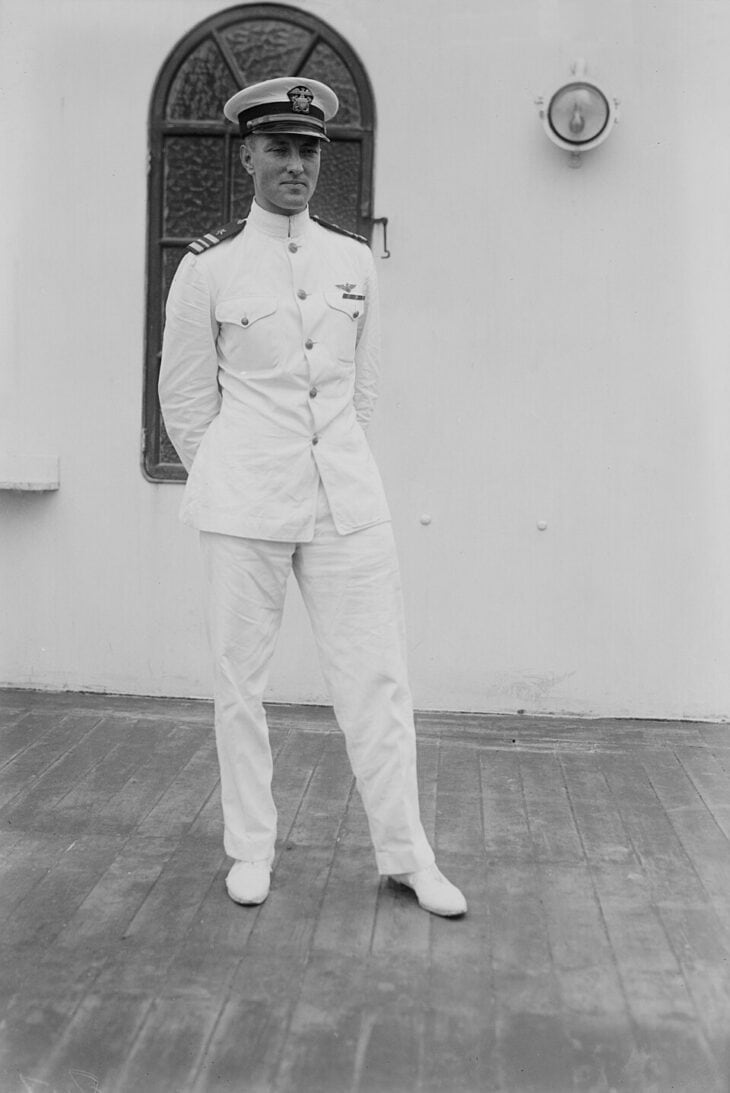
His specialty was aerial navigation. He helped plan the route of the Navy’s 1919 transatlantic attempt, which the NC-4 flying boat completed, but he was barred from flying on it because his wartime posting in Canada counted as overseas service.
In 1925 he commanded the aviation unit on Donald MacMillan’s Greenland expedition. There he met the two pilots who would shape his career: Navy pilot Floyd Bennett and Norwegian aviator Bernt Balchen.
The 1926 North Pole Flight
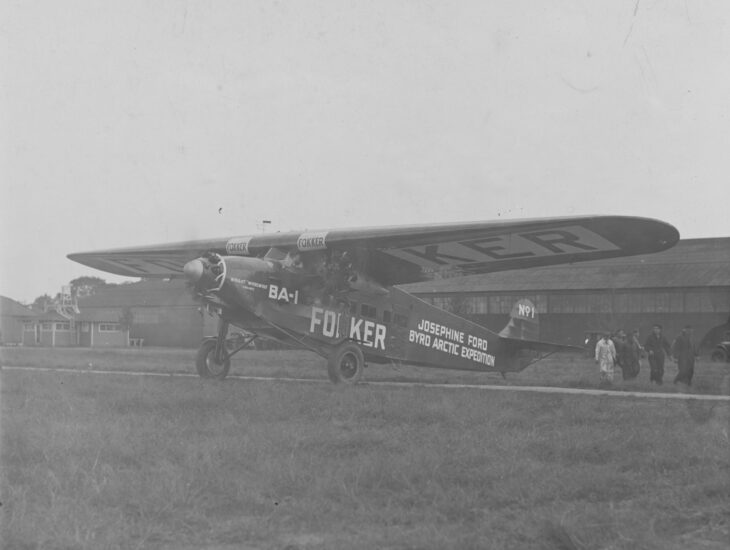
The aircraft was a Fokker F.VII trimotor named Josephine Ford, after the daughter of Edsel Ford, who helped pay for the expedition. It took off on skis from King’s Bay just after midnight on May 9, 1926, with Bennett and Byrd the only two people aboard.
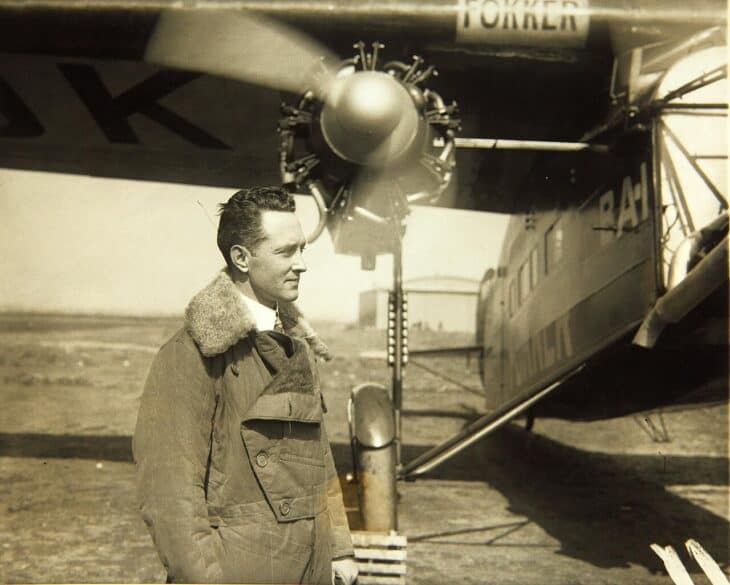
The cabin was too loud for conversation, so the two men wrote notes to each other in Byrd’s diary. Byrd navigated with a sun compass, two chronometers and a drift indicator he lowered through a trapdoor in the floor.
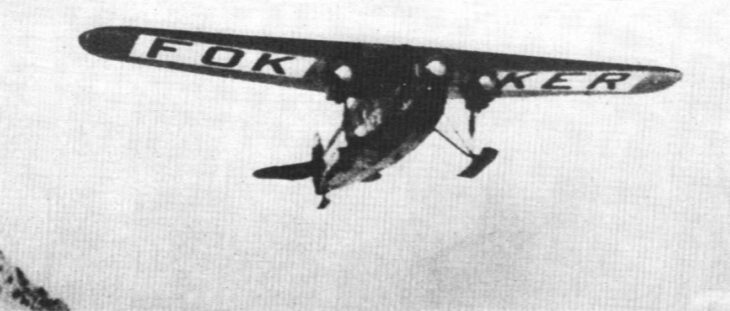

About an hour short of the pole, by Byrd’s account, the starboard engine began leaking oil. He said they reached the pole after 8 hours and 25 minutes, circled for 13 minutes and turned for home, landing back at King’s Bay 15 hours and 57 minutes after takeoff.
The claimed round trip was 1,535 miles (2,470 km). Congress passed a special act on December 21, 1926, that promoted Byrd to commander and awarded both him and Bennett the Medal of Honor.
Did Byrd Really Fly Over the North Pole?
Probably not. The doubts began almost at once and centered on the clock: the plane seemed to have been away from Spitsbergen too briefly to have reached the pole and come back.
HistoryNet’s account of the flight has the Fokker cruising at about 90 mph (145 km/h) on the way out and reaching ground speeds of more than 100 mph (160 km/h) on the way home, helped by a brisk tailwind. That tailwind, recorded by Byrd, is exactly what critics questioned.

In 1958, the year after Byrd died, Bernt Balchen said Bennett had privately told him they never reached the pole. Bennett could not answer: he had died of pneumonia in April 1928, and everything he wrote and said in public before then backed Byrd’s version.
The diary that turned up in 1996
On the flight’s 70th anniversary in May 1996, Ohio State University announced that its chief archivist, Raimund Goerler, had found Byrd’s flight diary in a box of artifacts in the university’s Byrd collection. It was a weathered 8-by-9-inch brown notebook.
One sun sight, taken at 7:07:10 Greenwich time, records a solar altitude of 19°25’30” in the diary, erased but still readable. Byrd’s typed official report to the National Geographic Society gives the same sight as 18°18’18”.
Navigation historian Dennis Rawlins, invited by Ohio State to study the notebook, concluded that Byrd and Bennett made a genuine, heroic attempt but never reached the pole. Ohio State’s researchers told UPI that Byrd may have missed by more than 67 miles (108 km), turning back because of the oil leak and headwinds.
Two myths, not one
Myth one: Byrd faked the flight by circling out of sight of Spitsbergen. The diary rules that out; Ohio State’s archivist called the idea clearly wrong, because Byrd really flew north. Myth two: Byrd was the first over the North Pole. Rawlins, writing in the journal Polar Record, argues the diary data confirm what most polar experts long believed: the airship Norge, with Amundsen, Lincoln Ellsworth and Umberto Nobile aboard, got there first on May 12, 1926.
The diary also shows that Byrd believed, at the time, that he was close. His notes put him within 20 miles (32 km) of the pole just before the oil leak, and he never dropped the American flags he had planned to scatter over it, which weakened his claim even in 1926.
Byrd still has defenders, who argue a real tailwind explains the times. And in 1926 a National Geographic Society committee checked his records and accepted the claim.
Beaten to Paris by Lindbergh
Byrd’s next target was the Orteig Prize for the first nonstop flight between New York and Paris. During a practice takeoff, his Fokker trimotor America crashed with Anthony Fokker at the controls, badly injuring Bennett.
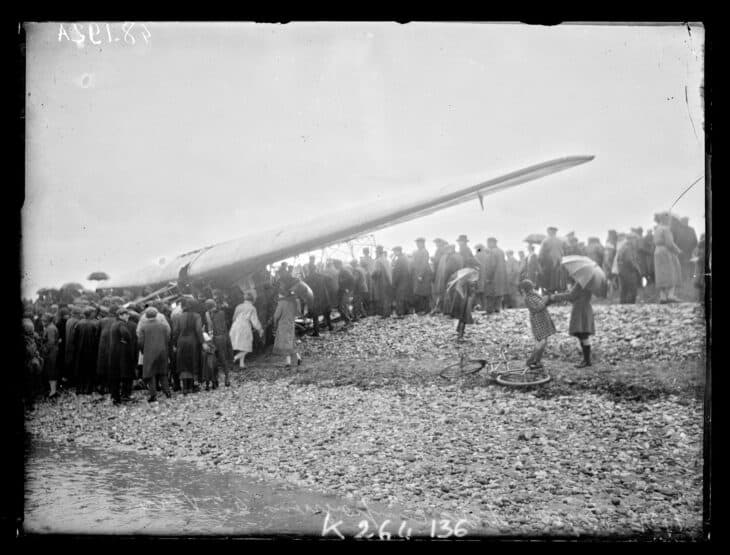

While it was repaired, Charles Lindbergh flew solo to Paris on May 20 and 21, 1927. Byrd took off from Roosevelt Field 39 days later, on June 29, with Balchen, Bert Acosta and George Noville, carrying a bag of U.S. mail to prove the airplane’s practical use.
Cloud hid Paris when they arrived. After a flight of 39 hours and 56 minutes, they came down beside the beach at Ver-sur-Mer in Normandy on July 1, 1927, without a single death.
The South Pole Flight Nobody Disputes
Byrd’s first Antarctic expedition, from 1928 to 1930, built a base called Little America on the Ross Ice Shelf. Its main aircraft was a Ford Trimotor he named Floyd Bennett, after his pilot, who had died the year before.
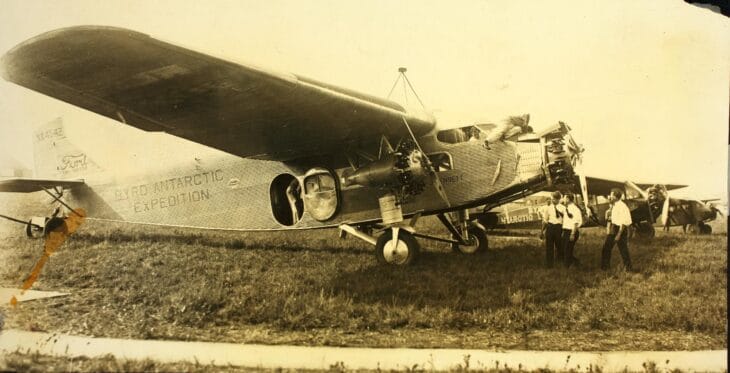

On November 28, 1929, Balchen took off for the pole with Byrd navigating, Harold June as co-pilot and radio operator, and Ashley McKinley as photographer. The Trimotor struggled to climb onto the Antarctic plateau, and the crew threw out emergency food and empty fuel tanks to gain enough altitude.
They reached the pole and returned in 18 hours and 41 minutes. Unlike 1926, the flight was thoroughly documented, and Byrd was promoted to rear admiral by a special act of Congress on December 21, 1929, at 41 the youngest in the history of the U.S. Navy.
The photographer was the point
Ashley McKinley flew to the pole as the expedition photographer, because Byrd used the airplane as a survey tool. A later Navy citation credits the flights of his 1939 to 1941 expedition with discovering new mountain ranges and 700 miles of previously unknown Antarctic coast.
Five Months Alone, and a Stove That Nearly Killed Him
On his second expedition, in the 1934 Antarctic winter, Byrd spent five months alone running a weather station called Advance Base. A badly ventilated stove slowly poisoned him with carbon monoxide.
His garbled radio messages alarmed the main camp, and after two failed attempts a tractor party reached him. An airplane flew him back to base on October 12. He told the story in his book Alone.
What Did Admiral Byrd Find in Antarctica?
Mostly, geography. His expeditions named Marie Byrd Land after his wife and found Mount Sidley, the largest dormant volcano in Antarctica. His 1939 to 1941 expedition was the first funded and run by the U.S. government.
His biggest was Operation Highjump in 1946 and 1947, a Navy task force of more than 4,000 people, an aircraft carrier, flying boats and helicopters. It mapped more than 1,500 miles (2,400 km) of coastline from the air and recorded 10 new mountain ranges.
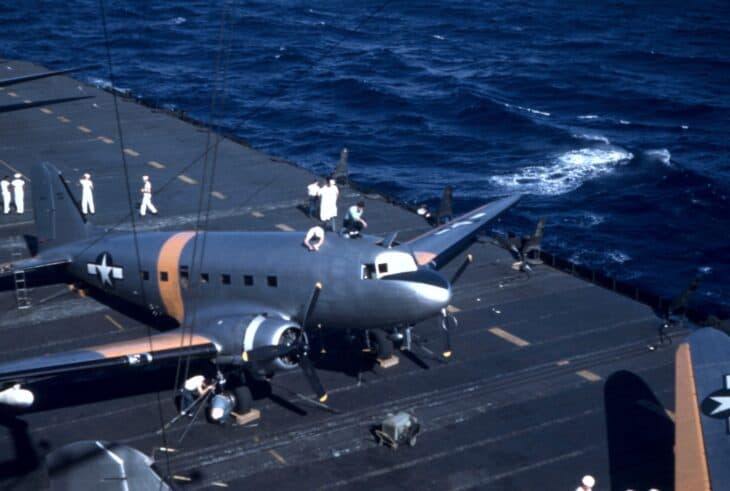

What Byrd actually said afterward was a warning about airpower. In an International News Service interview printed in Chile’s El Mercurio on March 5, 1947, he said the United States could be attacked in a future war by planes flying over one or both poles.
It reads as an early forecast of transpolar flying. Today airliners can fly over the North Pole, while flying over Antarctica remains a different story.
1918
Qualifies as naval aviator number 608. Byrd trains at Pensacola and commands naval air forces at Halifax, Nova Scotia.
May 9, 1926
The North Pole flight. Byrd and Floyd Bennett fly the Fokker Josephine Ford north from Spitsbergen. The claim is now widely doubted.
May 12, 1926
The airship Norge reaches the pole. Amundsen, Ellsworth and Nobile make what most historians count as the first verified trip to the North Pole.
July 1, 1927
The America ditches in Normandy. Byrd’s crew crosses the Atlantic but cannot land in Paris.
Nov. 28-29, 1929
First flight over the South Pole. Bernt Balchen flies the Ford Trimotor Floyd Bennett there and back in 18 hours and 41 minutes.
1934
Alone at Advance Base. Five months by himself and near-fatal carbon monoxide poisoning.
1946-1947
Operation Highjump. More than 4,000 people map Antarctica from the air.
1955-1956
Operation Deep Freeze I. Byrd’s last trip south, as the Navy sets up permanent U.S. bases.
May 1996
The diary surfaces. Ohio State finds Byrd’s 1926 flight notebook, with an erased sextant reading.
The Hollow Earth Story Is Not in Byrd’s Records
Search Byrd’s name today and you meet a stranger claim: that on a polar flight he found an opening into a hollow Earth, recorded in a “secret diary.” It circulates widely online, and it has no support in his expedition records.
The Skeptic traced the idea’s spread to Ray Palmer, a pulp science-fiction editor turned flying-saucer publisher, who leaned on Byrd’s polar flights to argue that saucers came from inside the Earth. The Skeptic’s Dictionary notes that the theory rests on little more than Byrd calling Antarctica “the Land of Everlasting Mystery” and writing that he would like to see the land beyond the North Pole.
The geography does not work either. Byrd’s 1947 flights, the ones the story dwells on, belonged to Operation Highjump, over Antarctica, not the Arctic. The Byrd diary historians actually opened is the one at Ohio State, and it is about sextant sights and an oil leak.
What Happened to Richard E. Byrd?
Byrd made his last trip to Antarctica on Operation Deep Freeze I in 1955 and 1956, which set up permanent American bases at McMurdo Sound and the South Pole. He spent only about a week on the ice.
He died in his sleep of a heart ailment at his home on Beacon Hill in Boston on March 11, 1957, aged 68, and is buried at Arlington National Cemetery. In 1987 Ohio State renamed its polar institute the Byrd Polar Research Center, after acquiring his papers.
Byrd belongs to the same golden age as the most famous pilots in history, though he is remembered mostly for the North Pole claim his own notebook undercuts. The flight that deserves the fame is the one over the South Pole, where the record and the legend agree.
Sources and references used for research and fact-checking.
- Ohio State University, Byrd's Diary of North Pole Flight Found in University Archives
- UPI, Diary: Admiral Byrd missed the pole
- Polar Record, Cambridge University Press, Byrd's heroic 1926 North Pole failure
- HistoryNet (Aviation History), Richard E. Byrd and Floyd Bennett: First to Fly over the North Pole?
- Wikipedia, Richard E. Byrd
- Wikipedia, Floyd Bennett
- Wikipedia, Norge (airship)
- Virginia Museum of History and Culture, Richard E. Byrd
- Byrd Polar and Climate Research Center, Ohio State University, Who was Admiral Byrd and why did OSU's Institute of Polar Studies change its name to honor him?
- The Skeptic, From the archive: The man who invented the flying saucer
- The Skeptic's Dictionary, Hollow Earth
Get the Newsletter
The latest aviation news and stories sent to your inbox.
About the Author

Tim is the owner and lead editor of AeroCorner since 2019, overseeing aviation content covering aircraft, airlines, airports, and the broader aviation industry. Through years of researching, writing, editing, and publishing aviation-focused content, he has developed extensive practical knowledge of commercial aviation and air travel. Based in Asia and a frequent traveler himself, Tim also brings firsthand passenger experience to AeroCorner’s coverage. Outside of publishing, he has also explored aviation firsthand through hands-on flight training in New Zealand.