

Table of Contents
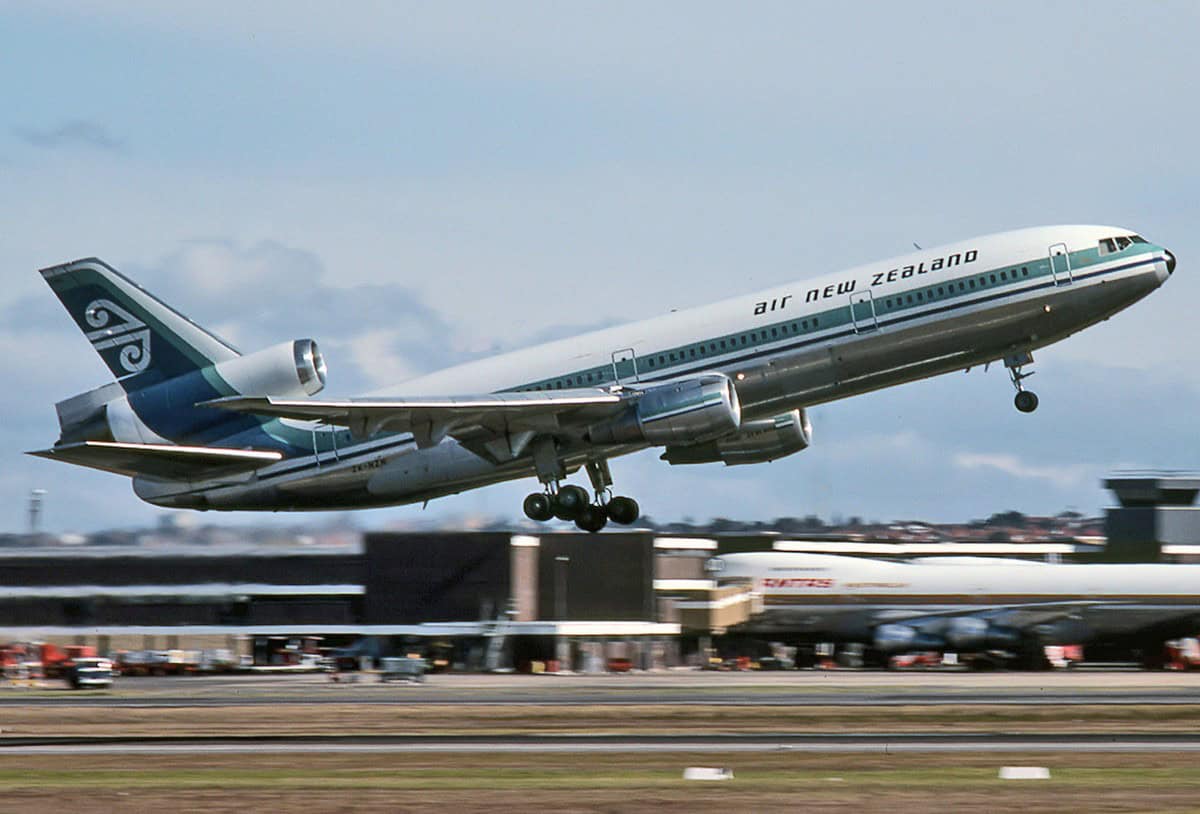
Air New Zealand Flight 901, a sightseeing flight from Auckland to Antarctica, flew into the lower slopes of Mount Erebus on Ross Island on November 28, 1979. The McDonnell Douglas DC-10-30, registration ZK-NZP, carried 237 passengers and 20 crew. All 257 people aboard died.
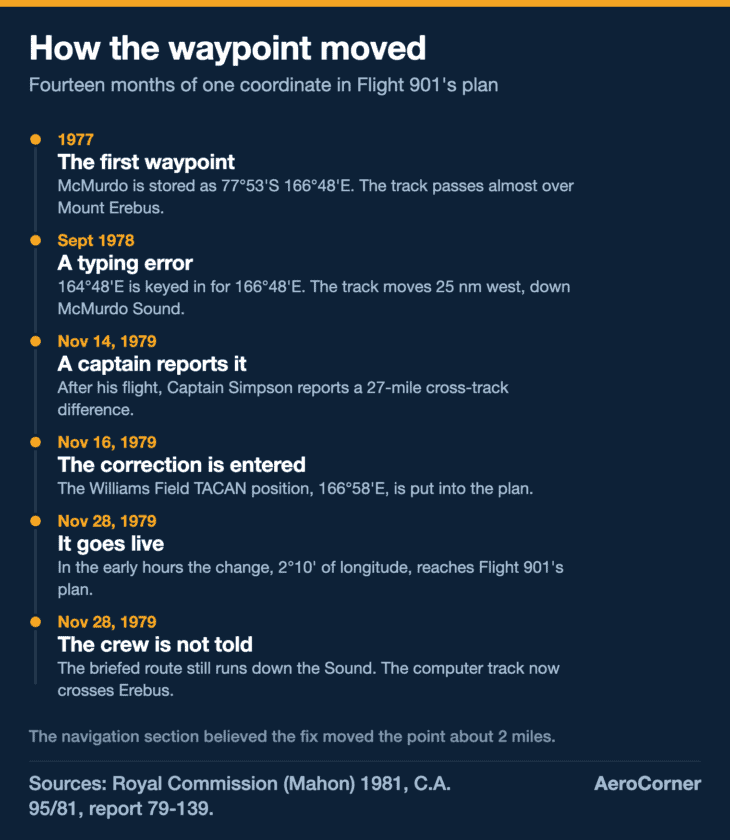
In the early hours of that morning, the airline’s navigation section had changed the last waypoint in the flight plan by 2 degrees 10 minutes of longitude. The computer track that crews had been briefed on ran down the flat ice of McMurdo Sound. The new one ran straight over a 12,450-foot (3,794 m) volcano, and nobody told the crew.
Two official inquiries reached opposite conclusions. Chief Inspector Ron Chippindale’s report, No. 79-139, blamed the captain’s decision to fly low. Justice Peter Mahon’s Royal Commission found the crew made no error and put the cause on the airline, and in 2019 New Zealand’s prime minister apologised on the government’s behalf.
Sept 1978
A typing error. Air New Zealand’s navigation section stores the McMurdo waypoint as 164°48’E instead of 166°48’E. The computer track moves 25 nautical miles west, down McMurdo Sound.
Nov 14, 1979
A captain notices. After an earlier Antarctic flight, Captain Simpson reports a cross-track difference at McMurdo.
Nov 28, 1979, early hours
The waypoint is changed. The Williams Field TACAN position goes into the live flight plan. The track now crosses Mount Erebus. The crew is not told.
Nov 28, 1979, 8:17 am
Departure. ZK-NZP leaves Auckland as Flight TE901, with Peter Mulgrew, an experienced Antarctic explorer, aboard as commentator.
Nov 28, 1979, 12:45 pm
Descent below the overcast. After two orbits north of Ross Island, the crew reports descending to 2,000 feet in visual conditions.
Nov 28, 1979, 12:49 pm
Impact. The DC-10 strikes the slope of Mount Erebus at 1,467 feet, McMurdo time. There are no survivors.
June 12, 1980
Chippindale report. Report 79-139 is released. Its probable cause centres on the captain’s decision to continue at low level.
1981
Mahon report. The Royal Commission finds the single dominant cause was the airline’s programming error, and that the crew made no error.
Oct 20, 1983
Privy Council. Mahon’s appeal against the Court of Appeal’s ruling on his cover-up finding and costs order is dismissed. The cause finding is never in issue.
Nov 28, 2019
Government apology. Prime Minister Jacinda Ardern apologises for the actions of the then state-owned airline.
A sightseeing flight over the ice: how Flight 901 unfolded
Air New Zealand had flown day trips to Antarctica since 1977. The flights left Auckland, looped over McMurdo Sound and the US base at McMurdo, and returned via Christchurch, with no landing on the ice. Chippindale records that the load on November 28 was cut by 21 seats so passengers could move between windows.
The aircraft was a McDonnell Douglas DC-10-30. Captain Jim Collins had 11,151 flying hours, 2,872 of them on the DC-10, and First Officer Greg Cassin had 7,934. Flight engineer Gordon Brooks, at the panel during the descent, was the only member of the flight deck crew who had flown to Antarctica before.
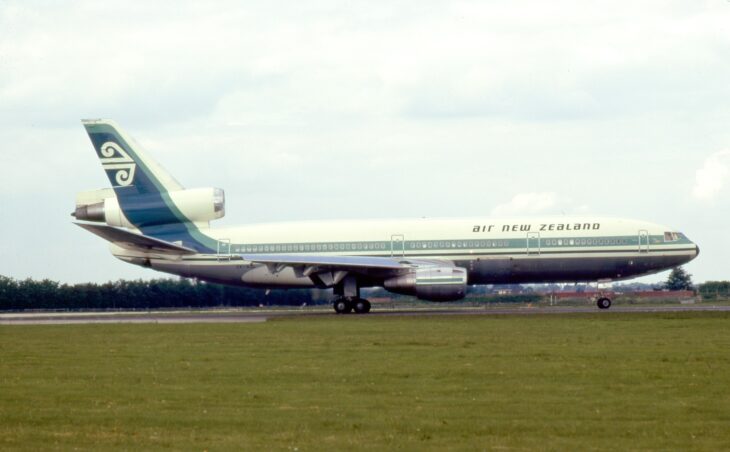

Flight 901 left Auckland at 8:17 am New Zealand daylight time. The route was flown by the aircraft’s area navigation system, which followed the waypoints the airline’s ground computer had loaded.
Near Ross Island the weather was a low overcast with clear air beneath it. McMurdo’s air traffic controllers, Mac Centre, offered a radar-guided letdown to 1,500 feet (460 m), but the report finds the radar never picked up the aircraft. Radio contact on VHF was unreliable, so the crew relied on HF.
The crew descended in two orbits through a gap in the cloud, then turned back onto the programmed track. At 12:45 pm McMurdo time they reported descending to 2,000 feet and flying visually, and they levelled at 1,500 feet at 260 knots, heading toward what they took to be McMurdo Sound.
The ground proximity warning sounded about 6.5 seconds before impact. At 12:49 pm the DC-10 struck the slope of Mount Erebus at 1,467 feet (447 m), about 1.5 miles east of its flight-planned track. The wreckage was found about 11 hours later.
What the Chippindale report found, and what Mahon found
New Zealand’s Office of Air Accidents Investigation led the site work and published report 79-139, signed on May 31, 1980. Its probable cause, paragraph 3.37, reads in full:
“The decision of the captain to continue the flight at low level toward an area of poor surface and horizon definition when the crew was not certain of their position and the subsequent inability to detect the rising terrain which intercepted the aircraft’s flight path.”
Chippindale’s report did record the waypoint change, made the day before the flight, and that it was not mentioned in the crew’s pre-flight dispatch planning. He also found that descending below the briefed minimum altitude breached the airline’s instructions.
The government then appointed a Royal Commission under Justice Peter Mahon. His 1981 report, paragraph 393, found that “the single dominant and effective cause of the disaster was the mistake made by those airline officials who programmed the aircraft to fly directly at Mt. Erebus and omitted to tell the aircrew.”
He added that the mistake was “directly attributable, not so much to the persons who made it, but to the incompetent administrative airline procedures which made the mistake possible.” In paragraph 394 he found that neither the pilots nor the flight engineers “made any error which contributed to the disaster.”
Mahon listed 10 factors and wrote that if any one of them had been missing, there would have been no disaster. The waypoint history behind the first of them, taken from his report and the Court of Appeal judgment, runs like this.
What most accounts get wrong
Flight 901 is still often summed up as pilot error, or as a jet lost in a blizzard. Neither holds. The aircraft was in clear air below an overcast, with visibility reported at 40 miles, and Chippindale’s report never used the words pilot error. Mahon’s Royal Commission found the crew made no error at all. The courts that later ruled against Mahon struck out his cover-up finding and his costs order against the airline, not his finding on the cause: the Court of Appeal said no attack had been made on it. Mahon’s report was tabled in Parliament in 1999, and in 2019 the prime minister restated that the pilots were not responsible.
How whiteout hid a 12,450-foot mountain
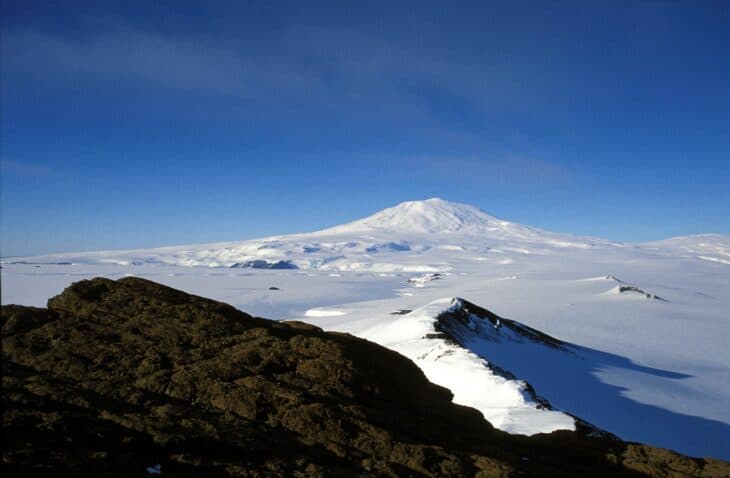
The crew could see. That is what makes Erebus hard to grasp. Chippindale’s report describes whiteout as needing only “a diffuse shadowless illumination and a mono-coloured white surface,” and notes it “is not necessarily associated with precipitation or fog.”
Mahon reconstructed the view from the flight deck. Under total overcast, with the sun behind the aircraft, the crew saw a long vista of flat snow, which matched exactly what they expected at the head of McMurdo Sound.
The flat ground was real. It ran about 6 miles (10 km) to a low ice cliff, then rose at about 13 degrees up the side of Erebus, white against white cloud, with no shadow to show the slope.

Here the two reports split hardest. Chippindale found the crew was not certain of its position. Mahon, paragraph 396, found that the captain’s handling of the navigation system showed he knew exactly where the programmed track went, and called the “uncertain” thesis false. On the briefing they had, that track led down the Sound.
The minimum altitude question splits them too. The airline’s rules allowed descent to 6,000 feet (1,830 m) south of Ross Island only in good visibility and in a defined sector away from Erebus. Mahon found the rule open to the pilots’ reading, noting that Mac Centre itself suggested 1,500 feet and that earlier flights had flown low over the Sound.
The same trap, a computer track trusted over terrain the crew could not see, killed 159 people at Buga, Colombia, in 1995. The NTSB’s report on American Airlines Flight 965 traced that crash to a waypoint selected in the flight management computer, and it led to the terrain warning systems airliners carry today.
What changed after Erebus, and what did not
Erebus produced no rule named after it, and no international standard traces back to it. Its legacy is narrower and, in New Zealand, longer: an end to an industry, a set of recommendations, and a 40-year argument over who was to blame.
The sightseeing flights stopped. Air New Zealand ended them at once, and Qantas, which flew its own from Australia, ended its program in February 1980, according to the government’s NZHistory account. About 10,000 passengers had made the trip. Qantas aircraft returned to Antarctic overflights in 1994, and charter flights from Australia have continued since.
Chippindale’s report made 17 recommendations. Among them: every flight plan entry in the computer to be independently checked; co-pilots, flight engineers and commentators to attend the route briefing; no descent below the minimum safe altitude near Ross Island without continuous radar; and, in recommendation 5.16, that “no commercial passenger carrying flight be planned to fly over or close to an active volcano.”
Others looked at the recorders and the search: a locator beacon on the flight recorders and an emergency beacon in the tail, plus a voice recorder tape longer than 30 minutes. They were recommendations to New Zealand’s authorities, guidance rather than binding rules.
Mahon’s own recommendations were about how New Zealand investigates accidents: that the attorney-general be able to order a public inquiry at any time, with the chief inspector as its fact-finder, and that investigators’ powers be written into regulations. He found nothing to recommend on flight operations.
In 1990 New Zealand moved accident investigation out of the ministry into a separate body, the Transport Accident Investigation Commission. A commission briefing says the old office “was seen as not providing sufficient independence.” No official source we found names Erebus as the reason, and Mahon himself had said no change to the chief inspector’s position was needed.
What changed because of this accident
Antarctic sightseeing flights: ended by Air New Zealand in 1979 and Qantas in 1980, resumed on Qantas aircraft in 1994 (operator decision, not a rule). Chippindale report 79-139: 17 recommendations, including independent checks of computer flight plan entries, full-crew route briefings and no low descent near Ross Island without radar, 1980 (guidance). Mahon Royal Commission: recommendations on public inquiries into accidents, 1981 (guidance). Transport Accident Investigation Commission: independent investigator set up by statute, 1990 (binding, not officially tied to Erebus). Mahon report tabled in Parliament, 1999. Government apology, 2019.
The courts, the apology and the memorial
Mahon’s sharpest words were in paragraph 377, where he wrote that he had “had to listen to an orchestrated litany of lies” from airline witnesses. He also ordered the airline to pay $150,000 toward the inquiry’s costs.
Air New Zealand challenged both. On December 22, 1981, the Court of Appeal quashed the costs order and found that paragraph 377 was made outside his jurisdiction and against natural justice. It also said no attack “can be or indeed has been made” on the report’s conclusions about the cause. Mahon resigned from the bench.
The Privy Council dismissed Mahon’s appeal on October 20, 1983, while paying tribute, NZHistory records, to his “brilliant and painstaking investigative work.” The cause finding was never before it.
Air New Zealand chief executive Rob Fyfe apologised in October 2009 for how the airline had treated the families. On November 28, 2019, Prime Minister Jacinda Ardern said that “the pilots were not responsible for this tragedy,” and apologised “for the actions of an airline then in full state ownership.”
A national Erebus memorial is still being built. After the first site in Auckland’s Parnell was dropped in 2023, Cracroft Reserve in Christchurch was chosen in November 2025, and work began there in June 2026.
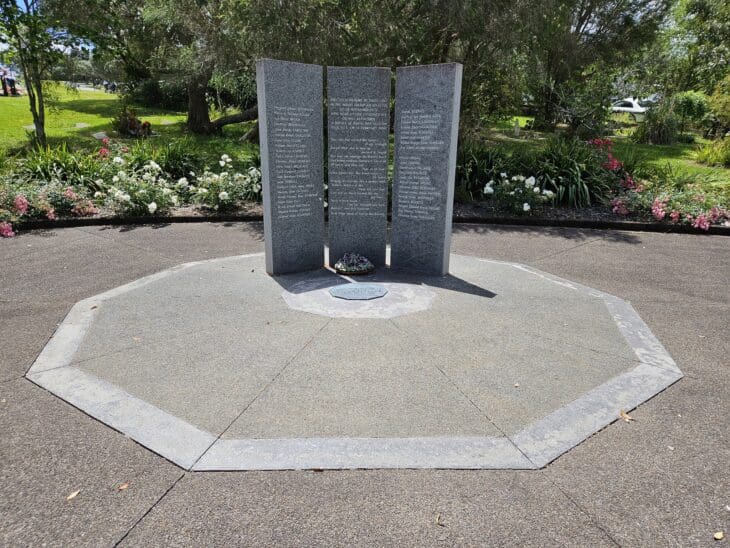

Erebus sits among the flights that changed aviation less for a rule than for a question it settled in New Zealand: whether a crew in a flawed system should carry the blame. Investigators had drawn the same lesson from Tenerife two years earlier: a crew’s last decision is rarely where an accident begins.
FAQ
Sources and references used for research and fact-checking.
- Office of Air Accidents Investigation, Ministry of Transport, New Zealand, Aircraft Accident Report No. 79-139: Air New Zealand McDonnell-Douglas DC10-30 ZK-NZP, Ross Island, Antarctica, 28 November 1979
- Royal Commission (Justice P. T. Mahon), New Zealand, 1981, Report of the Royal Commission to Inquire into the Crash on Mount Erebus, Antarctica, of a DC10 Aircraft Operated by Air New Zealand Limited
- Court of Appeal of New Zealand (Project Gutenberg text), Re Erebus Royal Commission; Air New Zealand Ltd v Mahon, Court of Appeal C.A. 95/81, 22 December 1981
- NZHistory, Manatū Taonga Ministry for Culture and Heritage, Erebus disaster (crash of Flight 901, the inquiry, remembering Erebus, visiting Antarctica)
- The Spinoff, Jacinda Ardern: 40 years on, we apologise for the state response on Erebus
- RNZ, Air NZ apologises to relatives of Erebus crash
- RNZ, Location of national Erebus memorial revealed in Christchurch
- Inside Government NZ, Work begins on national Erebus memorial
Get the Newsletter
The latest aviation news and stories sent to your inbox.
About the Author

Tim is the owner and lead editor of AeroCorner since 2019, overseeing aviation content covering aircraft, airlines, airports, and the broader aviation industry. Through years of researching, writing, editing, and publishing aviation-focused content, he has developed extensive practical knowledge of commercial aviation and air travel. Based in Asia and a frequent traveler himself, Tim also brings firsthand passenger experience to AeroCorner’s coverage. Outside of publishing, he has also explored aviation firsthand through hands-on flight training in New Zealand.