

Table of Contents
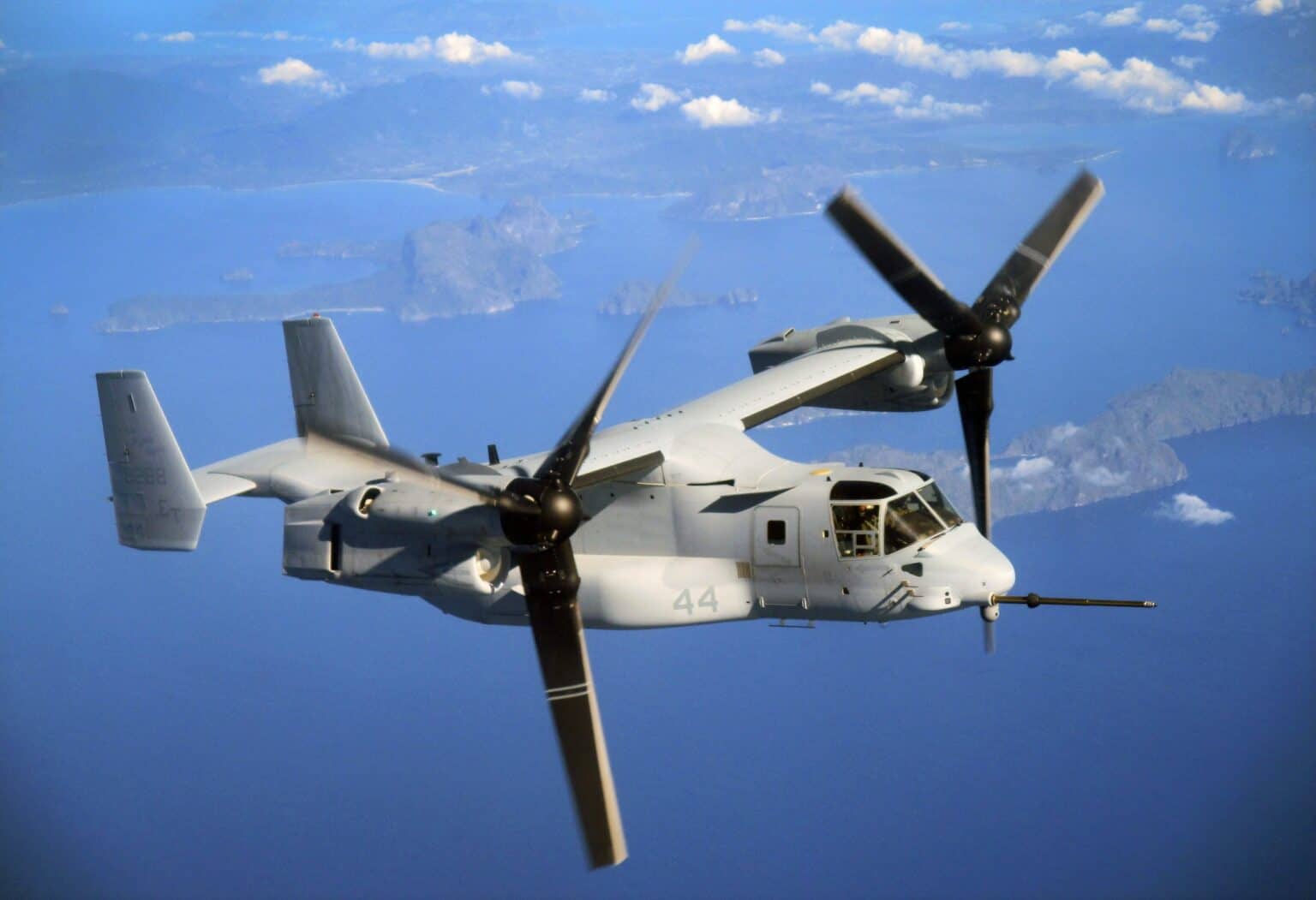
The Bell Boeing V-22 Osprey is the most important tiltrotor aircraft ever built, and as of November 2026 it is still the only one in regular service. More than 400 have been delivered to the US Marine Corps, Air Force and Navy and to Japan.
It is not the fastest, though. Two research aircraft flew faster, and neither one entered service. That gap between what tiltrotors can do and how few ever made it to an operator is the story of this whole aircraft type.
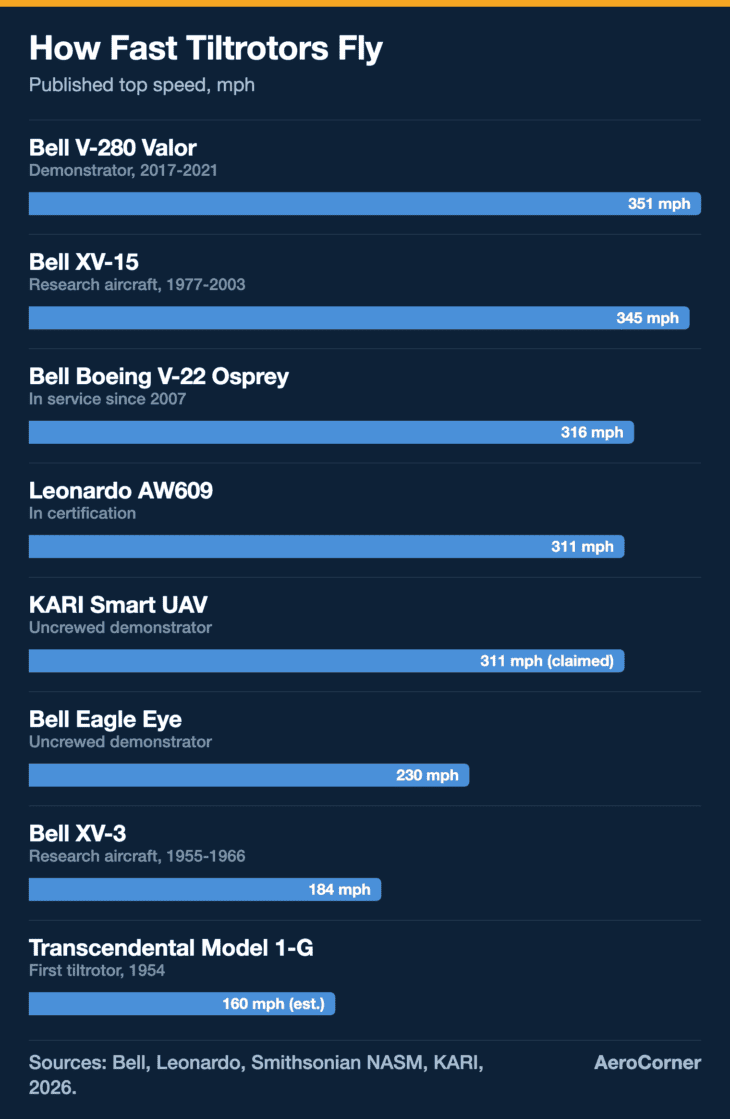
Below is every tiltrotor that has flown in airplane mode, eight in all, ranked by how far each one got: combat service first, then certification, then demonstrators and research aircraft. Each entry carries its published top speed, the number built and its status in 2026.
| Rank | Aircraft | First flight | Top speed | Built | Status (Nov 2026) |
|---|---|---|---|---|---|
| 1 | Bell Boeing V-22 Osprey | 1989 | 316 mph (275 kn) | 400+ | In service |
| 2 | Leonardo AW609 | 2003 | 311 mph (270 kn, max cruise) | 4 prototypes | In FAA certification |
| 3 | Bell V-280 Valor | 2017 | 351 mph (305 kn) | 1 | Retired 2021, became the MV-75 |
| 4 | Bell XV-15 | 1977 | 345 mph | 2 | Smithsonian |
| 5 | Bell XV-3 | 1955 | 184 mph | 2 | USAF Museum |
| 6 | Bell Eagle Eye (uncrewed) | 1990s | 230 mph (200 kn) | 2 demonstrators + 1 full-scale | Ended, one in a museum |
| 7 | KARI Smart UAV (uncrewed) | 2008 | 311 mph (claimed) | Not published | Demonstrator |
| 8 | Transcendental Model 1-G | 1954 | 160 mph (est.) | 1 | Crashed 1955 |
How this ranking works
A tiltrotor carries two proprotors on nacelles at the wingtips that swing from vertical, for helicopter-style takeoff, to horizontal, for airplane-style cruise. The list covers every one that has flown in airplane mode. It is ranked by how far each aircraft got: operational service beats certification, which beats a demonstrator, which beats a research or proof-of-concept airframe. Top speeds are published figures measured at different altitudes, so treat a gap of a few mph as a tie. Tiltwings, tilt-propeller eVTOLs and aircraft that have only hovered are covered separately below.
1. Bell Boeing V-22 Osprey
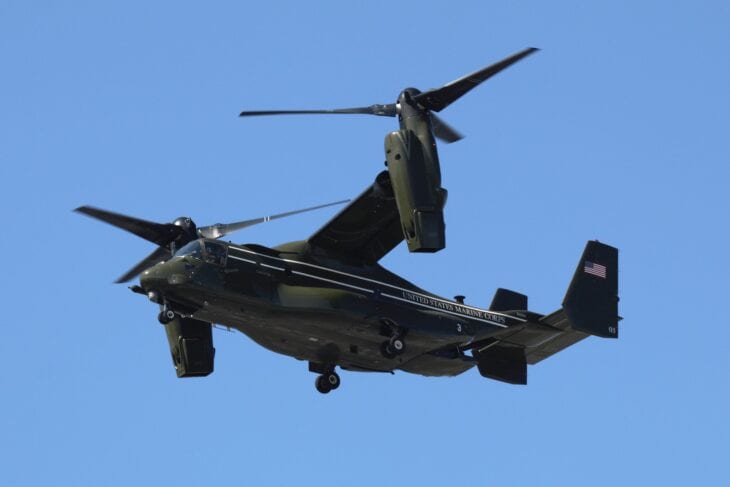

The V-22 Osprey is the only tiltrotor that has gone to war, and the only one built by the hundred. It first flew in helicopter mode on March 19, 1989, and the Marine Corps declared it operational on June 13, 2007.
Bell and Boeing delivered the 400th V-22 in June 2020. The Marines alone have taken 359 MV-22s, the backbone of the US Marine Corps aircraft fleet, and the Corps accepted its final MV-22B on July 28, 2026.
The line has not closed. Bell says it is still building CMV-22B carrier-delivery aircraft for the Navy, which had 29 of a planned 46 at the end of 2025. Air Force Special Operations Command flies 51 CV-22Bs, and Japan’s Ground Self-Defense Force, the only export customer, flies 17.
Top speed is 275 knots (316 mph, 509 km/h) at sea level, with a combat range of 390 nautical miles. The Marines plan to keep flying the MV-22B until 2055.
The record is not clean. On November 29, 2023, an Air Force CV-22B crashed off Yakushima, Japan, killing all eight aboard, and the US and Japanese fleets were grounded on December 6, 2023, returning to flight in March 2024. NAVAIR called another pause in December 2024 after a CV-22 landing incident, and aircraft with older proprotor gearboxes have flown under tighter limits since.
Most recently, on October 8, 2026, an MV-22B caught fire after a hard landing in North Carolina’s Bladen Lakes State Forest, and one Marine was flown to a burn center.
Why the Osprey ranks first without being the fastest
Every other aircraft on this list was a test article. The V-22 is the only tiltrotor to fly combat deployments, more than 683,000 fleet hours across 114 Marine Corps deployments by July 2026. Speed made the tiltrotor possible; the Osprey is what made it useful.
2. Leonardo AW609
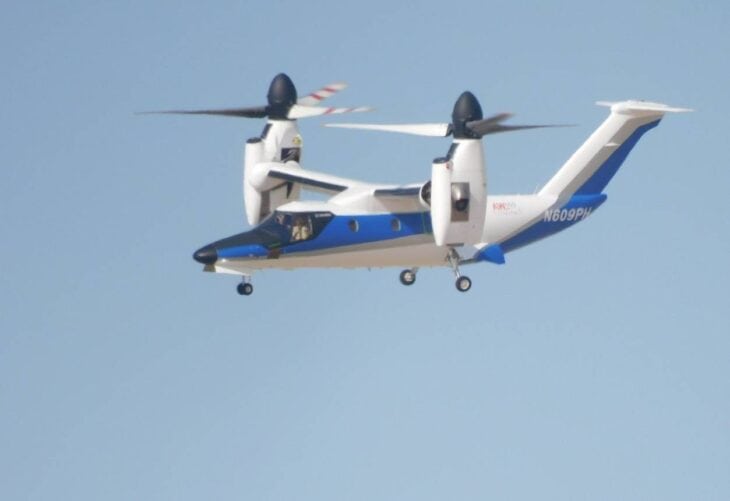

The AW609, born as the Bell/Agusta BA609, is the world’s first civil tiltrotor, and it has been in development for a very long time. It first flew on March 7, 2003, in Arlington, Texas.
Leonardo lists a maximum cruise speed of 270 knots (311 mph, 500 km/h), nine passengers as standard, two crew and a range of 700 nautical miles, or 1,000 with auxiliary fuel. That is helicopter flexibility at close to turboprop speed, aimed at offshore oil, search and rescue and VIP transport.
As of November 2026 it is still not FAA certified, and Leonardo now targets entry into service in 2027. Four prototypes have flown; the second, AC2, crashed near Vergiate, Italy, on October 30, 2015, killing test pilots Pietro Venanzi and Herb Moran after a high-speed dive went unstable.
It ranks above the faster V-280 because it is the closest any tiltrotor has come to a second production program open to anyone with the money. Bristow has said it intends to order 10 or more.
3. Bell V-280 Valor
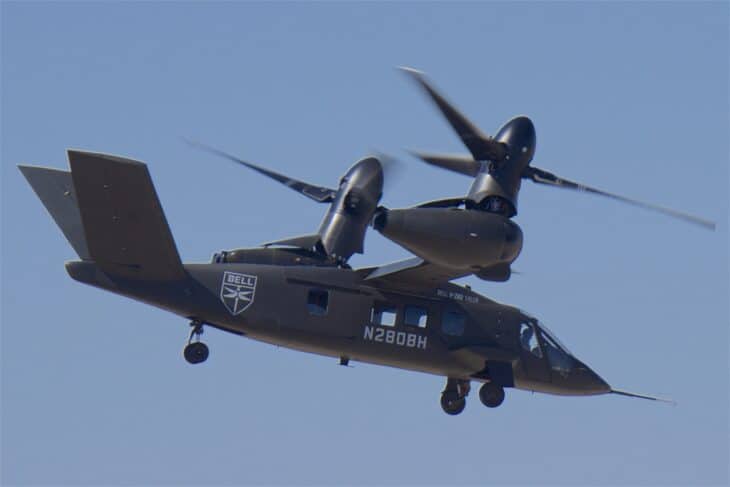

The V-280 Valor is the fastest tiltrotor on this list by a published, demonstrated figure. It first flew on December 18, 2017, reached its 280-knot cruise target in January 2019, and touched 305 knots (351 mph, 565 km/h) in December 2020.
Only one was built, and it was retired in June 2021 after 214 flight hours. Its real legacy came in December 2022, when the Army picked the design over the Sikorsky-Boeing Defiant X for the Future Long-Range Assault Aircraft, the eventual replacement for many of the US Army’s helicopters.
That production aircraft is now the MV-75, named Cheyenne II on April 15, 2026. Unlike the V-22, its engines stay in place while the rotors and driveshafts tilt. A driveshaft through the straight wing lets one engine turn both rotors if the other fails.
4. Bell XV-15
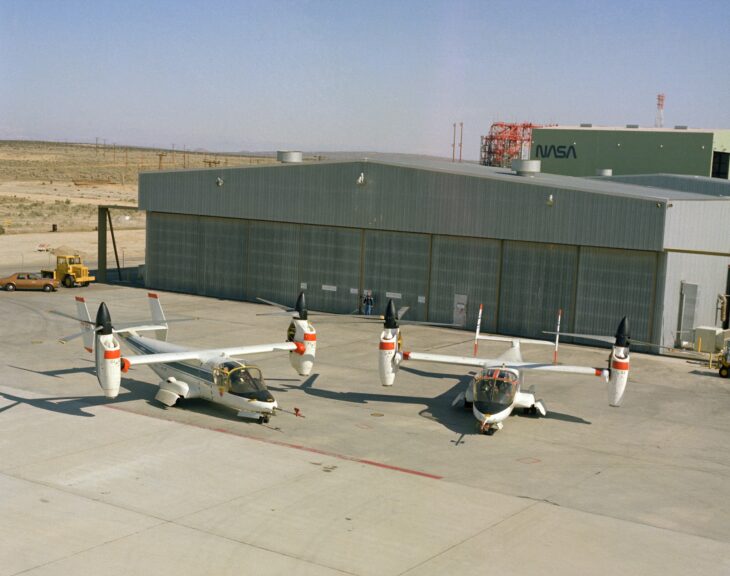

Without the XV-15, there is no Osprey and no AW609. NASA and the US Army paid Bell to build two, and the first flew on May 3, 1977.
The Smithsonian credits it with 345 mph (550 km/h) true airspeed, because tilting the rotors forward escaped the retreating-blade stall that caps a helicopter’s speed. Other references list 332 knots at 17,000 feet, which would make it faster than the V-280. The New York Times called it the hit of the 1981 Paris Air Show.
The first aircraft, N702NA, crashed in 1992 after a loose bolt in the collective control, and its crew survived with minor injuries. The second, N703NA, flew test work until 2003, logged about 700 hours and now hangs in the Smithsonian’s Udvar-Hazy Center in Virginia.
A 1977 research aircraft out-runs the Osprey
By the Smithsonian’s figure, the XV-15 flew 345 mph, about 30 mph faster than the V-22’s published sea-level top speed. The Osprey is a far bigger troop carrier; the XV-15 was a two-seat research aircraft.
5. Bell XV-3
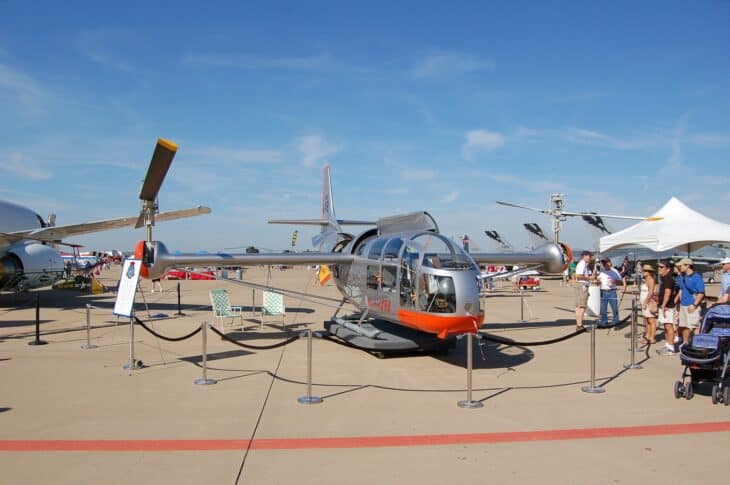

The XV-3 proved a tiltrotor could convert all the way from helicopter to airplane and back without killing its crew. It first flew on August 11, 1955, and on December 18, 1958, Bell test pilot Bill Quinlan flew the first stable full conversion.
Two were built. The first, with three-blade rotors, suffered from flutter and crashed in October 1956; the second went on to make 250 flights, 125 flight hours and 110 full conversions, with a top speed of 184 mph (296 km/h).
It was slow by later standards, but every tiltrotor since has followed its layout. The surviving aircraft is preserved at the National Museum of the US Air Force in Dayton, Ohio.
6. Bell Eagle Eye
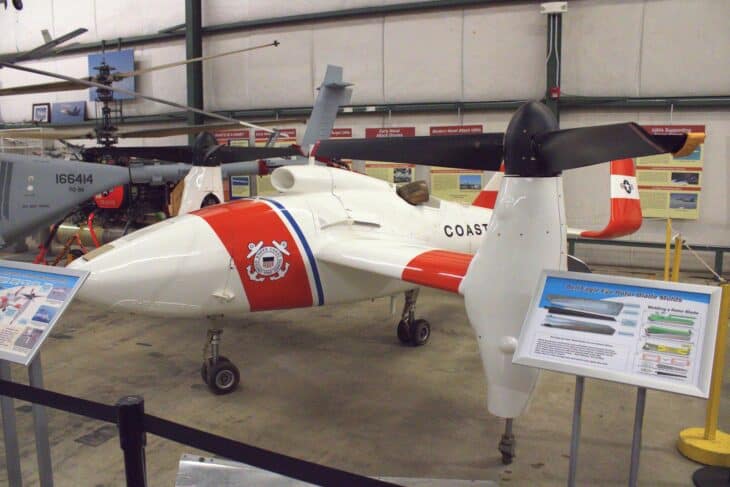

The Eagle Eye is the tiltrotor drone that almost went to sea. Bell’s TR911X demonstrators were flying Navy demonstration flights by 1993-94, and the Coast Guard ordered the design as the HV-911 in 2002 for its Deepwater modernization program.
The HV-911 was rated at 200 knots (230 mph, 370 km/h) with an endurance of 5.5 hours. A full-scale TR918 hovered for the first time on January 26, 2005, at Graford, Texas.
Then the money stopped. The Coast Guard put its funding on hold, the prototype crashed in 2006, and the program faded out. The sole surviving Eagle Eye, painted in Coast Guard colors, sits in the Patuxent River Naval Air Museum in Maryland.
7. KARI Smart UAV
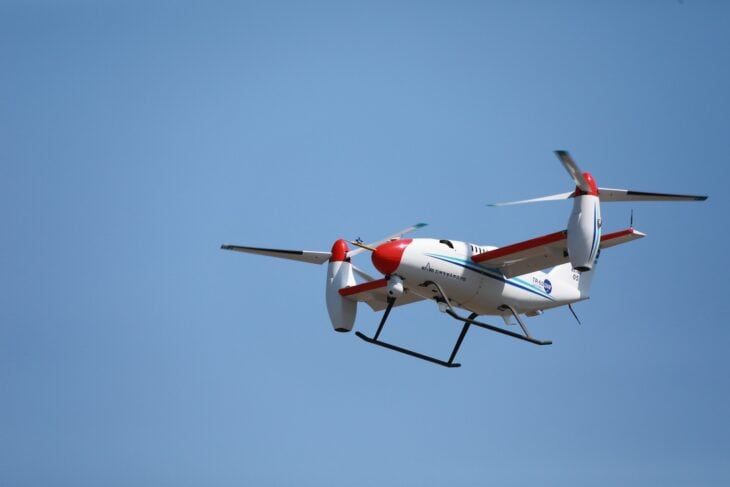

South Korea’s state aerospace institute, KARI, built this drone, and the program let Korea call itself the second country to develop tiltrotor technology. Flight testing began in 2008, and the drone flew publicly at Goheung on November 30, 2011.
The speed is a claim, not a published test result. A KARI researcher gave a top cruise speed of 500 km/h (311 mph), while a ministry official said 400 km/h, “twice as fast as a helicopter”.
KARI followed it with the smaller TR-60, a drone with a 463 lb (210 kg) maximum takeoff weight and a 155 mph (250 km/h) top speed, which landed itself on a moving ship in July 2017. Neither type has entered service.
8. Transcendental Model 1-G
The first tiltrotor to fly was not a Bell. The single-seat, piston-powered Transcendental Model 1-G made its first free flight on July 6, 1954, more than a year before the XV-3.
Its 160 mph (260 km/h) top speed is an estimate, because it never completed a full conversion: it reached about 75 degrees of tilt, with the wing carrying most of the weight. After more than 100 flights it crashed on July 20, 1955, and the only example was destroyed.
A larger Model 2 flew in 1956, but its funding went to the Bell XV-3 and the program ended in 1957. The tiltrotor’s story since then has been Bell’s to tell.
Tiltrotors that have hovered but not yet converted
Three newer aircraft have left the ground but have no confirmed flight in airplane mode, so they are not ranked yet. Any of them joins the list once it converts.
Leonardo NGCTR-TD. Europe’s Next Generation Civil Tiltrotor demonstrator, built on an AW609 fuselage with GE CT7 engines, made a short hover at Cascina Costa, Italy, on December 19, 2025. Leonardo targets a cruise speed of around 280 knots and a range of about 1,000 nautical miles.
United Aircraft R6000. China’s six-ton uncrewed tiltrotor made a tethered hover in November 2025 and its first free flight in June 2026. Its builder claims a cruise speed of up to 342 mph (550 km/h); a transition to airplane mode has not been confirmed.
China’s crewed tiltrotor demonstrator. Images in August 2025 showed an unnamed crewed tiltrotor lifting off and hovering, with clearer in-flight photos in June 2026. There is still no official statement, no specification and no confirmed conversion.
What comes next: the MV-75 Cheyenne II and the X-76
The next tiltrotor to enter service will be the Army’s MV-75 Cheyenne II, the production version of the V-280. Bell completed the first MV-75 fuselage in November 2026, six prototypes are on contract, and the Army plans to equip its first unit with 24 aircraft in fiscal 2030.
No date for its first flight has been announced. In October 2026 the Army dropped a plan to speed the program up because of funding, so the 2030 date is the one to watch.
Further out is Bell’s X-76, built for DARPA’s SPRINT program. It is a stop-fold tiltrotor that takes off like the V-280, then stops and folds its rotors in flight to go faster. It was in manufacturing as of March 2026.
What about the X-19, tiltwings and Joby's air taxi?
They are close cousins, not tiltrotors. The 1960s Curtiss-Wright X-19 tilted four propellers on two wings and is only sometimes counted; it crashed on August 25, 1965. Tiltwings rotate the whole wing with the engines on it. Electric air taxis such as the Joby S4 and Archer Midnight tilt several smaller propellers, which the industry calls tilt-prop or vectored thrust. The Bell V-247 Vigilant drone and the Bell Boeing Quad TiltRotor were designed but never built.
The air taxis are a different race, with batteries and smaller loads, and they are ranked in our guide to the eVTOL aircraft closest to carrying passengers. For conventional rotorcraft against the tiltrotor’s speed, see the fastest helicopters in the world.
FAQ
Sources and references used for research and fact-checking.
- Wikipedia, Bell Boeing V-22 Osprey
- Bell, U.S. Marine Corps MV-22 Program of Record Reaches Milestone
- DVIDS, Marine Corps completes MV-22B Osprey Program of Record
- The Aviationist, USMC receives final Osprey
- The Aviationist, Osprey returns to flight with new restrictions
- Leonardo Helicopters, AW609
- Wikipedia, AgustaWestland AW609
- AIN, Leonardo: AW609 Tiltrotor To Enter Service in 2027
- Wikipedia, Bell MV-75 Cheyenne II (V-280 Valor)
- AIAA, Bell's V-280 Valor technology demonstrator retires from flight
- Defense Daily, Army names FLRAA as Cheyenne II
- Stars and Stripes, Army MV-75 Cheyenne II tilt-rotor
- Air Data News, Bell completes first MV-75 Cheyenne fuselage
- Smithsonian National Air and Space Museum, Bell XV-15 TRRA Tilt Rotor Research Aircraft, Ship #2
- Wikipedia, Bell XV-15
- Wikipedia, Bell XV-3
- Wikipedia, Bell Eagle Eye
- Naval Technology, Eagle Eye Tiltrotor UAV
- FlightGlobal, Full-size Eagle Eye hovers
- Patuxent River Naval Air Museum, Unmanned aircraft collection
- UAS Vision, Korea's tilt-rotor UAV
- HeliHub, KARI Smart UAV shown in flight
- Airframer, Korea takes off with new advanced aircraft
- GBP, KARI shows off TR-60
- Aviation Week, South Korea flies tiltrotor UAS to ship
- Wikipedia, Transcendental Model 1-G
- The Aviationist, Leonardo NGCTR demonstrator first flight
- Aviation Week, Chinese R6000 large tiltrotor UAS makes first flight
- Militarnyi, Chinese tiltrotor R6000 performs first free flight
- The Aviationist, China's first manned tilt-rotor takes flight
- The Aviationist, Our best look at China's manned tiltrotor in flight
- AIAA, DARPA's SPRINT program advances as Bell's stop-fold tiltrotor becomes X-76
- Wikipedia, Curtiss-Wright X-19
- Wikipedia, Bell V-247 Vigilant
- Wikipedia, Bell Boeing Quad TiltRotor
- Vertical Flight Society (eVTOL.news), Archer Midnight
- Vertical Flight Society (eVTOL.news), Joby Aviation S4 production prototype
Get the Newsletter
The latest aviation news and stories sent to your inbox.
About the Author

Tim is the owner and lead editor of AeroCorner since 2019, overseeing aviation content covering aircraft, airlines, airports, and the broader aviation industry. Through years of researching, writing, editing, and publishing aviation-focused content, he has developed extensive practical knowledge of commercial aviation and air travel. Based in Asia and a frequent traveler himself, Tim also brings firsthand passenger experience to AeroCorner’s coverage. Outside of publishing, he has also explored aviation firsthand through hands-on flight training in New Zealand.