

Table of Contents
An ex-Air Canada jet first flown in 1974 spent 32 years as a flying launch pad. In July 2026 it released the last Pegasus rocket Northrop Grumman had left.
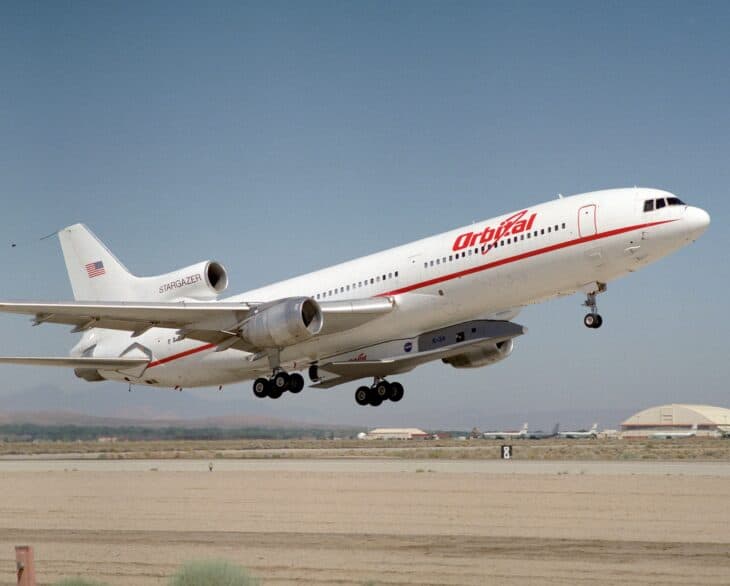
Of the 250 Lockheed L-1011 TriStars built between 1968 and 1984, only one is still in service: N140SC, a converted L-1011-100 TriStar that Northrop Grumman calls Stargazer.
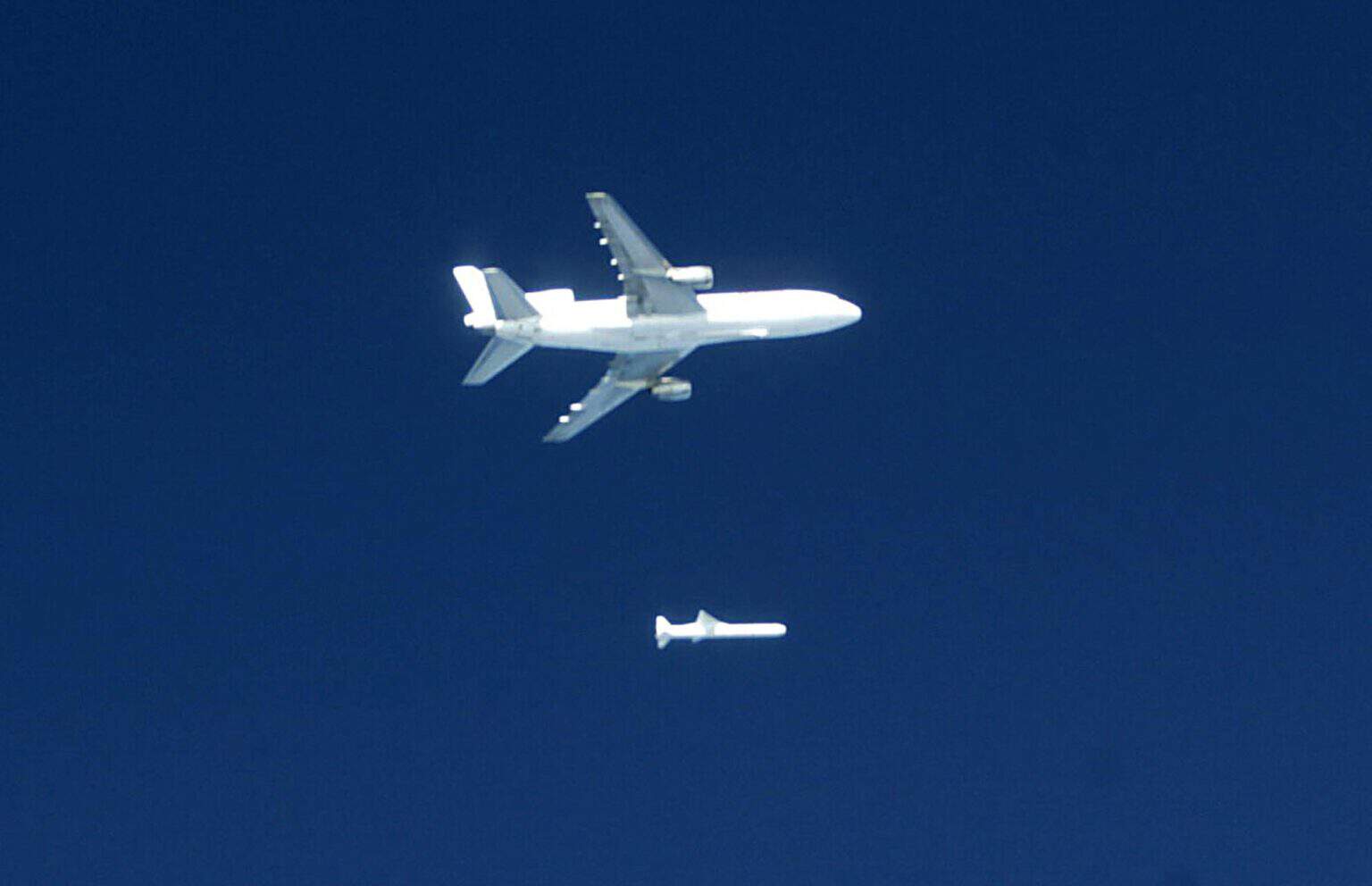
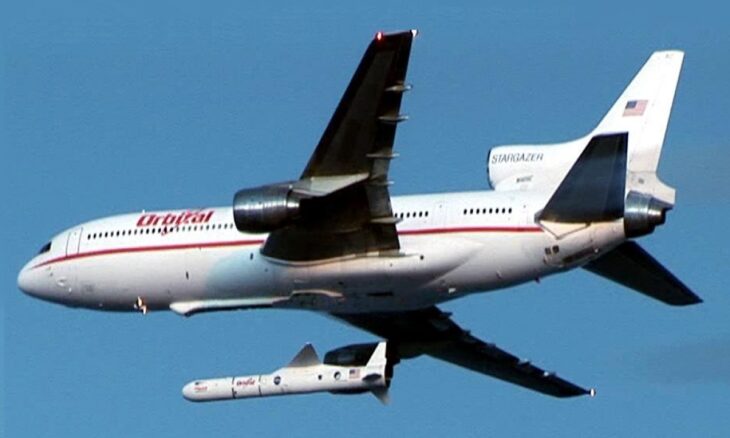
It does not carry passengers. It carries a winged rocket to about 40,000 feet (12,200 m), lets it fall for five seconds, and watches it light for orbit.
On July 3, 2026, it did that for the 40th time, from Kwajalein Atoll in the Pacific. Northrop says that was the last Pegasus mission it has on contract. The world’s last flying TriStar now has nothing scheduled to drop.
How a failed airliner became a rocket mothership
The TriStar was a fine airplane and a commercial disaster. It first flew on Nov. 16, 1970, and entered service with Eastern Air Lines in 1972, assembled at Lockheed’s plant in Palmdale, California.
Then its engine maker collapsed. Rolls-Royce went into receivership in February 1971 under the cost of developing the RB211, the TriStar’s only engine, and final assembly stalled until the British government agreed to fund the engine and Washington guaranteed Lockheed’s bank loans.
The delay handed the market to the McDonnell Douglas DC-10, which reached airlines about a year earlier and sold more than 400 copies. Lockheed needed around 500 TriStar sales to break even. It sold 250, ended production in 1984 and pulled out of the civil airliner business.
That left plenty of cheap, sturdy wide-bodies on the used market. One of them was C-FTNJ, which first flew on Feb. 22, 1974, and joined Air Canada that March.
It flew for Air Canada until 1990, apart from a short lease to Air Lanka in 1982, and went into storage at Marana, Arizona, that November. In May 1992, Orbital Sciences bought it and hired Marshall Aerospace in the UK to turn it into a carrier aircraft.
Orbital needed one. Its Pegasus rocket first flew on April 5, 1990, dropped from a NASA-owned B-52 Stratofortress. By 1994, Orbital had switched to its own converted TriStar.
Stargazer and Pegasus, by the numbers
Stargazer’s first Pegasus drop came on June 27, 1994. That launch failed, and the record improved from there.
Pegasus flew 46 times between 1990 and 2026: 41 successes, three failures and two partial failures, according to Wikipedia’s launch log. The B-52 carried six of the first seven. Stargazer carried the other 40.
Northrop Grumman says the rocket launched nearly 100 satellites. A fully loaded Pegasus XL weighs about 51,000 pounds (23,100 kg), yet it can put only 977 pounds (443 kg) into low Earth orbit.
What the airplane bought was freedom of location. Pegasus has flown from six sites in the US, Europe and the Marshall Islands, Northrop says. Stargazer’s departures have included Vandenberg in California, Cape Canaveral, Wallops Island in Virginia and Gando Air Base in Spain.

Price was the catch. A Pegasus launch cost about $40 million in 2017, a steep price for a payload under 1,000 pounds.
The flight rate fell away. Pegasus launched five or six times a year in the late 1990s, The Space Review reported. Before July 2026 it had not flown since June 13, 2021, and the Swift mission was only its sixth launch in 15 years.
The airframe kept changing underneath it. Stargazer swapped its original 42,000-pound-thrust RB211-22 engines for 50,000-pound RB211-524s in 2010, then wore Orbital ATK colors from 2015 and Northrop Grumman’s from 2018.
The last drop was a rescue mission that did not work
The final Pegasus had a dramatic job. NASA’s Neil Gehrels Swift Observatory, launched in 2004 to hunt gamma-ray bursts, was sinking faster than expected because intense solar activity was increasing atmospheric drag.
NASA paid Katalyst Space $30 million to build LINK, a robotic servicer meant to grab Swift and push it higher. Katalyst picked Pegasus for its short timeline: the rocket had been built for another customer and was sitting in storage.
Stargazer left NASA’s Wallops Flight Facility on June 18, 2026, with the rocket attached, and flew via California and Hawaii to Kwajalein. Weather scrubbed attempts on June 30 and July 1, and a Pegasus problem stopped the July 2 try.
On July 3, the TriStar took off at 4:26 a.m. Eastern time and released Pegasus at about 40,000 feet. Northrop confirmed the rocket put LINK in orbit.
Then LINK failed. Katalyst says an electrical power fault left two of its three reaction wheels unusable and sent it into a multi-axis spin, and fighting that spin burned its thruster fuel.
NASA and Katalyst dropped the capture in August. LINK came within 7.5 to 9 miles (12 to 15 km) of Swift, never touched it, and reentered on Sept. 25 after 85 days in orbit, Katalyst said.
Swift is still working: NASA had all three of its instruments back on by late September. Without a boost, NASA expects it to reenter later this year.
What happens to the last TriStar now
Pegasus is out of rockets. The Swift flight used the last Pegasus XL in Northrop’s inventory, and Northrop’s Wes Collier told The Space Review before the launch: “This is the last mission that we have on contract today.”
Collier also said Northrop remained open to follow-on Pegasus contracts. Nobody has announced one, so Stargazer’s rocket career is on hold rather than formally over.
The jet has had other work. It has supported the X-34 program, and in August 2020 The War Zone tracked it flying a two-hour racetrack over the Pacific from Edwards Air Force Base at about 40,000 feet, with no NOTAMs issued.

Every other TriStar is out of service. The last scheduled passenger operators, Brussels Airlines, Thai Sky Airlines and Lloyd Aéreo Boliviano, retired theirs in 2007 and 2008, which is why our ranking of the worst aircraft still in service files the TriStar with the retired first generation.
Three TriStars were still airworthy in 2014. The last one to fly besides Stargazer was N910TE, a former flying hospital that volunteers restored as a STEM classroom and flew as recently as December 2022. TriStar500.net, which tracks the type, now lists it on display at Kansas City International Airport.
Lockheed built the TriStar to carry airline passengers. The one that outlived all the others did it by carrying a single passenger with wings nearly eight miles up, 40 times.
Sources and references used for research and fact-checking.
- Wikipedia, Lockheed L-1011 TriStar
- Wikipedia, Stargazer (aircraft)
- Wikipedia, Pegasus (rocket)
- Northrop Grumman, Pegasus Rocket
- The Space Review, A swift effort to boost the prospects for satellite servicing
- NASA, Aircraft Carrying Swift Boost Satellite Takes Off from NASA Wallops
- SpacePolicyOnline, Katalyst's LINK On Its Way to Reboost Swift
- SpacePolicyOnline, Swift Reboost Mission Encounters Setback
- NASA, Commercial Spacecraft for NASA's Swift Boost Continues Tech Demo
- Katalyst Space, Katalyst Concludes LINK Mission, Advances Future Robotic Space Operations
- SpacePolicyOnline, Swift Rescue Mission May Not Have Succeeded, But No Regrets
- NASA, Neil Gehrels Swift Observatory blog
- The War Zone, Is The Stargazer Air-Launch Mothership About To Test A Secretive Air Force Payload?
- The Autopian, The Last Two Operational Lockheed L-1011 TriStars Spend Their Days Launching Rockets And Educating Kids
- TriStar500.net, TriStar500.net Blog, 2026 posts
Get the Newsletter
The latest aviation news and stories sent to your inbox.
About the Author

Tim is the owner and lead editor of AeroCorner since 2019, overseeing aviation content covering aircraft, airlines, airports, and the broader aviation industry. Through years of researching, writing, editing, and publishing aviation-focused content, he has developed extensive practical knowledge of commercial aviation and air travel. Based in Asia and a frequent traveler himself, Tim also brings firsthand passenger experience to AeroCorner’s coverage. Outside of publishing, he has also explored aviation firsthand through hands-on flight training in New Zealand.