

Table of Contents
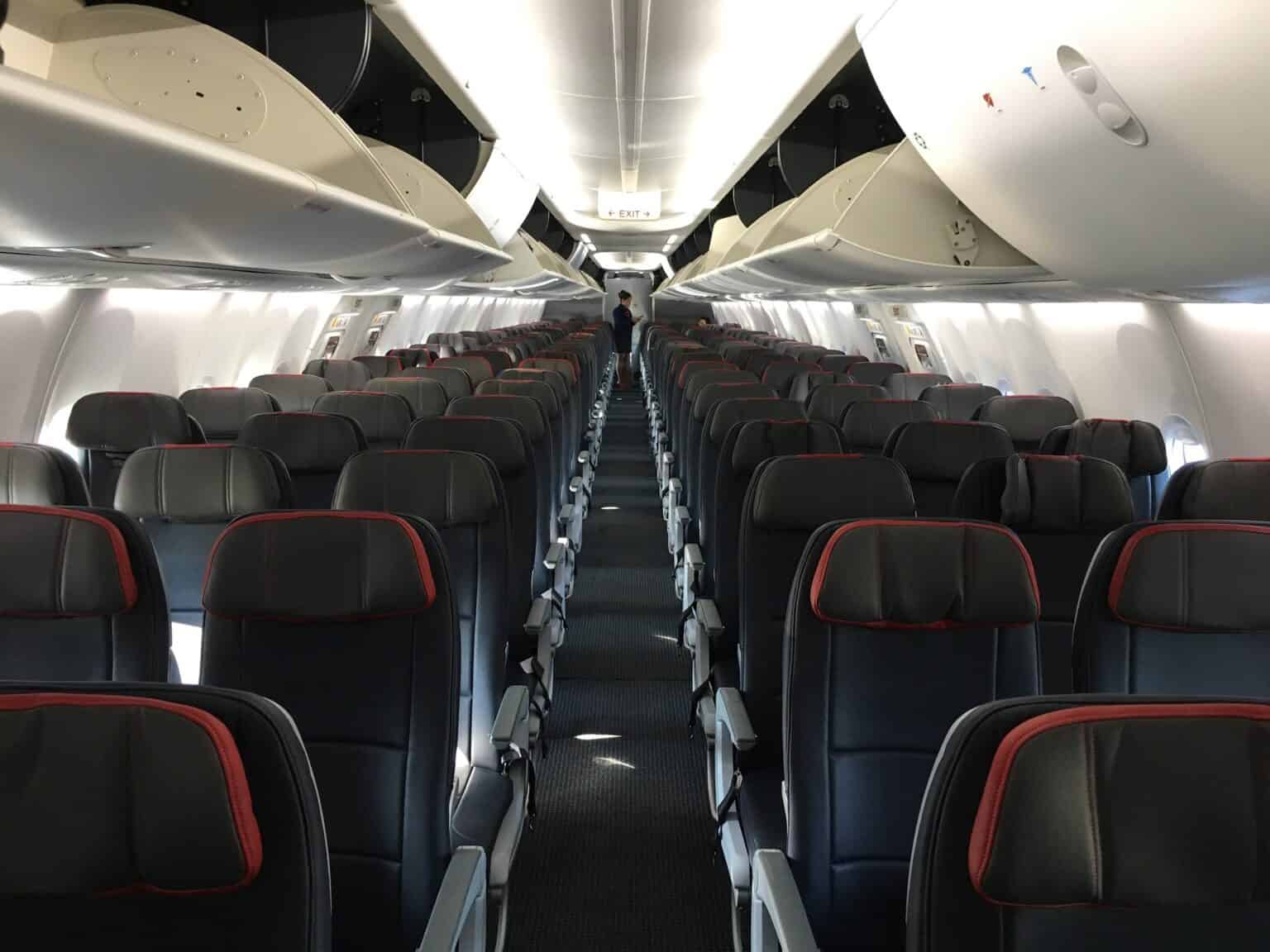
Board a Delta 737-800 and you share the cabin with up to 159 other passengers. Board a Ryanair 737-800, the same model of airplane, and there are 189 seats.
Across the family, a Boeing 737 in US service seats 124 to 180 people, according to the airlines’ 2025 annual reports and Delta’s seat maps, and Boeing’s own figures run up to 230 for the new 737-10. The most common answer, for a 737-800 or 737 MAX 8 at a major US airline, is 160 to 175 seats.
How Many Seats Are on a 737?
There is no single number, because “737” covers a family of jets that first flew in 1967 and has been stretched several times since. Each length has a typical layout chosen by the airline and a hard ceiling set by its certificate.
The figures below come from three places: the seat counts that Southwest, United, American and Alaska filed in their annual reports for December 31, 2025, Boeing’s current 737 MAX specifications, and the maximum passenger limits in the European type certificate for the 737 (EASA TCDS IM.A.120, Issue 30, October 28, 2026).
The 737 seat count at a glance
Fewest in US service: 124 (Alaska 737-700). Most common: 160 to 175 on a 737-800 or MAX 8. Most in US service: 180 (Delta 737-900ER). Highest certified ceiling: 230, Boeing’s maximum for the 737-10.
Seats on every 737 variant
The table splits the family by model. “Typical” is what airlines actually install or what Boeing quotes for a two-class cabin. “Maximum” is the most passengers the model is certified to evacuate, which no airline in the US gets close to.
| Variant | Typical seats | Maximum passengers |
|---|---|---|
| 737-700 | 124 to 143 | 149 |
| 737-800 | 159 to 189 | 189 |
| 737-900 | 179 | 189 |
| 737-900ER | 173 to 180 | 220 |
| 737 MAX 7 (737-7) | 135 to 160 | 172 |
| 737 MAX 8 (737-8) | 159 to 180 | 189 |
| 737-8200 (high-density MAX 8) | 197 | 202 |
| 737 MAX 9 (737-9) | 175 to 195 | 220 |
| 737 MAX 10 (737-10) | 185 to 210 | 230 |
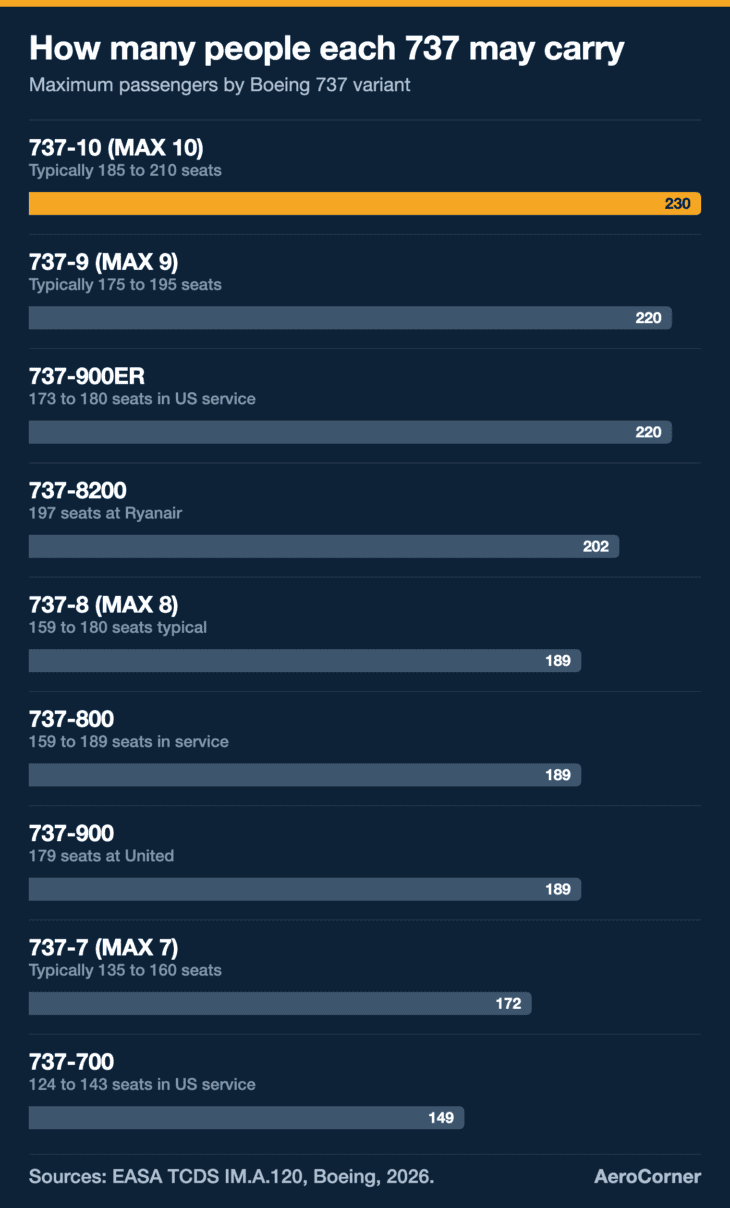
The surprise in the chart is the 737-900. It is the same length as the 737-900ER, yet its ceiling is 189, the same as the shorter 737-800. The difference is doors.
The original 737-900 kept the 737-800’s exit layout: two doors at each end and two over-wing exits a side. The 737-900ER added a pair of mid-cabin exit doors, and the EASA certificate raises its limit to 220 with them, or drops it back to 189 when they are blocked off.
How many seats each US airline puts on its 737s
The airlines that fly the most 737s each publish a standard seat count in their annual reports. Southwest alone operated 803 Boeing 737s at the end of 2025.
| Airline | 737-700 | 737-800 | 737 MAX 8 | 737-900ER | 737 MAX 9 |
|---|---|---|---|---|---|
| Southwest | 143 (137 after retrofit) | 175 | 175 | n/a | n/a |
| United | 126 | 166 | 166 | 179 | 179 |
| American | n/a | 172 (average) | 172 (average) | n/a | n/a |
| Alaska | 124 | 159 to 161 | 159 to 161 | 178 | 178 |
| Delta | n/a | 160 | n/a | 173 to 180 | n/a |
Southwest packs the most seats into its 737-800s and MAX 8s, at 175. Delta, at the other end, gives up 15 seats on the same airframe for 16 first-class seats and 54 Delta Comfort seats with extra legroom.
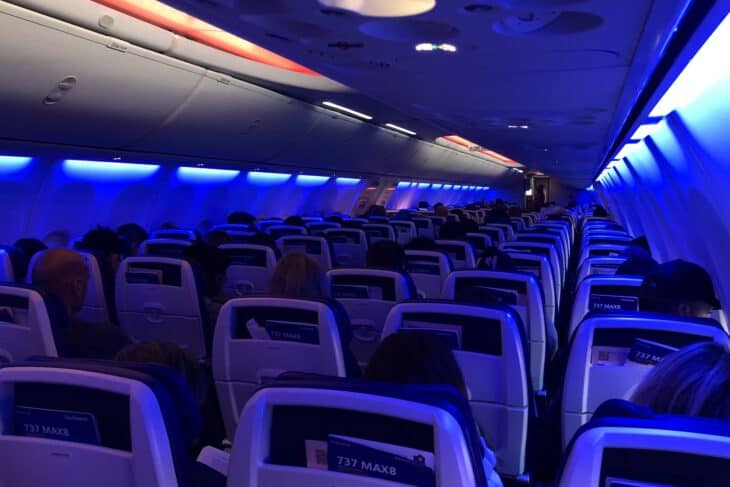

Southwest is also moving down, not up. Its 10-K notes that in January 2026 it finished cutting its 737-700s from 143 seats to 137 to make room for extra-legroom rows.
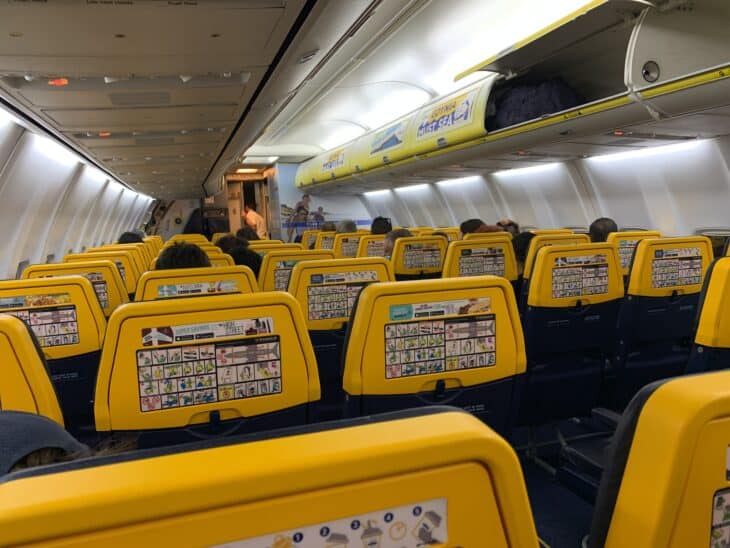
Europe flies a denser version still. Ryanair’s 737-8200, a MAX 8 with an extra pair of exit doors, has 197 seats, up from 189 on the airline’s 737-800s, according to Ryanair’s announcement of its first delivery. Seat count is only half of comfort: width matters too, as our ranking of economy seat widths by airline shows.

Why the numbers differ
Search for 737 seats and you will see 162 to 189, 172, 175, 210 and 230 quoted as “the” answer. Most of them are correct for something. They just measure different things.
The 189 figure is a ceiling, not a layout
The most repeated 737-800 number, 189, is the most passengers the jet is certified to evacuate through its doors. Ryanair fills it. No major US airline does: their 737-800s carry 159 to 175 seats.
Typical versus maximum. Boeing’s “two-class” ranges assume a first-class cabin. Its “maximum seats” figure is an all-economy cabin at the evacuation limit. Airlines choose a number somewhere below that.
Boeing’s 210 for the MAX 8. Boeing lists the 737-8 at up to 210 maximum seats. The European certificate splits that: a standard 737-8 is limited to 189 passengers, and the high-density 737-8200, with its extra exits, to 202.
That 202 has an unusual second limit. The certificate adds that a 737-8200 may carry no more than 207 people in total, passengers plus cabin crew, because of how much fresh air its ventilation system delivers per occupant.
Averages. American reports an “average seating capacity” of 172 for its 737-800s and MAX 8s, so individual aircraft can differ slightly from it.
Why 737 seat counts cluster below 150 and 200
Doors set the ceiling, but a staffing rule shapes the numbers underneath it. Under the FAA’s rule for US airlines, 14 CFR 121.391, a jet with 101 to 150 seats needs three flight attendants, and every further block of 50 seats, or part of one, adds another.
So a 737-700 with 143 or 149 seats needs three flight attendants, and a 151st seat would require a fourth. The 737-800s and MAX 8s, at 159 to 175 seats, all sit in the four-attendant band that runs to 200.
The same arithmetic applies higher up. Under the US rule, 197 seats, the 737-8200’s count at Ryanair, would still need four flight attendants, and a 201st seat would need a fifth.
Where 737 seat counts are going
The 737 keeps getting longer, and the ceiling keeps rising with it. The first 737-100 entered service with Lufthansa in 1968, and the 737-10, the longest version, received its amended FAA type certificate on October 20, 2026, as AeroCorner reported when the MAX 10 was certified.
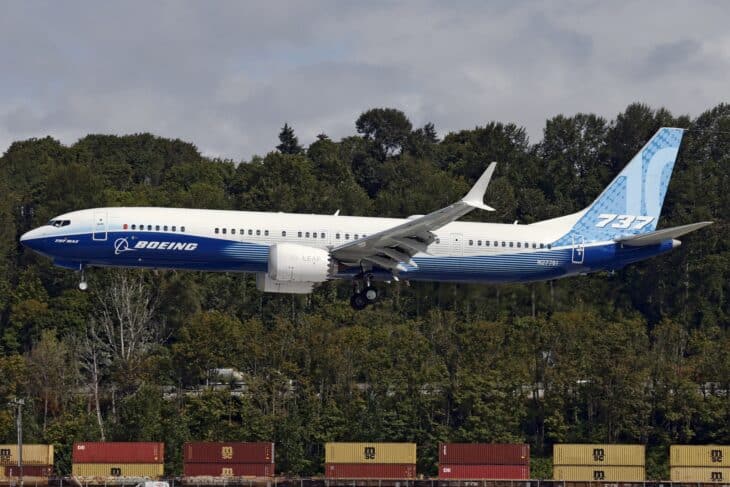

Boeing quotes the 737 MAX 10 at 185 to 210 seats in two classes and up to 230 at the limit. United had 167 of them on firm order at the end of 2025, its 10-K shows.
Inside existing fleets, the trend runs the other way. Southwest’s cut on the 737-700 and Delta’s large Comfort section show US airlines giving up seats for extra-legroom space. For how many of these jets are flying in all, see our count of how many Boeing 737s there are.
FAQ
Sources and references used for research and fact-checking.
- European Union Aviation Safety Agency, Type-Certificate Data Sheet EASA.IM.A.120, Boeing 737, Issue 30
- Boeing, 737 MAX technical specifications
- Boeing, FAA certifies Boeing 737-10
- U.S. Securities and Exchange Commission, Southwest Airlines 2025 Form 10-K
- U.S. Securities and Exchange Commission, United Airlines Holdings 2025 Form 10-K
- U.S. Securities and Exchange Commission, American Airlines Group 2025 Form 10-K
- U.S. Securities and Exchange Commission, Alaska Air Group 2025 Form 10-K
- Delta Air Lines, Boeing 737-800
- Delta Air Lines, Boeing 737-900ER
- Ryanair, Ryanair takes delivery of 1st Boeing 737 Gamechanger aircraft
- eCFR, 14 CFR 121.391, Flight attendants
- Wikipedia, Boeing 737
Get the Newsletter
The latest aviation news and stories sent to your inbox.
About the Author

Tim is the owner and lead editor of AeroCorner since 2019, overseeing aviation content covering aircraft, airlines, airports, and the broader aviation industry. Through years of researching, writing, editing, and publishing aviation-focused content, he has developed extensive practical knowledge of commercial aviation and air travel. Based in Asia and a frequent traveler himself, Tim also brings firsthand passenger experience to AeroCorner’s coverage. Outside of publishing, he has also explored aviation firsthand through hands-on flight training in New Zealand.