

Table of Contents
Nobody involved had been to a country where malaria exists. The parasite arrived the way everything else at Frankfurt arrives, which is by air.
Six people who work at Frankfurt Airport fell ill with malaria tropica in July 2026, and two of them died. On September 15 the city’s health authority reported two more cases, both residents of Schwanheim, a district a few miles from the runways.
One of those two patients died on September 17, which brought the cluster to eight infections and three deaths.
All eight infections are Plasmodium falciparum, the deadliest of the malaria parasites. None of the patients had travelled to a country where malaria is endemic, and none of them could have caught it from another person.
What makes the cluster remarkable is the base rate. Across the whole of Europe, this has happened 145 times since 1969, and only eight of those cases were ever traced to Frankfurt.
A Mosquito Boarded an Aircraft in the Tropics and Got Off in Hesse
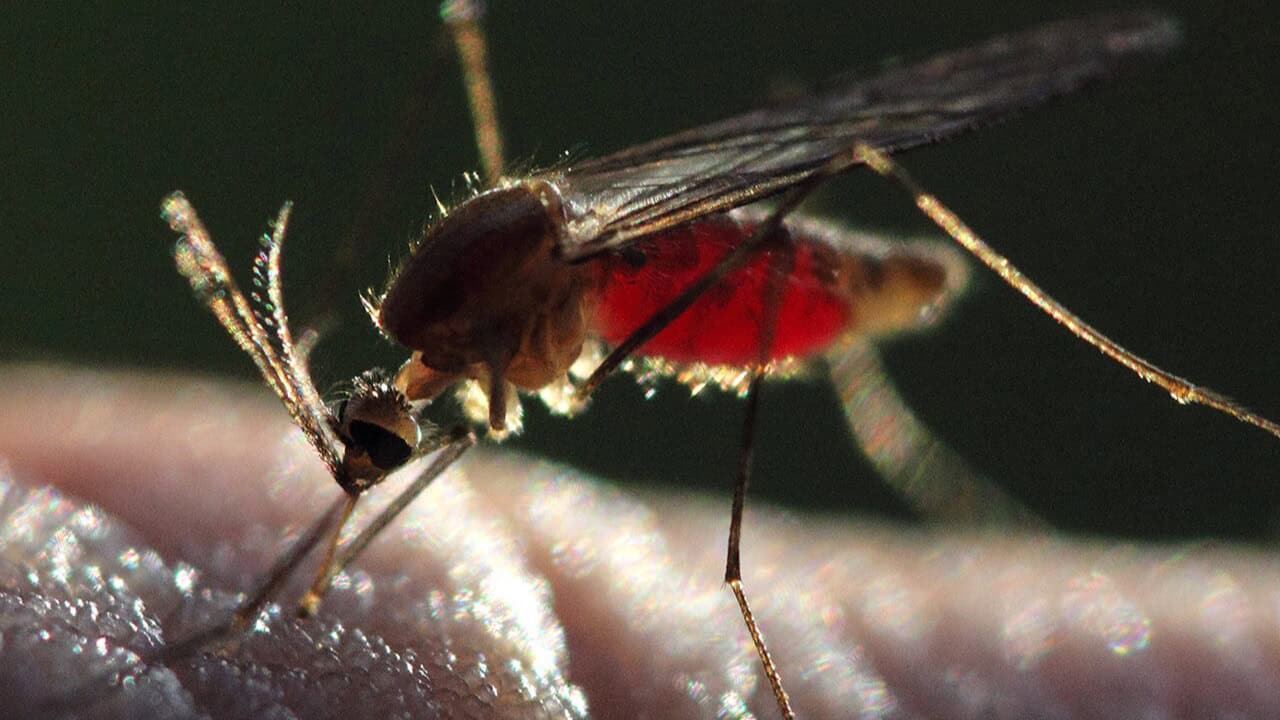
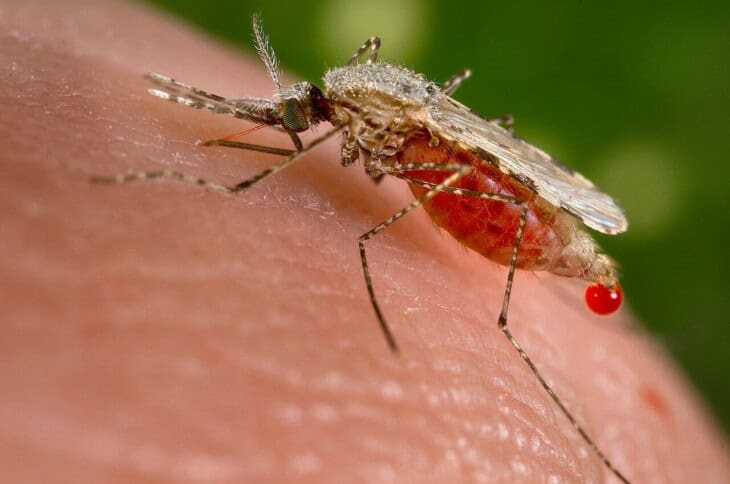
The phenomenon has a name. Airport malaria is what happens when an infected Anopheles mosquito is carried out of an endemic region aboard an aircraft, survives the journey, and bites someone at the other end.
When the first six cases surfaced in July, investigators suspected a mosquito that had come in with freight. That is a plausible route at Frankfurt Airport.
It moved roughly 2.1 million metric tons of freight and mail in 2025 and finished the year as the busiest cargo airport in Europe, narrowly ahead of Istanbul and Paris Charles de Gaulle.
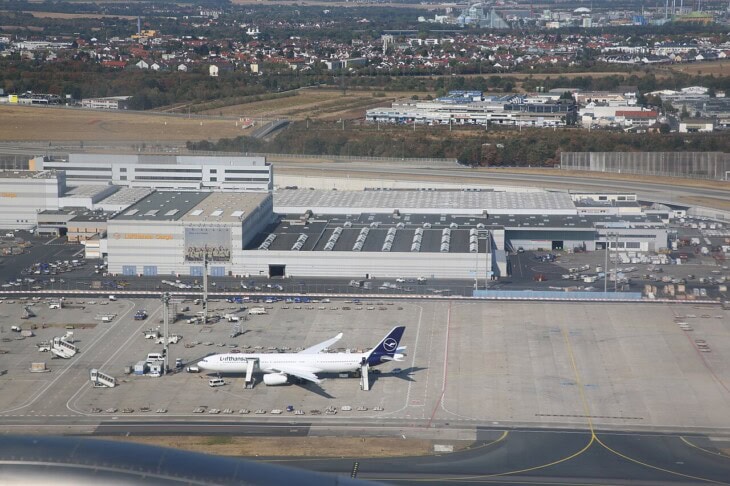
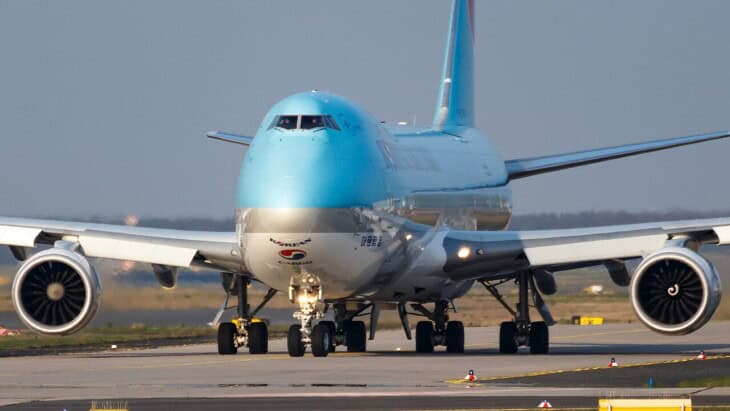
Lufthansa Cargo alone bases 18 Boeing 777 freighters at Frankfurt, and its 2026 summer schedule includes daily service to Nairobi. Passenger widebodies add their own connections to Africa’s major hubs, among them Lagos, Abuja, Luanda and Malabo, all in countries where malaria is endemic.
Across the whole airport, 94 airlines served 301 destinations in 96 countries during 2025. Every one of those flights is a sealed container that leaves one climate and opens in another a few hours later.
What makes summer different is that the insect survives the arrival. A tropical mosquito that gets out onto a cold apron dies quickly, which is why these cases cluster in the warmest months.
It then has to find someone. The two Schwanheim patients live inside a radius of about three miles (5 km) from the airport, and neither of them works there.
“Mosquitoes that come to Frankfurt via the airport can move over several kilometers. In this case we assume that a mosquito very probably flew that far and then infected the two people who fell ill.”
Peter Tinnemann, head of the Frankfurt health authority, speaking to hessenschau
Airport Malaria Kills Seven Times More Often Than the Travel Kind
The systematic review behind that figure of 145 covered nine European countries between 1969 and January 2024. France had the most cases with 52, and Paris Charles de Gaulle accounted for more of them than any other airport in Europe.
Belgium was next with 19. Germany was third with nine, and eight of those nine were Frankfurt.
Eight cases in fifty-five years, then eight more between July and September 2026. The Frankfurt health authority has said that an infection of this kind among people who simply live near a German airport has not been recorded in decades.
The seasonality in the review is stark. Of the airport malaria cases with a recorded month, 83 fell between June and September, with the peak in August.
So is the distance. Airport malaria patients lived an average of 2.7 miles (4.3 km) from the airport involved, which is almost exactly where the Schwanheim cases sit.
And so is the death rate. Among the European cases with a documented outcome, about 6.8 percent were fatal, against roughly 1 percent for malaria caught while travelling.
The reason is not a different parasite. It is that nobody suspects malaria in a patient who has not been anywhere, so the average diagnosis took 7.5 days instead of the three days typical for travel-acquired cases. Plasmodium falciparum can turn severe within hours.
Germany Does Not Require Arriving Aircraft to Be Sprayed
There is an established aviation countermeasure for exactly this problem. It is called disinsection, and the WHO and ICAO recognize two methods: spraying an aerosol insecticide in the cabin, or treating interior surfaces with a residual insecticide while nobody is aboard.
Plenty of countries require it. India, Madagascar, Tanzania, Zimbabwe, Seychelles and others mandate an aerosol spray on every inbound flight, while Australia and New Zealand accept the residual method instead.

Aviation does spray for mosquitoes elsewhere. The US Defense Department keeps a single Air Force Reserve wing of C-130s rigged for large-area aerial mosquito control, the only fixed-wing unit of its kind.
None of that effort is aimed at the aircraft themselves, and none of it applies in Europe.
Several European states apply it selectively. France requires disinsection on flights from areas with malaria, yellow fever or dengue, Switzerland on flights from intertropical Africa, Italy on flights from areas with Zika or the Aedes aegypti vector, and the UK asks for it voluntarily on flights from malarial countries.
Germany appears on none of those lists. The 2024 review put it plainly: there are no standardized disinsection procedures across the EU and EEA, only individual national rules in a handful of member states.
That is not a clean explanation for what happened, and it should not be sold as one. France requires disinsection and still has more airport malaria cases than anywhere else in Europe.
Part of that is simply volume, because France also has the most flights from endemic regions. Part of it is that the same review found nobody has properly measured how consistently the spraying is done or how well it works.
What the Frankfurt cluster establishes is narrower and harder to argue with. A hub can move 63.2 million passengers and 2.1 million metric tons of freight a year, fly daily to malaria-endemic Africa, and still treat the insects aboard those aircraft as nobody’s specific responsibility.
The Traps Have Not Caught the Mosquito
Mosquito traps are running at the airport and the monitoring has been extended into Schwanheim. As of the health authority’s September 16 update, no Anopheles mosquitoes had been found in any of them.
Insects collected in the airport traps during July and August went to a laboratory in Antwerp for analysis, and those results were not back either. Laboratory work on the parasites themselves should eventually show whether all eight infections trace to a single source, but the authority expects that to take several more weeks.
Officials cannot say whether one mosquito or several were involved, whether the insect is still alive, or which flight, hold or suitcase it came out of.
Doctors across the Rhine-Main region have been told to consider malaria in a feverish patient with no travel history. Fraport has alerted every airport badge holder, and a public hotline is fielding five to ten calls an hour.
The assessed risk to the general population remains very low. Malaria tropica has an incubation period of 7 to 15 days, so the window for any remaining exposure to show up is a short one.
The German autumn will close this particular cluster on its own, because a tropical Anopheles does not last long once the temperature drops. It will not close the route that brought it here, which runs every day, in both directions, in the hold of an ordinary widebody.
Sources and references used for research and fact-checking.
- Stadt Frankfurt am Main, Gesundheitsamt, Flughafenmalaria FAQs
- hessenschau, Malaria-Falle in Frankfurt: Eingeschleppte Mucken fliegen ins Stadtgebiet
- Al Jazeera, Third person dies from malaria in cluster near Germany's Frankfurt Airport
- Eurosurveillance / PubMed Central, Airport and luggage (Odyssean) malaria in Europe: a systematic review
- Gavi, the Vaccine Alliance, Can malaria-carrying mosquitoes really hitch a ride on planes?
- U.S. Department of Transportation, Aircraft Disinsection Requirements
- Fraport AG, Fraport Traffic Figures 2025: Broad Growth Across Airport Portfolio
- Air Cargo News, Frankfurt back on top as cargo volumes grow at European hubs
- Lufthansa Cargo AG, Lufthansa Cargo has launched its summer flight schedule 2026
- Wikipedia, List of Lufthansa destinations
Get the Newsletter
The latest aviation news and stories sent to your inbox.
About the Author

Tim is the owner and lead editor of AeroCorner since 2019, overseeing aviation content covering aircraft, airlines, airports, and the broader aviation industry. Through years of researching, writing, editing, and publishing aviation-focused content, he has developed extensive practical knowledge of commercial aviation and air travel. Based in Asia and a frequent traveler himself, Tim also brings firsthand passenger experience to AeroCorner’s coverage. Outside of publishing, he has also explored aviation firsthand through hands-on flight training in New Zealand.