

Table of Contents
The best personal helicopter for most private owners in 2026 is the Robinson R66 NxG. It is a five-seat turbine with a glass cockpit and a standard autopilot, and Robinson lists it at $1,563,500, a price most turbine makers will not even publish.
This list ranks nine factory-built helicopters you can order new today by how well they suit a private owner. That means the cost to buy and fly where the maker publishes it, safety design, cabin and performance, and how easy the aircraft is to keep flying.
If you only care about the lowest sticker price, our cheapest helicopters you can buy list covers kits and two-seat trainers. This one is about the helicopter you would actually want to own.
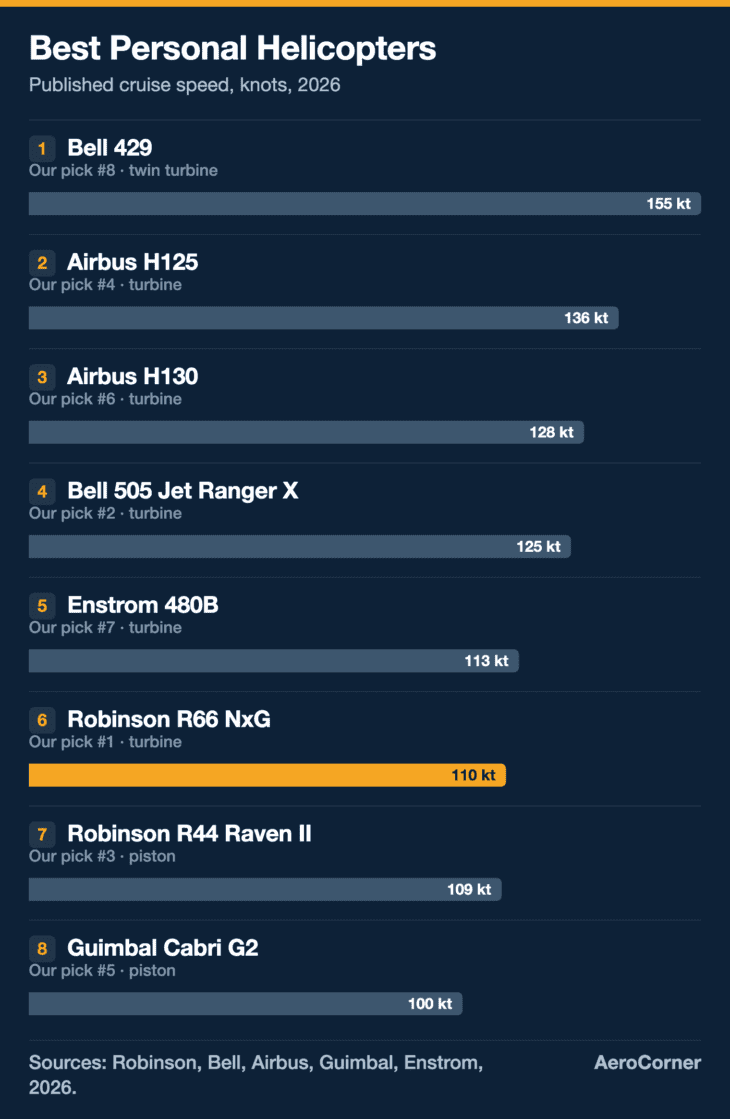
| Rank | Helicopter | Seats | Cruise speed | Engines | 2026 US list price |
|---|---|---|---|---|---|
| 1 | Robinson R66 NxG | 5 | 110 kt | 1 turbine | $1,563,500 |
| 2 | Bell 505 Jet Ranger X | 5 | 125 kt | 1 turbine | Quote only |
| 3 | Robinson R44 Raven II | 4 | 109 kt | 1 piston | $646,000 |
| 4 | Airbus H125 | Up to 7 | 136 kt | 1 turbine | Quote only |
| 5 | Guimbal Cabri G2 | 2 | 100 kt | 1 piston | Quote only |
| 6 | Airbus H130 | Up to 8 | 128 kt | 1 turbine | Quote only |
| 7 | Enstrom 480B | 5 | 113 kt | 1 turbine | Quote only |
| 8 | Bell 429 | 8 | 155 kt | 2 turbines | Quote only |
| 9 | Leonardo AW109 Trekker | Up to 8 | 148 kt | 2 turbines | Quote only |
How this ranking works
We ranked helicopters a private owner can order new in 2026, judged on four things: published purchase and operating cost, safety design, cabin and performance, and how simple the aircraft is to own. Kits, used-only models and aircraft still in development are left out. Only Robinson publishes US list prices and operating-cost estimates, so every other price here is a quote from the factory or a dealer.
1. Robinson R66 NxG
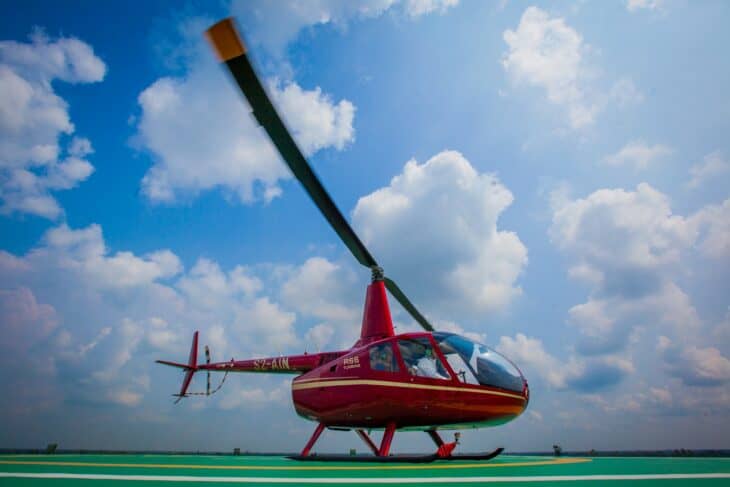

The Robinson R66 wins because it gives a private owner a turbine for close to piston money. The NxG Palo Verde lists at $1,563,500 as of Robinson’s January 1, 2026 price list, with a Garmin glass cockpit, a two-axis autopilot, air conditioning and leather seats all standard.
Its Rolls-Royce RR300 is derated to 270 shp for takeoff and 224 shp continuous. Robinson quotes a cruise of up to 110 knots at its 2,700-pound (1,225 kg) maximum gross weight and a range of about 350 nautical miles with no reserve.
Robinson’s own 2026 estimate puts the R66 at $475.24 per flight hour, assuming 500 hours a year. The FAA certified it on October 25, 2010, and about 1,500 had been built by 2024, so parts, mechanics and resale buyers are easy to find.
A turbine for the price of a nicer piston
Robinson’s R66 NxG costs $917,500 more than its own piston R44 Raven II, yet Robinson calls the R66 the industry’s best-selling light single turbine. Its standard two-axis autopilot is, in Robinson’s words, an industry first for a light helicopter.
2. Bell 505 Jet Ranger X

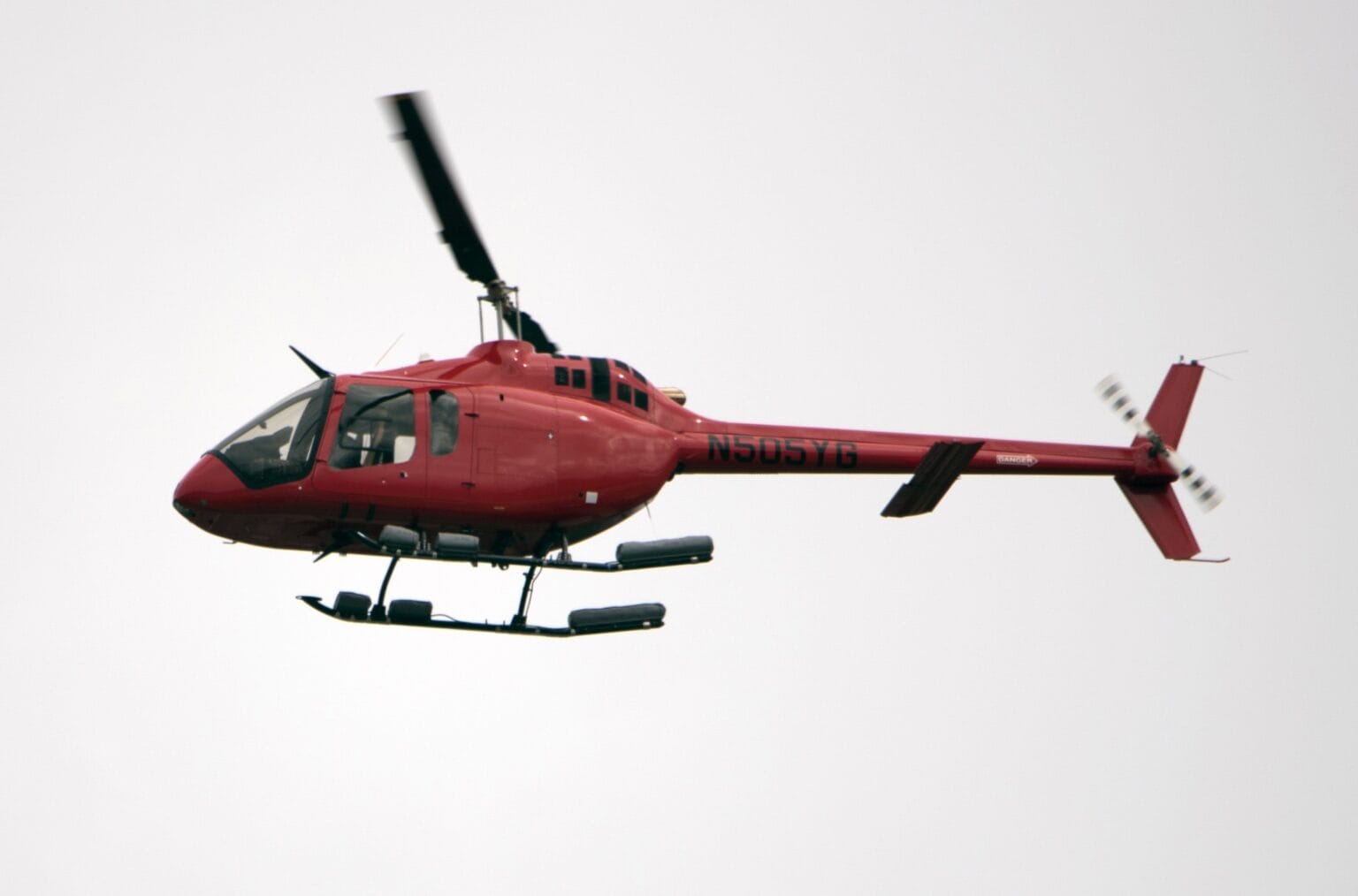
The Bell 505 Jet Ranger X is the R66’s real rival, and it is the faster of the two. Bell lists a maximum cruise of 125 knots and a range of 306 nautical miles, with one pilot and four passengers.
Its turbine makes 505 shp for takeoff, and Bell calls it the only dual-channel engine in its class. Bell quotes a hover ceiling of 10,460 feet out of ground effect and a useful load of 1,500 pounds (680 kg).
It ranks second for one reason: Bell does not publish a price, so you negotiate. For an owner who wants a big-name turbine and a little more speed, it is the natural alternative to the Robinson.
3. Robinson R44 Raven II

The Robinson R44 Raven II is Robinson’s least expensive four-seat helicopter. It lists at $646,000 with standard equipment, and its fuel-injected Lycoming IO-540 cruises at up to 109 knots with a range of about 350 nautical miles.
Robinson’s 2026 estimate is $331.43 per flight hour at 500 hours a year. The Clipper II float versions cost $689,500 with fixed floats and $735,500 with pop-out floats, which matters if you live near water.
The catch is training. The FAA’s Special Federal Aviation Regulation 73 applies only to the R22 and R44, requiring ground training on mast bumping, low rotor RPM and low-G before anyone touches the controls, and extra hours or training before acting as pilot in command.
4. Airbus H125
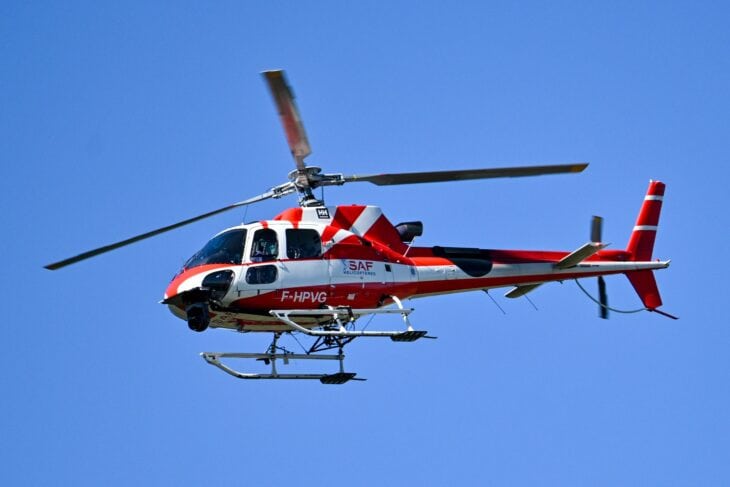

The Airbus H125, the current version of the AS350 Ecureuil, is the most powerful single-engine helicopter on this list. Airbus quotes a fast cruise of 136 knots, a range of 340 nautical miles at maximum takeoff weight, and up to seven people on board.
Its Safran Arriel 2D makes 952 shp at takeoff, and in 2005 an AS350 B3 landed on the summit of Mount Everest at 29,029 feet (8,848 m). Airbus says about 4,200 of the family are in service worldwide.
For a private owner that power is often more than the mission needs, and it comes with a bigger engine to maintain and a price Airbus only quotes. It ranks fourth because it is a working helicopter first and a personal one second.
5. Guimbal Cabri G2
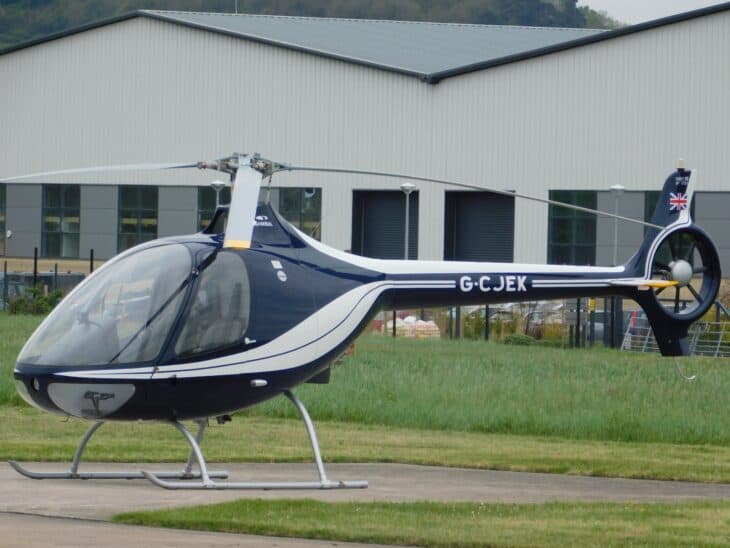
The Guimbal Cabri G2 is the two-seat helicopter to buy if safety design is your first filter. Its certified crash tests showed occupants surviving a 2,000 feet-per-minute vertical impact, and it carries stroking seats, a crash-resistant fuel tank and a shrouded tail rotor.
Guimbal says it is the only piston helicopter certified to the EASA CS-27 and FAR 27 standards. Its Lycoming O-360-J2A is flat-rated to 160 hp for takeoff, the maximum gross weight is 1,540 pounds (700 kg), and it cruises at up to 100 knots indicated.
Two seats limit it to the owner and one passenger, which is why it is not higher. As a first helicopter or a weekend machine for two, nothing else in this class is built as carefully.
6. Airbus H130
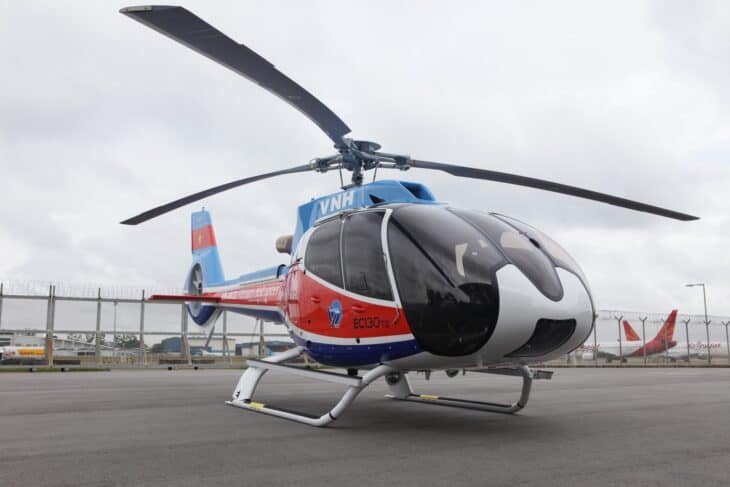

The Airbus H130, the newest form of the EC130, is the single-engine choice for an owner who carries family and friends. It seats a pilot and up to seven passengers in a cabin with a flat floor, and Airbus quotes a fast cruise of 128 knots and a range of 327 nautical miles.
Its party trick is noise. Airbus says the Fenestron tail rotor and variable rotor speed keep it 6 dB below ICAO limits and under Grand Canyon National Park’s strict limits, which matters if you fly into a home pad near neighbors.
7. Enstrom 480B

The Enstrom 480B is back on sale. Enstrom announced on April 10, 2026 that the FAA and EASA had cleared the turbine 480B for new deliveries, with aircraft 5261 the first new one signed off.
Its Rolls-Royce 250-C20W makes 305 shp, and Enstrom lists a maximum cruise of 113 knots at 3,000 feet and a range of 360 nautical miles with no reserve. The 3,000-pound (1,361 kg) maximum gross weight leaves a 1,180-pound (535 kg) useful load.
It ranks seventh only because Enstrom says it is still building up its network of authorized dealers and service centers. Buyers who want something rarer than a Robinson, with a wide cabin, should get on Enstrom’s list.
8. Bell 429
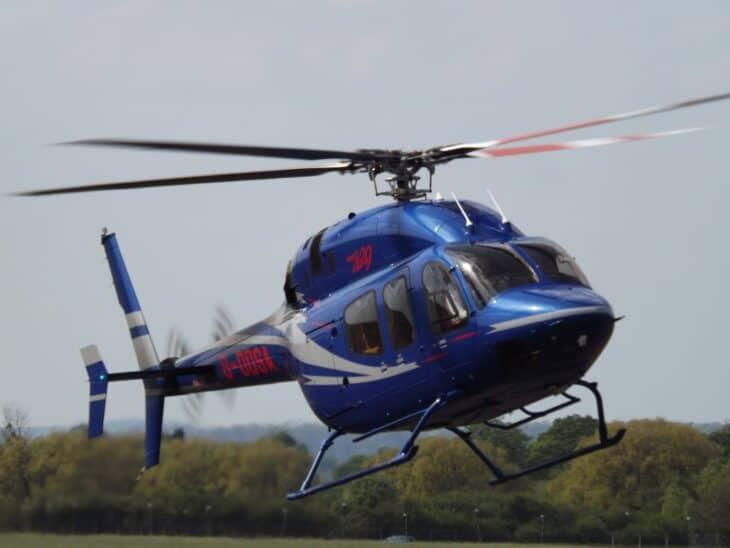

The Bell 429 is where personal ownership turns into corporate transport. It is a twin-engine helicopter with two Pratt & Whitney Canada PW207D1/D2 engines, seats a pilot and seven passengers, and is certified for single-pilot IFR flight.
Bell quotes a maximum cruise of 155 knots, the fastest on this list, and a range of 411 nautical miles. Two engines mean an engine failure is a problem rather than a forced landing, which is the main reason to pay for one.
9. Leonardo AW109 Trekker
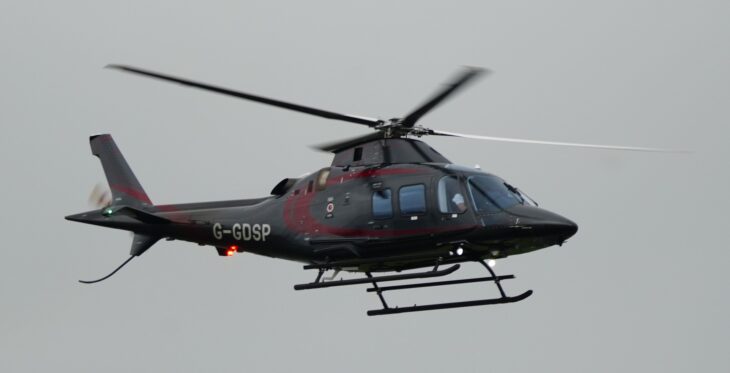

The Leonardo AW109 Trekker is the other twin worth a private owner’s shortlist. Leonardo lists a maximum cruise of 148 knots true and a range of 366 nautical miles with one auxiliary tank, from two Pratt & Whitney Canada PW207C engines.
It seats one or two crew and up to six passengers. Like the Bell 429, it suits an owner who pays a professional pilot, which is why both twins sit at the bottom of a list about personal ownership.
What about the Robinson R22 and kit helicopters?
The R22 Beta II lists at $375,000 and seats two, but it cruises at up to 96 knots and is mainly a trainer, with the same SFAR 73 rules as the R44. Kit helicopters cost far less but are built by the owner and flown under experimental rules. Both are covered in our cheapest helicopters guide; neither is what most buyers mean by a helicopter to own.
What it really costs to own one
The purchase price is the smaller problem. Robinson’s hourly estimates assume 500 flight hours a year, which spreads insurance thin, and few private owners fly that much.
Robinson puts fixed costs at $14,288 a year for the R44 and $30,837 for the R66, all of it insurance for a pilot with 200 helicopter hours. At 100 hours a year, our calculation from those same figures raises the R44 to about $446 an hour and the R66 to about $722, before hangar rent.
The rest is overhaul reserves: the R44 needs a $91,900 engine exchange and a $207,200 parts kit every 2,200 hours. If you want the long version of why every rotorcraft costs this much, read why helicopters are so expensive.
What is coming next
Robinson unveiled the 10-seat R88 in March 2025 at a $3.3 million price, powered by a Safran Arriel 2W. In March 2026 the company said it still targets the end of 2026 for first flight, so it is not a helicopter you can own yet.
Enstrom also told buyers in April 2026 that it expected to resume deliveries of its piston 280FX once FAA flight tests were done. Until those land, the nine helicopters above are the shortlist.
FAQ
Sources and references used for research and fact-checking.
- Robinson Helicopter Company, R66 NxG Palo Verde Price List, January 1, 2026
- Robinson Helicopter Company, R66 NxG Palo Verde Estimated Operating Cost 2026
- Robinson Helicopter Company, R66 NxG brochure, February 2026
- Robinson Helicopter Company, R44 Raven II and Clipper II Price List, 1 January 2026
- Robinson Helicopter Company, R44 Raven II Estimated Operating Cost 2026
- Robinson Helicopter Company, R44 Raven II / Clipper II
- Robinson Helicopter Company, R22 Beta II Price List, January 1, 2026
- Robinson Helicopter Company, R22 Beta II
- Wikipedia, Robinson R66
- Bell Textron, Bell 505
- Bell Textron, Bell 429
- Airbus, H125
- Airbus, H130
- Guimbal Helicopters, Cabri G2 Specifications and Features 2024
- Guimbal Helicopters, Cabri G2
- Enstrom Helicopter Corporation, 480B Elite
- Enstrom Helicopter Corporation, The Wait is Over: Enstrom Cleared by FAA and EASA to Deliver New Rotorcraft
- Wikipedia, Enstrom 480
- Leonardo Helicopters, AW109 Trekker
- Cornell Law School Legal Information Institute, Special Federal Aviation Regulation No. 73
- FLYING Magazine, Robinson Unveils 10-Seat R88 at Verticon
- Helicopter Investor, Robinson Helicopter Company plans big year for R88
Get the Newsletter
The latest aviation news and stories sent to your inbox.
About the Author

Tim is the owner and lead editor of AeroCorner since 2019, overseeing aviation content covering aircraft, airlines, airports, and the broader aviation industry. Through years of researching, writing, editing, and publishing aviation-focused content, he has developed extensive practical knowledge of commercial aviation and air travel. Based in Asia and a frequent traveler himself, Tim also brings firsthand passenger experience to AeroCorner’s coverage. Outside of publishing, he has also explored aviation firsthand through hands-on flight training in New Zealand.