

Table of Contents
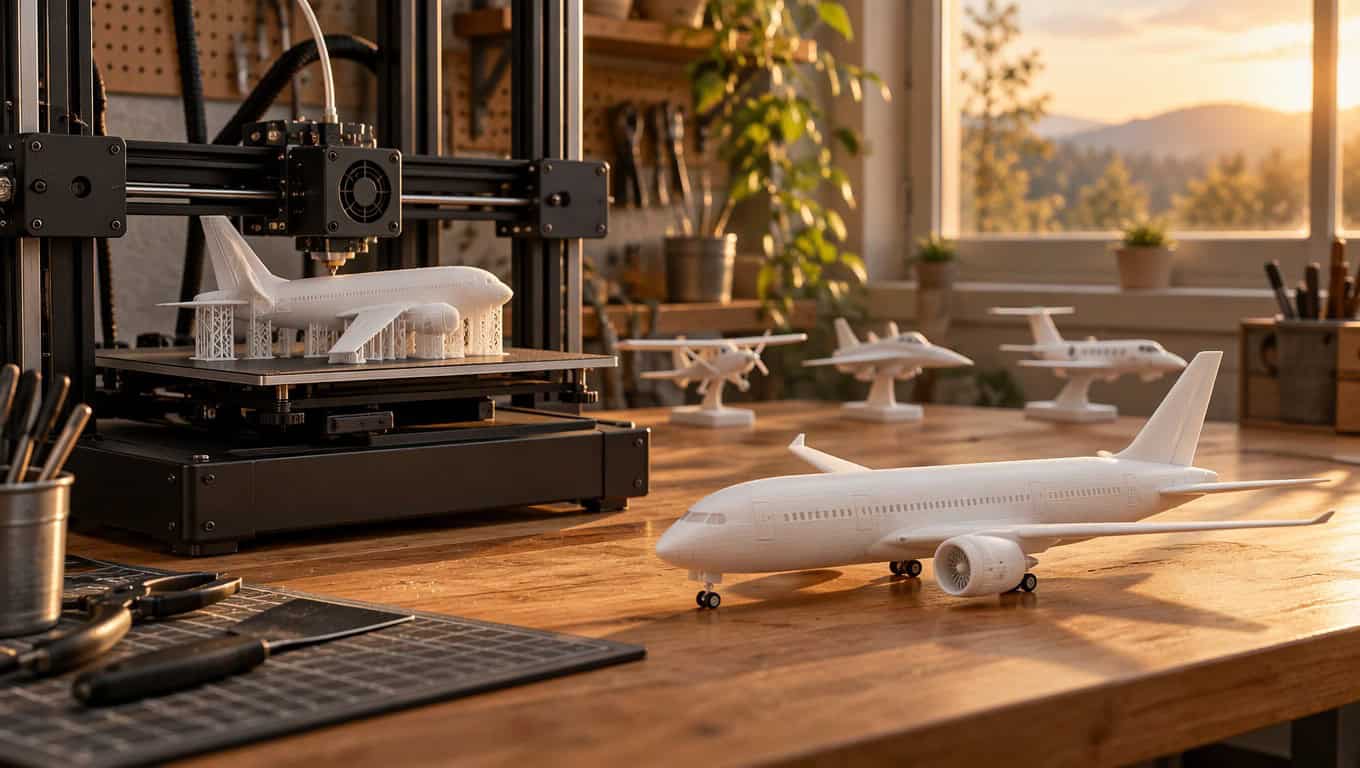
A 3D printer can turn a spool of plastic into a propeller plane in an afternoon. Printed airplanes range from desk models and toys to gliders that really fly.
The hobby works because aircraft shapes suit layer-by-layer printing. Wings, fuselages and engine parts are smooth curves that look great even when printed at home.
These 25 ideas cover display models, flying planes, sim parts, decor and gifts. If you also like building at the bench, pair this list with these aviation hobby ideas, and check each design’s license before you print or sell it.
01. Desktop Display Scale Model
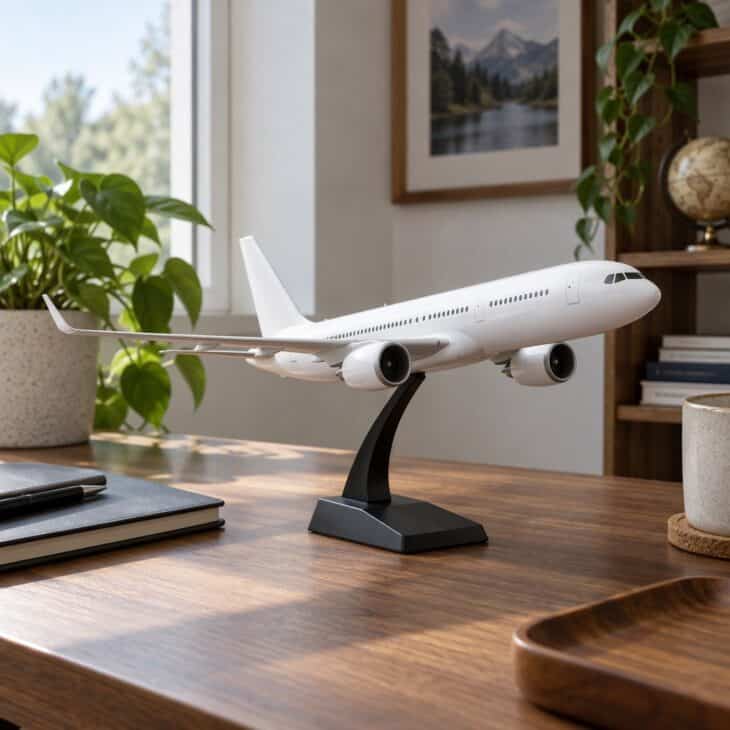
What it is A solid or lightly hollow scale model of a generic airliner or fighter, printed in one piece or in a few glued sections. Typical sizes run 6 to 12 inches (15 to 30 cm) long, with a small stand included.
Why it works It is the easiest first print because there are no moving parts to tune. A finished model looks good on any shelf and shows what your printer can do.
How to get it Pick a model with a flat belly so it prints without heavy supports. Print it at 0.12 mm layer height and sand it lightly before painting. Prime with a spray filler to hide the layer lines.
02. Snap-Fit Kit Model
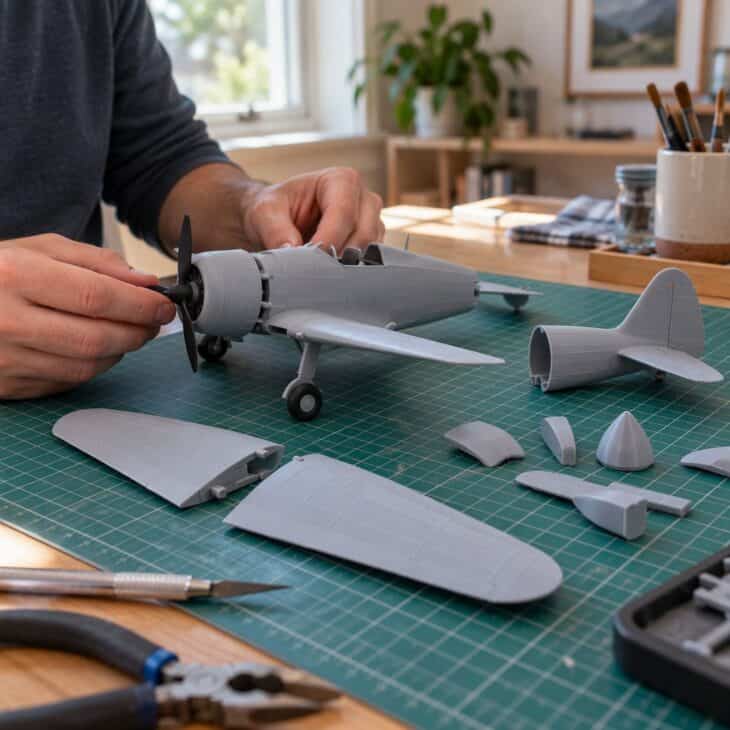
What it is A model split into 10 to 30 parts that lock together with printed pegs and sockets. Many designs print flat on the bed, so every part needs little or no support.
Why it works Snap-fit builds feel like a real kit but cost a fraction of the price. They also let kids help, since nothing needs glue or a sharp blade.
How to get it Print a test peg first and check the fit, because printers differ by a fraction of a millimeter. Light sanding loosens a tight joint, and a drop of glue tightens a loose one. Print in two colors for the fuselage and wings if your machine allows.
03. Print-in-Place Spinning Propeller Plane
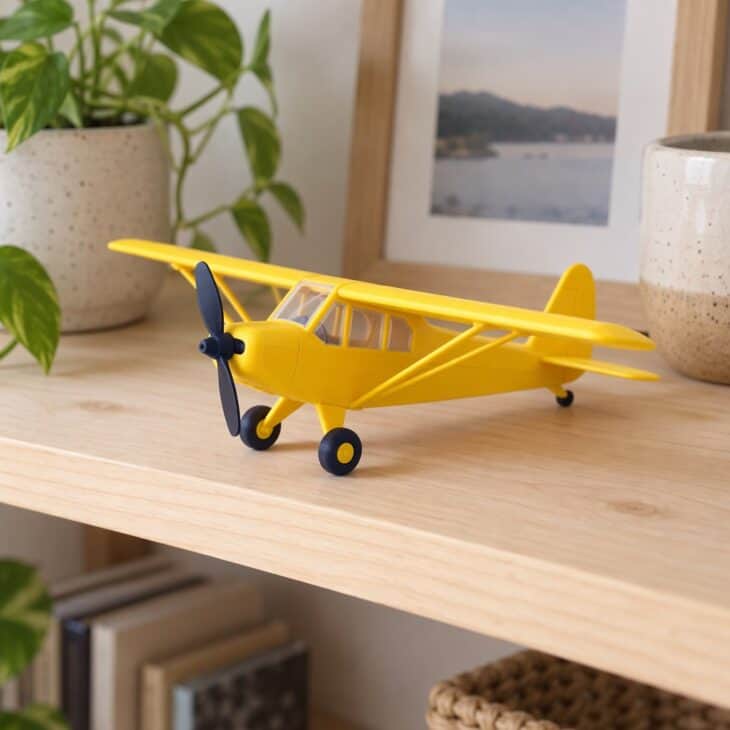
What it is A model whose propeller, and sometimes wheels, are printed already assembled with tiny gaps around each moving part. After printing, a quick twist frees the parts.
Why it works Moving parts turn a static shelf piece into a fidget toy. It also shows off what printers can do that molding cannot.
How to get it Look for designs tagged print-in-place and check the gap size, which is usually 0.3 to 0.5 mm. Print slowly with cooling fans on so the gaps stay clean. Free the propeller by flexing it gently before it cools fully.
04. Hand-Launch Glider

What it is A hand-thrown glider with a printed fuselage and wings, usually 20 to 30 inches (50 to 75 cm) across. Wings print in thin vase-mode shells, and some designs use foaming filament to save weight.
Why it works A glider needs no motor, battery or radio, so it is the cheapest way to get a printed plane into the air. Each throw teaches the basics of balance and trim.
How to get it Add a small coin weight in the nose until the glider flies level instead of stalling. Launch into a light breeze on a calm day. Bend the tail slightly with warm water to fine-tune the glide.
05. Rubber-Band Powered Flyer
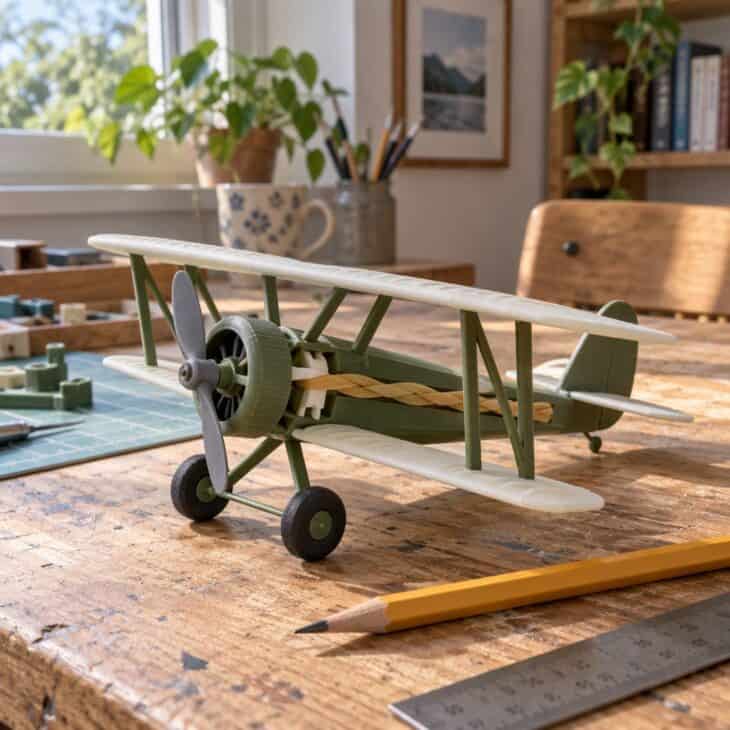
What it is A lightweight printed airframe with a propeller and a loop of rubber band running from nose to tail. Winding the propeller stores energy, and releasing it gives a flight of a few seconds to a minute.
Why it works It sits between a toy and a science lesson, and it explains stored energy better than any diagram. It is also quiet and safe indoors.
How to get it Print the airframe in thin walls to keep the weight under 30 grams. Buy fresh rubber, because old bands snap early. Wind in small turns and count them, so you can repeat a good flight.
06. Electric Ducted Fan Jet
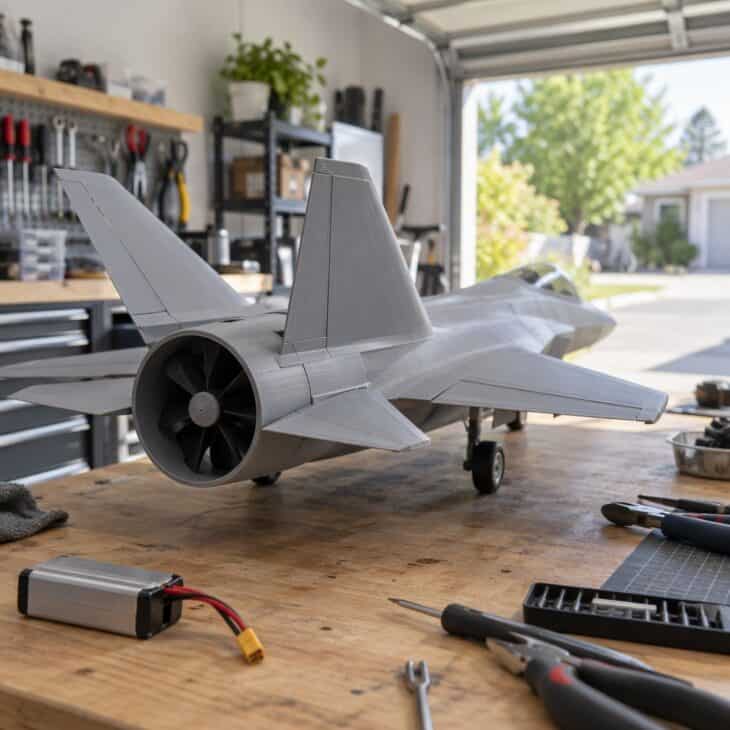
What it is A fighter-style airframe printed in sections around an electric ducted fan unit of 50 to 70 mm. A small battery, speed controller and receiver complete the radio-controlled build.
Why it works Ducted fans give a jet-like sound and speed from a plane small enough to fly in a park. Printed shells make repairs simple after a rough landing.
How to get it Choose a design that names the exact fan size it needs, and buy that fan before printing. Print the fuselage in a tougher material like PETG for crash resilience. Fly only in a legal open area and follow your country’s rules for model aircraft.
07. Full Printed RC Trainer
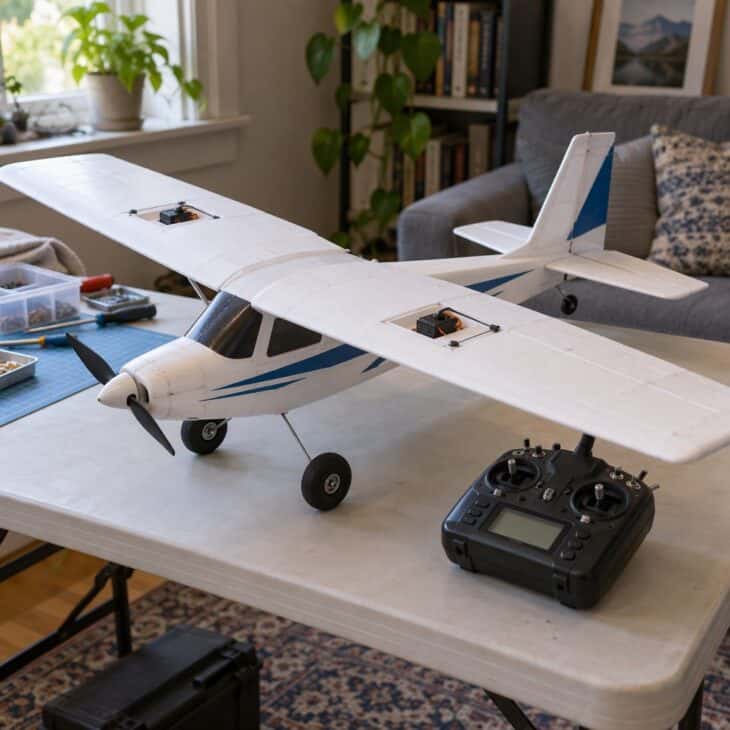
What it is A radio-controlled trainer with printed wings, fuselage and tail, plus a motor, propeller and servos bought separately. Wingspan is usually 40 to 60 inches (100 to 150 cm).
Why it works A forgiving design lets a beginner learn without wrecking an expensive plane. When a wing cracks, you reprint it for the price of a little plastic.
How to get it Choose a design with a large community and a build video. Print the wings in lightweight foaming filament and the fuselage in PETG. Pair your first flights with a club or an experienced friend.
Safety tip
Never fly a printed RC plane near people, roads or airports. Check your national model aircraft rules first, and keep small printed parts away from toddlers.
08. Pen Holder Airplane
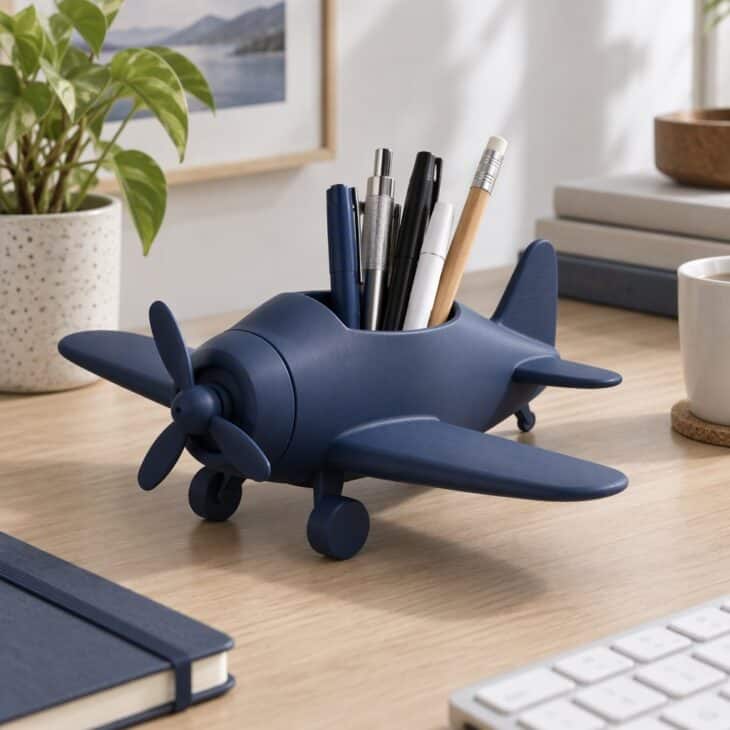
What it is A hollow airplane body, often cut away at the top, that holds pens, brushes or small tools. Some versions add a small tray in the wings for paper clips.
Why it works It is a useful print that people actually keep on their desks. It also makes a quick gift once you have the file.
How to get it Choose a design with thick walls and a wide base so it does not tip when full. Print it in a dark color to hide dust. For a work-and-fly space, see these pilot desk setup ideas.
09. Phone Stand Wing
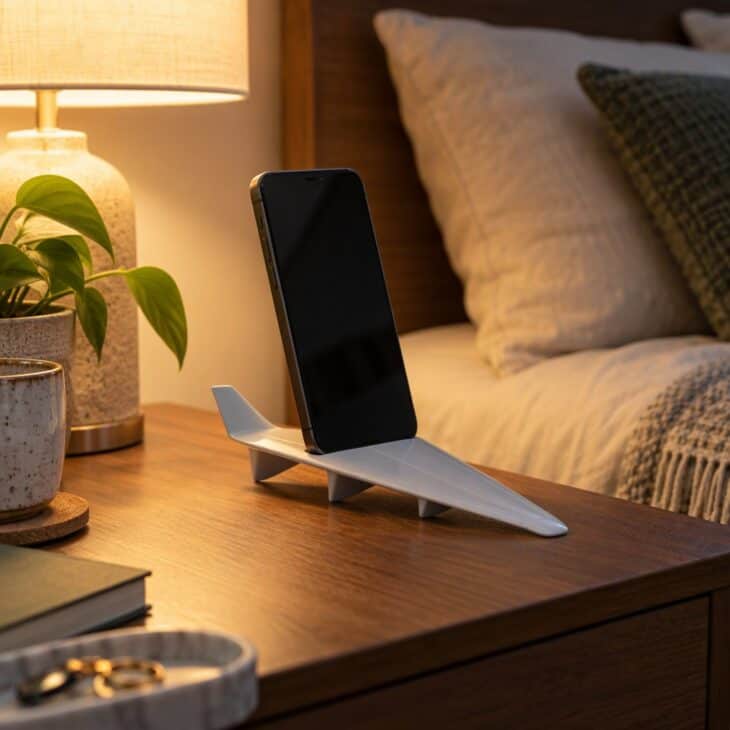
What it is A flat stand shaped like a wing cross-section, with a slot or ledge that holds a phone at 60 to 70 degrees. A cable gap at the back lets you charge while it stands.
Why it works It is small, fast to print, and used every day. The shape hints at aviation without being loud about it.
How to get it Measure your phone case thickness and add 2 mm to the slot width. Print it flat and with a wide base for stability. Add a thin rubber pad under the base so it does not slide.
10. Headphone Hook Propeller
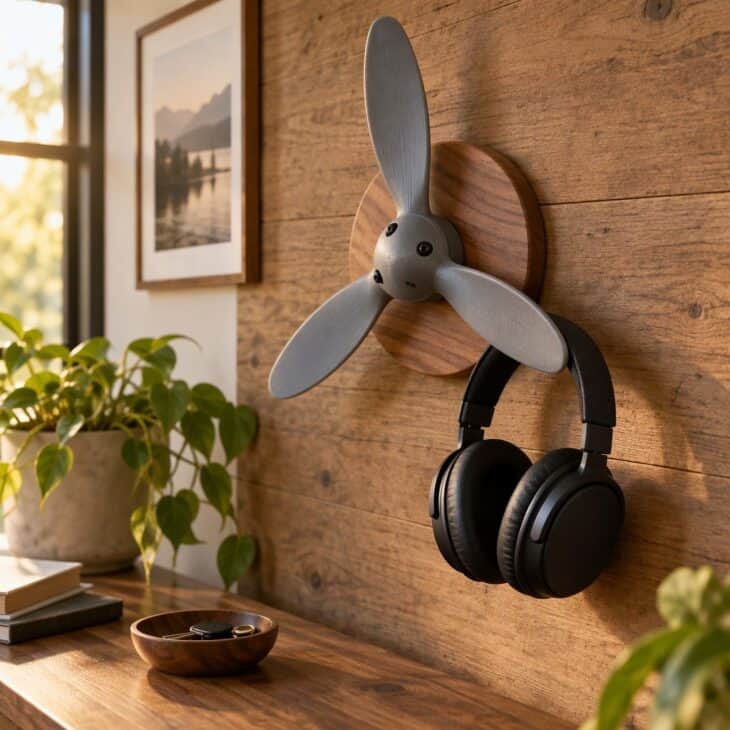
What it is A wall-mounted propeller with a hub, two or three blades, and one blade angled upward to hold a headset. Screws go through the hub into a wall or board.
Why it works Pilots and sim fans own headsets that need a home, and a propeller feels right. It keeps the desk clear and looks like decor.
How to get it Print the blades with the grain running along their length for strength. Anchor the hub into a stud or a wall plug. Keep the hanging load under 1 pound (0.5 kg) unless you print thick walls.
11. Sim Throttle Knobs
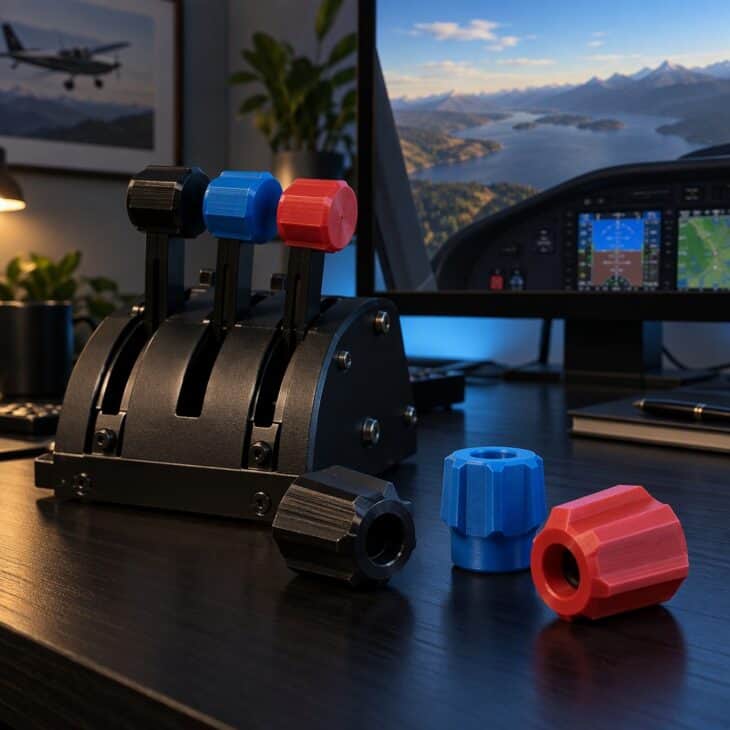
What it is Replacement knob caps for a home throttle quadrant, usually colored red for mixture, blue for prop and black for throttle. They fit common 6 mm shafts, and some include small grooves for grip.
Why it works Real light-aircraft levers use this color code, so the knobs help you build muscle memory. They cost cents to print and change how the whole setup looks. See more in these flight simulator setup ideas.
How to get it Measure the shaft diameter and any flat spot before you print. Print with 100 percent infill so the knobs do not crack under hand pressure. A tiny set screw makes them stay in place.
12. Printed Yoke Grip
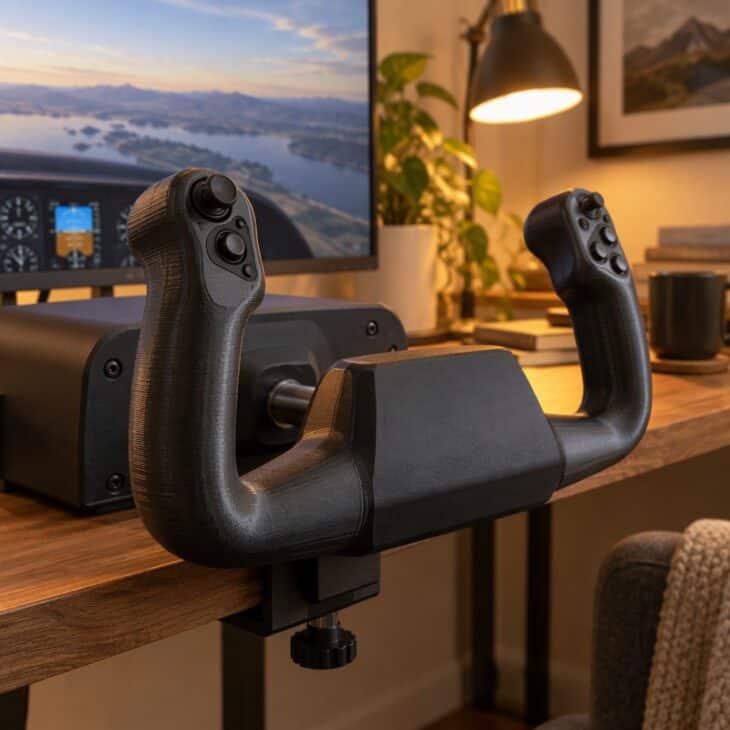
What it is A printed replacement or add-on handle that fits over a sim yoke shaft. Designs include a classic Y shape, a round wheel and a flat-top grip with switch cutouts.
Why it works A better grip changes the way a yoke feels in the hand. It also gives you a place to mount buttons for radios and trim.
How to get it Check the shaft dimensions in the design before you print. Use flexible filament for the outer layer if you want a soft touch. Sand and seal the grip so it feels smooth against the palm.
Material tip
PLA is the easiest filament for display models. Switch to PETG for parts that flex, get hot or take knocks, such as RC airframes and luggage tags.
13. Cockpit Button Box
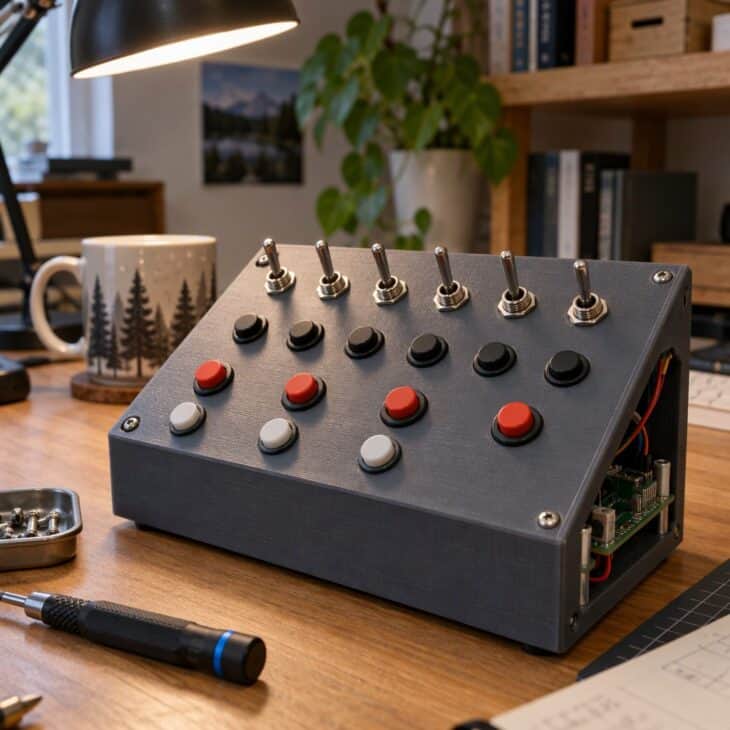
What it is A printed enclosure that holds toggle switches, push buttons and rotary encoders wired to a small board. It plugs into a computer by USB and works as an extra panel.
Why it works Flying a sim with the mouse breaks the mood, and a button box puts key actions under your fingers. It also teaches basic electronics.
How to get it Buy the switches first and size the printed panel to them. Label each switch with a small sticker or an engraved print. Add a lid screw at each corner so the box can be opened for repairs.
14. Propeller Wall Art

What it is A decorative propeller printed in sections and joined with dowels or glue. Wood-fill or silk filament gives it a vintage warbird look.
Why it works Real propellers are heavy and expensive, and a printed one weighs a few hundred grams. It brings the same shape to a wall with a single screw. For more wall ideas, see these aviation wall art ideas.
How to get it Print the halves flat so the grain of the layers follows the blade. Finish with wood stain for a deeper look. Mount it on a French cleat so it hangs flat and level.
15. Airplane Window Night Light
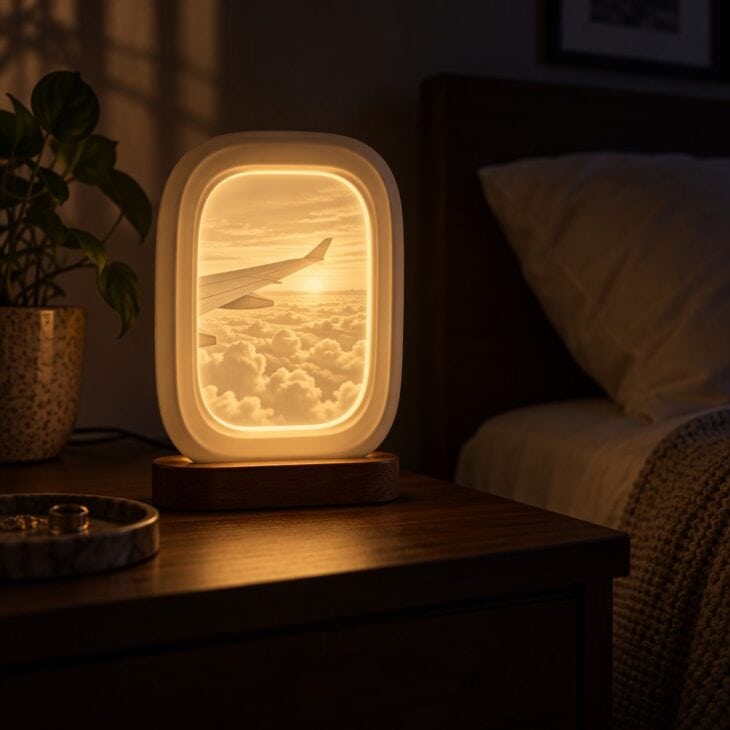
What it is A frame shaped like an oval cabin window holding a lithophane, a thin white print whose varying thickness shows a picture when lit from behind. A small LED base lights it from below.
Why it works A lithophane looks like a photograph and reads as a gift. It is also soft enough for a child’s room.
How to get it Choose a landscape or sky photo with strong contrast and convert it with a free lithophane tool. Print it standing upright at 0.1 mm layer height in plain white. Use a warm white LED strip and keep the power low.
16. Hanging Plane Mobile
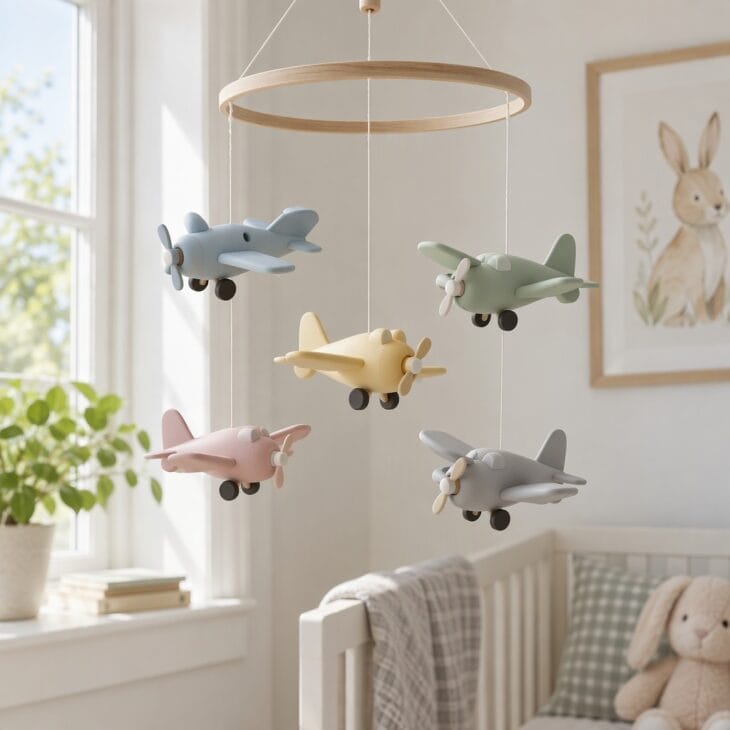
What it is Five to seven small planes printed in thin walls and hung on fishing line from a printed or wooden hoop. Each plane weighs only a few grams, so the mobile stays balanced.
Why it works A mobile gives a nursery or kid’s room movement without any motor. Printing means you can match any color scheme. For related rooms, see these airplane nursery ideas.
How to get it Print the planes with a loop at the top for the thread. Balance the mobile by adjusting the string length on each plane. Hang it out of reach of a crib, and check each knot every few weeks.
17. Radial Engine Cutaway
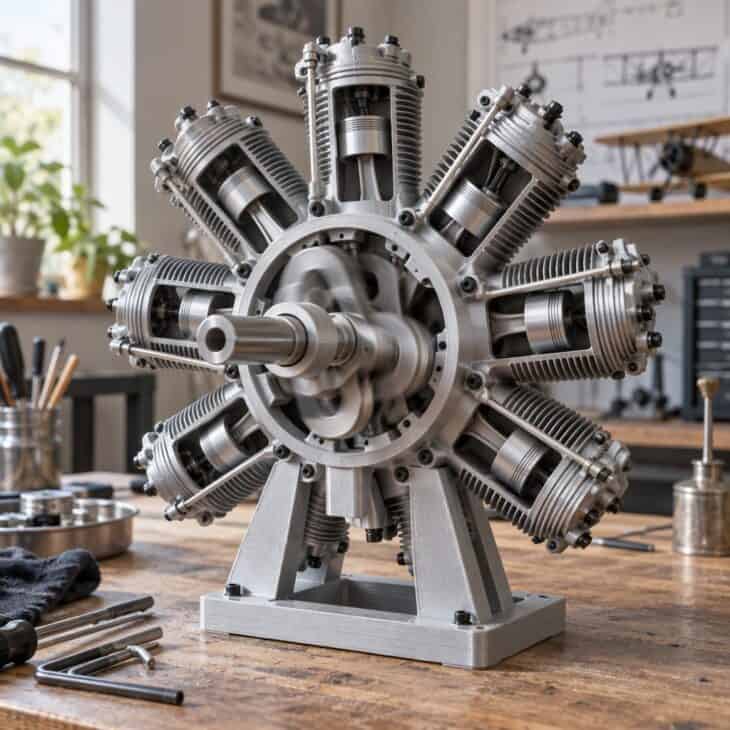
What it is A working model of a radial engine with nine cylinders, pistons, rods and a crankshaft. It runs by hand or with a small motor, and parts print in silver or metallic filament.
Why it works It shows how a piston engine turns up and down motion into rotation. Few desk pieces teach as much while looking this good.
How to get it Print the parts at a fine layer height and test each piston in its cylinder before you assemble. Use a little silicone grease on moving pieces. Add a small electric motor for a gentle display speed.
18. Turbofan Desk Spinner
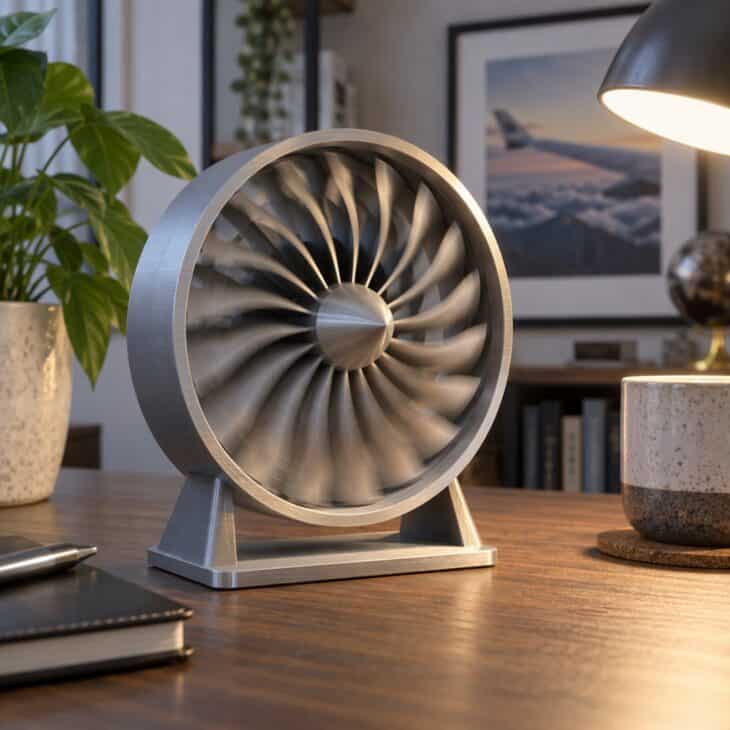
What it is A model of a jet engine fan with 18 to 24 curved blades, printed as a disc with a cowl ring. It spins on a printed or metal pin bearing.
Why it works The blade pattern looks stunning and spins well as a fidget toy. It also teaches how bypass air provides most of a jet’s thrust.
How to get it Print the disc flat with a brim to stop warping. Use a steel pin and a bit of light oil for a long spin. Mount the cowl on a stand so the disc sits at eye level.
19. Ground Support Vehicle Set

What it is A set of small printed vehicles: a baggage tug, a passenger stair truck, a fuel truck and a cargo loader. Each is 2 to 4 inches (5 to 10 cm) long, with rolling wheels.
Why it works Airport ground crews are a favorite for young plane fans, and the vehicles pair with any printed model. They are fast to print in batches.
How to get it Print the bodies in bright colors and the wheels in black. Use a printed pin for each axle so the wheels spin. Keep the set in a small tray so nothing gets lost.
20. Tiny Hangar Diorama
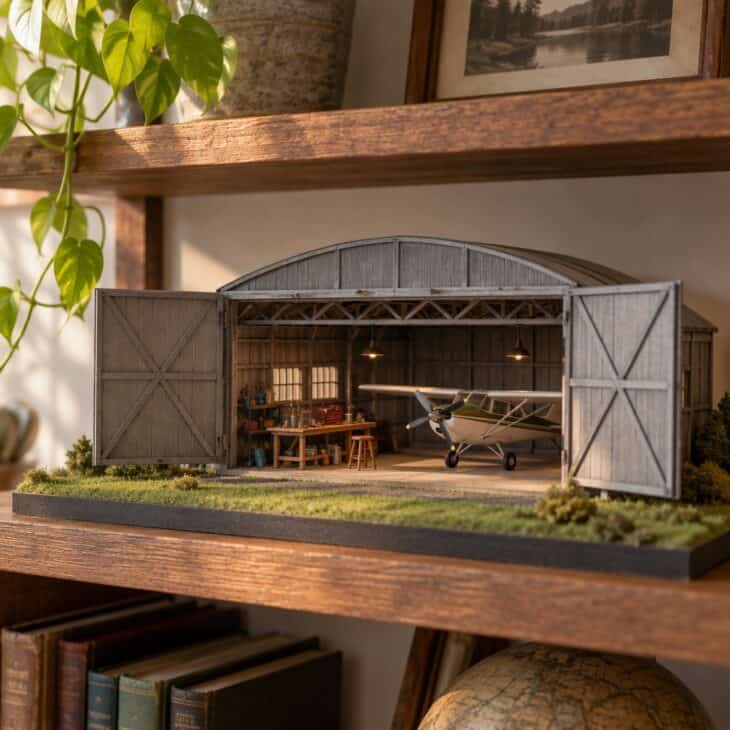
What it is A printed hangar with sliding doors, a cutaway roof and a base plate. Inside sit a tiny plane, a toolbox, an engine stand and a few barrels.
Why it works It turns single models into a scene, and the scene tells a story. Dioramas also make shelves look planned instead of crowded. For more ways to show off planes, see these model airplane display ideas.
How to get it Print the walls flat and glue them with plastic cement. Paint the floor in concrete grey and add a little dry brushing for wear. Add an LED strip under the roof for a warm glow.
21. Chunky Toy Plane Set
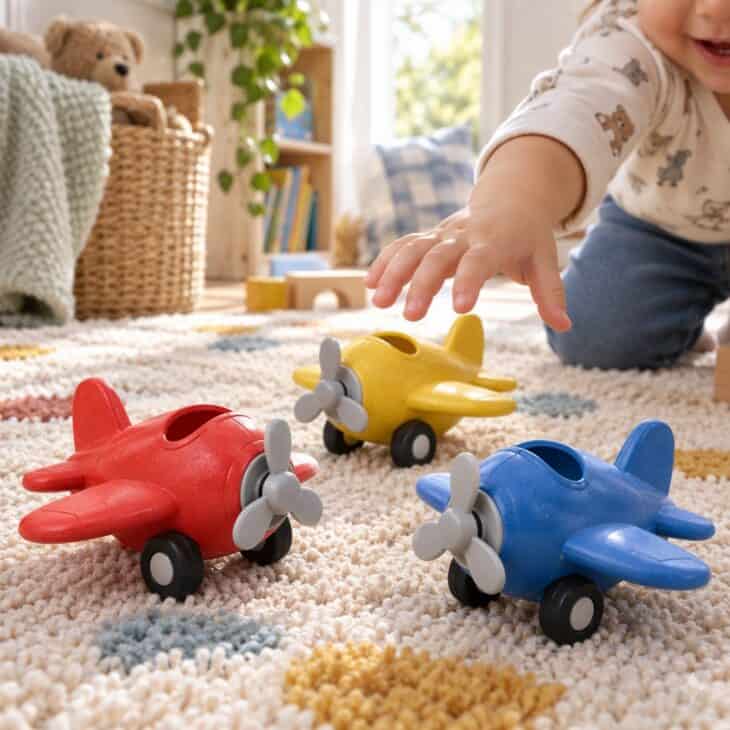
What it is Toy planes with thick wings, rounded edges and no small detachable parts. A typical plane is 4 to 6 inches (10 to 15 cm) wide and prints in one piece.
Why it works Kids drop and chew toys, so safe shapes matter more than scale accuracy. A set in bright colors looks great in a toy basket. For more kid projects, see these airplane crafts for kids.
How to get it Print in PLA or PETG and check that all edges are smooth. Skip any piece smaller than 1.5 inches (4 cm), which is a choking risk. Use a nontoxic paint if you color them yourself.
22. Plane Keychain and Luggage Tag
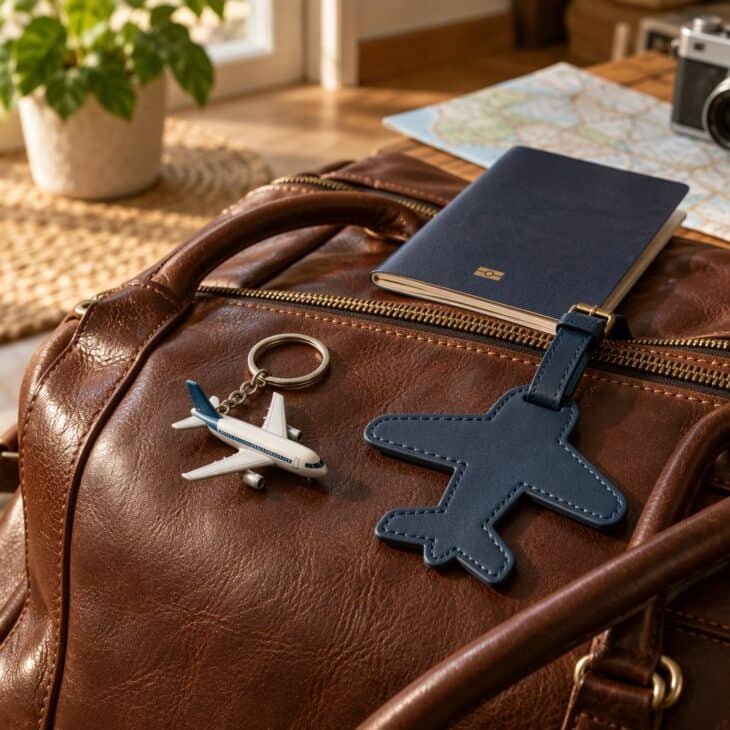
What it is A flat airplane silhouette with a hole for a ring or strap, printed 3 to 4 mm thick. A luggage version adds a recessed panel for a paper card.
Why it works They print in minutes, cost almost nothing, and are easy to personalize. They also work as party favors for a group trip.
How to get it Print a batch in different colors at once. Use PETG for a tag that survives baggage handling. Add your contact details on a paper card, but not your full home address.
23. Airplane Cookie Cutter Set

What it is A set of cutters in the shape of a propeller plane, a jet and a biplane, with a thin cutting edge and a thicker top rim for pressing. Sizes run from 2 to 4 inches (5 to 10 cm).
Why it works Printed cutters are cheap and can be made in any shape. They are perfect for birthday parties and airport farewell snacks. See more in these airplane birthday party ideas.
How to get it Use food-safe filament and hand wash only, since the layer gaps can hold bits of dough. Coat the print with food-safe sealant for repeated use. Treat the cutter as a one-time tool for parties if you are not sure.
24. Tail Fin Bookend
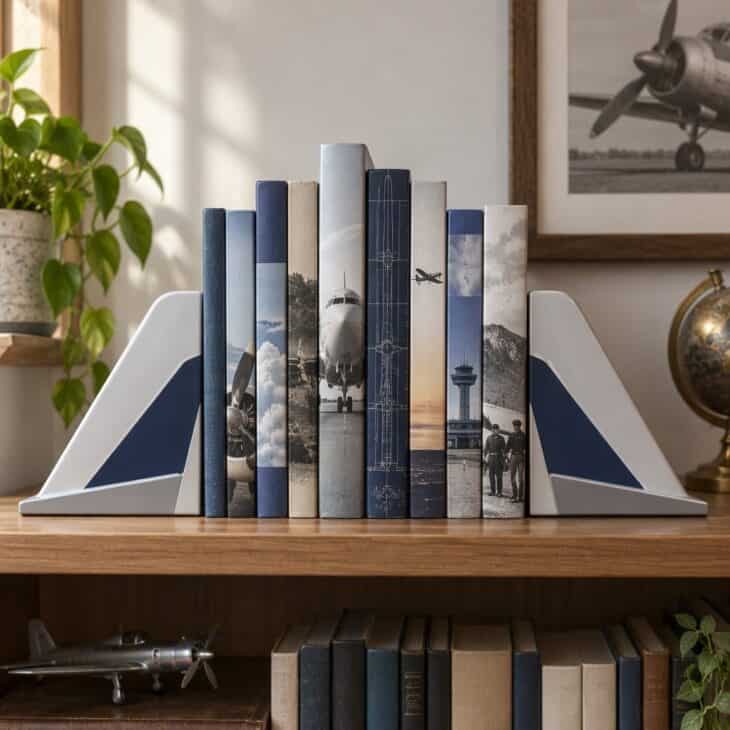
What it is A pair of L-shaped bookends with a vertical tail fin and a flat base. Each is about 6 inches (15 cm) tall and prints with a broad foot for stability.
Why it works Bookends are useful and they carry the theme without extra clutter. They suit pilot study shelves as well as kids’ rooms. See more shelf ideas in these aviation hobby ideas.
How to get it Print with 30 percent infill and a solid base. Add a strip of adhesive felt to the underside to protect shelves. A little weight in a hollow base, such as sand, keeps them from tipping.
25. Fuselage Succulent Planter
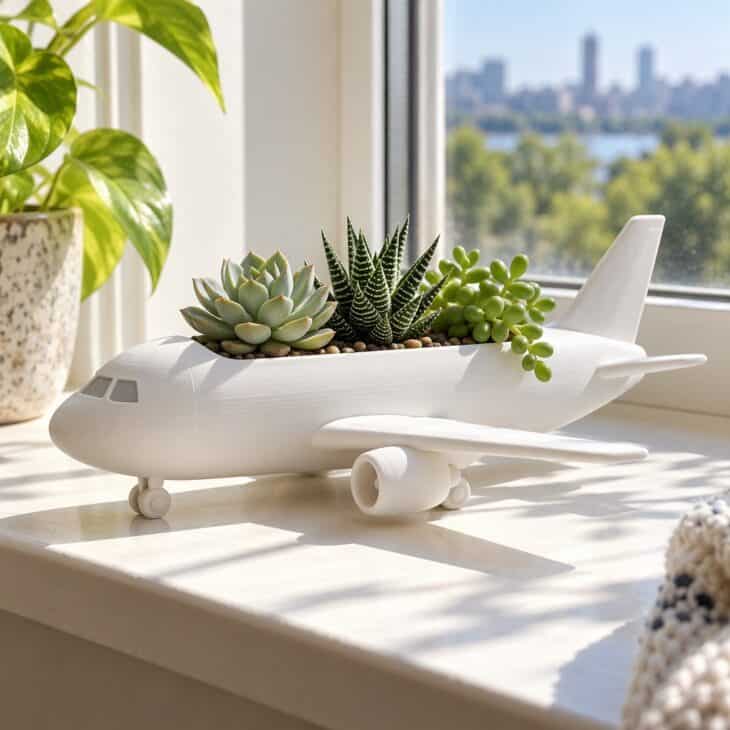
What it is A planter shaped like a short airplane body, with an open top, a drain hole and a small saucer. Typical size is 6 to 8 inches (15 to 20 cm) long, which suits three or four small plants.
Why it works Plants soften a hard-edged hobby shelf, and the shape reads as a plane even from across a room. It is also a lovely housewarming gift.
How to get it Print with 4 or more wall layers and seal the inside with a waterproof coating. Use cactus soil and water lightly, since the pot holds little. Place a pebble layer under the soil to help drainage.
FAQ
Sources and references used for research and fact-checking.
Get the Newsletter
The latest aviation news and stories sent to your inbox.
About the Author

Hanna writes AeroCorner's aviation-lifestyle and decor guides, turning a love of flight into ideas for your home, celebrations, and gift lists.