

Table of Contents
A paper airplane tattoo is small, personal, and easy to read. It stands for a fresh start, a daydream, or a person who loved to fly. Few symbols say so much with so few lines.
This list covers 25 designs, from tiny fine-line darts to watercolor and memorial pieces. Each one includes what it looks like, why people choose it, and how to get it done well.
If you want a wider range of flying motifs, browse our aviation tattoo ideas. For service themes, see these Air Force tattoo ideas. Wondering about careers? Read can pilots have tattoos.
01. Tiny Fine-Line Dart
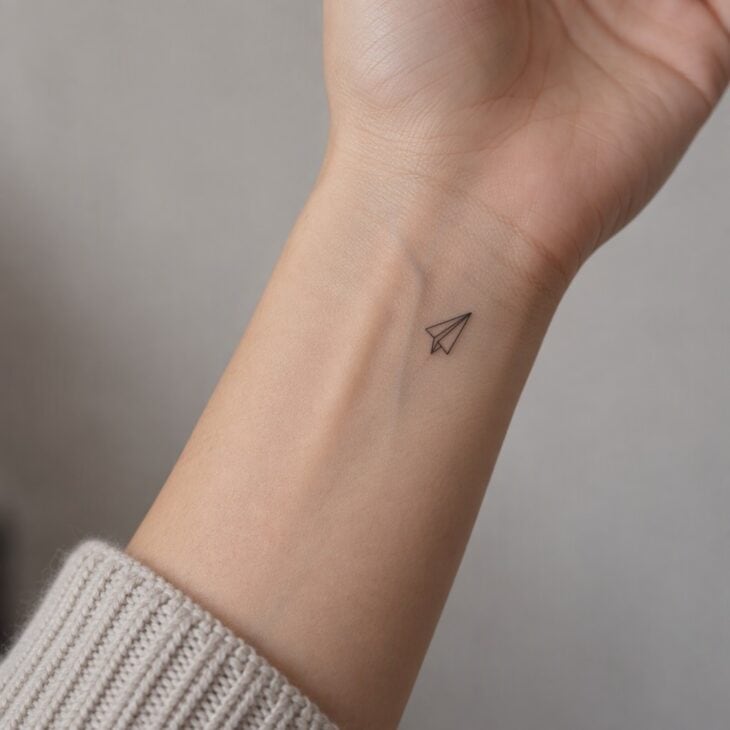
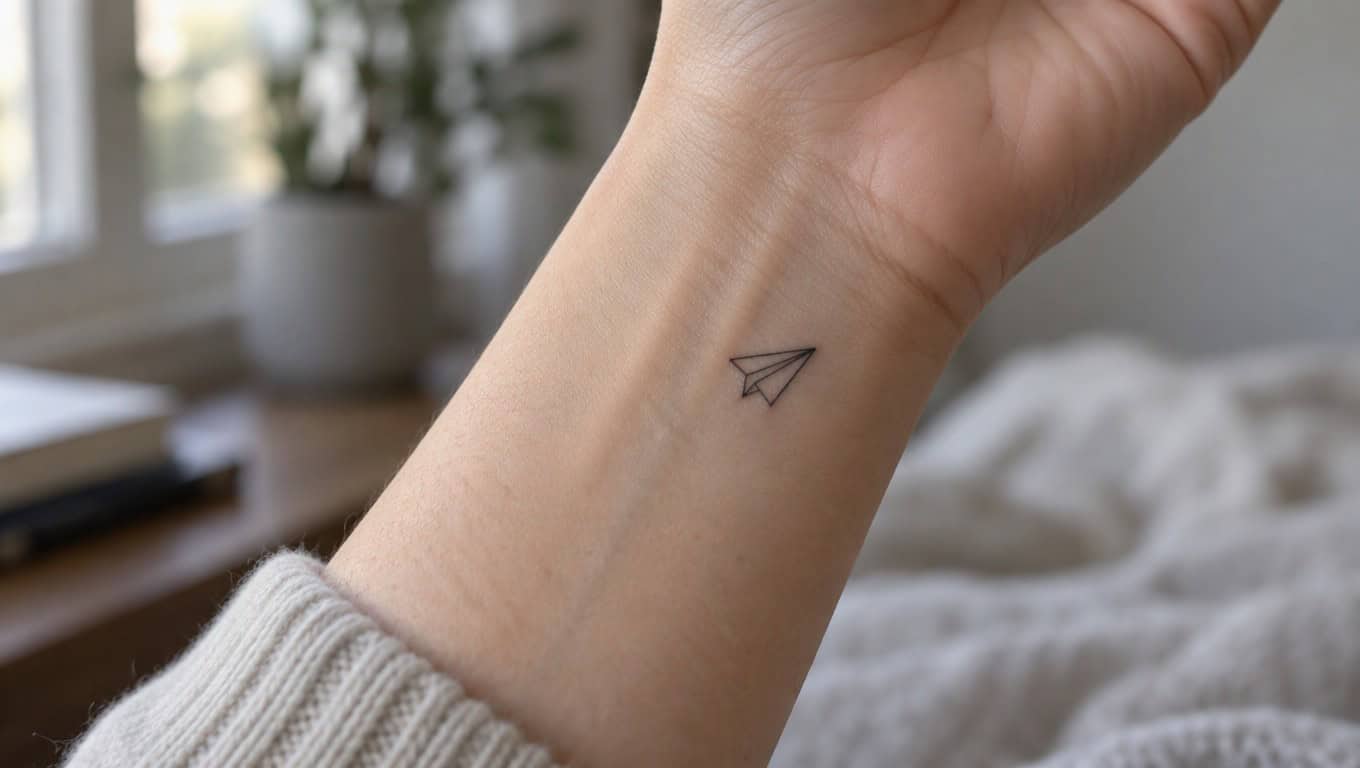
What it is A classic dart fold drawn with one thin black line, about the size of a coin. A single center crease and two wing edges are all it needs.
Why it works Small and simple, it reads as a paper plane at a glance. It suits a first tattoo because the lines are few and forgiving.
How to get it Choose the inner wrist, ankle, or behind the ear. Ask for a single-needle fine-line artist and keep the piece at least an inch wide so the lines do not blur. Touch-ups after a year are common for lines this thin.
02. Unfolding Paper Plane
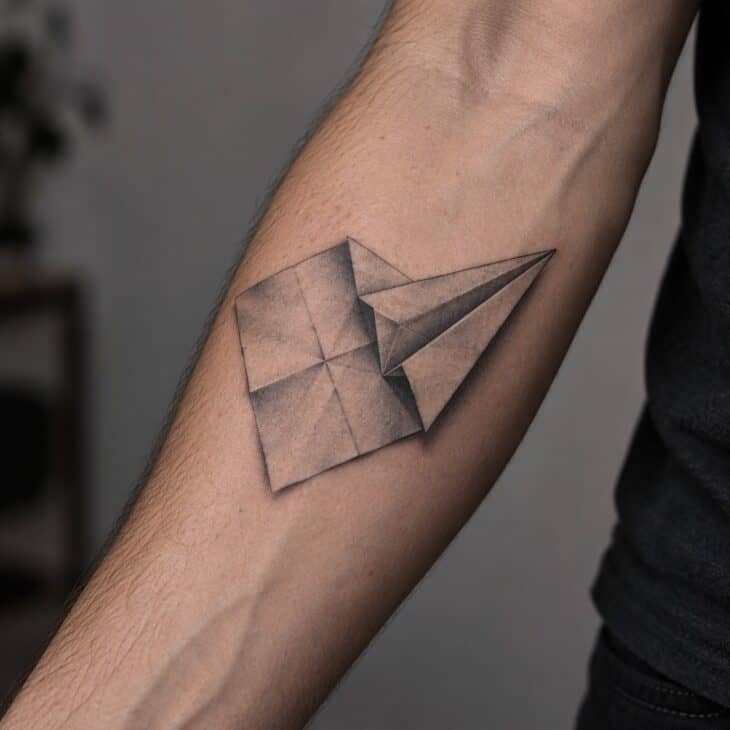
What it is A plane with one wing still flat, showing the grid of fold lines across the sheet. Light grey wash fills the creases.
Why it works It tells a story of making something from a blank page. People pick it for career changes and new starts.
How to get it The forearm gives enough width for the creases to show. Ask for light shading rather than heavy black so the folds stay visible. Bring a photo of a real folded sheet for the artist to copy.
03. Dotted Flight Path Loop
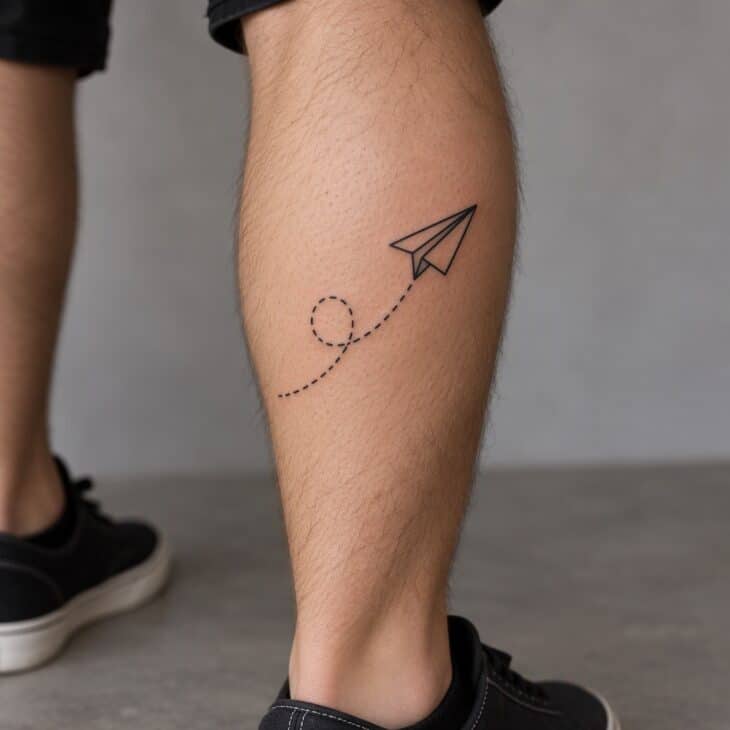
What it is A small plane at the head of a dotted trail that loops once and curves off. The dots are evenly spaced round points.
Why it works The loop adds humor and movement. It is the design that says a trip did not go in a straight line.
How to get it Calves, shins, and outer thighs give the trail room. Have the artist stencil the dots first so the spacing stays even. Keep the loop to one turn to avoid a cluttered look.
04. Paper Plane Over Mountains
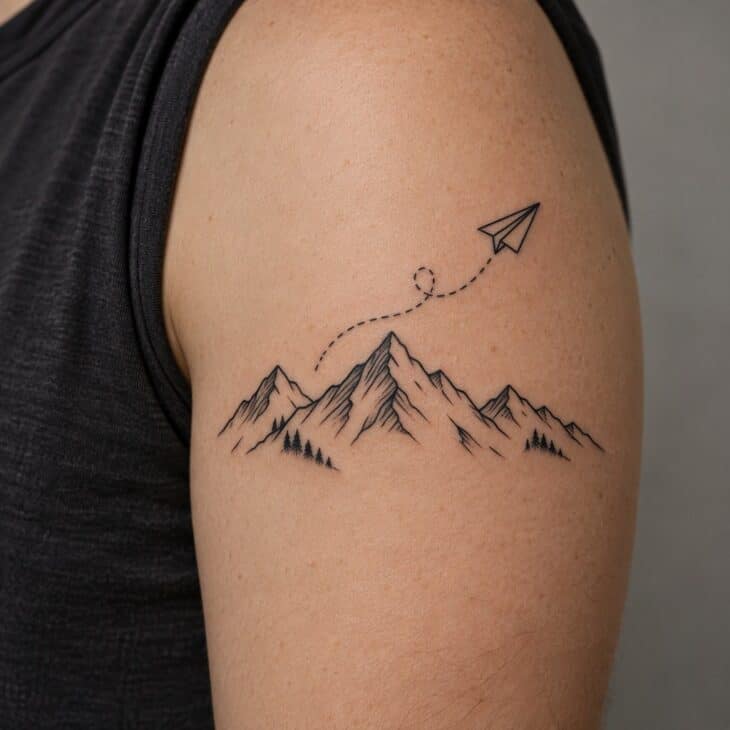
What it is A paper plane above three or four peaks drawn in single lines. A thin circle or moon is sometimes added behind.
Why it works Mountains give scale, so the plane feels like it is on a journey. It is a favorite with hikers and travelers.
How to get it Choose the outer upper arm or shoulder. Keep peaks simple and give the plane clear space above them. Fine line or light dotwork shading both age well.
05. Origami Crane and Plane Pair
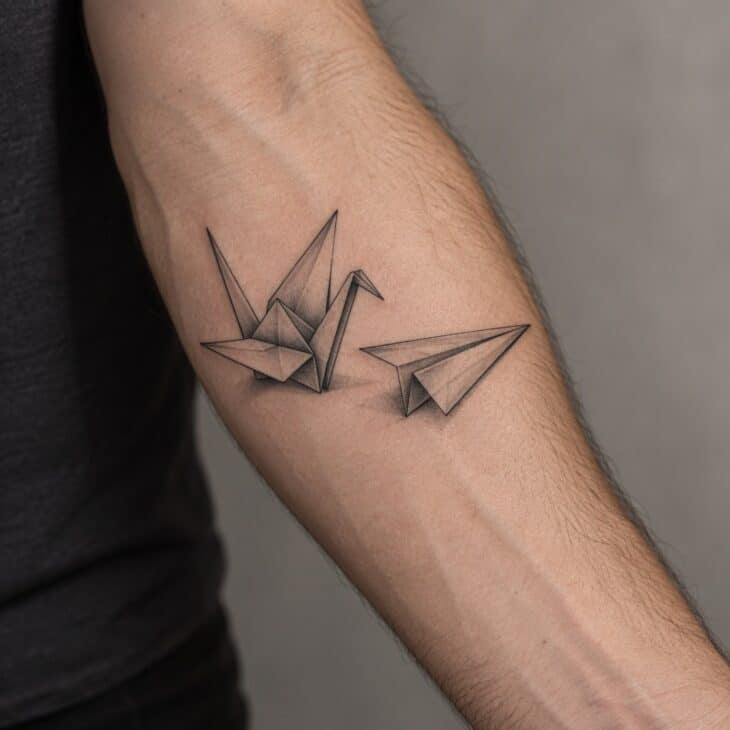
What it is A folded crane and a paper plane drawn next to each other, sharing the same crease style and shading.
Why it works Both are folded paper that fly, so the pair tells a story about patience and motion. It also works as a matching tattoo for two people.
How to get it Draw both in the same line weight so they look like a set. A forearm or the outer calf fits the pair. Research the crane’s meaning in Japanese culture before choosing it for a memorial piece.
06. Paper Plane Constellation
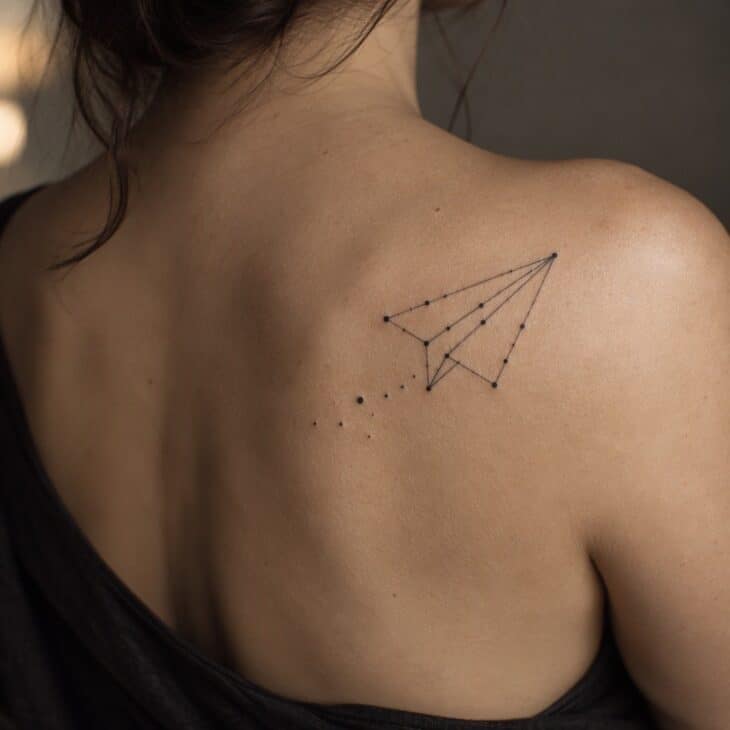
What it is The outline of a dart built from nine to twelve star dots joined by hairline strokes.
Why it works It turns a toy into a night-sky symbol. The dot structure also means it can be scaled to any size.
How to get it Shoulder blade, collarbone, and ribs all work. Mark each dot with a skin pen so the artist can match the layout. Dots can soften over time, so ask for slightly larger points.
07. Watercolor Paper Plane
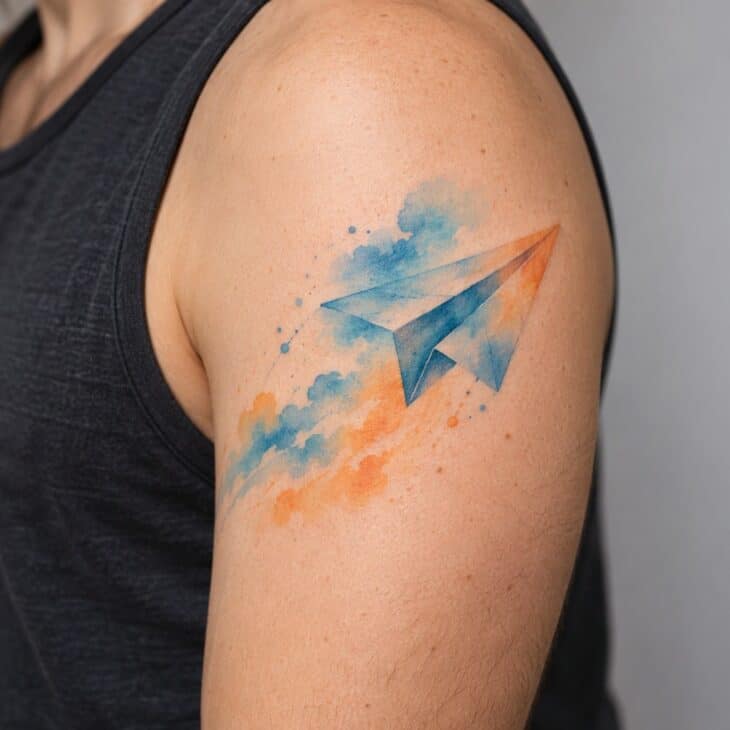
What it is A paper plane filled with loose blue and orange color that bleeds slightly past a faint sketch line.
Why it works Color makes it feel like childhood art. It stands apart from the black-ink majority.
How to get it Find an artist who shows healed watercolor work in their portfolio. Keep a thin dark line under the color so the shape survives. Sunscreen matters, since watercolor tattoos fade faster than black ones.
08. Blackwork Silhouette
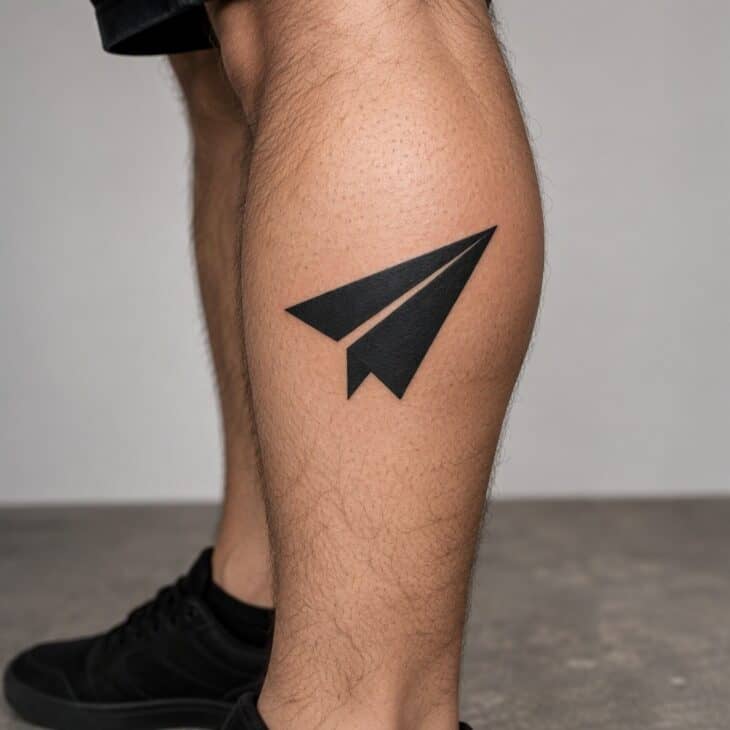
What it is A filled black dart with sharp triangular wings and a white crease line cut through the center.
Why it works The bold shape reads from across a room and holds up for decades. It is the toughest style on this list.
How to get it Pick a spot that can take a bold design such as the calf, shoulder, or thigh. Leave a thin skin-tone gap for the center crease. Expect the artist to pack black more than once for even coverage.
09. Paper Plane on a Chain of Planes
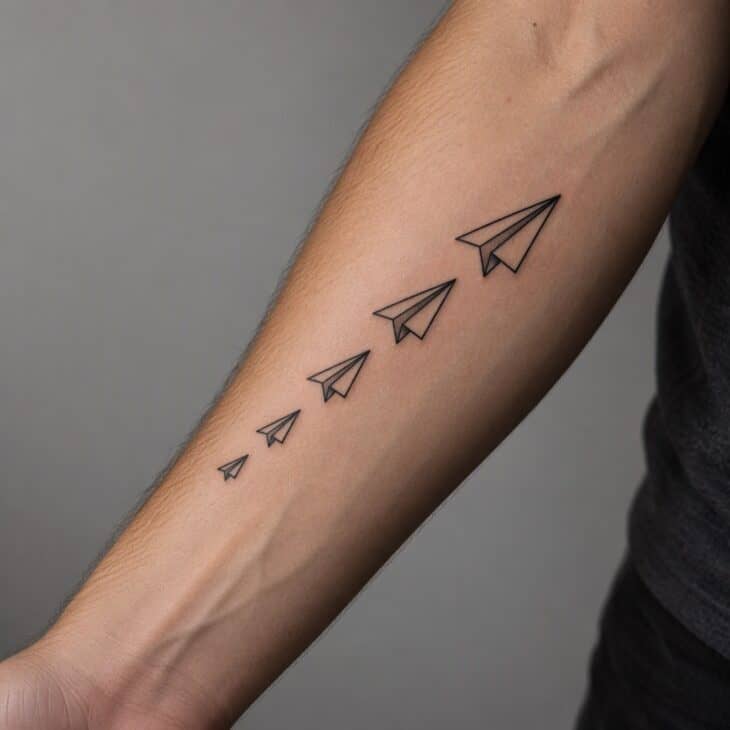
What it is A flock of five dart-fold planes that grow slightly larger along the arm, all angled the same way.
Why it works The progression suggests growth or the journey of a group. The count can mean family members or years.
How to get it Choose a long surface such as the forearm, ribs, or outer thigh. Decide the count before the session because each plane adds time. Vary the size by about ten percent each step. Read our paper airplane designs for folds to copy.
10. Plane From a Torn Page
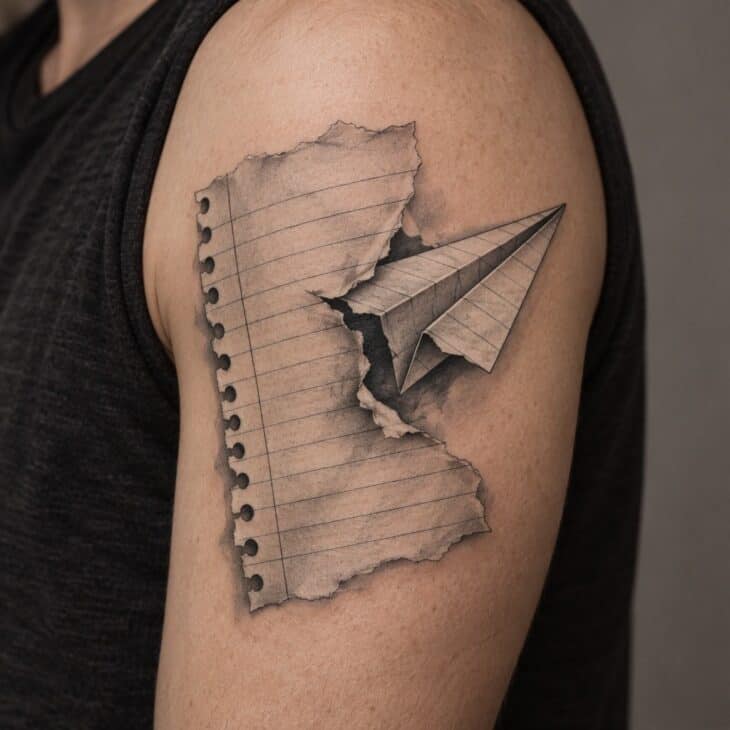
What it is A plane folding away from a ragged page edge, with faint ruled lines and a punched hole at the margin.
Why it works It is the school-day daydream in ink. Writers, students, and teachers choose it often.
How to get it Keep the ruled lines pale and let the plane carry the darkest ink. Add a short word or date inside the page only if it will stay legible. Upper arm and thigh give the page room.
11. Paper Plane and Compass
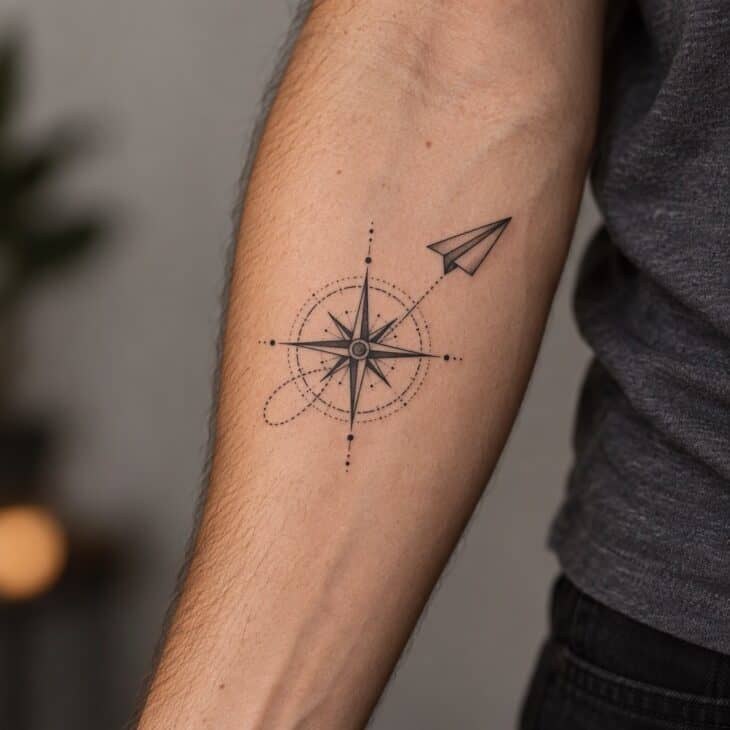
What it is A compass rose with four points and a paper dart cutting across its center, with a faint circle behind.
Why it works Compass and plane together say direction plus motion. It fits graduates and people heading abroad.
How to get it Keep the compass points sharp by asking for stencil linework. Forearm and calf both hold the circle well. The plane should sit on top, not inside, to stay readable.
12. Paper Plane With Heart Trail
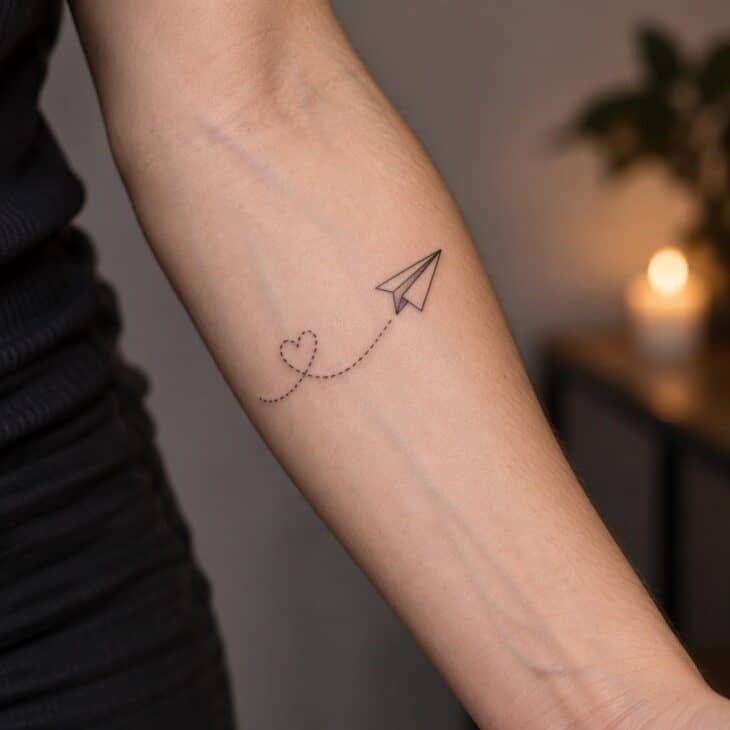
What it is A dart on a single trailing curve that closes into a tiny heart behind it.
Why it works It is a soft design for couples, parents, and long-distance love. One line forms both shapes.
How to get it Matching versions on two people work well, mirrored. Keep the heart under half an inch to stay subtle. Inner forearm, wrist, and ankle are common spots.
13. Paper Plane Crossing a Moon
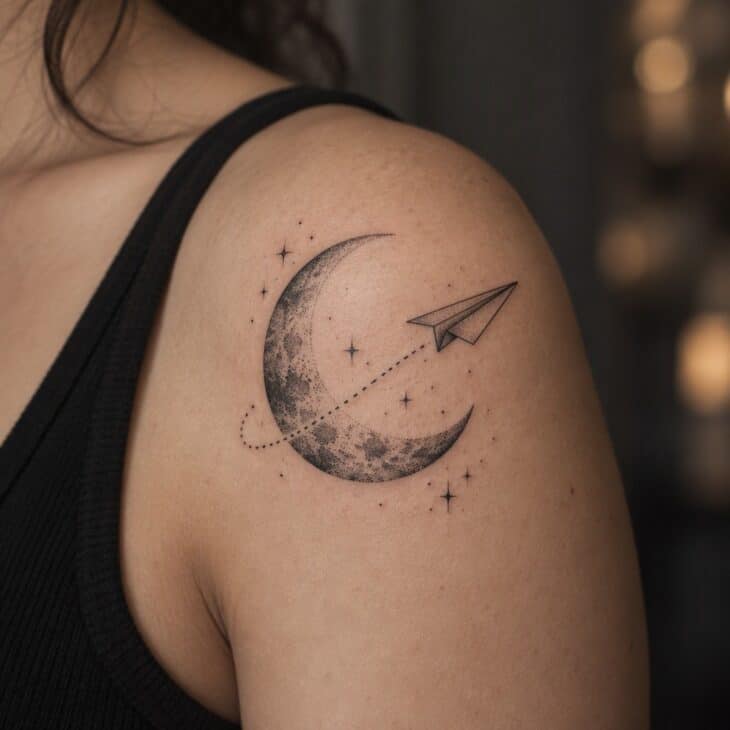
What it is A crescent moon drawn in stippled dots with a paper dart crossing in front of it.
Why it works It echoes old night-sky illustrations and the idea of reaching for something far away.
How to get it Shoulder, upper back, and thigh suit the shape. Ask for stipple shading on the moon only, so the plane stays crisp. Stippling needs a skilled hand, so check healed samples.
Placement tip
Small, thin designs blur faster on hands, fingers, and feet. Wrists, forearms, and calves hold fine detail longest.
14. Geometric Folded Planes
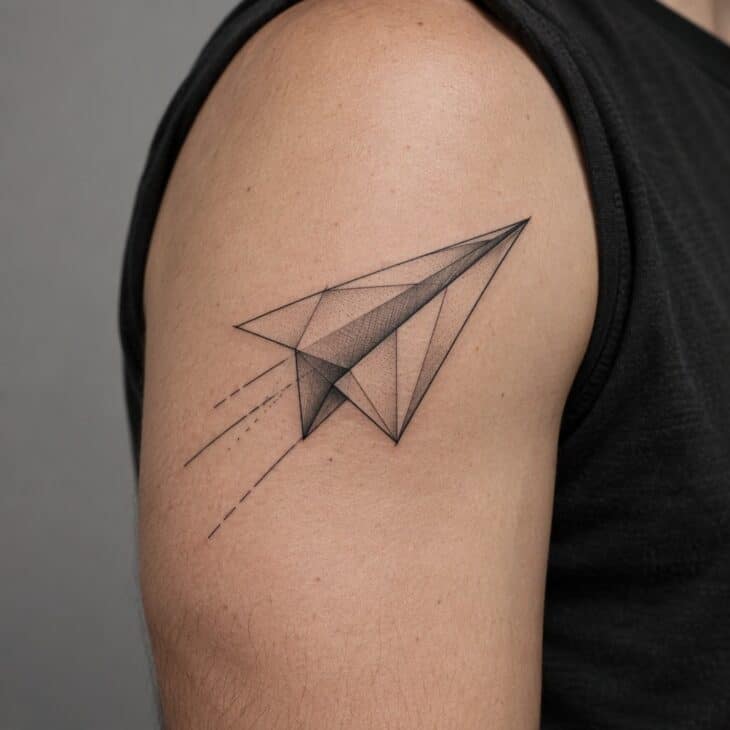
What it is A dart redrawn as stacked triangles, some filled and some outlined, to show each fold as a facet.
Why it works The geometry gives it a modern graphic feel. It works on skin the way a logo works on a page.
How to get it Straight lines show every wobble, so book an artist known for clean geometry. Upper arm and shoulder blade give flat planes. Allow for a longer session than a plain silhouette.
15. Paper Plane in a Jar
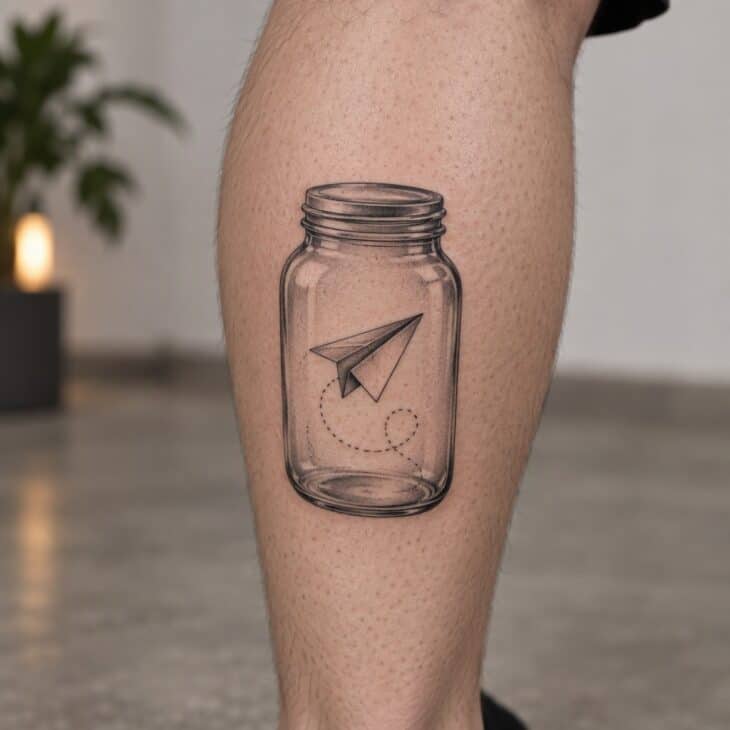
What it is A corked jar holding a paper plane, with a highlight line along the glass.
Why it works It suggests a dream kept safe. It is a gentle design for anyone holding on to a plan.
How to get it The calf or outer thigh fits the jar’s shape. Ask for white highlights left as bare skin. Keep the glass lines thin so the plane stays the focus.
16. Paper Plane Over a City Skyline
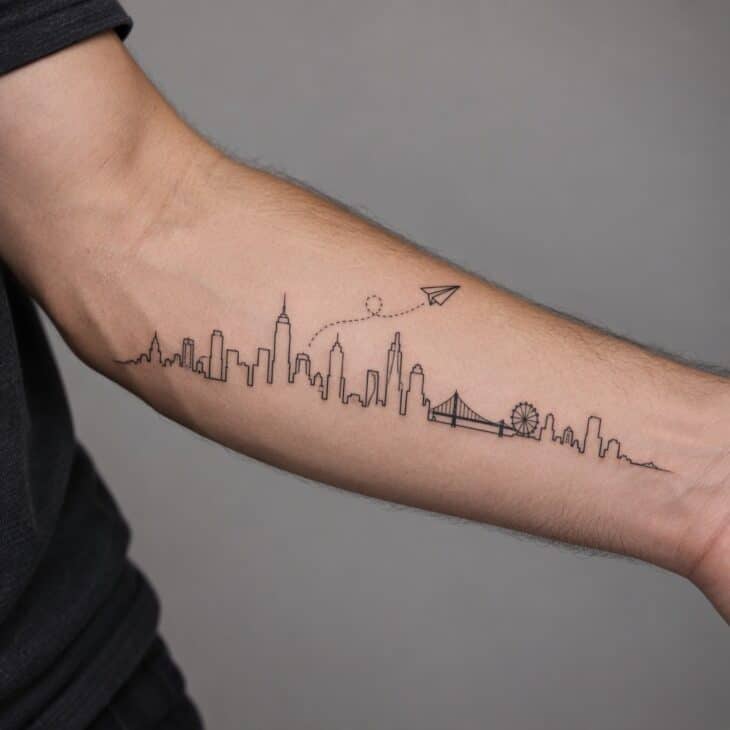
What it is A skyline of generic towers drawn in one continuous line, with a dart flying above.
Why it works It says going somewhere new. It is popular with people who moved cities or left home to work.
How to get it Use a generic skyline unless you want one city. A forearm band shape gives the skyline a strip to sit in. Keep the buildings simple for clear healing.
17. Paper Plane and Wave
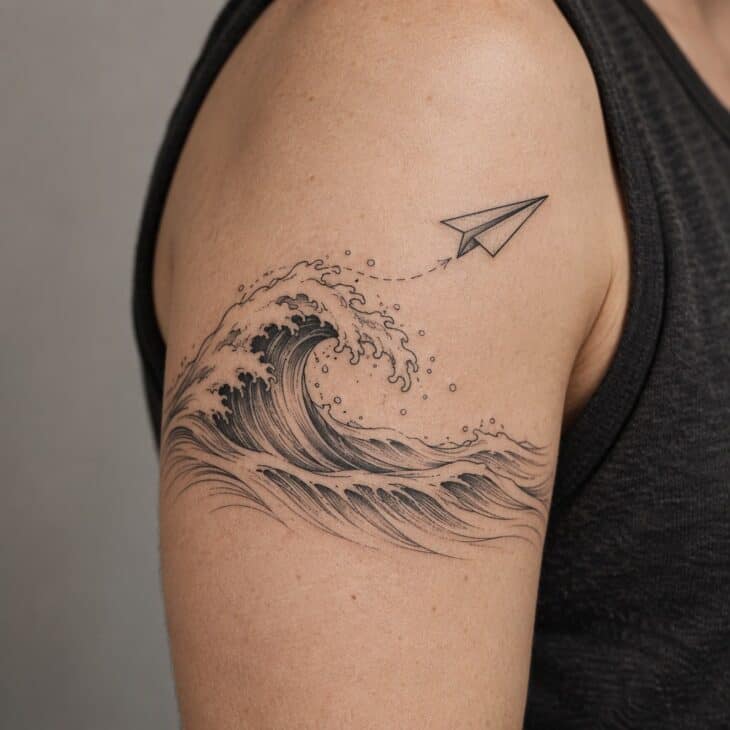
What it is A curling wave drawn in flowing lines with a dart skimming its crest.
Why it works Sea and sky together suit travelers and people who grew up near the coast.
How to get it Outer upper arm and thigh handle the curl. Ask for open linework that does not fill in as it heals. Keep the plane small relative to the wave.
18. Memorial Paper Plane
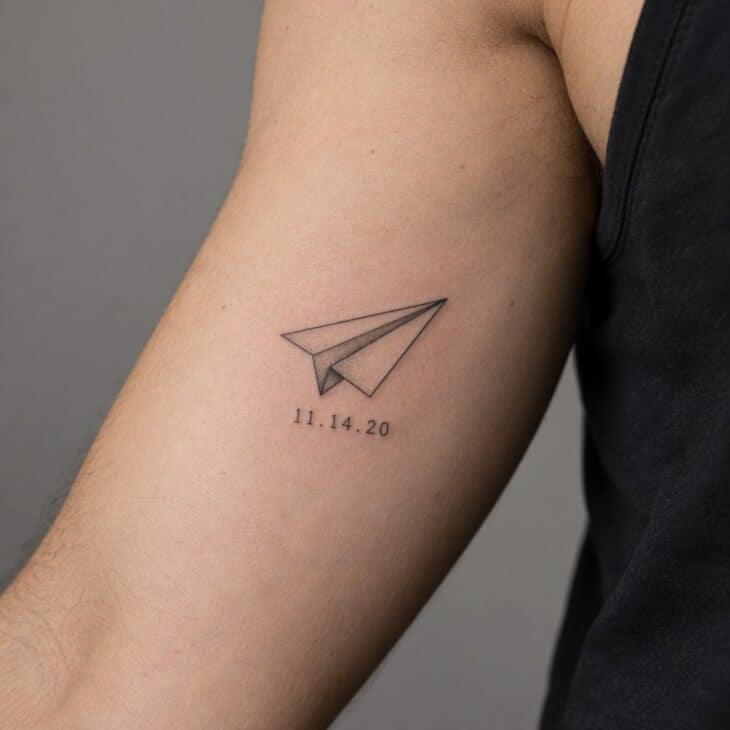
What it is A plane with a short line of numerals below, usually a date or a set of initials.
Why it works A folded plane can honor someone who loved to make or fly them. The date keeps it personal.
How to get it Keep text short and large enough to stay readable, about a quarter inch high. Inner arm and ribs are private places. Ask the artist to review your spelling before the stencil goes on.
19. Pair of Matching Planes
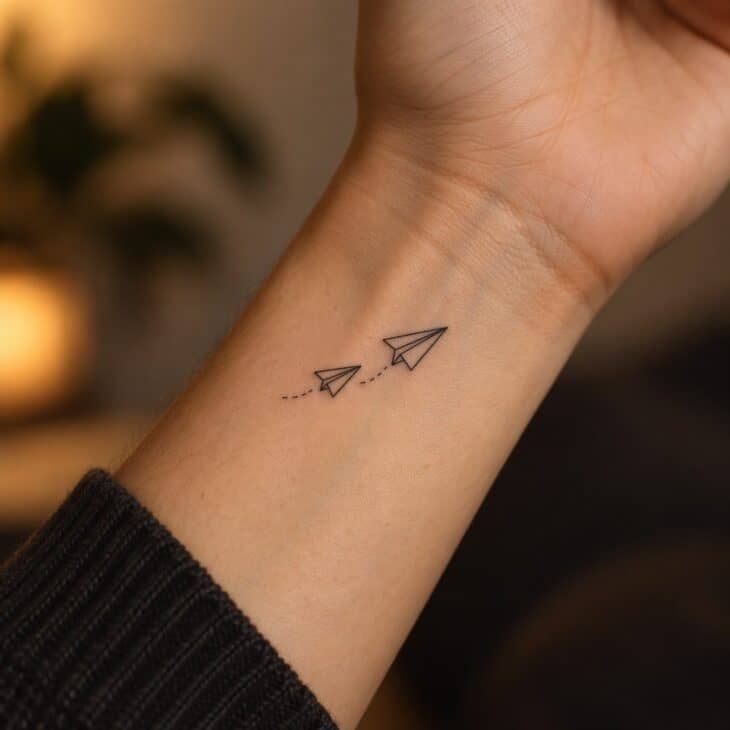
What it is Two planes of slightly different sizes angled to fly together. Often one is placed on each person.
Why it works It marks siblings, friends, or partners. Each piece stands alone, so neither looks incomplete.
How to get it Book both people in the same session so line weight matches. Wrist, ankle, and rib are common. Agree on size first since small tattoos need care.
20. Paper Plane With Sun Rays
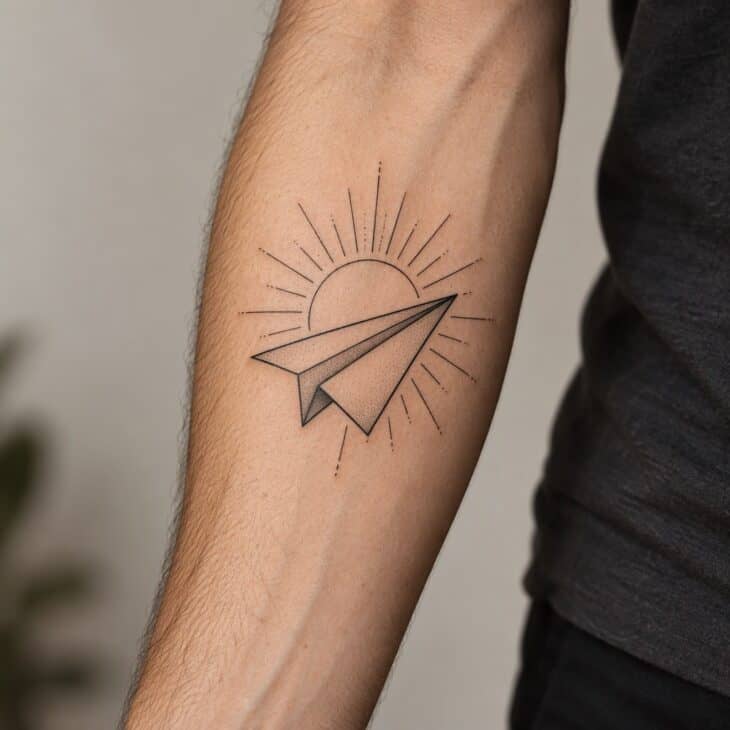
What it is A dart in front of a half sun with evenly spaced straight rays.
Why it works Sunrise and flight combine optimism and motion. It suits recovery and fresh-start stories.
How to get it Even ray spacing needs a stencil. Forearm and calf offer the right proportions. Black rays heal sharper than grey ones.
21. Paper Plane With Wildflowers
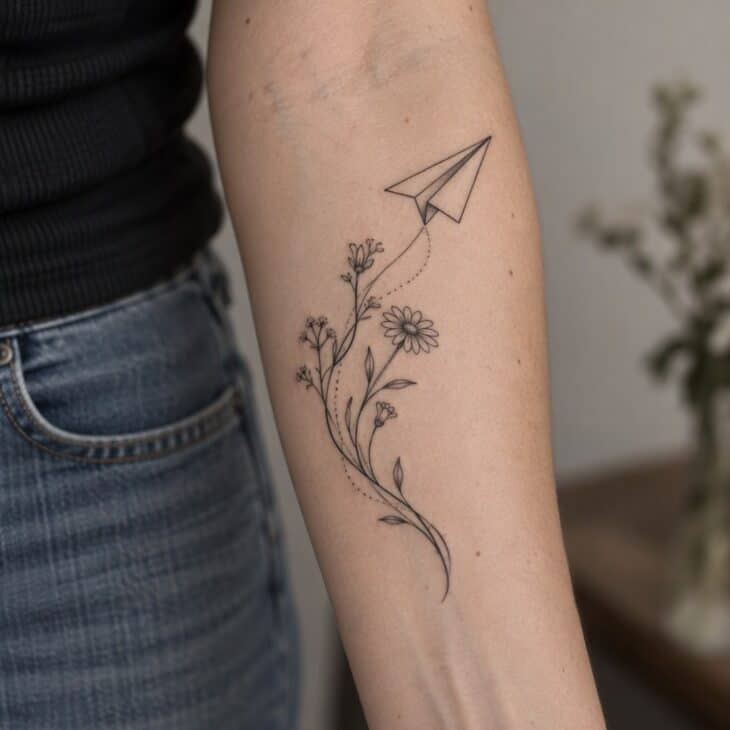
What it is A paper dart above a loose spray of three or four wildflower stems with small petals.
Why it works The mix of plants and paper feels handmade. It balances a travel symbol with something grounded.
How to get it Pick a flower with meaning for you, such as a birth flower. Keep stems thin and spaced. Fine-line florals need touch-ups, so budget for one.
22. Paper Plane Ankle Band
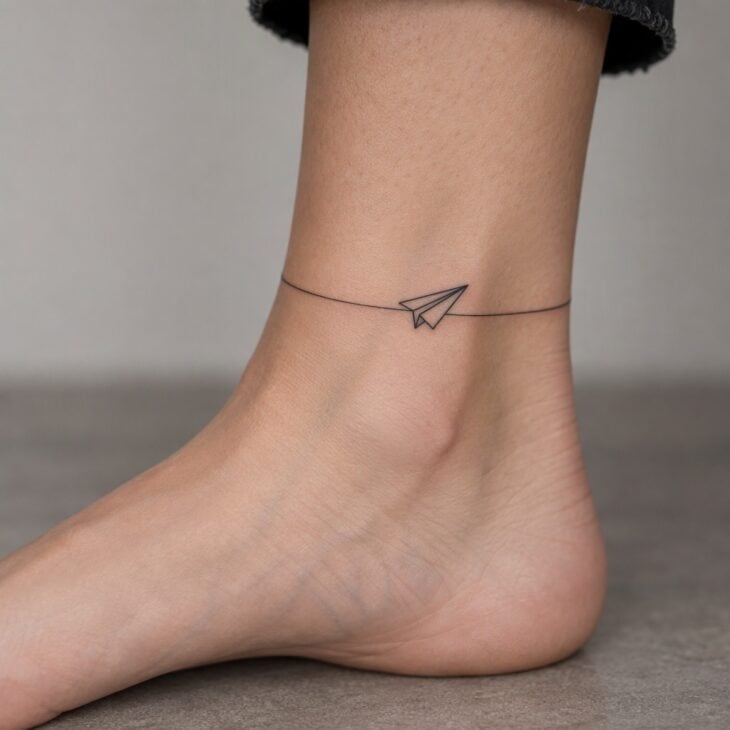
What it is A band of two thin lines circling the ankle with a small dart set into one side.
Why it works A band is a simple frame that is easy to cover with a sock or shoe.
How to get it Ankle bands stretch and warp with movement, so ask for a slightly loose circle. Choose a spot away from sock friction. Expect a slower heal on the ankle.
23. Paper Plane Cityscape Map Route
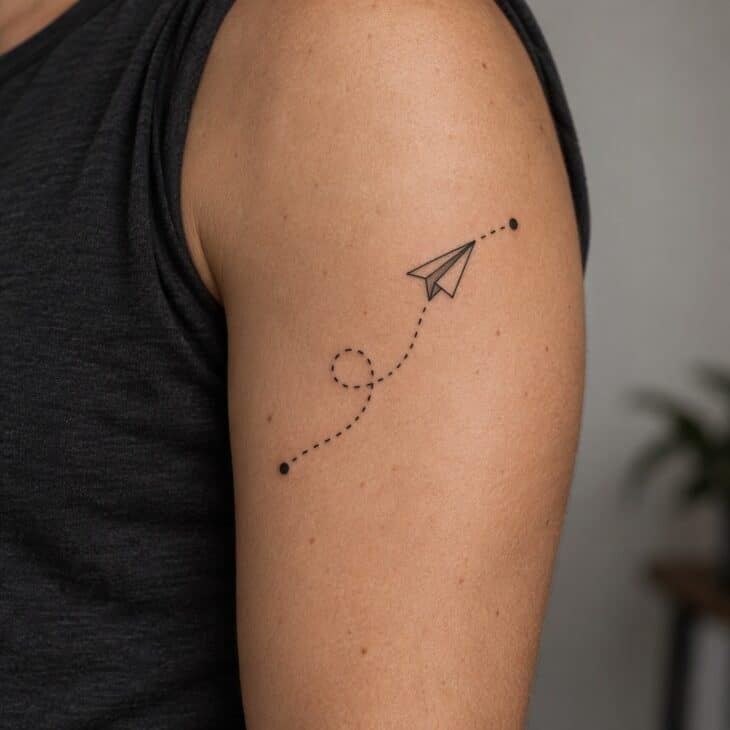
What it is A dotted arc connecting two small x marks, with a dart in the middle of the route.
Why it works The two points can mark home and a destination, or two people. The route makes the link visible.
How to get it Use real coordinates in tiny numerals only if you want them. Keep the arc smooth and wide. Upper arm and ribs give room for the arc.
24. Paper Plane and Stars
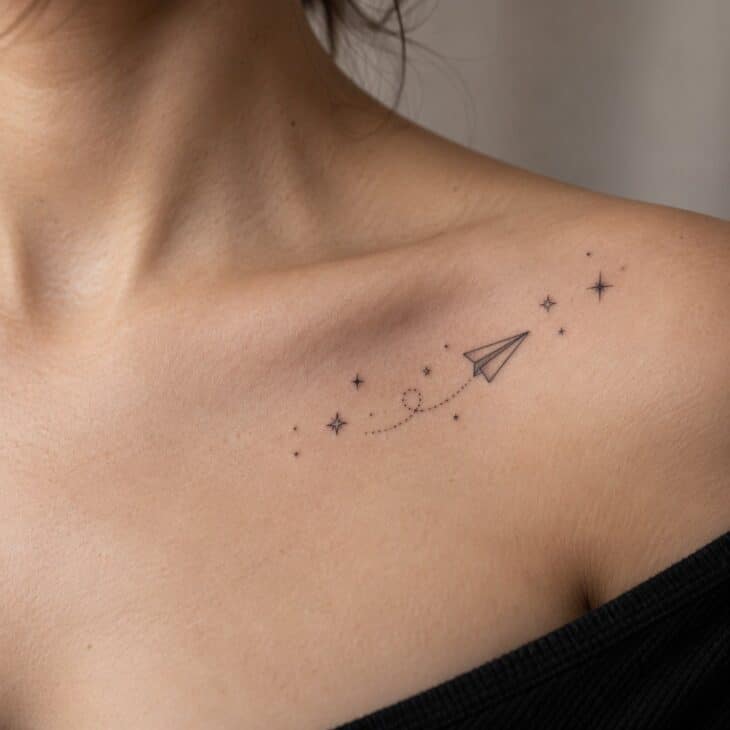
What it is One dart angled upward among five or six stars of different sizes.
Why it works The upward angle suggests a wish. It is a favorite for dreamers and young travelers.
How to get it Collarbone and shoulder place the stars along natural lines. Let the artist vary the star sizes. Check how the design moves when you raise your arm.
25. Paper Plane With Number Date
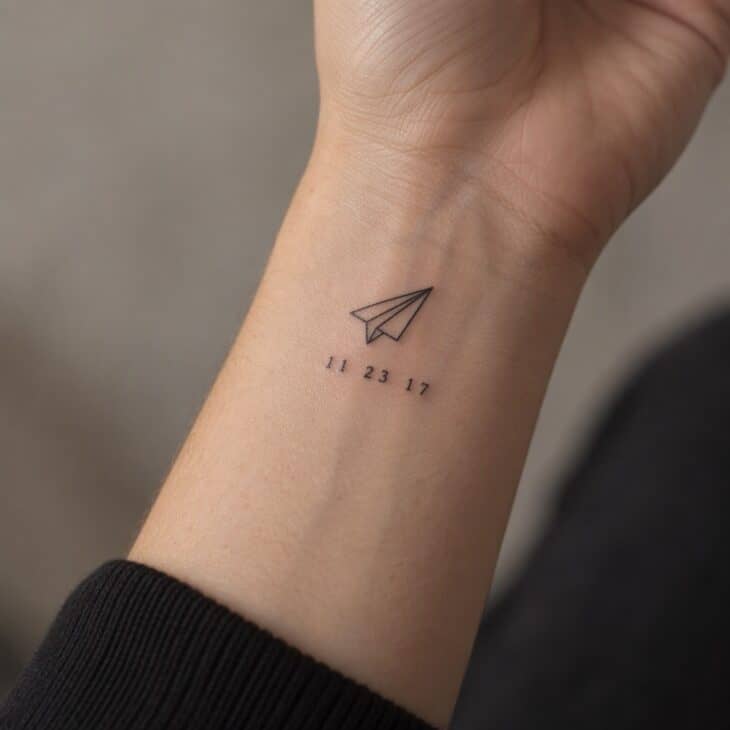
What it is A tiny plane over a date in Roman or standard numerals, such as a first flight, a graduation, or a birth.
Why it works A date turns a generic symbol into a personal one. It reads as a marker, not a brand.
How to get it Roman numerals take less width than standard digits. Keep numerals above one eighth of an inch high. Double check the date with the artist before the stencil.
FAQ
Sources and references used for research and fact-checking.
Get the Newsletter
The latest aviation news and stories sent to your inbox.
About the Author

Hanna writes AeroCorner's aviation-lifestyle and decor guides, turning a love of flight into ideas for your home, celebrations, and gift lists.