Military Propellor Planes
Supermarine Spitfire
ICAO: SPIT
Carrier-based naval variant of the Spitfire
The latest aviation news and stories sent to your inbox.
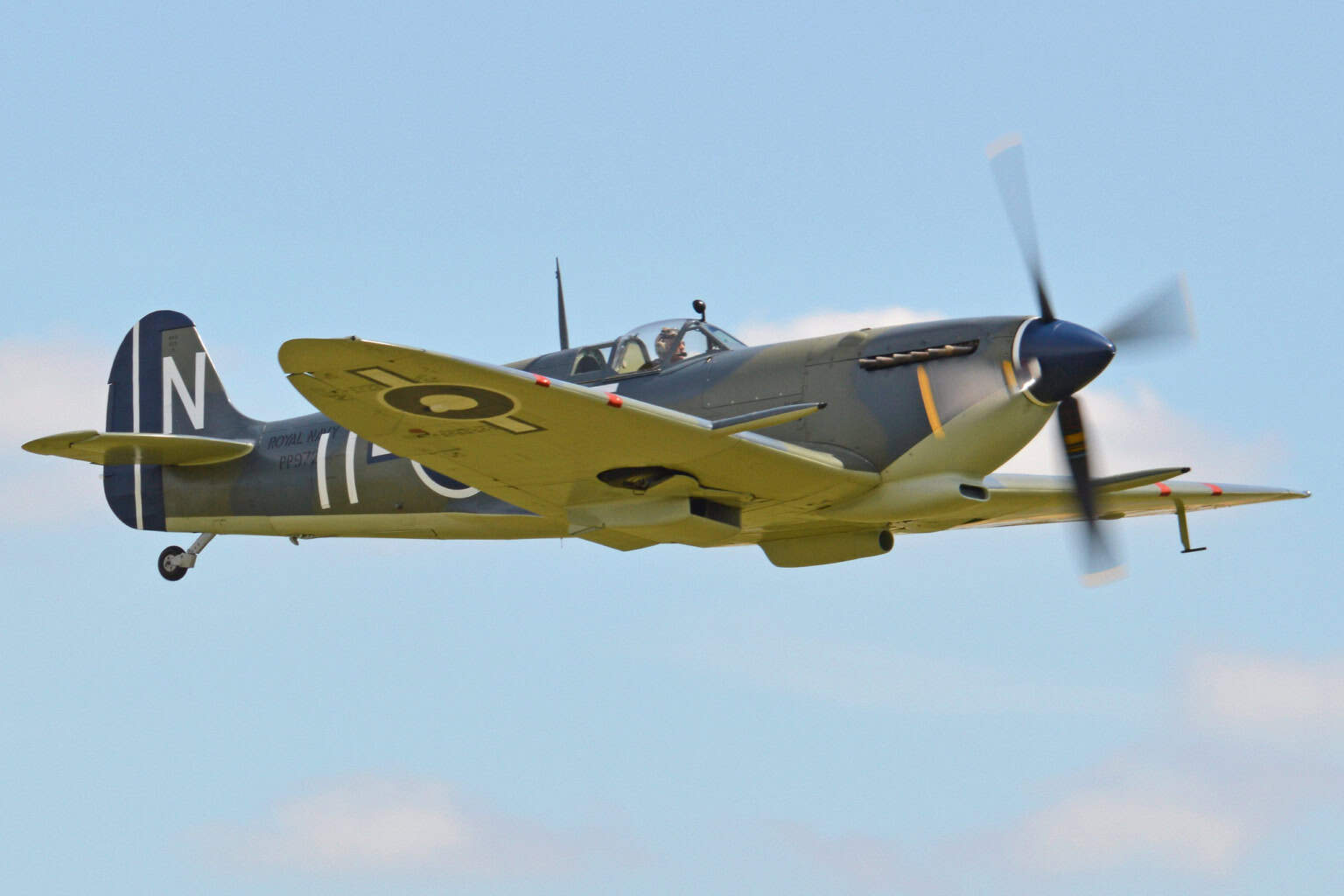
The Supermarine Seafire was developed and manufactured by Supermarine as a naval variant of the Spitfire fighter aircraft modified for missions from aircraft carriers. The carrier-based fighter first flew in January 1942 and was in service with the Royal Navy, French Navy, Irish Air Corps, and Royal Canadian Navy. A total number of 2,646 aircraft were built.


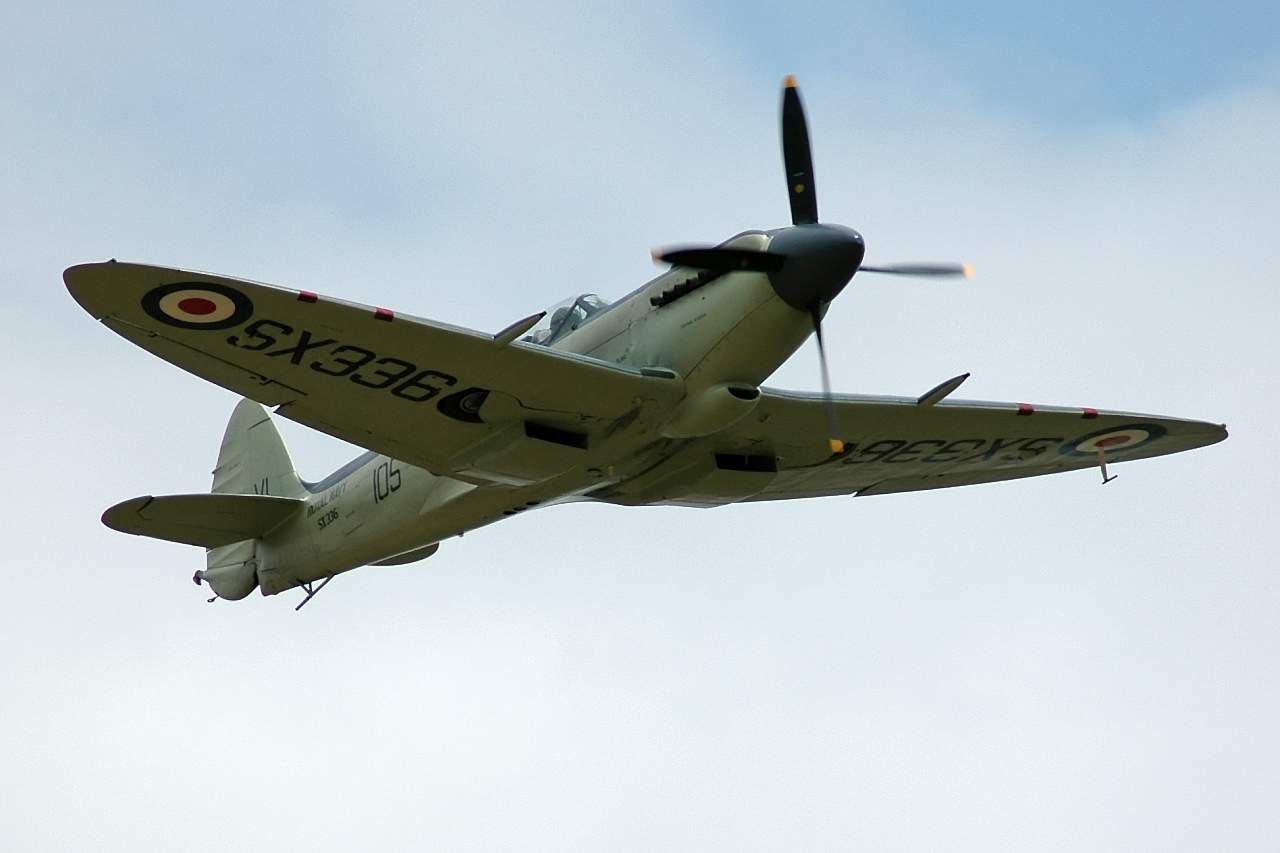


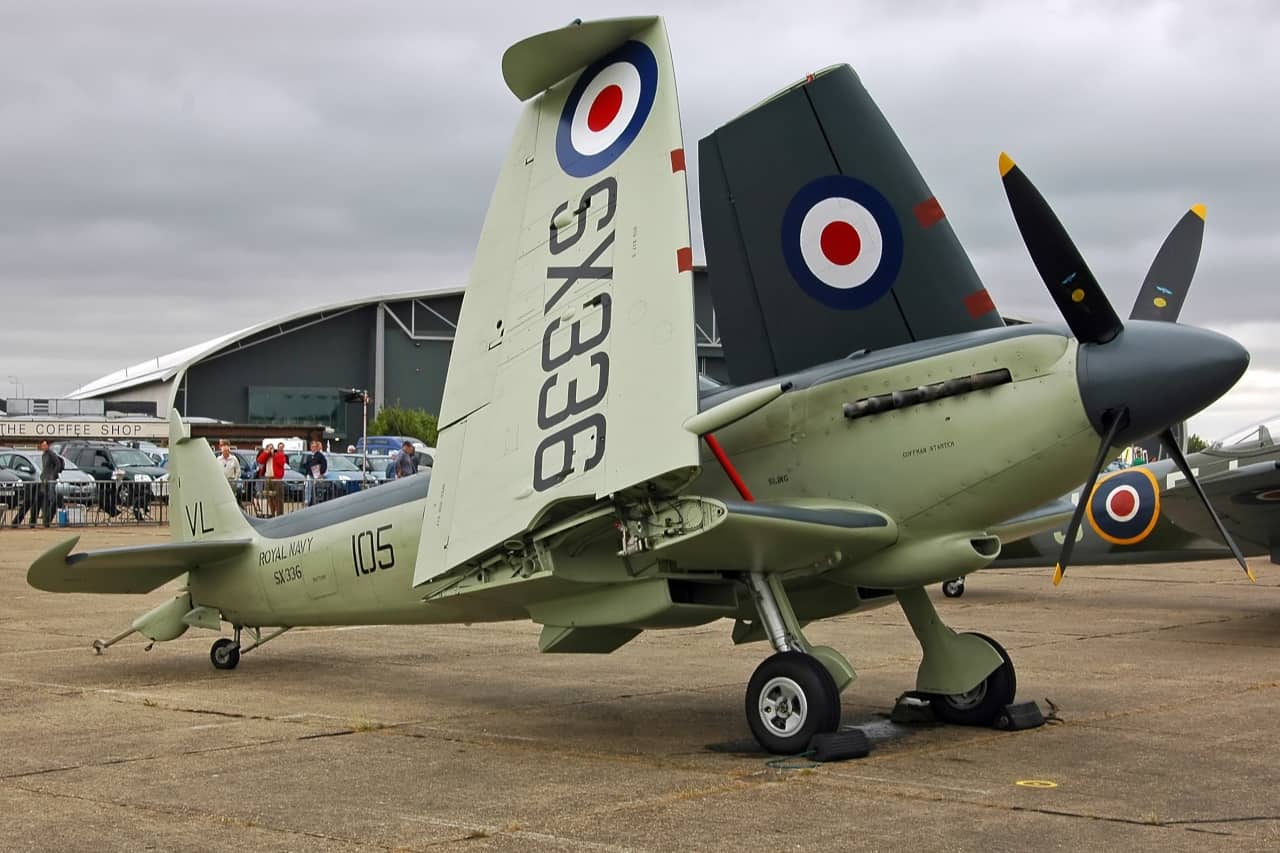

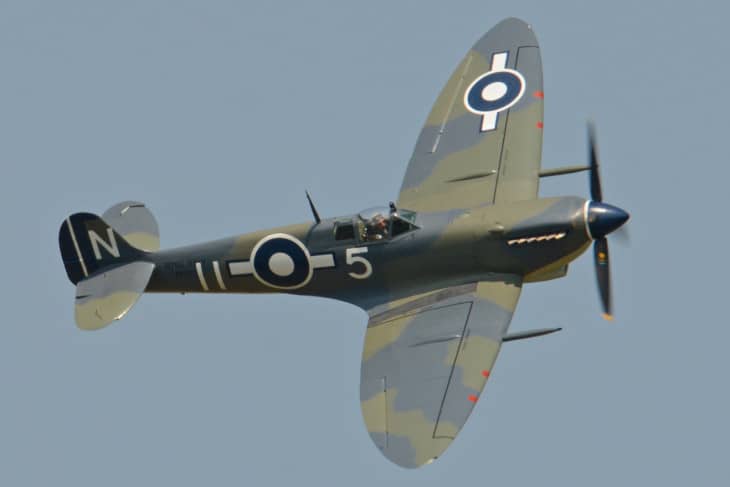
The Seafire is a single-seat aircraft with an external length of 9.21 meters, an external height of 2.87 meters, and a fuselage diameter of 0.85 meters. It has a tail height of 3.49 meters and a wheelbase of 6.3 meters. The wingspan is 11.23 meters and the wing area is 22.5 square meters. It has an empty weight of 2,412 kg, a gross weight of 3,280 kg, and a fuel capacity of 130 US gal.
The aircraft is powered by a single Rolls-Royce Merlin engine. It is a twelve-cylinder supercharged liquid-cooled “Vee” piston engine with overhead camshaft, two-speed two-stage supercharger, twin-choke updraught carburetor fuel system, a dry-sump oil system, and a supercharger intercooler system. It produces a maximum thrust of 1,585 hp and drives a four-bladed constant-speed propeller. The aircraft has a maximum speed of 312 knots at 36,000 feet and a cruise speed of 236 knots. The travel range is 404 nautical miles at cruising speed. It can fly up to 36,000 feet and can climb at a rate of 3,250 feet per minute.
The Seafire is armed with two 20 mm Hispano Mk II cannons and four 7.70 mm Browning machine guns located in the wings. It is also loaded with eight 27 kg of rockets and two 113 kg of bombs; one under each wing or one 227 kg bomb under the fuselage.
On January 7, 1942, the aircraft took to the air for the first time. It was a naval variant developed from the Spitfire built by the British manufacturer Supermarine. The aircraft served with the Royal Navy, as well as the French Navy, Irish Air Corps, and Royal Canadian Navy. Since 1942, orders for more Seafire versions were rapidly placed, which included the first operationally-capable Seafire F Mk III version. In November 1942, the aircraft was used in the Operation Torch, and in July 1943, it provided air cover during Operation Husky.
Sources and references used for research and fact-checking.