Midsize Business Jets
Gulfstream G800
ICAO: GA8C
The long-range business jet that defined executive travel in the 1990s
The latest aviation news and stories sent to your inbox.
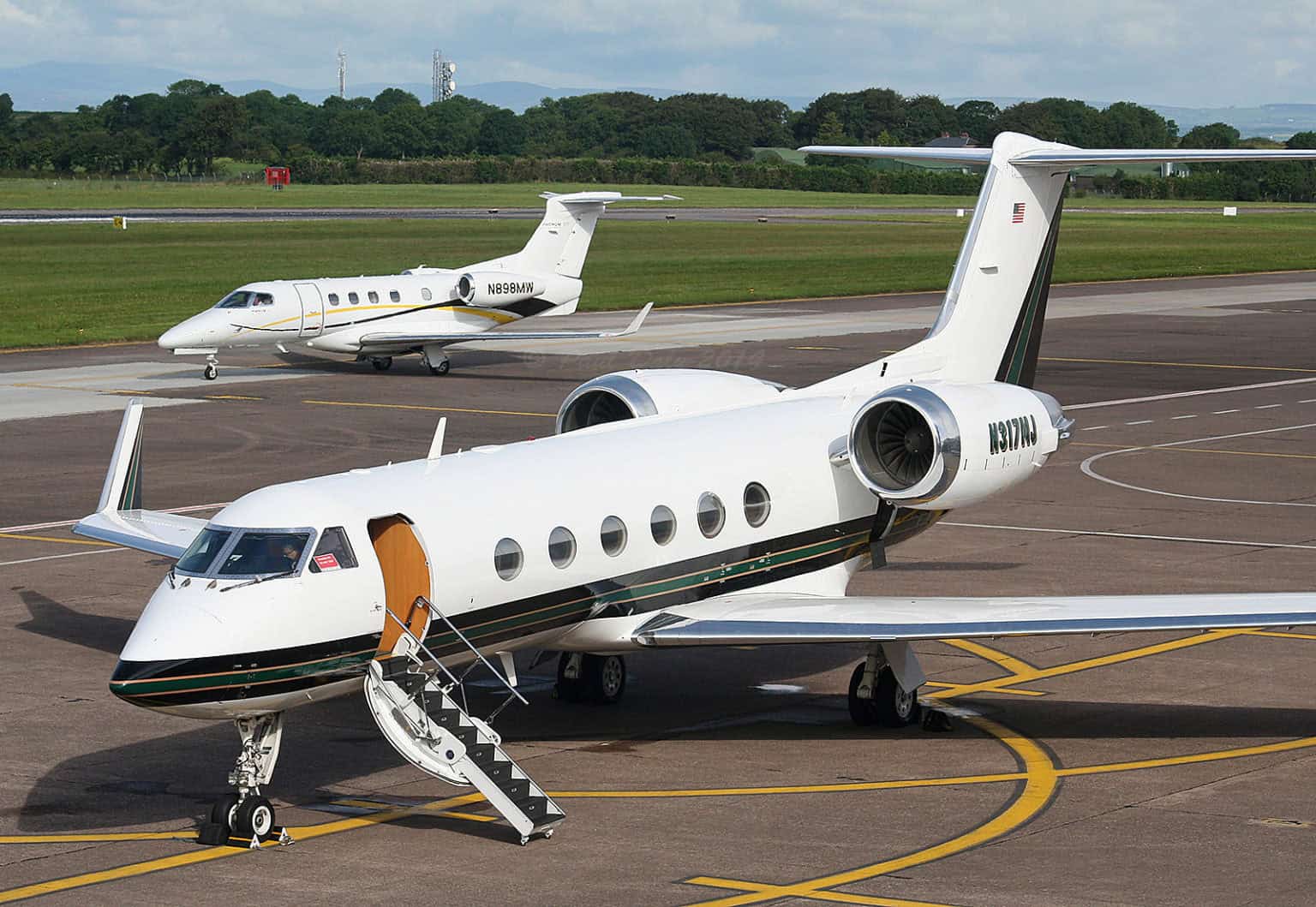
The Gulfstream IV, often referred to as the GIV, became one of the most successful large-cabin business jets of its era. Combining intercontinental range with a spacious cabin and advanced avionics, it helped establish Gulfstream’s reputation as a leader in long-range corporate aviation.
Live Fleet Activity (GLF4)
Fetching live data…
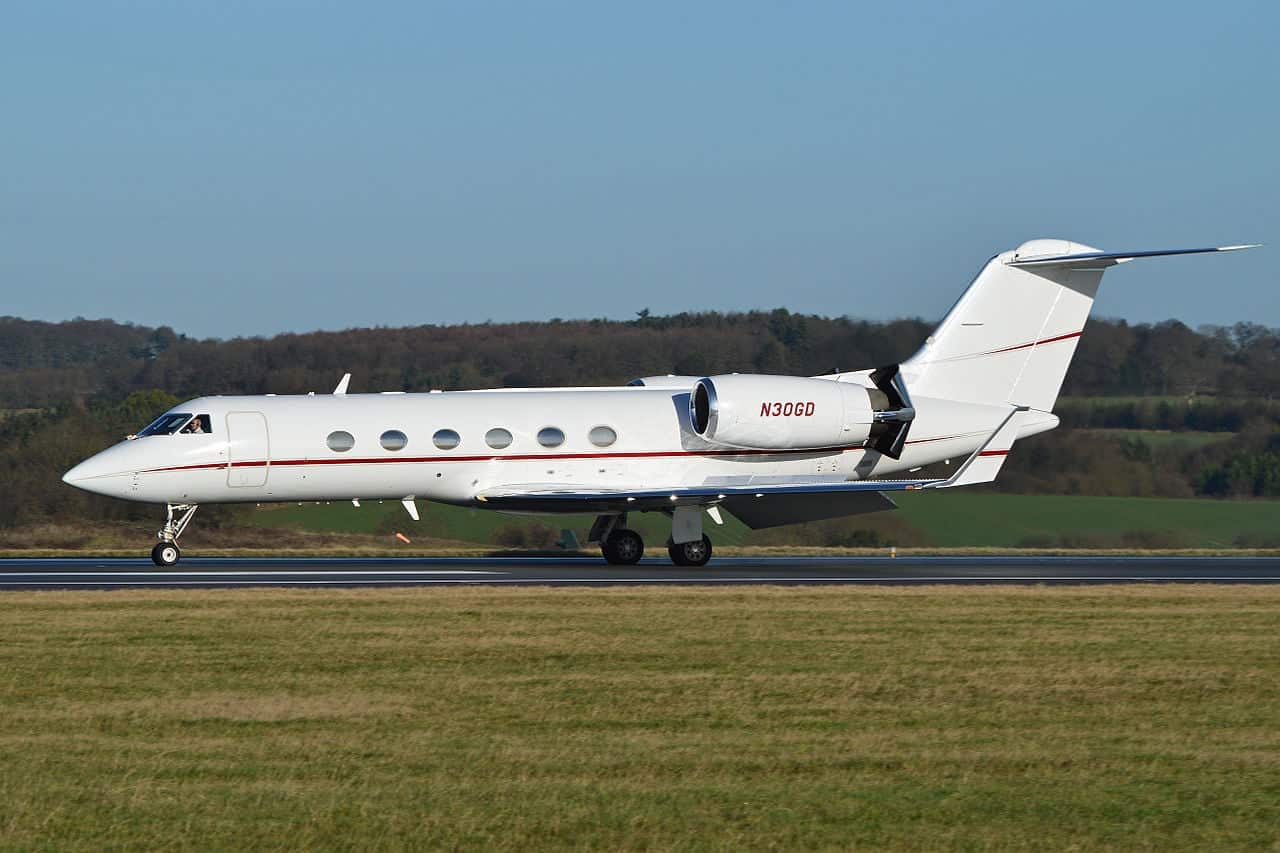
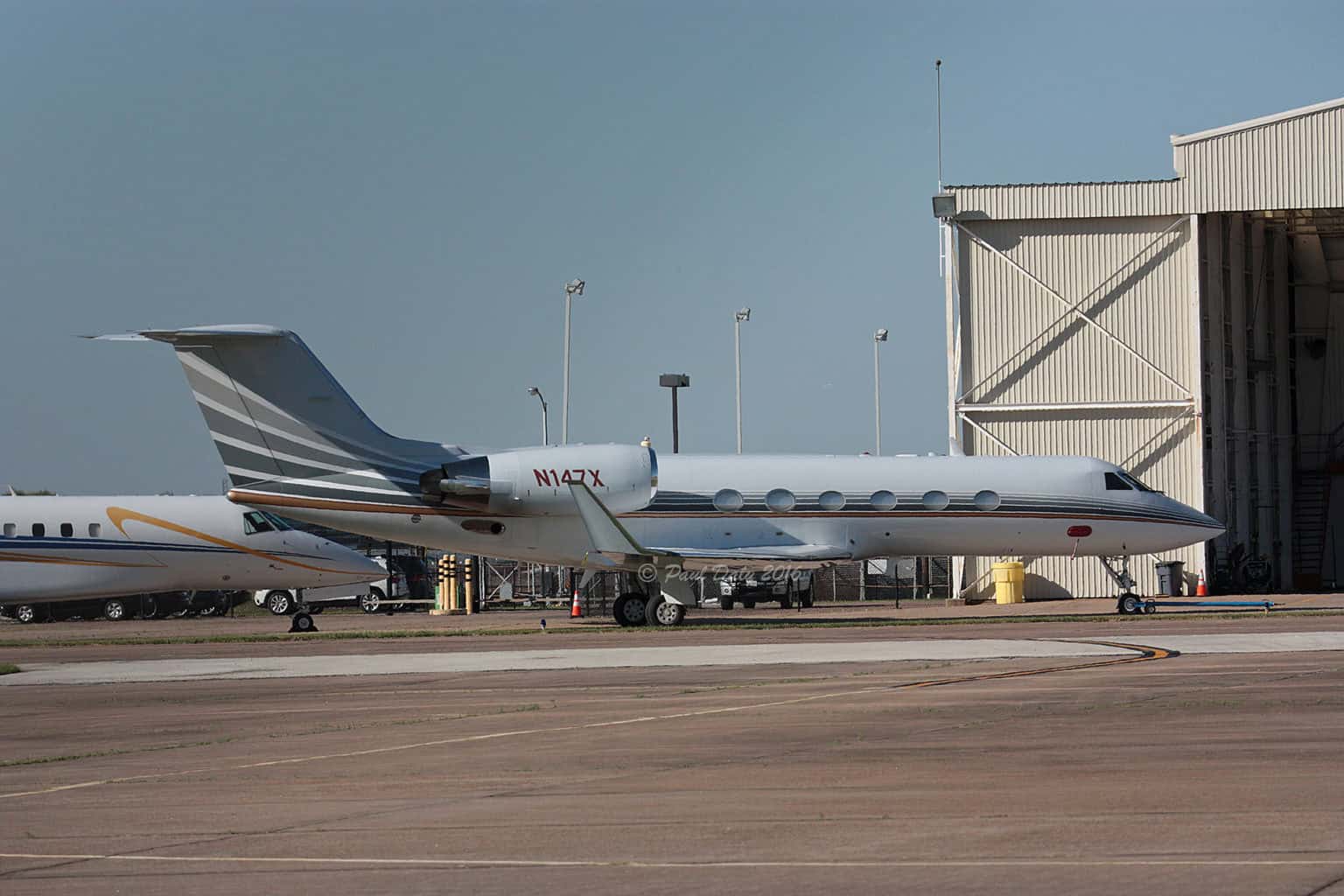



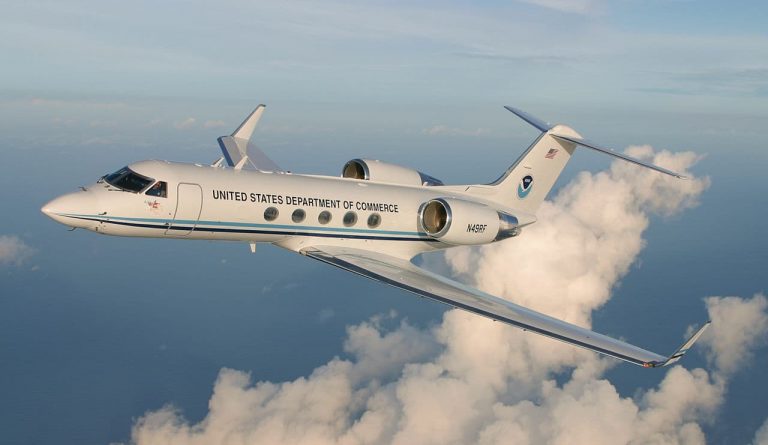
The Gulfstream IV was introduced in the mid-1980s as an evolution of the earlier Gulfstream III. First flown in 1985 and entering service in 1987, the aircraft was designed to offer greater range, improved aerodynamics, and modernized systems to meet the growing demands of global business travel.
The GIV retained the distinctive swept-wing and T-tail configuration of earlier Gulfstream models but incorporated structural refinements and upgraded systems. Powered by two Rolls-Royce Tay turbofan engines, it delivered improved fuel efficiency and longer nonstop range, enabling transoceanic flights between major business centers. Typical range exceeded 4,000 nautical miles, depending on configuration and payload.
Inside, the Gulfstream IV offered a large, pressurized cabin that could be configured for executive seating, conference areas, and sleeping accommodations. The aircraft’s spacious layout and intercontinental capability made it especially attractive to corporations, charter operators, and government agencies.
Several improved versions followed, including the GIV-SP and G400, which introduced enhanced avionics and performance refinements. More than 500 aircraft in the GIV family were produced, and many remain in service today in business, government, and special mission roles.
The Gulfstream IV marked a turning point in long-range business aviation, combining comfort, capability, and reliability in a platform that helped shape the modern large-cabin jet market.
In March 1983, Gulfstream Aerospace together with Grumman, a producer of military and civilian aircraft in the early years developed the Gulfstream IV. It is an extended fuselage descendant of the Gulfstream III.
On September 19 1985, the Gulfstream IV took its first flight
On April 22 1987, the aircraft received its type certification from the Federal Aviation Administration. On the same year, it entered into service with serial number 1000.
In 1993, it was enhanced to the GIV-SP (Special Purpose) variant with serial number 1214. Afterwards, it was relabeled as G400 with serial number 1500.
In 2002, the G300 was developed. This type is a version with a shorter range based on the GIV.
In 2001, the GIV-X, an upgraded type of the GIV-SP was developed. Afterwards, it was relabeled as the G450. In October 2004, production of the said type started. In 2004, the shorter range type was designed and gained its certification.
In 2018, 1990 to 1992 GIVs were listed for sale, at a cost of $1.6- 4.4 million. The GIVSPs made from 1992 to 1999 were for sale at $1.25- 5.2 million. The vintage G300s and G400s were listed for $4.5- 7 million, and the G450s produced from 2006 to 2016 were available at $9.95- 23.75 million.
The Gulfstream IV has a wingspan of 23.72 meters. The wing design was enhanced to increase range, and reduce weight and cruise drag. Alteration of wing outline was limited to the onward 65% of wing chord in order that no realteration of the control surfaces would be needed.
Alteration of the inboard wing would have involved a modification of the fuselage floor design, as a result this part of the wing was not realtered. Alteration of the outboard wing was done to reduce the pressure coefficient and letting it move toward the tail in order to increase shock sweep and decrease shock strength.
The aircraft has an extra swept outboard shock that results in a decreased cruise drag. Given this configuration, the aircraft has a lower bending moment in the root because of the extra inboard center of pressure, the fuel volume was larger because of the increase in wing chord, and the stall speed was decreased because of the washout.
The Gulfstream IV has a fuselage length of 26.92 meters and height of 7.44 meters.
The Gulfstream IV is powered by Tay 611-8 manufactured by Rolls- Royce. This turbofan engine entered into service in 1987. It has a three-stage intermediate-pressure compressor connected to the fan shaft, a twenty-two-blade titanium fan, a twelve-stage high-pressure compressor, a two-stage high-pressure turbine and a three-stage low-pressure turbine. The engine has a maximum thrust of 13,850 lbf.
The Gulfstream IV can fly up to 45,000 feet. It has a travel range of 4,220 nautical miles and maximum speed of 505 knots. It has a take off distance of 1,609 meters and a landing distance of 1,521 meters. The aircraft has a rate of climb of 4,219 feet per minute.
The Gulfstream IV is capable of carrying a maximum payload of 1,542 kg and has a fuel tank capacity of 3513.6 US Gal. The maximum take off and landing weight are 33,203 kg and 26,535 kg respectively.
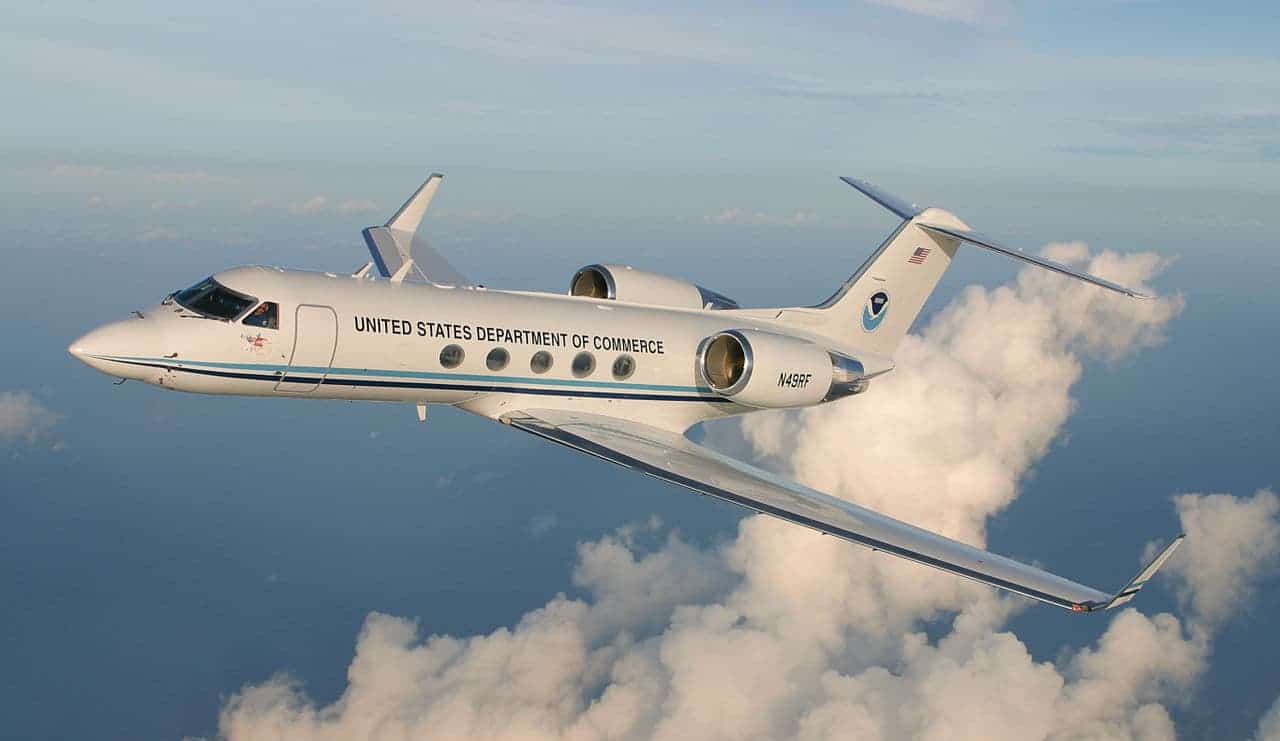
The C-20F/G/H/J is a military version of the Gulfstream IV in service of the United States Department of Defense (USDOD). The C-20F is a GIV prototype under the United State Army for command or executive transport role. The C-20G can be customized for cargo transport, twenty-six seats passenger transport, or a mixture of the two.
By removing the passenger seats, the C-20G can be set up as three pallets without passengers, two pallets with eight passengers, or one pallet with fourteen passengers. The operator of the said variant is the Fleet Logistic Support Squadron Four Eight (VR-48). The United States Air Force is the operator of the C-20H, while the United States Army operates the C-20J.
On August 12 2004, the Federal Aviation Administration approved the G450 and the G350, the shorter range version.
Sources and references used for research and fact-checking.