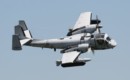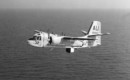
Military Propellor Planes
Grumman F7F Tigercat
ICAO: F7F
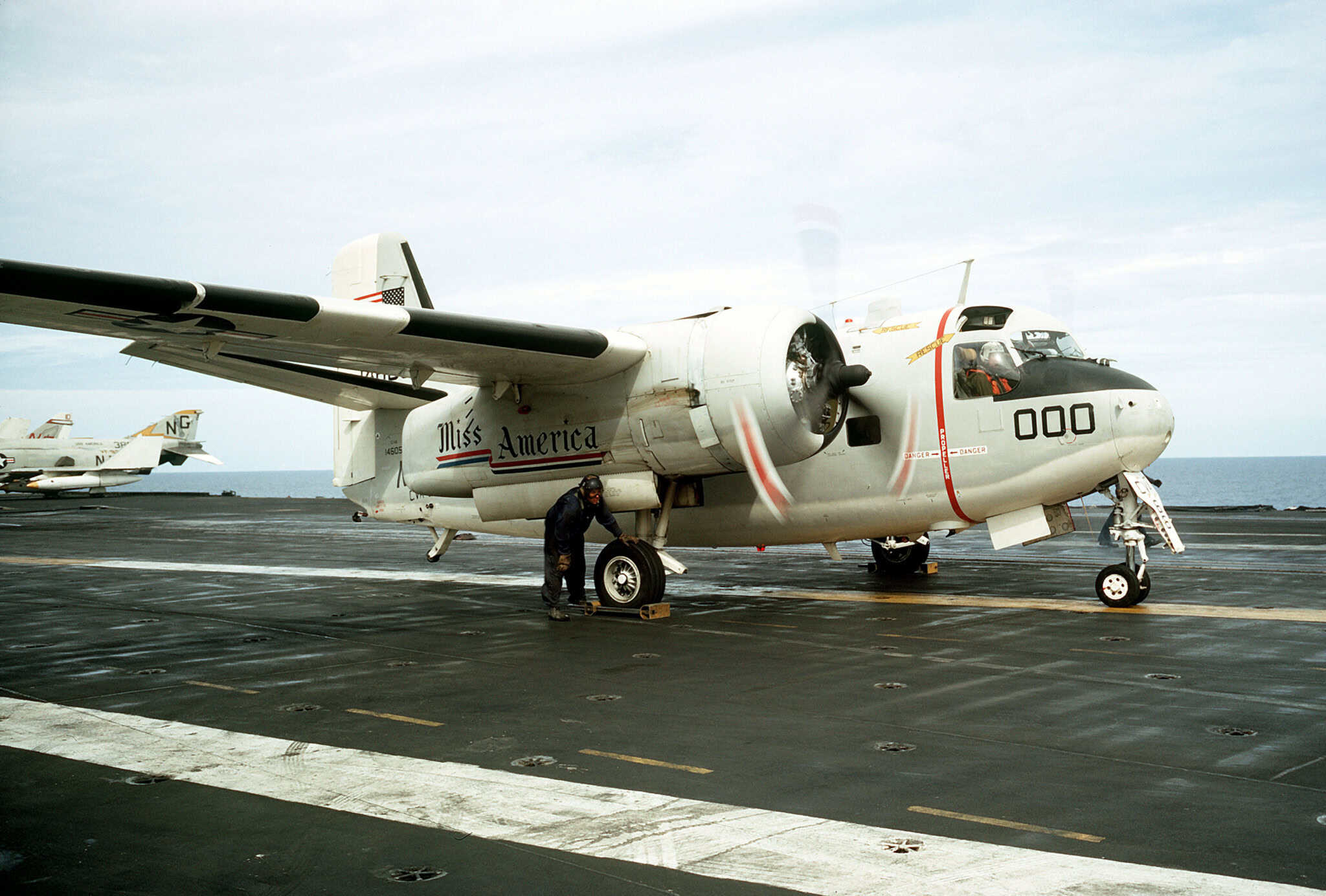
The Grumman C-1 Trader was the U.S. Navy's piston-engine carrier onboard delivery aircraft, a Tracker airframe with a fatter fuselage that hauled mail, parts and up to nine passengers to carriers until the late 1980s.
Updated: by Tim de Vries
The latest aviation news and stories sent to your inbox.
The Grumman C-1 Trader (originally the TF-1) is the transport sibling of the S-2 Tracker submarine hunter. Built in 87 examples, it flew mail, priority parts and passengers from shore to deployed carriers, including through the Vietnam War. It was the last piston-engine aircraft to fly from Navy carrier decks, and a few still fly as civilian warbirds.
Live Fleet Activity (G96)
Fetching live data…
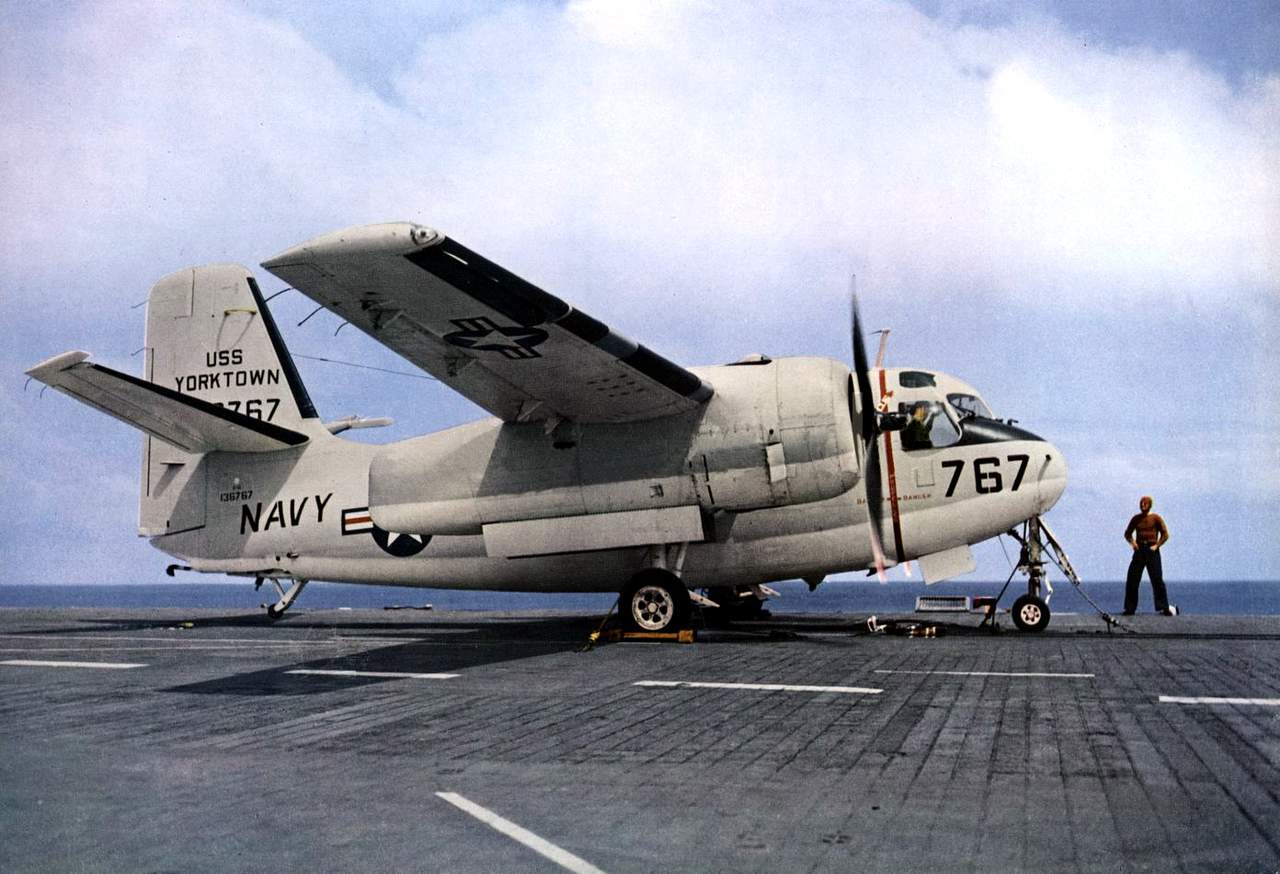
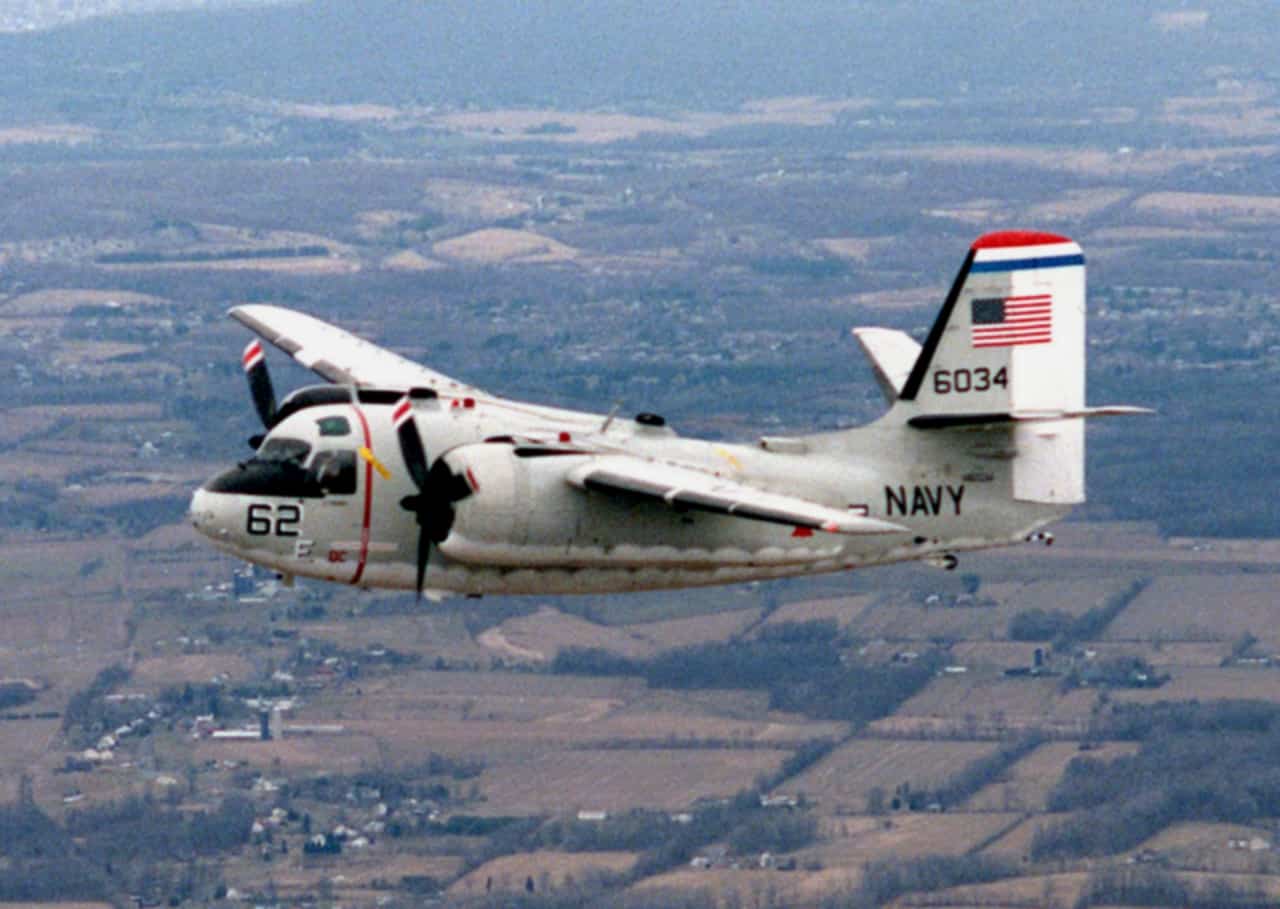


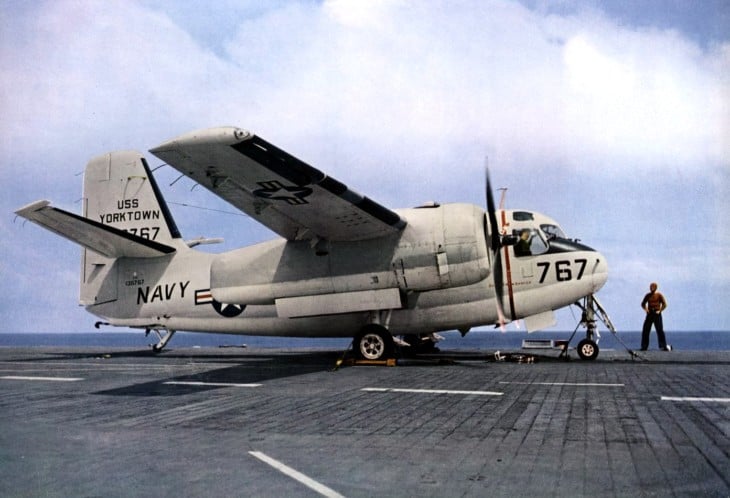
The Grumman C-1 Trader was the U.S. Navy’s carrier onboard delivery (COD) aircraft of the 1950s to 1980s. It was a twin-engine, high-wing transport built on the airframe of the S-2 Tracker submarine hunter.
Grumman gave it an enlarged fuselage so it could carry mail, priority parts and up to nine passengers out to ships at sea. It entered service in 1956, and the Navy built 87 of them.
The full specification table for the aircraft is on this page, beside the article.
The Tracker’s prototype first flew on 4 December 1952 as the XS2F-1. The transport version, then called the TF-1, flew for the first time on 19 January 1955.
The Navy’s 1962 tri-service redesignation renamed the TF-1 the C-1A. That is why period photographs show “TF-1” while later ones show “C-1”.
The C-1 shared its wings, engines and tail with the Tracker, which kept spares and training simple. Only the fuselage grew.

The Trader’s job was the last leg of the supply chain. It carried mail, spare parts and people from shore bases to carriers on station, and sometimes flew sick or injured sailors the other way.
Through the Vietnam War era, C-1s kept Pacific Fleet carriers supplied. The Grissom Air Museum says it could carry nine passengers or up to 4,800 lb of cargo, including small jet engines, if the load fit the fuselage doors.
It usually flew with three crew: two pilots and an aircrewman who acted as plane captain, mechanic and loadmaster. It operated from shore-based transport squadrons and detachments in places such as the Philippines, Turkey, Greece and Norway.
In 1956 the Marine Corps also tested the TF-1 for inserting reconnaissance teams. Four recon parachutists jumped from one launched from USS Bennington about 70 miles (113 km) at sea.

The airborne early warning version of the family is a separate aircraft, the WF Tracer, later the E-1. Wikipedia lists the Trader’s own early warning variant only as a TF-1W project.
Two Wright R-1820-82WA Cyclone radials powered the Trader. They were gasoline engines, which became a problem as the fleet moved to jet fuel only.
The USS Midway Museum notes that after Midway switched to jet fuel in the 1970s, its C-1 was based ashore and flights were planned closely around fuel. The Trader was the last piston-driven carrier aircraft in the Navy.
The Grumman C-2 Greyhound, a turboprop, replaced it. A Navy VRC-30 history says the squadron received its first C-2A in 1985 and retired the C-1A the following year.
Other sources date the last Navy service later. Wikipedia and the Grissom Air Museum say the final C-1 left service in 1988, which made it one of the last radial-engine aircraft in U.S. military use.

Quoted figures for the Trader disagree, because the sources mix different loadings and variants. Takeoff weight is the clearest case: the USS Midway Museum lists a figure several thousand pounds higher than Wikipedia’s. The panel carries the higher one.
Range is another. Wikipedia lists 960 nautical miles, while museum sources quote about 1,300 miles. The two are close once you convert the units, since 960 nautical miles is about 1,100 statute miles.
Speed depends on what is meant. The panel’s 240 kt (276 mph · 444 km/h) is top speed at low altitude. A normal cruise was around 145 kt (167 mph · 269 km/h).
The page’s panel shows the figures we could source to a published reference. Where sources conflict, treat the numbers as approximate.
Several C-1s survive. Museum examples include the National Naval Aviation Museum in Pensacola, the Grissom Air Museum in Indiana, the USS Midway Museum in San Diego and the Pacific Coast Air Museum in California.
A number are also airworthy in private hands. Wikipedia lists Traders at the Lauridsen Aviation Museum, the Champaign Aviation Museum, the Lone Star Flight Museum and several private owners.
In 2010 Brazil announced plans to buy and modernize eight C-1s for its carrier. A 2011 contract covered converting four to KC-2 Turbo Traders, but by 2023 no aircraft had been delivered and the contract was cancelled.

Grumman merged with Northrop in 1994 to form Northrop Grumman. Its carrier designs, including the Tracker family and the C-2 Greyhound, carry on in the Navy’s history.
It is not a Navy ship program. In 1963 the Navy tested landing a Lockheed KC-130F on USS Forrestal, but the Hercules was never adopted as a carrier aircraft. Carrier delivery stayed with the C-1 and then the C-2 Greyhound.
No official ranking exists. The U.S. Navy’s Nimitz and Ford classes are the largest carriers in service, and the C-1’s successors still fly to them.
Yes. A number of Grumman Goose amphibians still fly, mostly with small airlines and private owners in Alaska, Canada and the Pacific Northwest. The Goose is a different aircraft from the Trader.
The turboprop C-2 Greyhound replaced it in the carrier delivery role in the mid-1980s.
Sources and references used for research and fact-checking.