Fighter Jets
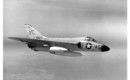
Douglas F3D Skyknight
ICAO: F3D
The Douglas A-4 Skyhawk was a small, light carrier attack jet built at roughly half the Navy's target weight, and it fought in Vietnam, the Yom Kippur War and the Falklands before flying with the Blue Angels.
Updated: by Tim de Vries

The latest aviation news and stories sent to your inbox.
The Douglas A-4 Skyhawk was a compact, carrier-based attack jet that proved small aircraft could deliver serious firepower. First flown in 1954 and entering service in 1956, it was designed for simplicity, low weight, and efficient carrier operations. Nicknamed the “scooter,” the A-4 served extensively in Vietnam and went on to equip air forces around the world, earning a long and durable service life.
Live Fleet Activity (A4)
Fetching live data…

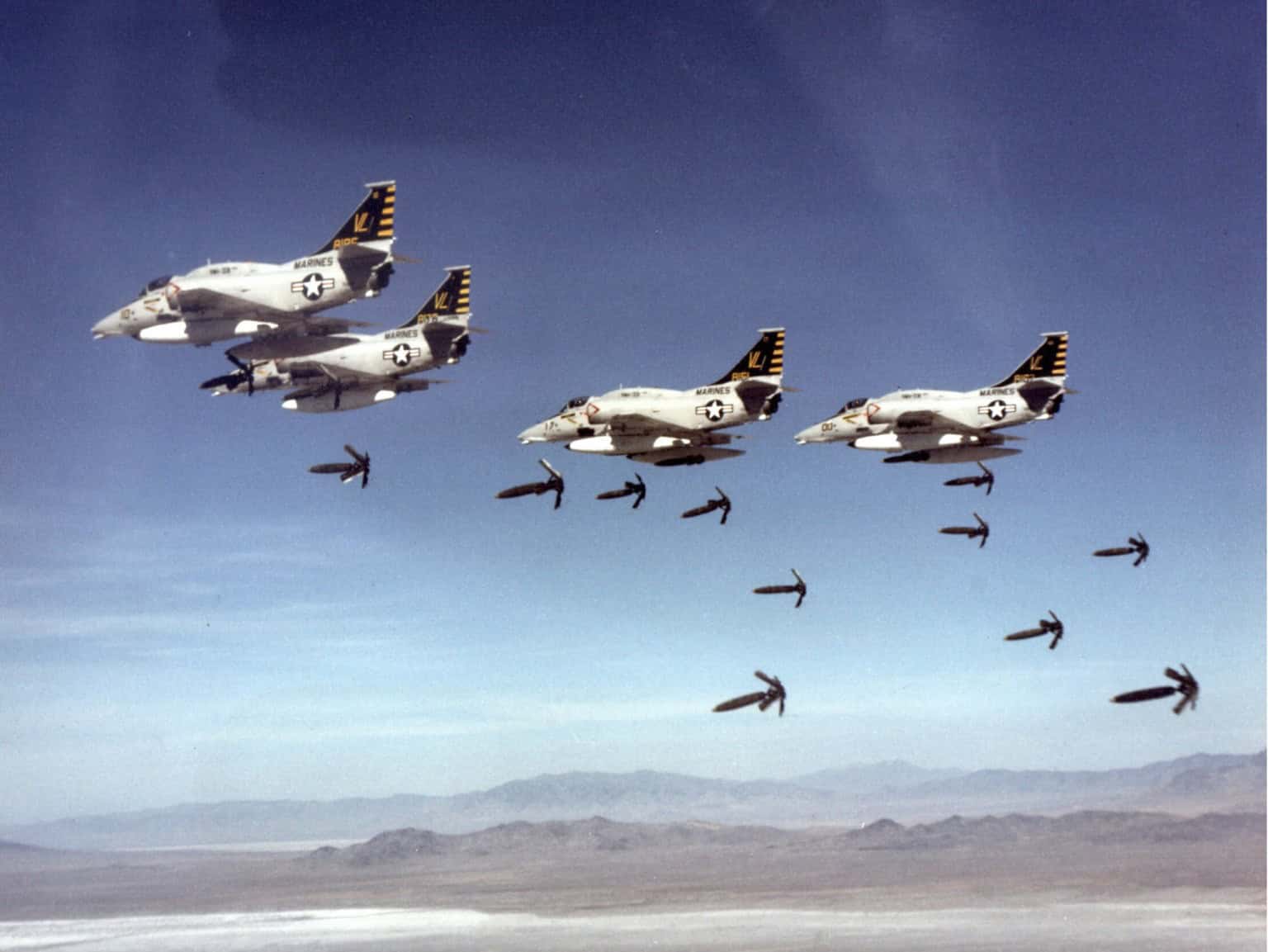
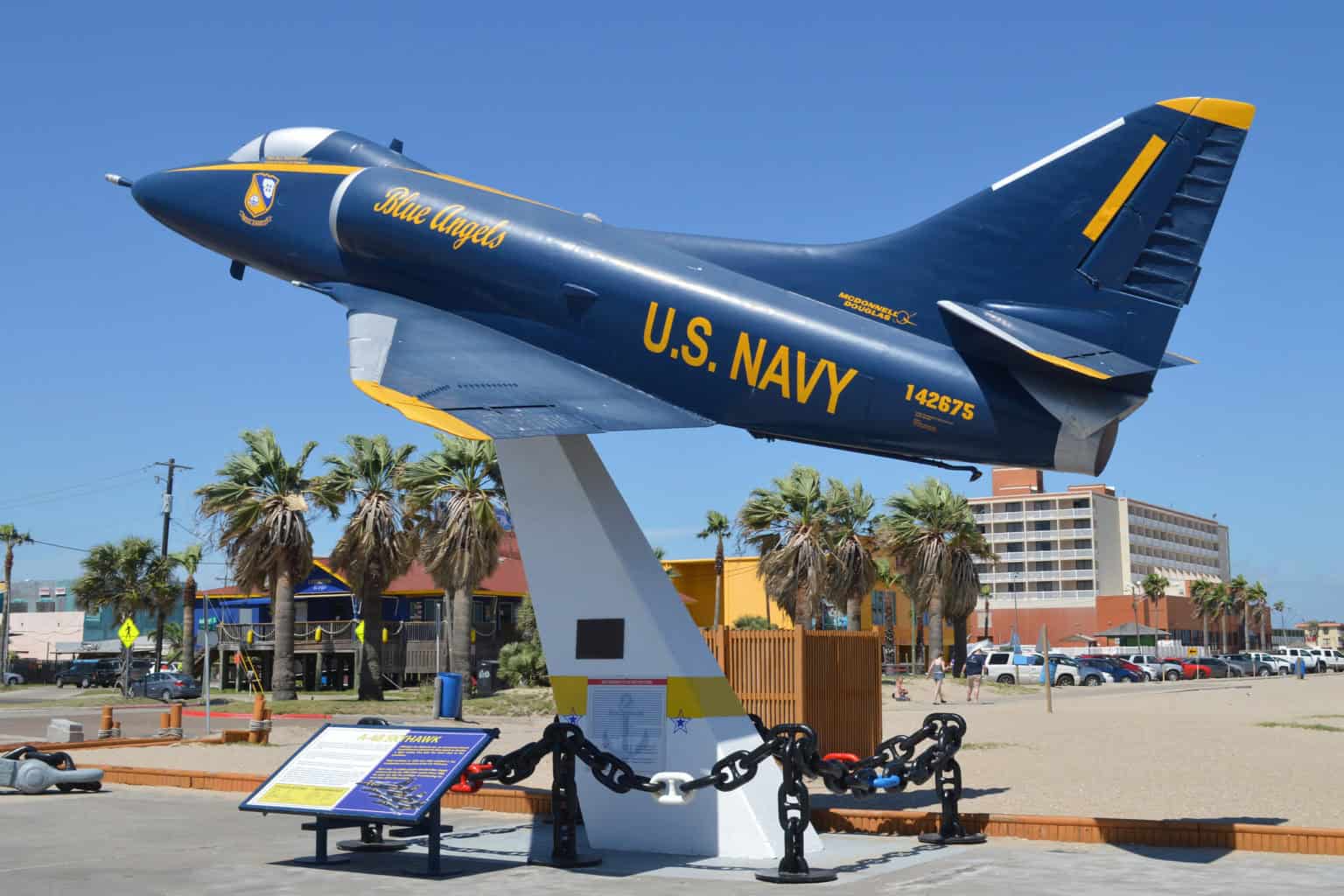
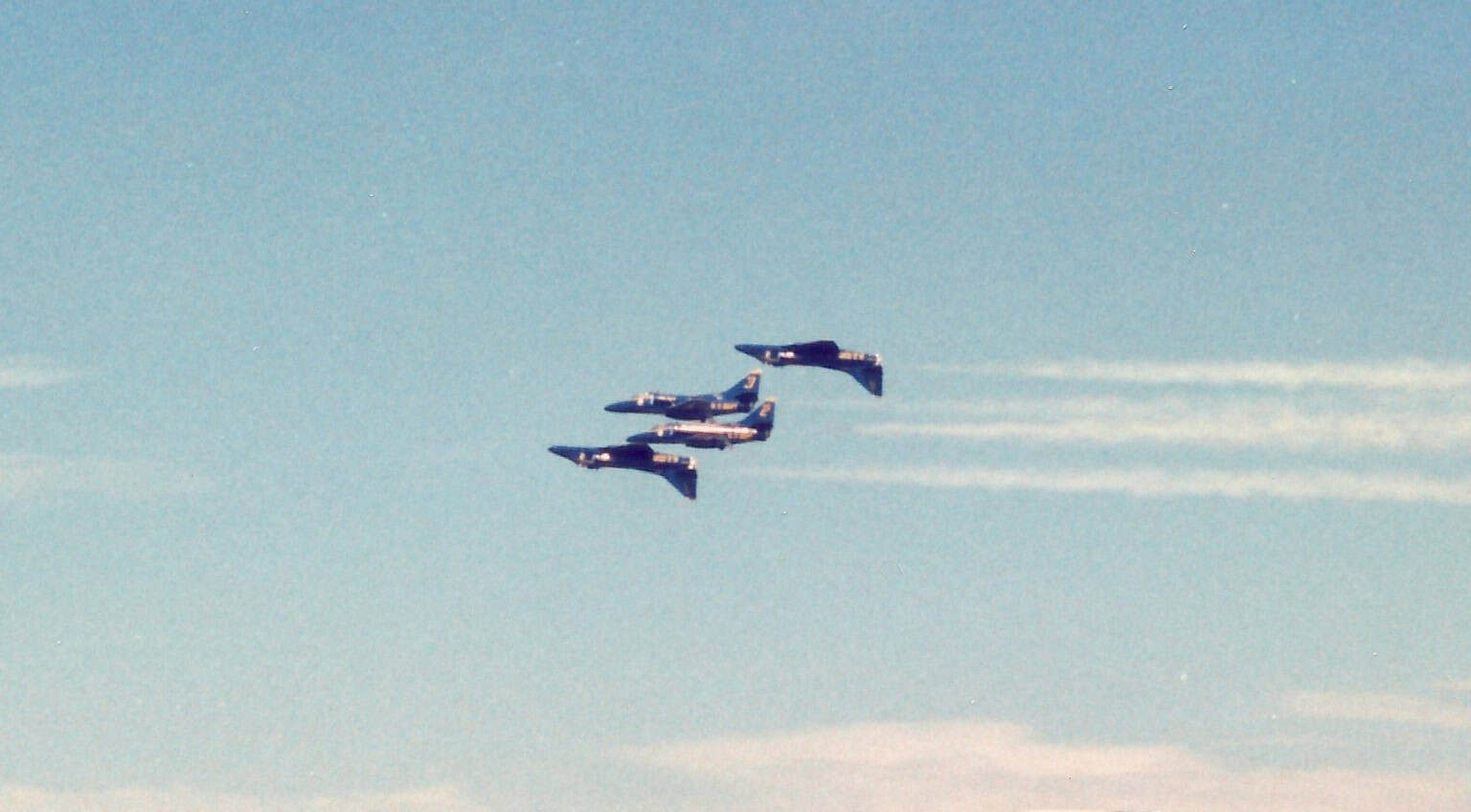


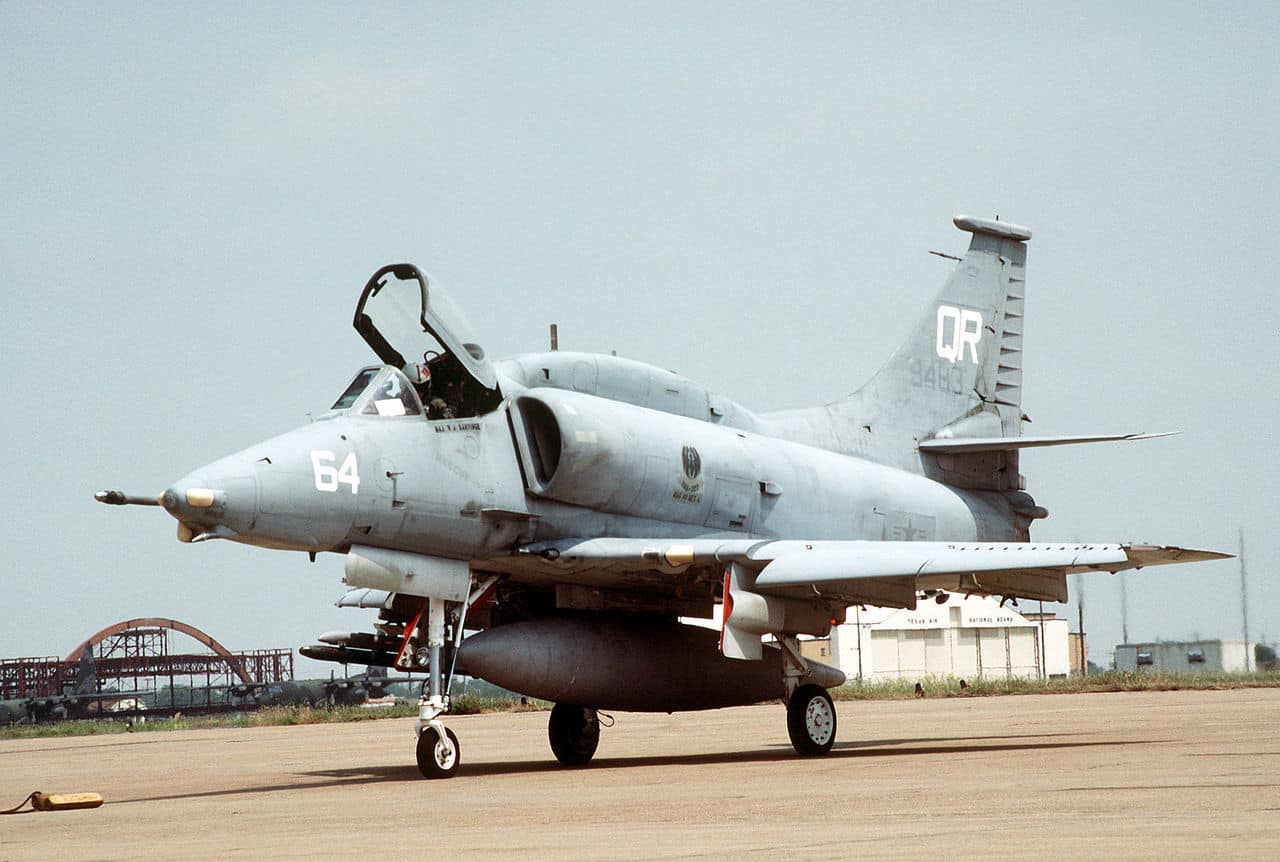
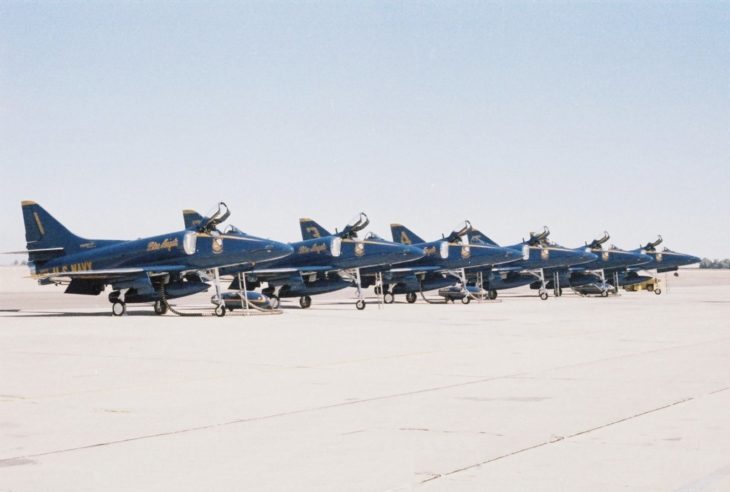
The Douglas A-4 Skyhawk is a single-seat, carrier-capable attack jet built around a simple idea: make it small, make it light, and it will out-turn and out-last anything the U.S. Navy’s weight specifications called for. Douglas delivered an aircraft roughly half the Navy’s target weight, and the design worked so well it stayed in production for 25 years.
Nearly 2,960 Skyhawks were built between 1954 and 1979, and the type fought in Vietnam, the Yom Kippur War, and the Falklands before spending nearly a decade as the Blue Angels’ aircraft. A handful still fly today as commercial adversary-training jets.
Douglas chief engineer Ed Heinemann designed the A-4 in the early 1950s to replace the piston-engined A-1 Skyraider without repeating the size and weight of contemporary jet attack designs. The Navy issued a contract on June 12, 1952, and the prototype, the XA4D-1, first flew on June 22, 1954.
The compact delta wing was small enough to fit on a carrier deck without folding, a detail that simplified maintenance and saved weight. On October 15, 1955, an early A-4 set a world speed record of 695 mph over a closed course, earning it the nickname “Heinemann’s Hot-Rod,” alongside “Scooter” and “Bantam Bomber” for its diminutive size.
The Skyhawk entered fleet service on October 1, 1956, and production ran until February 1979, ending with 2,960 aircraft built, including 555 two-seat trainers.
Early A-4A, A-4B and A-4C models used a Wright J65 turbojet; the A-4C’s J65-W-20 was rated at 8,200 lbf of thrust. The definitive A-4E introduced the Pratt & Whitney J52-P-6A, producing 8,500 lbf, later upgraded to the J52-P-8A at 9,300 lbf. The final A-4M “Skyhawk II” carried the J52-P-408A, rated at roughly 11,200 lbf of thrust.
Top speed is 674 mph (586 knots, 1,085 km/h) at low altitude, with a service ceiling of 42,250 feet and an initial climb rate of 10,300 feet per minute. Combat radius on a hi-lo-lo-hi interdiction mission is about 357 miles (575 km), and ferry range with external tanks reaches 2,000 miles (1,739 nm).
The A-4 pioneered “buddy” air-to-air refueling, in which one Skyhawk carried a refueling pod to top off another mid-mission, extending the type’s reach without a dedicated tanker aircraft.
The Skyhawk carried two 20mm Colt Mark 12 cannons in the wing roots, with 100 rounds per gun on most models and 200 on the A-4M. Five hardpoints, one under the fuselage and four under the wings, carried bombs, rockets, and air-to-air missiles like the AIM-9 Sidewinder.
Despite its size, the A-4 could deliver a nuclear weapon using the low-altitude bombing system (LABS), a loft-toss maneuver that let the aircraft release a bomb while climbing away from the target at low altitude, giving the pilot time to escape the blast radius.
Israel’s A-4H and later variants replaced the American cannons with two 30mm DEFA cannons, a heavier-hitting gun favored by the Israeli Air Force for strafing.
The Skyhawk went through more than a dozen production and export variants over its 25-year production run. The major ones:
| Variant | Notes |
|---|---|
| A4D-1 / A-4A | Initial production model, 166 built |
| A4D-2 / A-4B | Added air-to-air refueling and improved flight controls, 542 built |
| A4D-2N / A-4C | Night and adverse-weather avionics, 638 built |
| A4D-5 / A-4E | Major upgrade with the P&W J52 engine and five hardpoints, 499 built |
| A-4F | Enhanced avionics with a distinctive dorsal avionics hump |
| A-4M “Skyhawk II” | Final U.S. production model for the Marine Corps, uprated J52-P-408 engine |
| TA-4F / TA-4J | Two-seat trainer versions, 555 built across the program |
| A-4H / A-4N | Israeli variants with 30mm DEFA cannons |
| A-4K / A-4AR | New Zealand and Argentine modernization programs with upgraded avionics |
The U.S. Navy’s 1962 tri-service redesignation renamed the A4D family to A-4, so early aircraft delivered under Navy contracts are sometimes still referred to by their original A4D designation.
The A-4 was the U.S. Navy’s principal light-attack aircraft in Vietnam, flying the first American airstrikes of the war during Operation Pierce Arrow in August 1964. The Navy and Marine Corps lost 362 A-4s and TA-4Fs in the conflict, and Lieutenant Commander Theodore Swartz scored the type’s only air-to-air kill, downing a MiG-17 with a Zuni rocket in 1967.
Israel flew the A-4 as its primary ground-attack jet in the War of Attrition and the 1973 Yom Kippur War, where Egyptian and Syrian MiGs shot down at least nine. Argentina flew 48 Skyhawks in the 1982 Falklands War, sinking the destroyer HMS Coventry and the frigate HMS Ardent before losing 22 aircraft to British Sea Harriers, ship-based missiles, and ground fire.
During the 1991 Gulf War, Kuwaiti Air Force A-4s flew more than 1,300 sorties to help liberate their own country after most of the fleet escaped to Saudi Arabia ahead of the Iraqi invasion.
The Navy’s Blue Angels flew the A-4F from 1975 to 1986, replacing the larger F-4 Phantom II with the Skyhawk’s tighter turning radius and lower operating cost, before moving on to the F/A-18 Hornet.
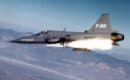
The Navy Fighter Weapons School, known as TOPGUN, used stripped-down A-4s to simulate the small, agile Soviet MiG-17 in dogfight training starting in 1969. The type appears in the original 1986 Top Gun film as a training target aircraft chased by Maverick and Iceman during Hop 31, while the fictional enemy “MiG-28s” were played by Northrop F-5 Tigers.
The U.S. Marine Corps retired its last combat A-4s in the late 1980s, and the Navy flew its final TA-4Js with squadron VC-8 until May 3, 2003. New Zealand retired its A-4Ks in 2001, and Israel flew Skyhawks until December 2015.
Brazil still operates modernized AF-1 Skyhawks from its aircraft carrier, and Argentina kept a small number of A-4AR Fightinghawks in limited service into the 2020s. Commercial adversary-support contractor Top Aces flies a fleet of single- and two-seat A-4Ns for military Red Air training, fitted with modern radar and infrared sensors to simulate current fighter threats.
Yes. Brazil’s navy operates modernized AF-1 Skyhawks, Argentina has kept a small number of A-4ARs airworthy, and commercial adversary-training operators like Top Aces fly A-4Ns for military exercises.
Yes. In the original 1986 film, an A-4 serves as the target aircraft that Maverick and Iceman chase during Hop 31. The fictional enemy jets were played by Northrop F-5 Tigers, not the A-4.
It had a strong reputation. The A-4 was cheap to build and maintain, easy to fly, and agile enough to serve as a MiG-17 stand-in for TOPGUN training, and it stayed in frontline and adversary service for nearly 50 years.
Yes, two 20mm Colt Mark 12 cannons in the wing roots on most U.S. variants. Israeli A-4H and A-4N models swapped these for two heavier-hitting 30mm DEFA cannons.
The original A-4A cost about $860,000 per aircraft in 1954 dollars, a fraction of the price of contemporary jets, which was central to Heinemann’s low-weight, low-cost design philosophy.
Sources and references used for research and fact-checking.