

Military Aircraft
Douglas B-66 Destroyer
ICAO: B66
The Navy's carrier-launched nuclear bomber, nicknamed the Whale
Updated: by Tim de Vries
The latest aviation news and stories sent to your inbox.
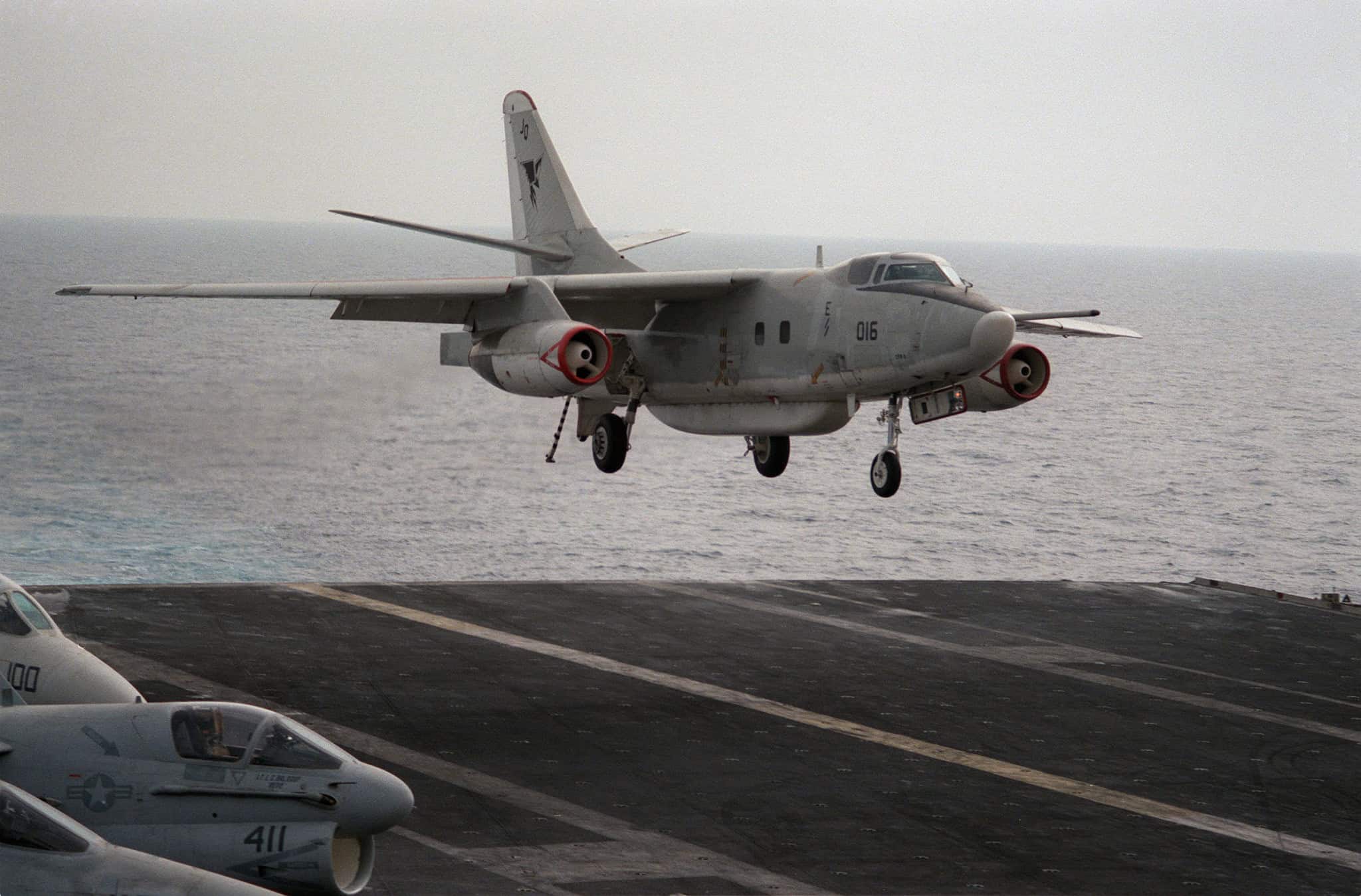
The Douglas A-3 Skywarrior was a twin-jet Navy bomber built by the Douglas Aircraft Company, nicknamed the Whale because it was the heaviest aircraft to operate routinely from a carrier deck. It first flew in October 1952 and entered squadron service in March 1956. Production ran from 1956 to 1961, and the type left Navy service in September 1991 after a second career as a tanker, a reconnaissance platform and an electronic warfare jet.
Live Fleet Activity (A3)
Fetching live data…


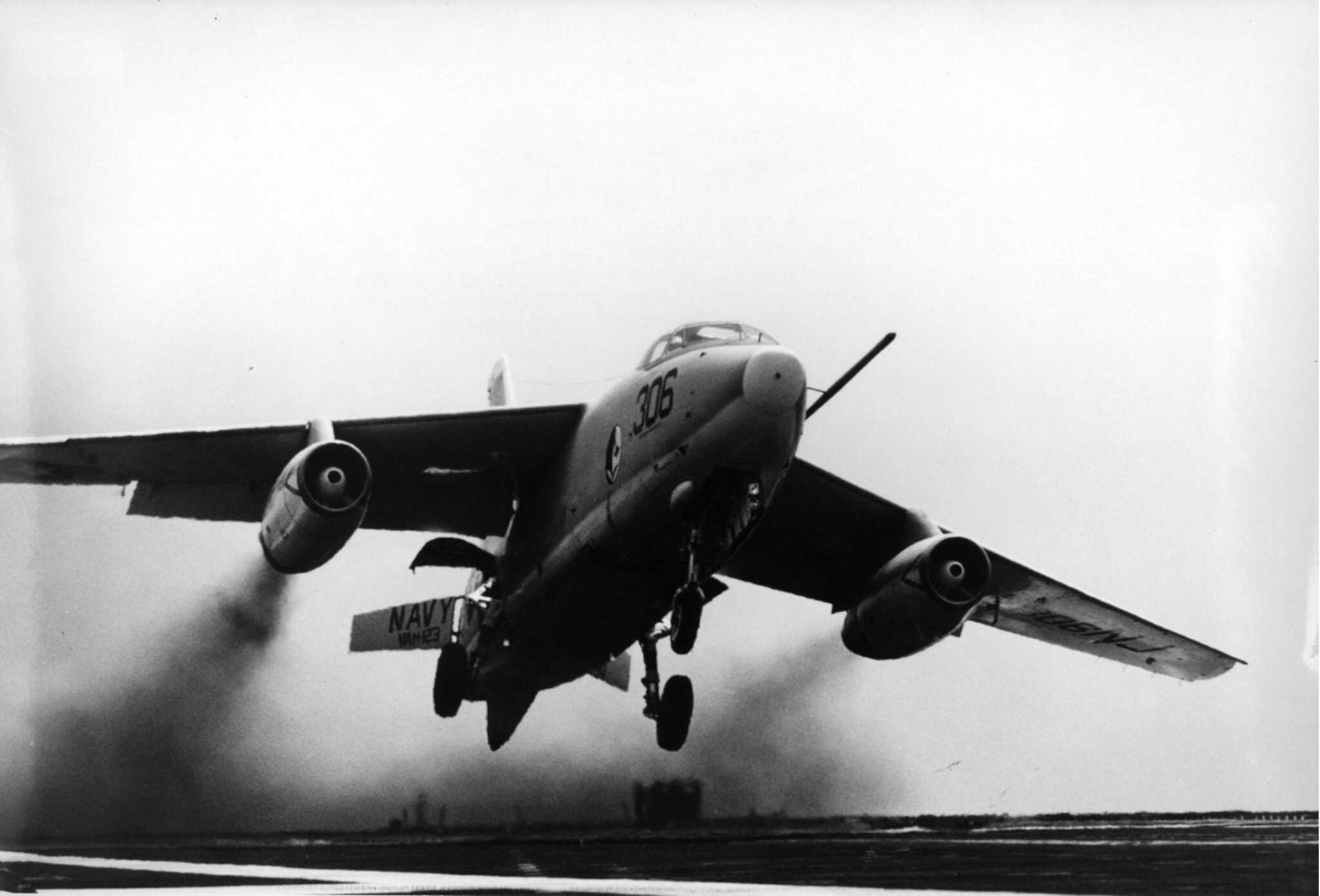


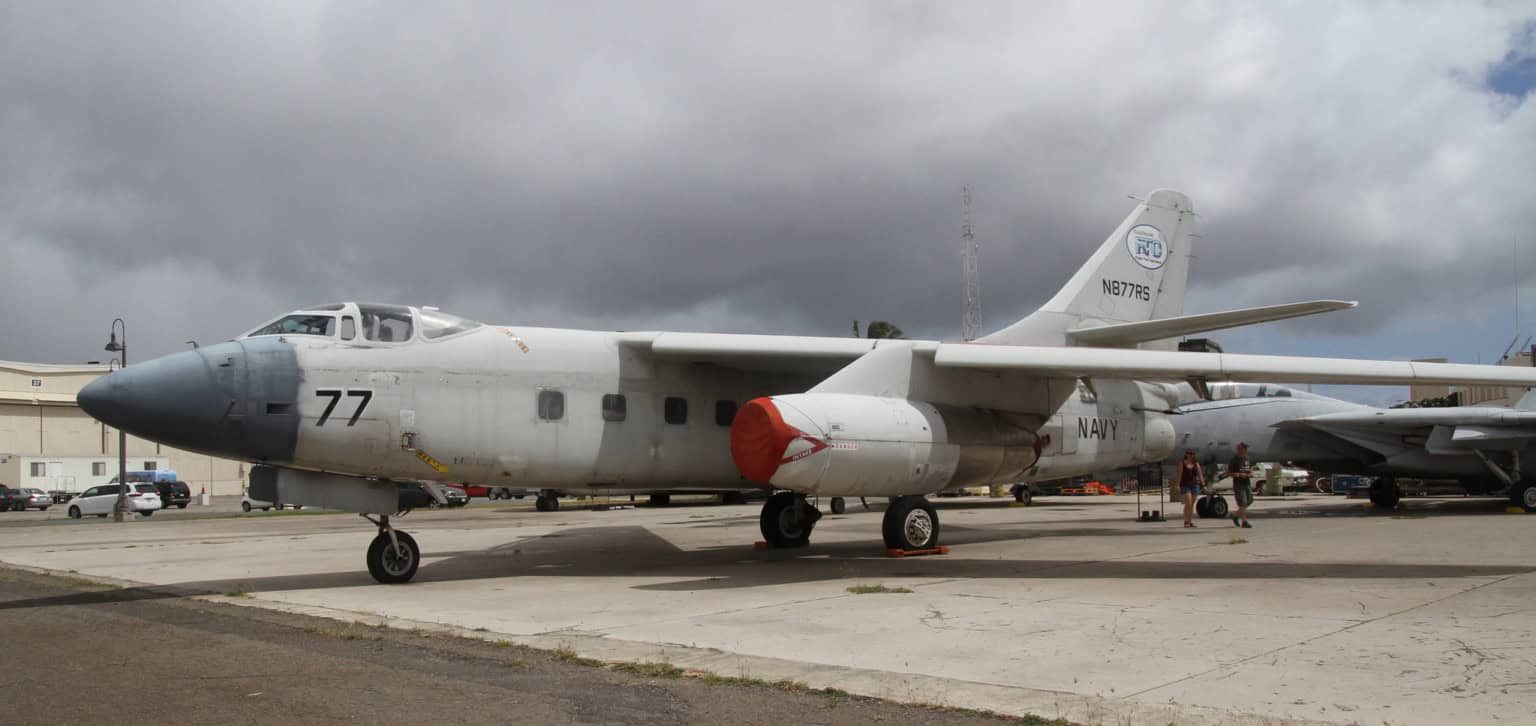
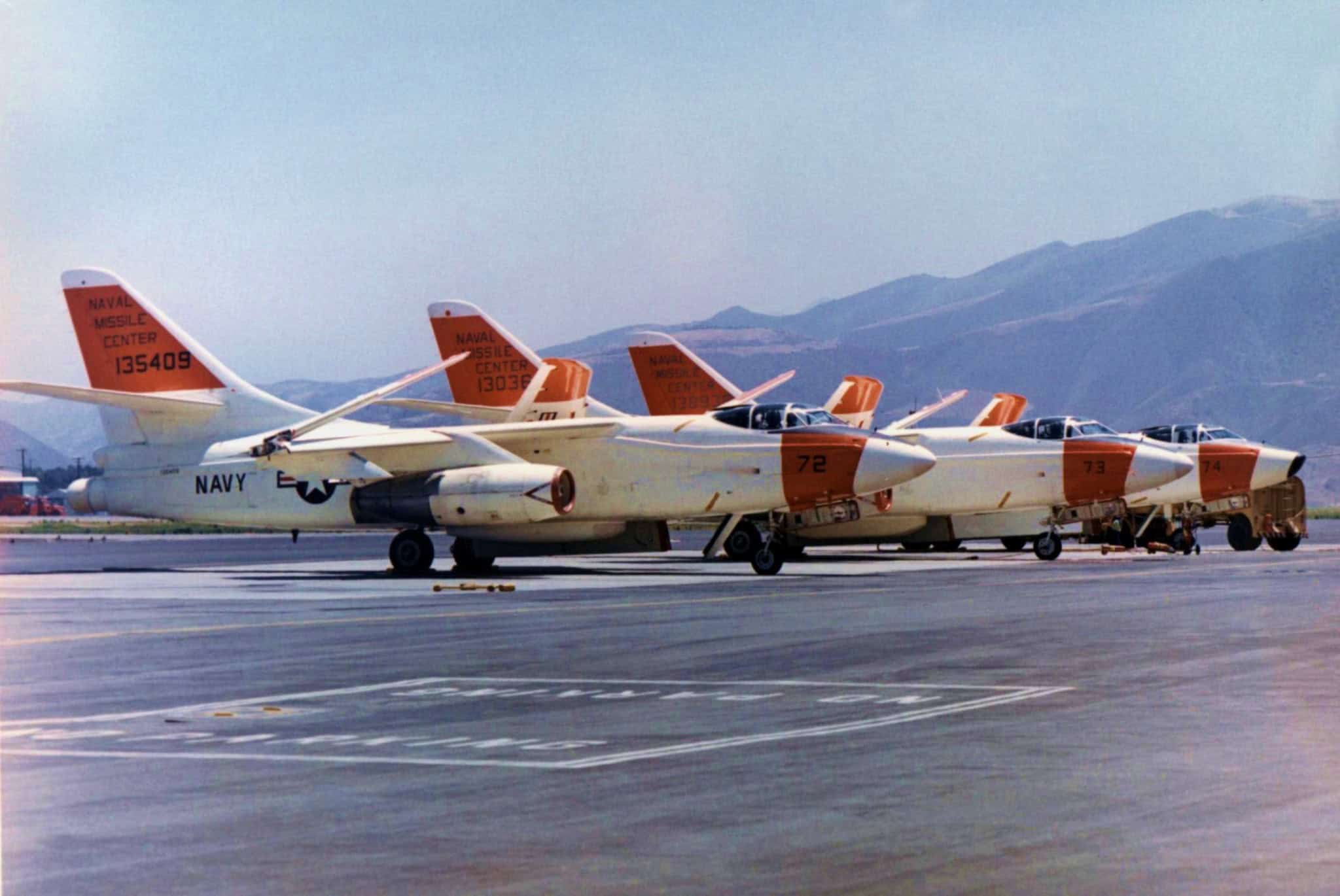

The Douglas A-3 Skywarrior, originally the A3D, was a twin-jet bomber built for the U.S. Navy. The A-3 Skywarrior Association calls it the largest combat aircraft routinely catapulted off and recovered on a carrier deck.
That size earned it the nickname “the Whale.” It was designed to carry a nuclear weapon from a carrier, and it ended up serving for decades as a tanker, a reconnaissance aircraft and an electronic warfare platform.
The full specification table for the aircraft is on this page. The sections below explain the numbers that need context, and the history behind them.
The Navy asked for a carrier-based attack aircraft in January 1948. It had to carry 10,000 lb of bombs or a nuclear weapon.
Douglas chief designer Ed Heinemann answered with a design of about 68,000 lb loaded weight. It was sized for the planned 100,000 lb “United States” class supercarriers, which were cancelled in April 1949.
Douglas still won a contract in July 1949 for two flight prototypes and a static test airframe. The first prototype, the XA3D-1, flew on October 28, 1952, with George Jansen at the controls.
The Westinghouse J40 engines it was designed around proved inadequate. By mid-1953 the Pratt & Whitney J57 had replaced them, and the type entered squadron service on March 31, 1956.
The A-3B (A3D-2) was the definitive bomber, and the panel on this page describes it. Its two J57-P-10 engines make 10,500 lbf each dry, and the panel shows the higher rating with water injection.
Weight is where the Whale stands out. Its maximum takeoff weight was 82,000 lb (37,200 kg). That is well beyond the fighters and attack jets that shared a deck with it.
The range needs care because two figures circulate. The published range is 1,825 nm (2,100 mi, 3,380 km), while the ferry range, flown without a bomb load, is 2,520 nautical miles. Some references quote that ferry figure as if it were the working range.
Speed is stated at altitude. The panel’s top speed applies at 10,000 feet, and the normal cruise speed was only slightly lower, at 520 kt (598 mph, 963 km/h).
Early Skywarriors carried three crew: a pilot, a bombardier-navigator and a third crewman. Ejection seats were left out to save weight.
Crews joked that A3D stood for “All Three Dead.” The nickname reflects the real difficulty of getting out of a large jet at low level, especially from a carrier deck.
Electronic variants were far bigger inside. The EA-3B signals intelligence version carried seven crew, which is why a lost EA-3B costs so many lives at once.

The A3D-1 (A-3A) was the first production version, with 49 built. The A3D-2 (A-3B) followed as the definitive bomber, and most later variants were converted from it.
Conversions and special versions included:
Production ran from 1956 to 1961. Sources give the total as 282 or 283 airframes.
Polaris submarines took over the Navy’s strategic nuclear mission, and the Skywarrior’s role in it faded after 1964. The jet found new work.
A-3Bs flew bombing and mining missions over Vietnam from 1964 to 1967. EA-3Bs of fleet reconnaissance squadron VQ-1 flew electronic reconnaissance from Da Nang.
The tanker conversion proved the most useful of all. On May 31, 1967, a KC-135 refueled a KA-3 that was in turn refueling an F-8, the first triple-level aerial refueling.

The EA-3B was an electronic intelligence aircraft, flown by VQ-1 and VQ-2 squadrons.
On the night of January 25, 1987, an EA-3B callsign Ranger 12 crashed while trying to land on the USS Nimitz. All seven crew members were killed.
The Skywarrior left U.S. Navy service in September 1991, with the last examples retired on September 27. Roughly 120 of the 283 built, about 42 percent, were lost or crippled in accidents and combat over the type’s career.
Civilian companies kept a few flying. Hughes, Westinghouse, Raytheon, Thunderbird Aviation and CTAS used remaining A-3s as radar and avionics testbeds, with eleven aircraft spread across five operators.
The last flyable EA-3B, a Raytheon aircraft, arrived at NAS Pensacola on June 30, 2011, for display.
Surviving airframes are displayed at the National Naval Aviation Museum, Patriots Point, the New England Air Museum, the USS Midway Museum, the Air Force Flight Test Museum, the Pima Air & Space Museum, Castle Air Museum and the Pacific Aviation Museum, among other sites.

We found no A-3 Skywarriors listed for sale. The last airworthy examples, flown by a civilian contractor, went to museums around 2011, and the rest are static displays. The realistic route to see one is a museum visit.
No. Ejection seats were omitted to save weight. Crews joked that A3D stood for “All Three Dead,” a reference to the three-person crew of the early bombers.
The EA-3B was an electronic reconnaissance and signals intelligence version, 24 of which were built. It was flown by Navy fleet reconnaissance squadrons and carried a crew of seven.
The A-3 Skywarrior is generally cited as the largest and heaviest aircraft to operate routinely from an aircraft carrier. The A-3 Skywarrior Association describes it as the largest combat aircraft routinely catapulted off and recovered on a carrier deck.
Between 282 and 283, depending on the source, built from 1956 to 1961.
The U.S. Navy retired the type in September 1991. Civilian testbed aircraft flew until about 2011.
Sources and references used for research and fact-checking.