Military Aircraft
Douglas A-3 Skywarrior
ICAO: A3
The Air Force jet that began as a bomber and ended up as the Vietnam War's radar-jamming escort.
Updated: by Tim de Vries
The latest aviation news and stories sent to your inbox.
The Douglas B-66 Destroyer was the US Air Force’s land-based cousin of the Navy’s A-3 Skywarrior. It started as a light bomber and reconnaissance jet, then found its real career in electronic warfare. Over Cold War Europe and the skies of North Vietnam, it jammed radars and listened to enemy air defenses so other aircraft could get through.
Live Fleet Activity (B66)
Fetching live data…
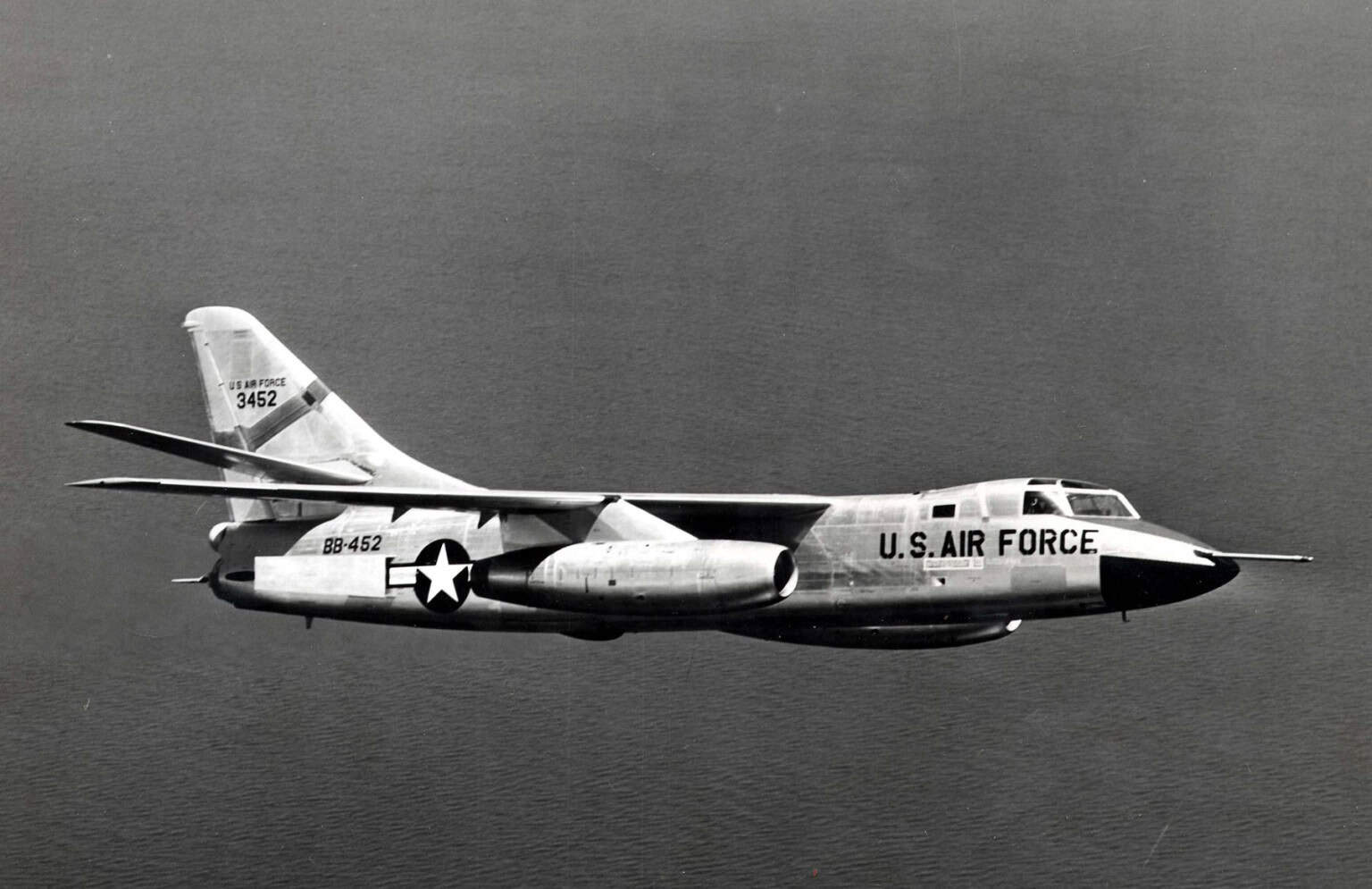
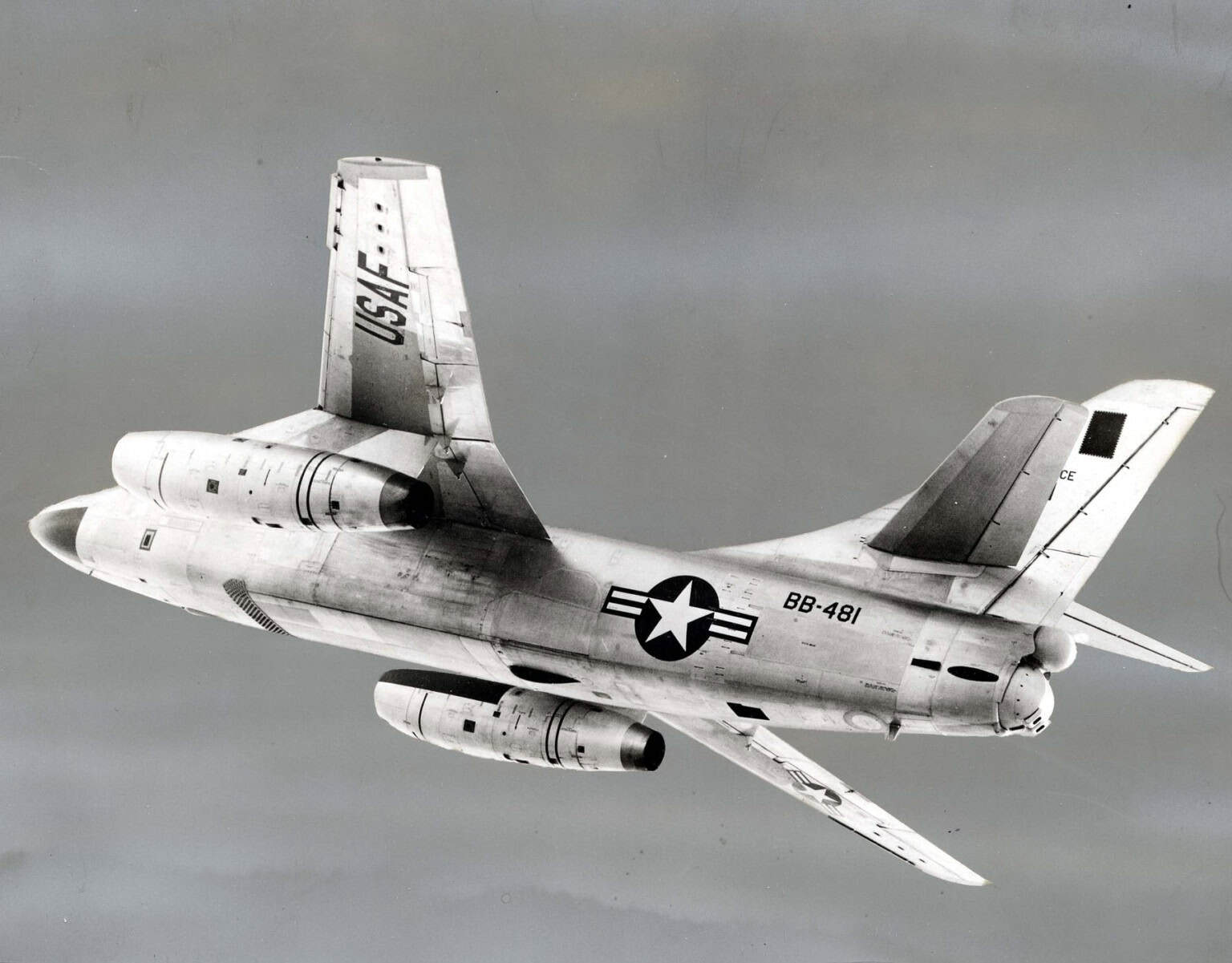
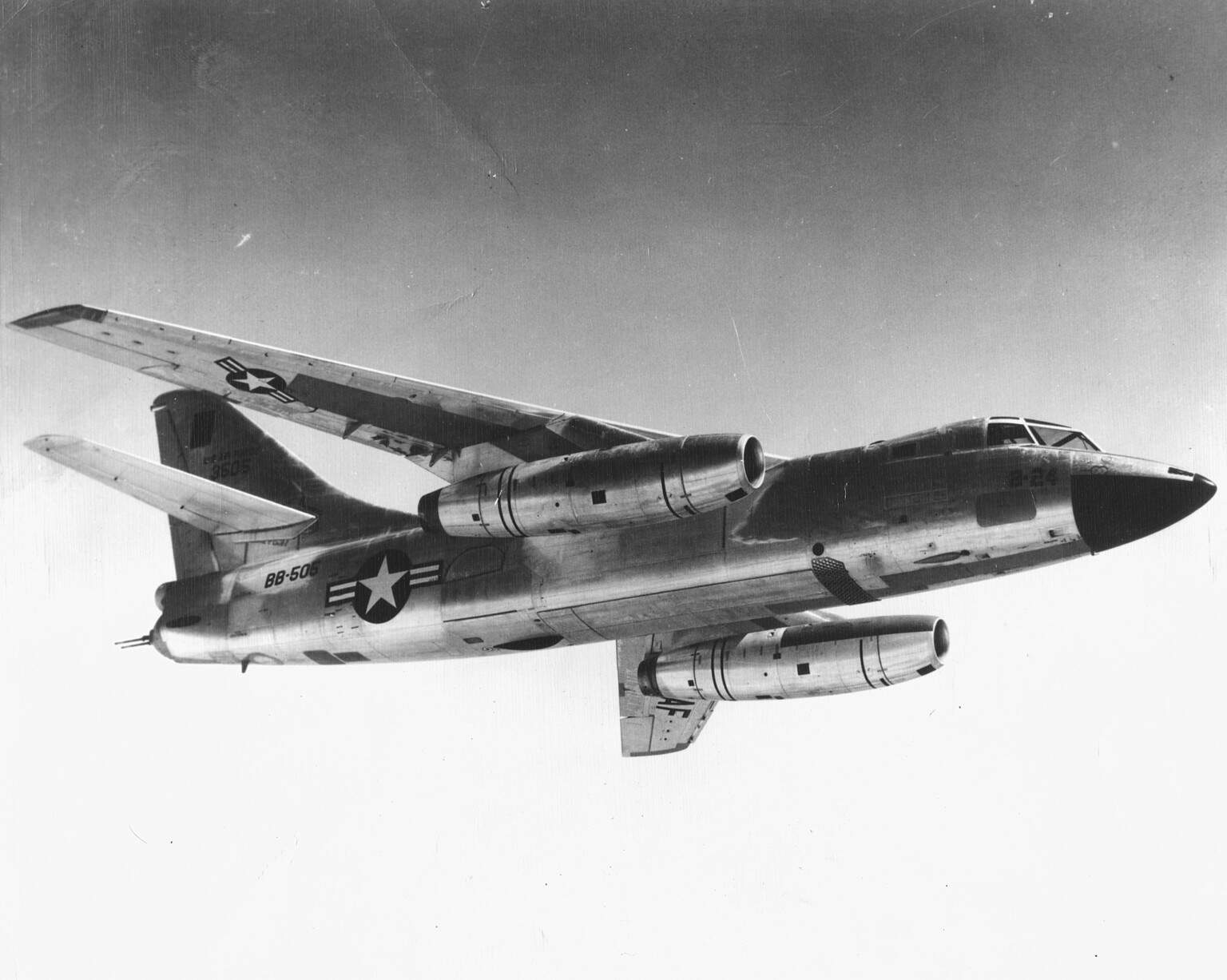
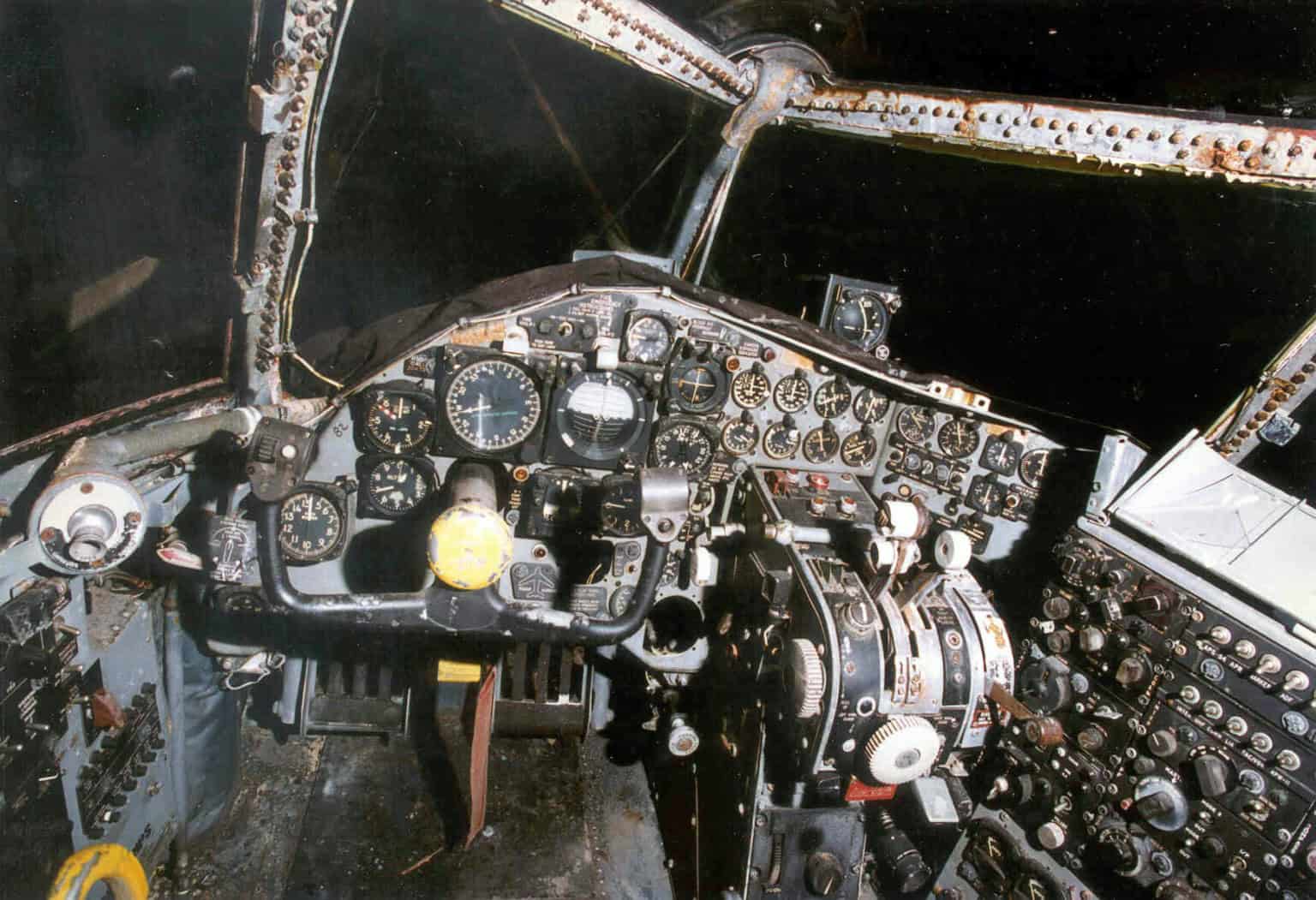
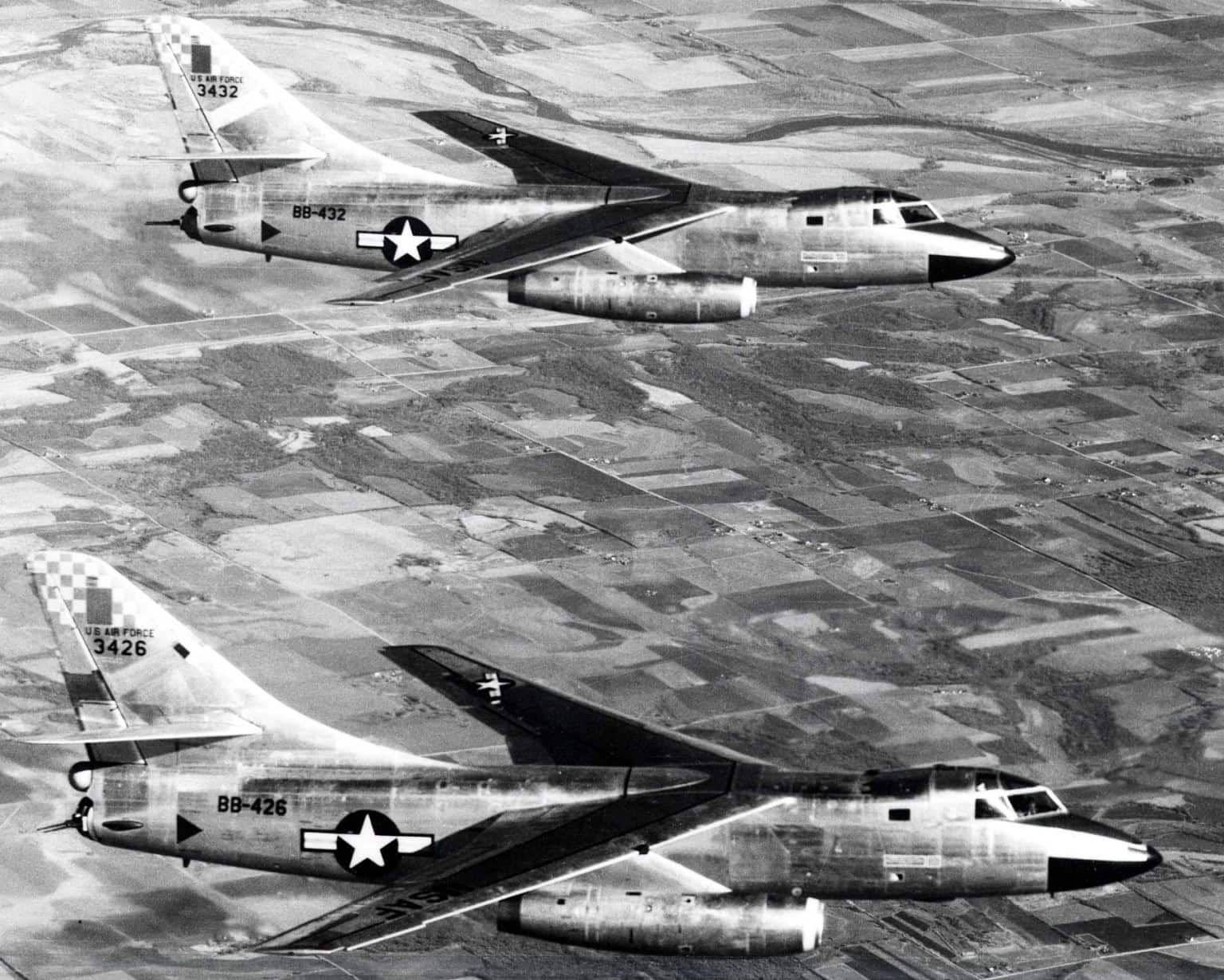


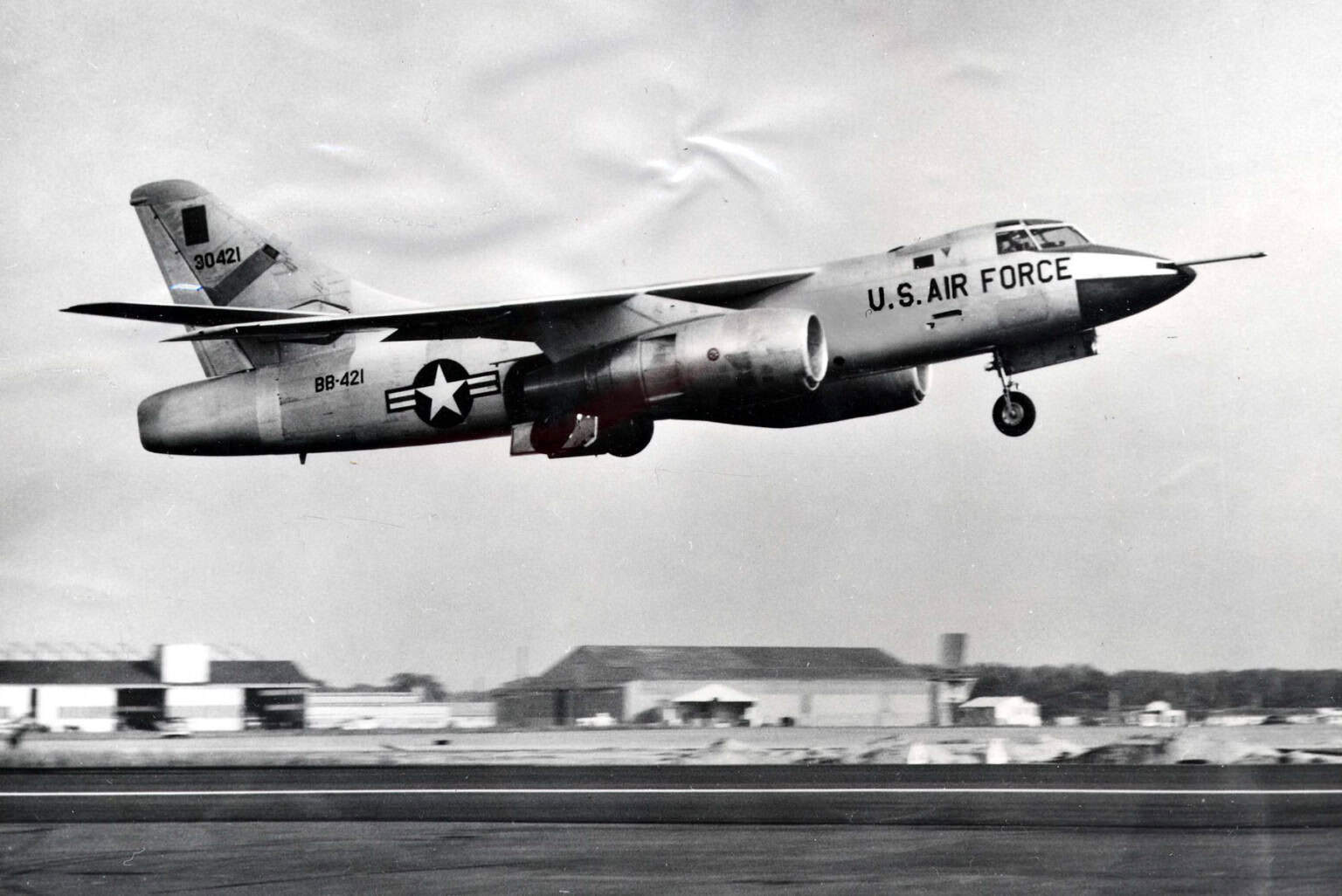
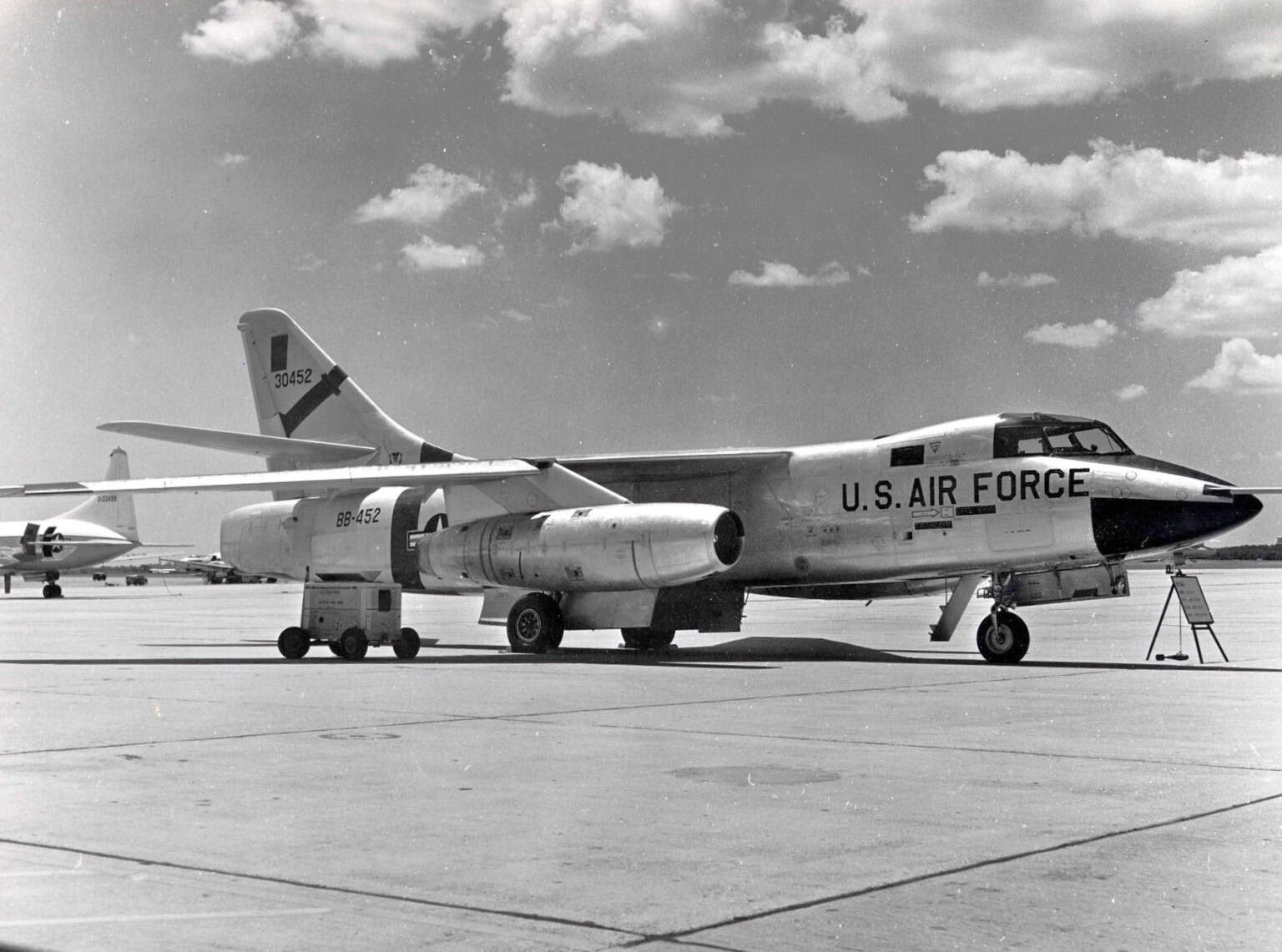

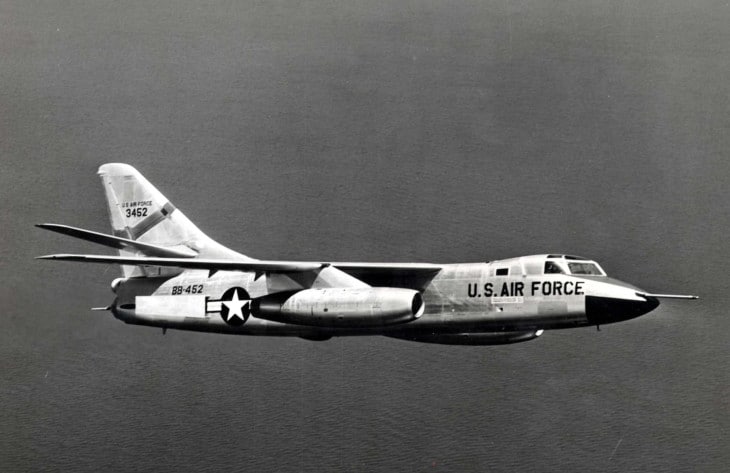
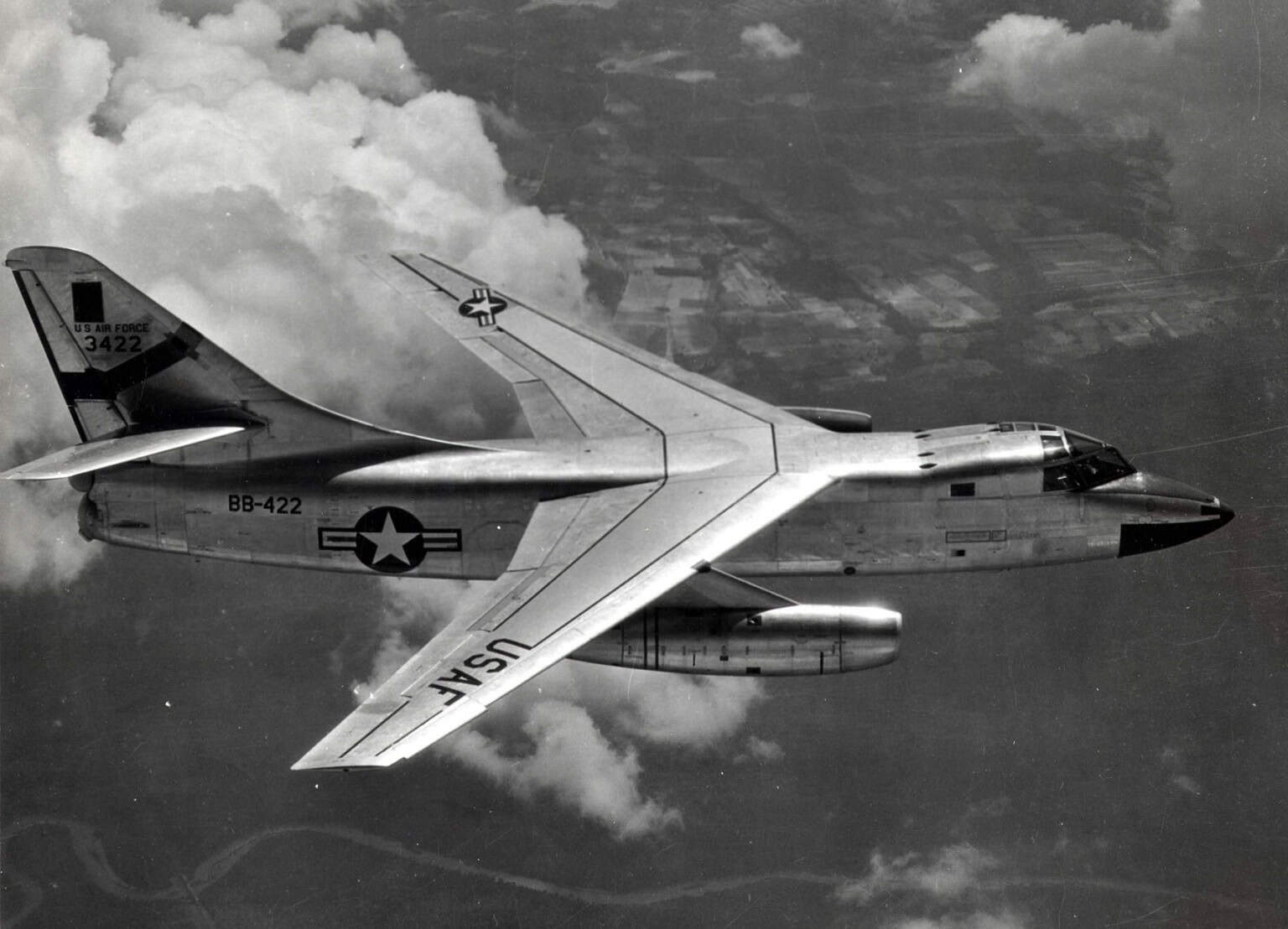
The Douglas B-66 Destroyer was a twin-jet light bomber built for the US Air Force, derived from the US Navy’s A-3 Skywarrior. A total of 294 were built, and the type served from 1956 into the mid-1970s.
It never became a famous bomber. Its real career was reconnaissance, weather sampling and, above all, electronic warfare over Europe and Southeast Asia.
The specifications for the aircraft are in the panel on this page. This article covers what the numbers do not: why it exists, what each version did and what happened to it.
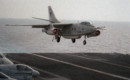
Air Force officers were skeptical of the Navy’s claims for the A-3 Skywarrior. Even so, the Korean War had raised demand for a jet that could strike and photograph targets, and the Skywarrior was the obvious starting point.
In June 1952 the Air Force ordered five pre-production RB-66A aircraft from Douglas. There were no prototypes.
The plan was a quick conversion. The requirements kept growing until the design was essentially new, and the authors Gunston and Gilchrist judged that 98 percent of the changes made for the RB-66A were unnecessary.
Two changes did matter. The Navy’s Pratt & Whitney J57 engines gave way to Allison J71s, and ejection seats were added, which the A-3 had lacked.
The first RB-66A flew on 28 June 1954. The first production B-66B flew on 4 January 1955, and deliveries to the Air Force began on 16 March 1956.
Each J71-A-11 produced 10,200 lbf (45 kN) of thrust, and the engines hung in pods under the wings. Wikipedia’s account of the swap is blunt: the J71 offered no apparent advantage over the J57 it replaced.
That is a useful reminder that the Destroyer was shaped by Air Force requirements, not by a clean-sheet design. It was heavier and more complex than the Navy jet it came from.
The production run split into a handful of roles. Counts below come from Wikipedia and the National Museum of the US Air Force, and they differ slightly in places.
The totals reach 294 only if you accept the museum’s RB-66B count, so treat 145 versus 149 as an unresolved difference between sources.
The B-66B carried three: a pilot, a navigator and an electronic warfare officer. The electronic warfare versions added operators in the back, up to seven aboard the RB-66C.

Defense was minimal. The bomber version had two 20 mm M24 cannon in a radar-controlled tail turret, and could carry up to 15,000 lb (6,800 kg) of bombs.
The Destroyer went forward quickly. Wikipedia lists RAF bases in England including Sculthorpe, Alconbury, Bruntingthorpe and Chelveston, plus bases in West Germany and France. In Japan it flew from Yokota from 1956 to 1960 and later used Itazuke and Kadena.
Moving them was not always easy. In Operation Mobile Zebra in November 1957, nine B-66s set out from California for the Philippines and only three completed the trip.
During the Cuban Missile Crisis, RB-66Cs operated near Cuba.
On 10 March 1964 an RB-66C of the 19th Tactical Reconnaissance Squadron strayed across the border into East Germany after a compass malfunction. A Soviet MiG-19 shot it down.
The crew ejected and were held briefly before being sent home.

The Destroyer was not used as a bomber in Vietnam. The EB-66B, EB-66C and EB-66E went to war to collect electronic intelligence and to jam North Vietnamese radar.
Their job was to shield strike aircraft such as the F-105 Thunderchief from surface-to-air missiles and anti-aircraft guns. They also supported missions that mapped missile and gun sites.
That made them targets, and EB-66s were shot down over North Vietnam. The best-known loss is below.

On 2 April 1972, EB-66C serial 54-0466 of the 42nd Tactical Electronic Warfare Squadron, flying from Thailand with the call sign Bat 21 Bravo, was shot down over Vietnam.
Lt Col Iceal “Gene” Hambleton, a senior navigator, was the sole survivor of the six aboard. His long evasion and the rescue effort that followed became the book and 1988 film Bat*21.
Two WB-66Ds were converted into the Northrop X-21A, a test aircraft with an experimental wing for laminar flow control. Flight research began at Edwards Air Force Base in April 1963.
The program was abandoned, with Wikipedia citing technical problems and the funding demands of the Vietnam War.
The full specification table for the aircraft is on this page. A few figures need context because the sources do not all describe the same version.
Top speed is the clearest example. Wikipedia’s B-66B figure is 548 kt (631 mph) at 6,000 ft, while the National Museum’s RB-66B fact sheet quotes 585 mph.
Range depends on what you count. The museum gives about 1,800 mi for the RB-66B. Wikipedia’s B-66B block separates a combat range of 782 nmi from a ferry range of 2,146 nmi.
Ceiling and maximum weight vary the same way. Wikipedia lists a service ceiling of 39,400 ft for the B-66B, and the museum quotes 43,000 ft for the RB-66B.
The Air Force leaned on missiles and newer aircraft through the 1960s, and some tactical bomber versions went to storage at Davis-Monthan Air Force Base. The EB-66C and EB-66E hung on longest. Sources date their last USAF service between 1973 and 1975.
Six survivors are listed by Wikipedia. They include an RB-66B (53-0475) at the National Museum of the US Air Force in Ohio, an RB-66C at Shaw Air Force Base in South Carolina, and WB-66Ds at the Pima Air and Space Museum in Arizona and the Museum of Aviation at Robins Air Force Base in Georgia.
It was designed as a light bomber and photo-reconnaissance jet. In service it became best known for electronic warfare, jamming radars and gathering signals intelligence.
No. It was derived from the Navy’s A-3 Skywarrior, but the Air Force requirements changed the design so much that it became essentially a new aircraft.
294 were built across all versions. Counts for individual variants differ slightly between sources.
Yes, as an electronic warfare aircraft, not a bomber. EB-66s jammed North Vietnamese radar to protect strike aircraft, and several were shot down.
The B-66B carried three: a pilot, a navigator and an electronic warfare officer. The RB-66C carried up to seven.
No flying examples are known. The survivors listed by Wikipedia are museum and static displays, including the RB-66B at the National Museum of the US Air Force.
Both were light jet bombers of the 1950s. The Martin B-57 Canberra had its own reconnaissance and strike career, so the two are best read as separate designs.
Sources and references used for research and fact-checking.