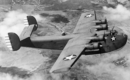
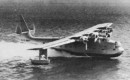
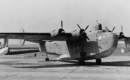
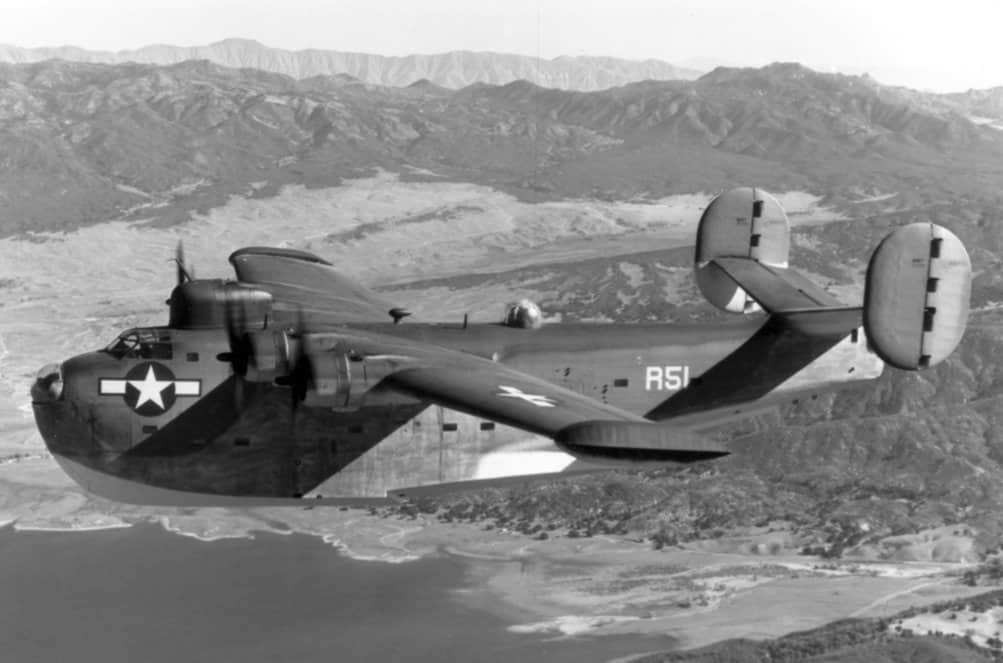
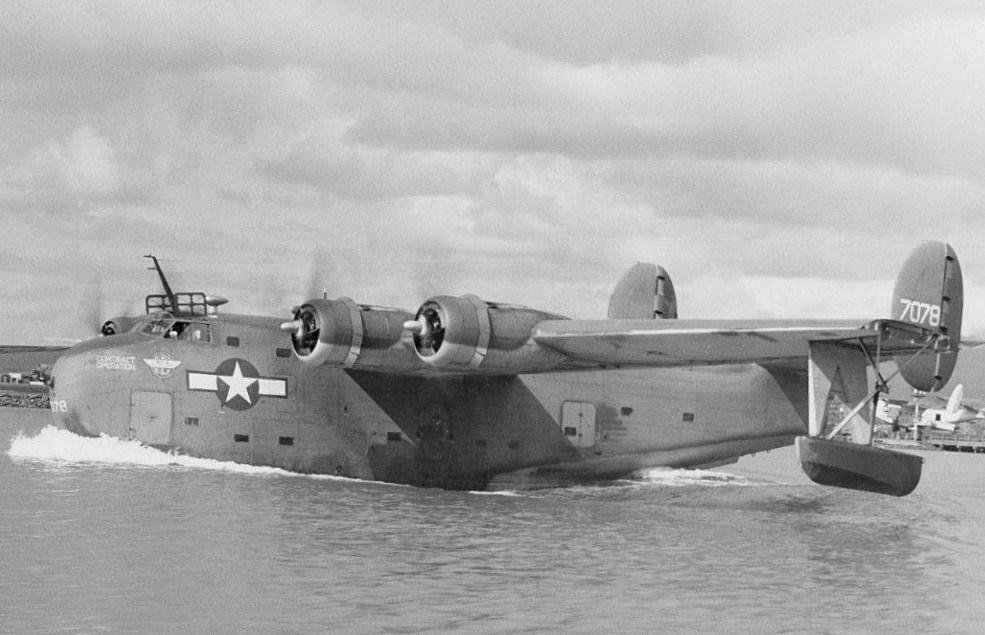
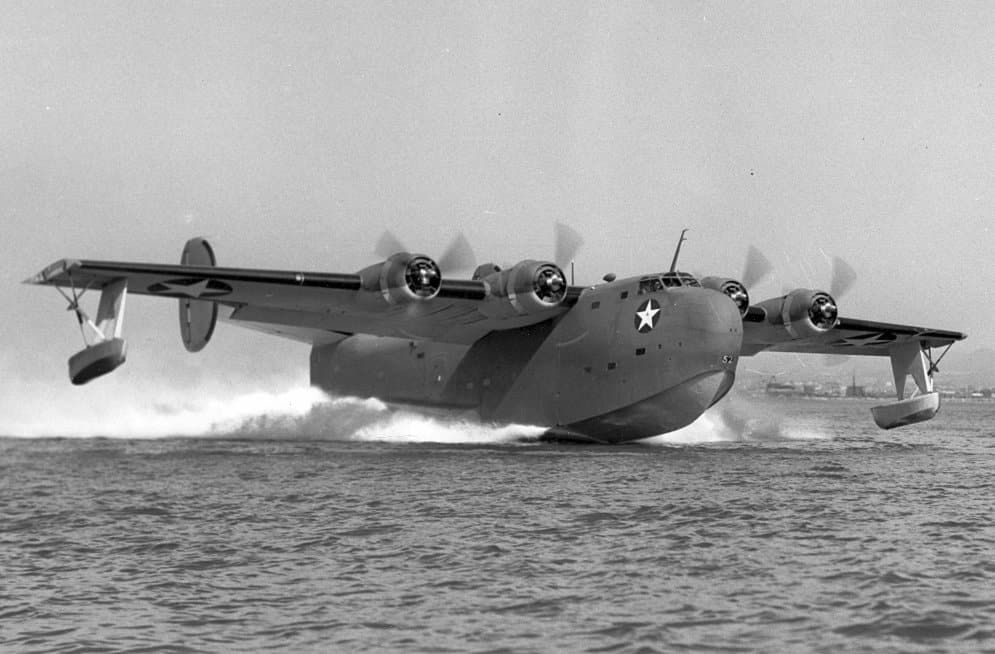
In the vast expanse of the Pacific, few aircraft symbolized American naval power like the Consolidated PB2Y Coronado. Massive, four-engined, and capable of crossing oceans, it was designed to carry war to the enemy’s shores — yet its size and timing meant it would always live in the shadow of its smaller sibling, the PBY Catalina.
Consolidated PB2Y Coronado — The Navy’s Ocean-Crossing Giant
The PB2Y Coronado was a large, four-engine flying boat built by Consolidated Aircraft for the U.S. Navy during World War II. Conceived in the late 1930s as a long-range patrol bomber and transport, the Coronado first flew in December 1937 and entered service in 1941. It was the Navy’s answer to the need for greater payload, range, and survivability than the earlier twin-engine PBY Catalina.
Powered by four Pratt & Whitney R-1830 Twin Wasp engines of 1,200 horsepower each, the PB2Y-3 variant could reach speeds of around 200 mph (320 km/h) and had a range of roughly 2,500 miles (4,000 km). The aircraft carried a crew of ten and could haul up to 8,000 pounds (3,600 kg) of bombs or depth charges. Its defensive armament included multiple .50-caliber machine guns in powered turrets for all-around protection.
While the Coronado was robust and versatile, its range was shorter and its fuel consumption higher than the smaller PBY. As a result, it saw limited combat use compared to its sibling. Many were converted for transport and medical evacuation duties, including operations with the Naval Air Transport Service across the Pacific.
A total of 217 PB2Ys were built before production ended in 1945. Though it never gained the fame of the Catalina, the Coronado served loyally as a heavy transport and flying command post — a symbol of an era when the world’s oceans were ruled not only by ships, but by wings.
Want More of This?
We'll send you our latest and best content straight to your inbox