Military Helicopters
The presidential helicopter program built for enhanced range and security
The latest aviation news and stories sent to your inbox.
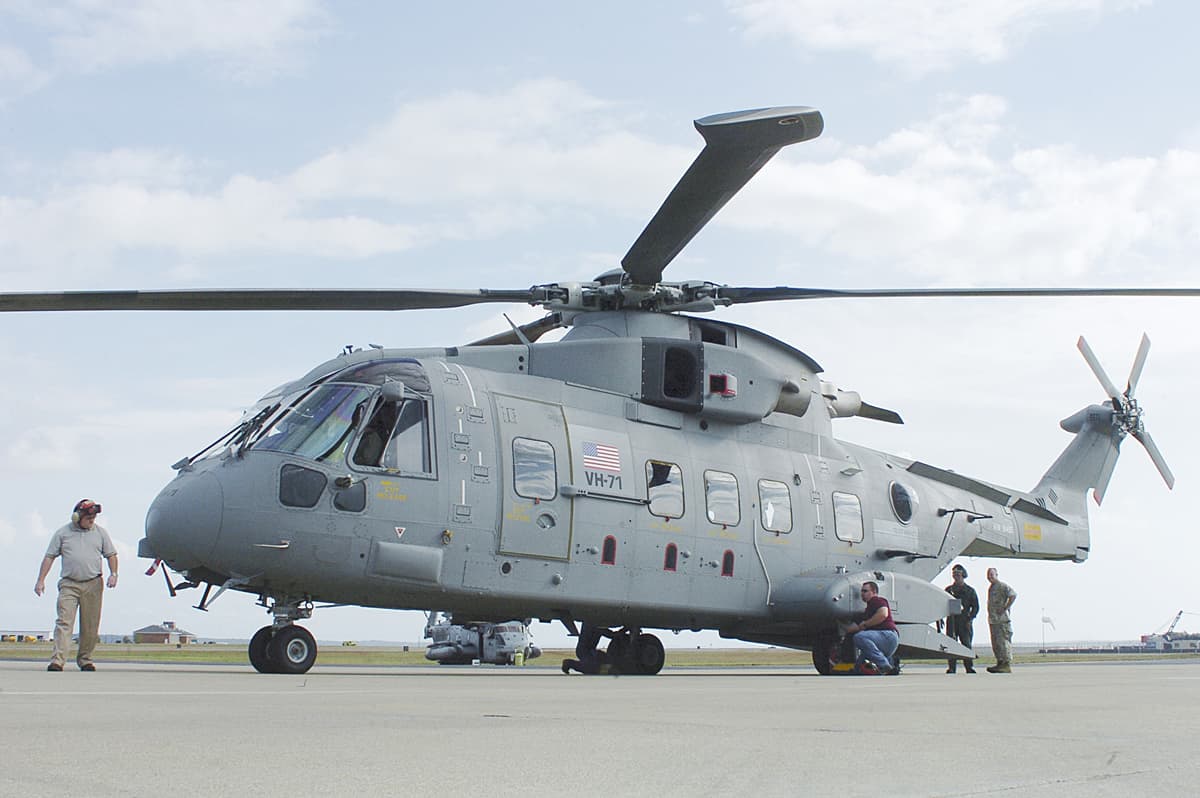
The Agusta Westland VH-71A, also known as the US101, was selected as a replacement for the aging Marine One fleet. Developed from the AW101 platform, it aimed to provide improved performance, range, and communications capability. The program ultimately faced cancellation before full deployment.
Live Fleet Activity (VH71)
Fetching live data…

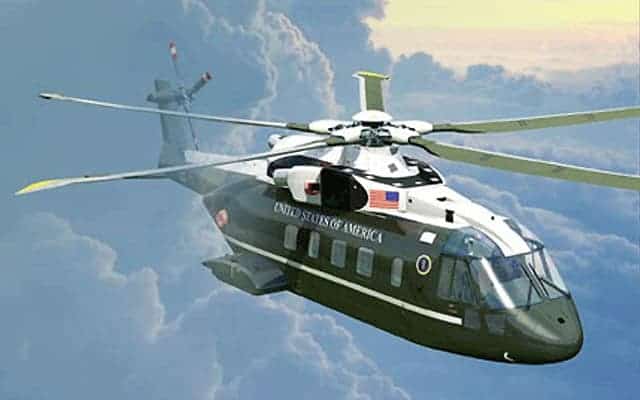
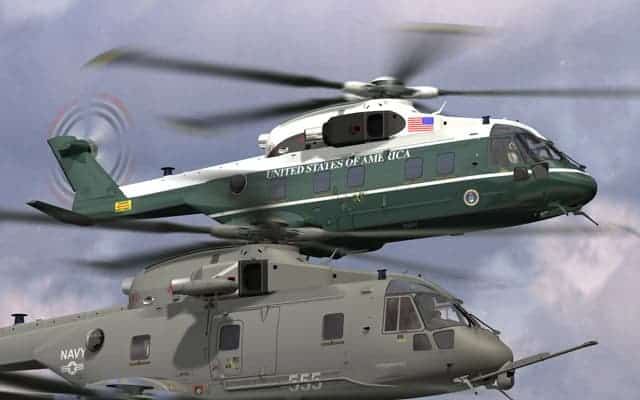
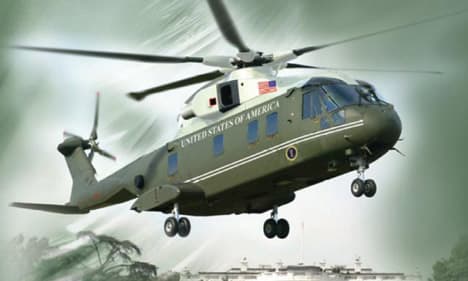
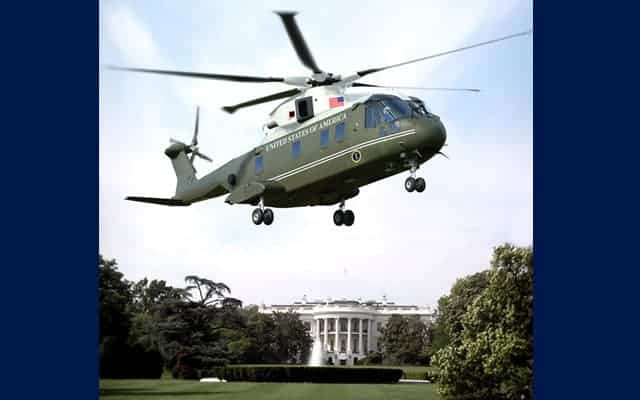
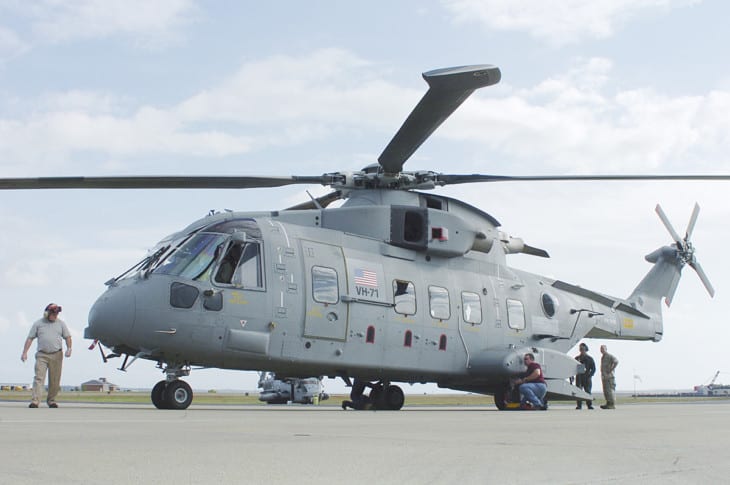
The VH-71A program was initiated in the mid-2000s to replace the existing VH-3D and VH-60N helicopters used for U.S. presidential transport. Based on the three-engine AW101, the aircraft offered increased cabin space, improved avionics, and extended range. The first U.S.-configured aircraft flew in 2007.
Powered by three turboshaft engines, the US101 configuration provided greater redundancy and range compared with earlier Marine One helicopters. The platform was capable of cruising at approximately 150 knots (280 km/h) with a range exceeding 700 nautical miles (1,300 km) depending on configuration. The large cabin allowed integration of advanced communications and defensive systems.
Escalating costs and program delays led to cancellation in 2009 before operational deployment. Although the VH-71A did not enter service, lessons learned informed later presidential helicopter acquisition efforts. The program remains a notable example of the complexities involved in high-profile defense procurement.
The VH-71A program assembled a multinational industrial team drawn from the AW101 airframe supplier and multiple U.S. subcontractors to meet stringent domestic production and security requirements. Contractual arrangements emphasized U.S.-based workshare for critical systems and final assembly to satisfy political and oversight expectations for sensitive government platforms.
Systems integration requirements expanded the baseline airframe scope substantially. Avionics, communications, and defensive systems demanded extensive software development and unique interfaces, producing a complex integration task beyond routine rotorcraft modification. Program management approaches adjusted to prioritize security, redundancy, and electromagnetic compatibility testing.
Flight test effort concentrated on validating mission-system interoperability rather than basic rotorcraft handling. Test activities exercised secure communications, coordinated navigation and self-protection sensors, and assessed maintenance access for mission systems. These test objectives drove schedule and resource allocation decisions distinct from conventional helicopter flight certification campaigns.
Program administration encountered recurring configuration-control challenges. Frequent requirement changes and added government-unique features produced configuration drift between early prototypes and later production-intent aircraft. Management measures focused on stabilizing baselines, establishing formal change control, and reconciling supplier deliveries with evolving interface definitions.
The VH-71A adapts a medium-lift, three-engine architecture to a high-security transport role by emphasizing mission systems and survivability over simple payload optimization. The cabin layout prioritizes secure voice and data suites, reconfigurable seating, and dedicated space for an entourage and staff workstations. Structural provisions support heavy equipment racks and redundant environmental control.
The cockpit arrangement integrates a mixed set of certified flight instruments and mission displays tailored for presidential transport tasks. Avionics philosophy centers on layered redundancy and secure routing for communications, with segregated pathways for classified and unclassified data. Navigation equipment is installed to support long overwater transits and multiple contingency profiles.
Defensive fit includes provisions for passive and active countermeasures, sensor cueing, and protected wiring to reduce vulnerability. Structural hardpoints and internal stowage accommodate dispensers and electronic warfare boxes while preserving crashworthiness standards for troop transport variants. Armor and ballistic protection are incorporated selectively in critical zones.
Maintenance access and sustainment considerations shape paneling, component placement, and system modularity. Designers emphasized replaceable mission modules and quick-change avionics racks to minimize depot-level intervention. Corrosion prevention and environmental controls reflect operational expectations for varied climates where executive transport duties occur.
The aircraft is intended to support long-duration executive transport missions with emphasis on endurance, communications availability, and payload flexibility. Mission profiles include extended overwater flights, secure transit of VIPs and staff, and rapid reconfiguration between passenger and staff-cabin roles. Fuel and system provisioning is balanced against weight growth from mission equipment.
Climb and cruise capabilities are governed by the platform’s three-engine arrangement and enhanced by power reserves allocated for auxiliary systems. Load-carrying capability supports multiple passengers plus mission systems, requiring performance margins for hot-and-high departure conditions and maritime operations. Range and endurance objectives guided auxiliary fuel planning and inflight refueling considerations where applicable.
Operational limitations derive primarily from systems complexity and weight increase due to mission-fit items. Added avionics and defensive equipment raised empty weight relative to commercial equivalents, affecting useful load and operational ceiling in certain weather and altitude regimes. Maintenance-intensive systems impose additional ground-time requirements for mission readiness.
Mission adaptability supports varied flight profiles but imposes strict configuration control for secure systems. Preflight checks for communications security, electromagnetic compatibility tests, and mission-specific sensor calibrations extend turnaround times compared with standard transport helicopters. Training syllabi include integrated mission-system checks in addition to typical airworthiness tasks.
The VH-71A represents a government-specific adaptation of a proven civil and military medium-lift rotorcraft. Modifications focus on mission system integration rather than fundamental aerodynamic or propulsion changes. The conversion approach preserved the base airframe’s major structural elements while instituting tailored internal arrangements and wiring looms for classified equipment.
Parallel proposals and contract options considered simplified executive-transport variants with reduced mission-system suites for lower-cost use by other government agencies. These derivative concepts maintained the core flight characteristics while offering trade-offs between security features and acquisition cost. Implementation plans proposed modular mission packages to ease conversion between roles.
A maintenance and training variant concept emphasized fleet commonality with existing service helicopters to reduce logistical impact. This approach targeted shared consumables, standardized ground-support equipment, and commonality in aircrew procedures where possible. The concept aimed to limit support footprint while retaining necessary separations for classified systems.
The airframe was designed for noncombatant executive transport and not tailored for offensive or kinetic operations. Defensive measures are confined to self-protection, detection, and electronic countermeasures intended to reduce vulnerability during transit. Operational doctrine for the platform centers on avoidance, secure communications, and coordination with supporting air and ground assets.
The primary intended operator was the U.S. rotary-wing unit responsible for executive airlift operations, which manages tactics, training, and logistics for presidential flights. Training plans included transition courses for aircrew and maintainers to accommodate the platform’s mission-specific systems and procedures. Support organizations prepared specialized supply chains for secure equipment handling.
Fleet experience during the test and evaluation phase produced documented lessons for operator training, maintainability, and mission planning. Aircrew feedback emphasized the importance of integrated system drills, while maintenance units highlighted the need for specialized tooling and secure facilities for sensitive component repairs. These operational observations informed subsequent procurement guidance.
Deployment planning envisaged coordinated support with existing executive airlift assets to provide redundancy and mission continuity. Ground support for mission systems required secure infrastructure at key operating locations. Logistics planning accounted for the need to transport or replicate classified system elements under controlled conditions during relocation.
Program engineering work produced detailed approaches to integrating high-security communications suites into medium-lift helicopters. Architectural solutions for segregating classified and unclassified data flows, secure wiring harness layouts, and mission-rack modularity contributed concrete engineering practices for future government rotary-wing procurements. These technical artifacts informed later requirements development.
Program management and acquisition experience highlighted the consequences of aggressive requirement creep in high-visibility programs. Contractual lessons centered on balancing feature growth against schedule and cost, and on the administration of multinational supply chains for security-sensitive projects. These lessons influenced subsequent structuring of complex defense helicopter contracts.
Sustainment planning and systems-integration methods developed for the program served as reference points for subsequent executive transport efforts. Documentation on maintenance access, corrosion prevention measures, and spares provisioning for mission-specific equipment provided practical guidance for lifecycle planning. The program’s technical record remains a source for engineering and procurement studies.
Sources and references used for research and fact-checking.