Mid Size Helicopters
AgustaWestland AW169
ICAO: A169
The light twin helicopter built for executive transport and EMS missions
The latest aviation news and stories sent to your inbox.
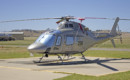
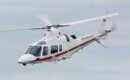
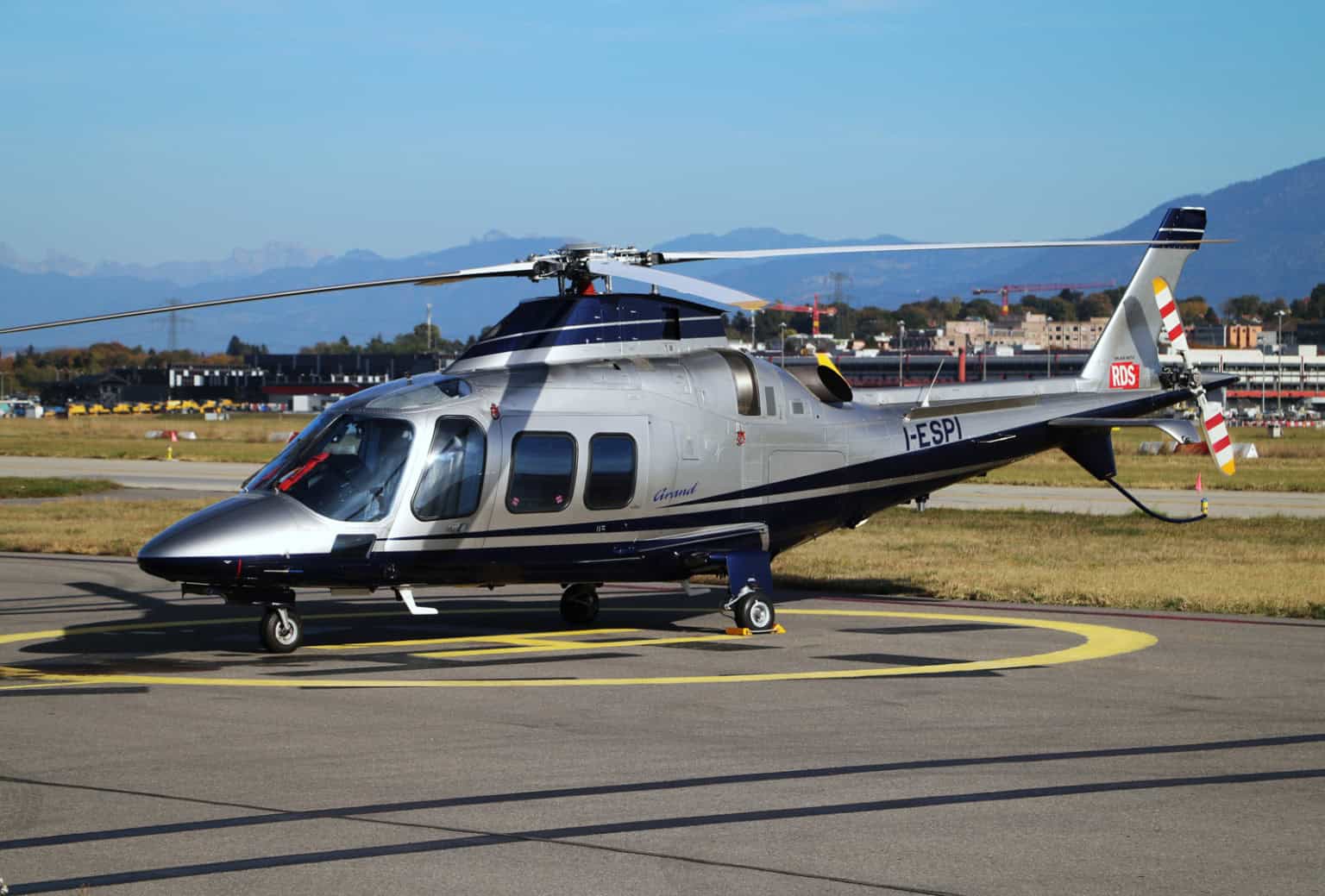
The Agusta Westland Grand is a light twin-engine helicopter developed from the successful A109 lineage. Designed to enhance cabin space and modernize systems, it serves corporate and emergency medical roles. The aircraft reflects incremental refinement of a proven platform.
Live Fleet Activity (A109)
Fetching live data…
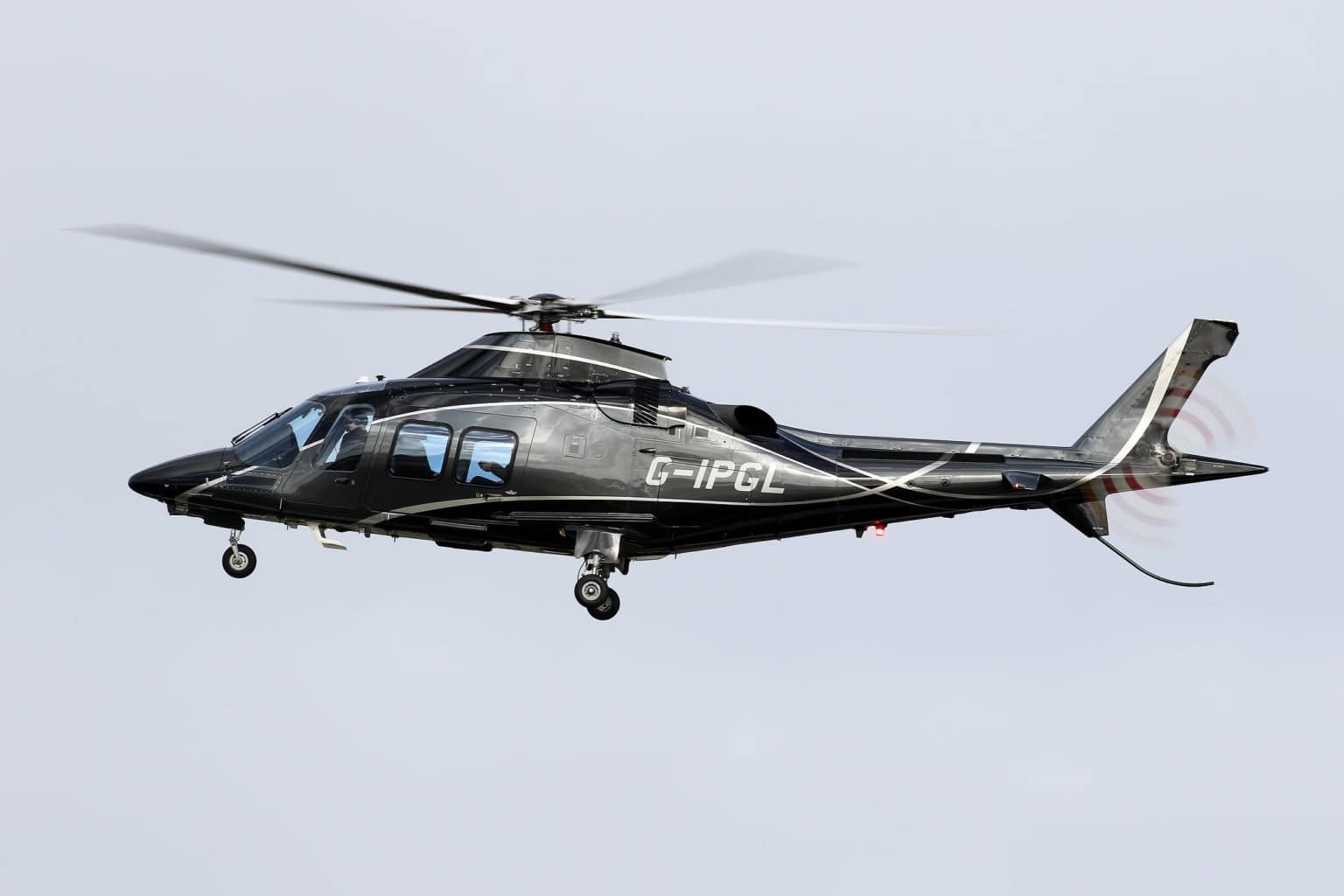


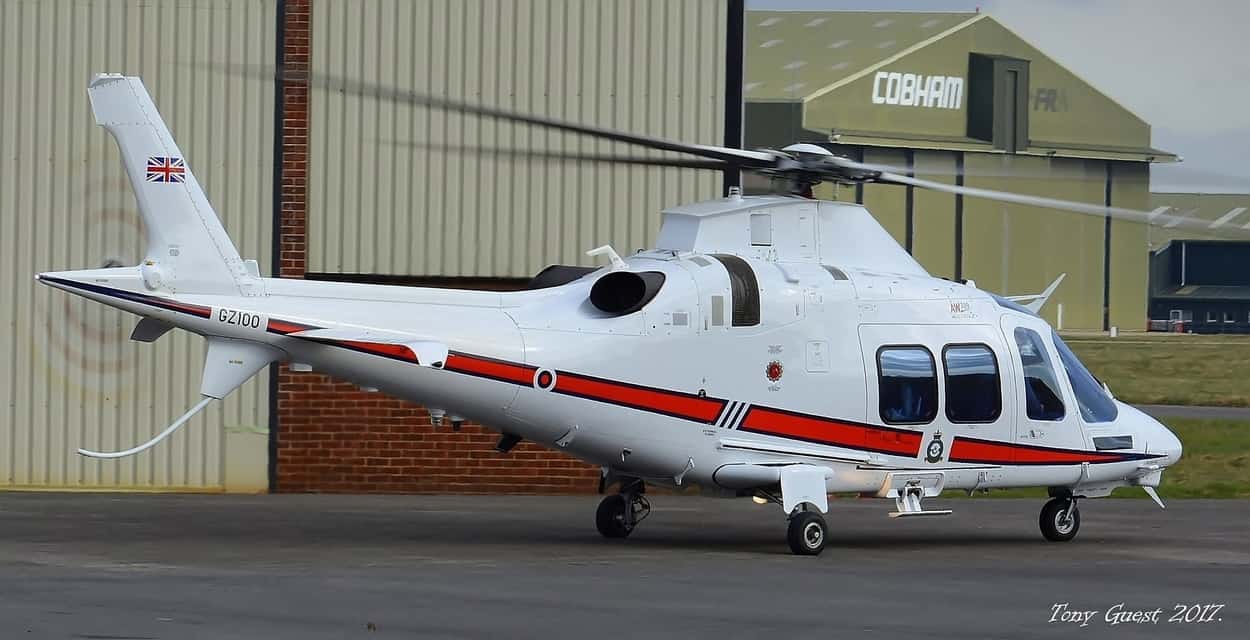


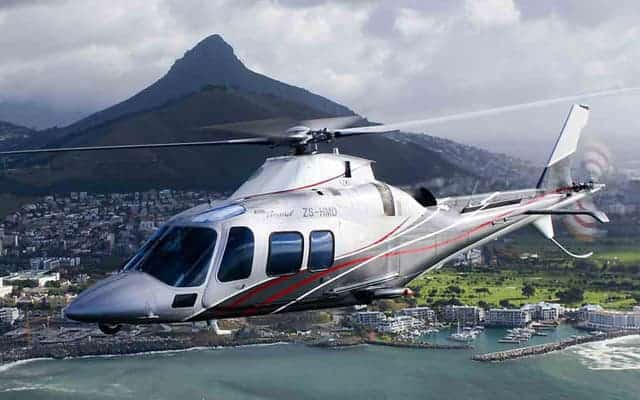
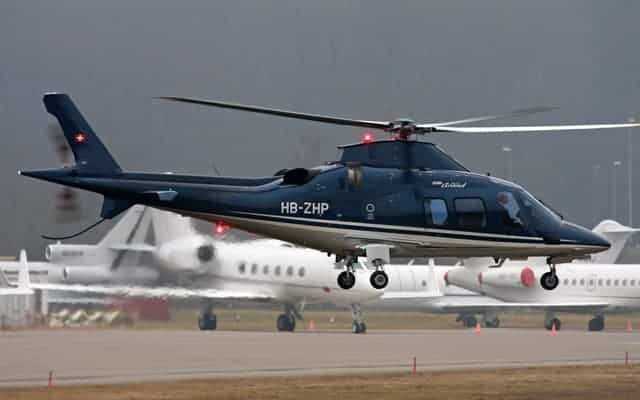
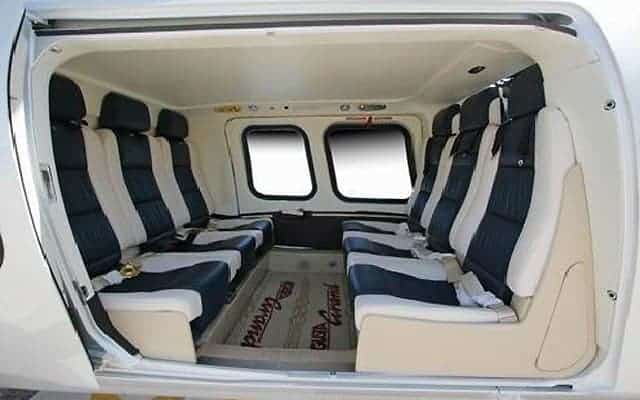

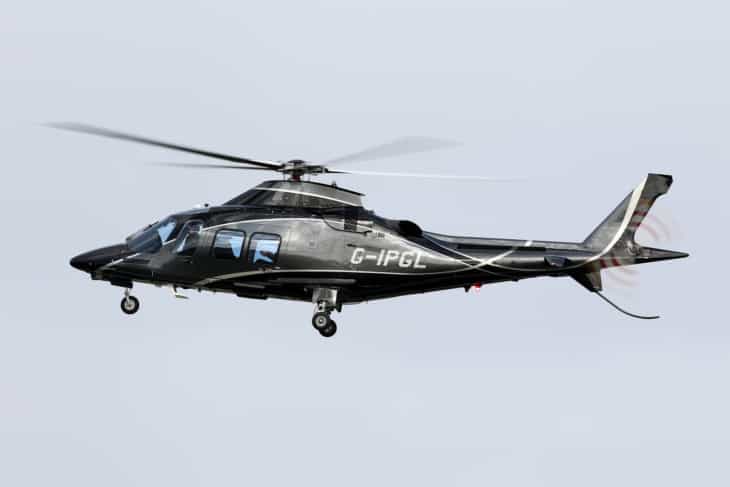
The AW109 Grand was introduced in the 2000s as a stretched and updated version of earlier A109 variants. By extending the fuselage, the design increased cabin volume and improved passenger access. The aircraft retained the retractable landing gear and streamlined profile characteristic of the family.
Powered by two Pratt & Whitney Canada PW207 engines producing approximately 735 shaft horsepower each, the Grand cruises at around 150 knots (280 km/h). Maximum takeoff weight is about 6,800 pounds (3,100 kg). The cabin typically accommodates six to seven passengers depending on layout.
The type gained popularity in executive transport and air ambulance service due to its speed and refined interior. Modern avionics and improved hot-and-high performance broadened its operational envelope. The Grand remains an important variant within the long-running A109 series.
The Grand emerged from a program to broaden mission flexibility for a light twin platform while improving occupant comfort and access. Program intent emphasized a wider cabin cross section and adaptable interior arrangements to serve corporate, medical, and utility roles without a complete redesign of dynamic components.
Prototype activity concentrated on validating the longer fuselage amid unchanged rotor and drivetrain geometry. Flight testing evaluated handling, vibration characteristics, and center of gravity effects introduced by the cabin extension. Structural and systems changes were exercised to confirm maintenance accessibility and operational reliability.
Manufacturing context relied on existing supply and support chains to limit tooling changes. Production planning prioritized commonality with earlier models to simplify operator transition and spares stocking. Certification testing established compliance with applicable airworthiness criteria for multi-engine rotorcraft.
Development work also considered mission equipment integration from the outset. Provisions for medical fitments, corporate cabin furnishings, and mission radios were incorporated into production standards to enable rapid role conversion without major structural modification.
The Grand retains a conventional single main rotor and tail rotor arrangement with emphasis on sound attenuation and occupant comfort within the enlarged fuselage. The cabin layout is intentionally modular, permitting rapid reconfiguration between passenger seating, stretcher bays, and cargo stowage while maintaining external access for loading.
Structural approach balances a metal airframe with selected composite components in nonprimary structures to reduce weight and corrosion susceptibility. Access panels and equipment bays are arranged to facilitate routine inspection and expedite scheduled maintenance tasks without extensive disassembly.
Avionics philosophy centers on an integrated cockpit that supports single-pilot IFR operations as well as two-pilot crew configurations for demanding missions. Systems redundancy and logical human-machine interfaces aim to reduce pilot workload during complex procedures such as instrument approaches and low-level maneuvering.
Distinguishing features include attention to cabin ergonomics and environmental control, with soundproofing, adaptable lighting, and utility power provisions to support medical equipment or executive amenities. Exterior fittings support auxiliary options such as rescue hoists, search lights, and mission-specific sensor mounts.
Flight characteristics emphasize cruise efficiency and stability for short- to medium-range missions where speed and cabin comfort are priorities. Fuel consumption and range vary with load and optional equipment, and mission planning commonly balances passenger count against auxiliary fuel or medical equipment weight.
Climb performance supports rapid access to en route altitudes from sea level and maintained capability in moderate hot-and-high conditions relative to earlier family members. Single-engine performance considerations influence weight and balance limits applied for operations from confined helipads and unimproved surfaces.
Endurance is sufficient for typical executive transfers and regional medevac missions, with operational procedures in place to manage fuel reserves and contingency planning for diversion. Operators often equip aircraft with supplemental fuel systems when extended range is required.
Operational limitations include sensitivity of handling and performance to gross weight and ambient conditions. Maintenance schedules and component life limits govern operational availability, and many operators implement mission profiles that maximize dispatch reliability while avoiding operations at the extreme edges of the helicopter's performance envelope.
The Grand represents a fuselage-stretched iteration within a broader model family rather than a wholly new design. Its relationship to the baseline is primarily structural and interior oriented, retaining the core dynamic systems and flight control characteristics of the parent type.
Mission-specific fit-outs constitute the most common differentiation among individual Grand airframes. Operators specify configurations for executive transport, medical evacuation, law enforcement, and utility work. These fit-outs often include mission management consoles, patient handling systems, or specialized seating and insulation packages.
Manufacturers and maintenance organizations offer retrofit kits and equipment bundles that adapt the basic Grand airframe to specific operator requirements. These kits preserve the aircraft’s general handling qualities while providing certified ways to install mission avionics, safety equipment, and comfort enhancements.
Civil operators include corporate flight departments, emergency medical service providers, government agencies, and law enforcement units that require a fast, comfortable light twin capable of short-range missions. Deployment patterns favor daytime operations and planned point-to-point transfers between urban and regional helipads.
In medevac service the aircraft typically carries a single stretcher with attendant seating and life support equipment. EMS operators value the cabin layout for patient access and rapid loading. Corporate operators select the type for executive shuttles and charter work where cabin quality and speed matter.
Government and police missions exploit the platform for personnel transport, reconnaissance, and liaison duties where a compact twin with rapid fieldability is preferred. Offshore and utility use is less common but encouraged by available mission equipment packages that support external loads and hoist operations.
Fleet experience shows that commonality with earlier family members reduces training and logistics burden for mixed type operators. Overhauls and interior refurbishments are frequent in long-term service, and aftermarket support networks provide upgrade paths for avionics and mission systems throughout operational life.
The Grand contributed to a practice of evolving proven airframes through fuselage modification to meet new market needs without wholesale redesign. The program demonstrated how cabin adaptability and systems modularity can extend commercial and governmental appeal while maintaining continuity in maintenance and training.
Operational lessons clarified the tradeoffs between increased cabin volume and weight distribution, informing subsequent cabin-focused developments across the manufacturer’s product range. Support and retrofit pathways developed for the Grand influenced how operators approached mid-life upgrades for comparable helicopters.
Technological carryover is evident in later designs that incorporate integrated cockpits and user-configurable interiors as standard options. The aircraft’s role in demonstrating the practicality of mission-specific factory provisions influenced procurement and aftermarket strategies among operators seeking versatile light twin capabilities.
Sources and references used for research and fact-checking.