

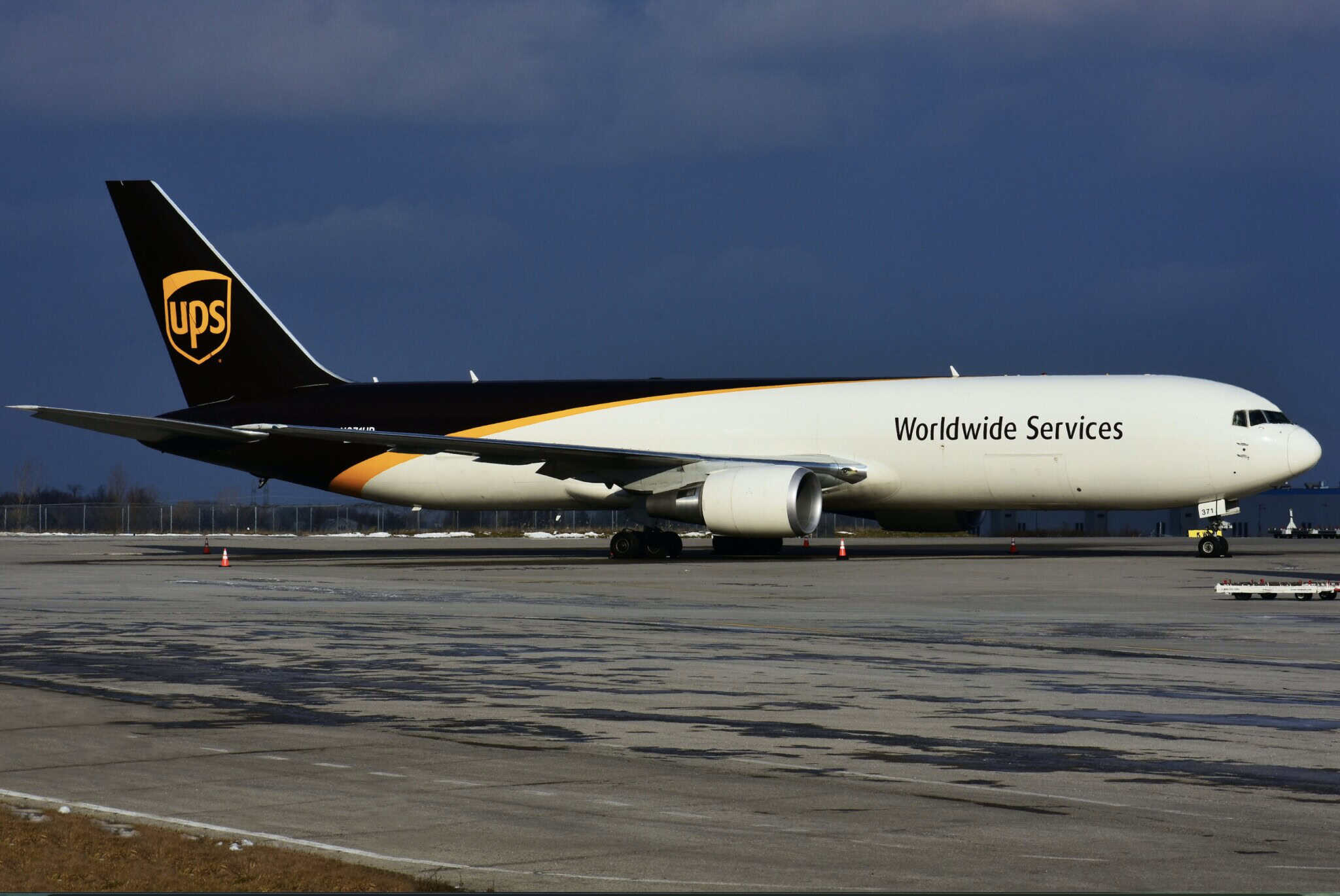
On the evening of August 15, 2026, a UPS Airlines Boeing 767-300 freighter lost every large cockpit display screen while approaching Denver International Airport. The crew landed the jet safely using only backup instruments.
What Happened
Flight 5X5806, registered N312UP, was flying cargo from Oklahoma City to Denver when its Primary Flight Display, Navigation Display, and Engine Indicating and Crew Alerting System all failed at once, according to Aviation Herald, which first reported the incident.
The pilots switched to the 767’s standby instruments and the magnetic compass, then continued to a landing on runway 35L at 8:59 p.m., about an hour and 40 minutes after leaving Oklahoma City, Simple Flying reported. Nobody on board was hurt.
The aircraft was still grounded in Denver more than two days later while UPS investigated the cause. Neither UPS Airlines nor the FAA has issued a public statement, and Simple Flying said UPS had not responded to a request for comment.
Why a Blank Screen Isn’t the End of the Story
Modern 767 flight decks are glass cockpits: nearly everything pilots read, airspeed, altitude, attitude, and engine data, comes from digital displays fed by shared computers and power buses.
On a 767, the PFD normally shows attitude, airspeed, and altitude together; the ND shows the flight plan and heading; and the EICAS shows engine and system readouts. Those screens usually draw from separate display units, so losing all three at once points to a shared cause further upstream, such as a power bus or symbol generator, rather than one broken screen.
Certification rules require every airliner to also carry instruments that do not depend on that same wiring. That requirement, spelled out in FAA rule 14 CFR 25.1333, is why losing the main displays did not leave the UPS crew without a way to fly the airplane.
What's on the backup panel
Standby instruments typically include a self-powered attitude indicator, airspeed indicator, altimeter, and a magnetic compass, the same analog-style readouts pilots trained on before glass cockpits existed.
Losing every primary display at once is rare enough that most pilots never see it happen in a career. Training and recurrent checkrides still cover partial and full display failures regularly, so a crew can shift to standby instruments without hesitating.
Losing the ND also does not disable navigation outright. Pilots can still fly using raw VOR or ILS needles on the standby instruments, but they lose the moving map that makes flying a precise instrument approach easier.
N312UP has flown for UPS since 1996. It is one of 95 767 freighters in a UPS fleet that averages nearly 15 years old, with 12 more 767s on order, according to Simple Flying. UPS has not said whether the aircraft’s age played any role.
Cause still unknown
No agency has confirmed it is investigating, and UPS has not said what caused the display failure. Treat any explanation of the root cause as provisional until officials or the airline comment.
Get the Newsletter
The latest aviation news and stories sent to your inbox.
About the Author

Tim is the owner and lead editor of AeroCorner since 2019, overseeing aviation content covering aircraft, airlines, airports, and the broader aviation industry. Through years of researching, writing, editing, and publishing aviation-focused content, he has developed extensive practical knowledge of commercial aviation and air travel. Based in Asia and a frequent traveler himself, Tim also brings firsthand passenger experience to AeroCorner’s coverage. Outside of publishing, he has also explored aviation firsthand through hands-on flight training in New Zealand.