

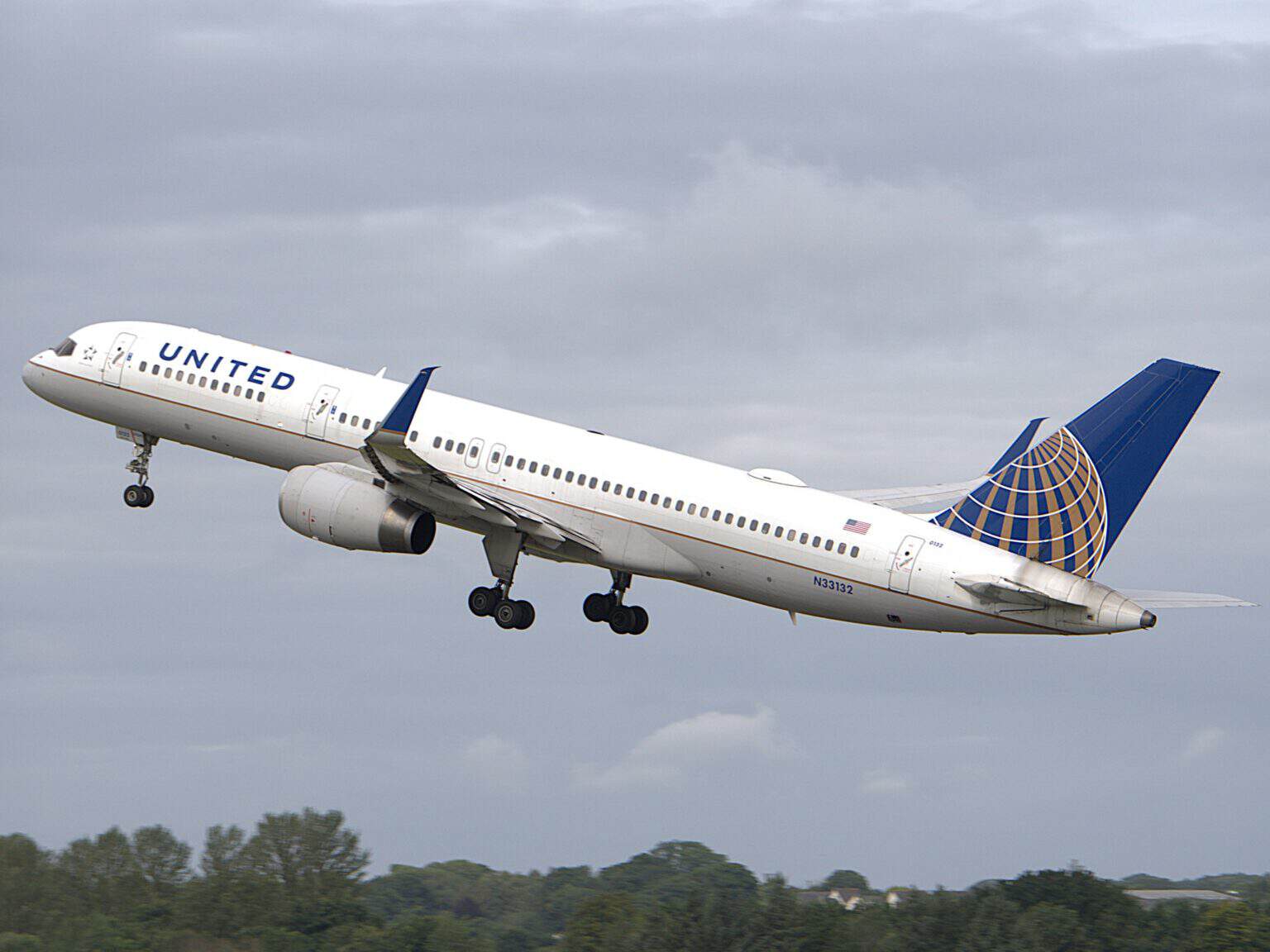
On October 27, 2026, the crew of United Airlines flight UA1321, a Boeing 757-200 registered N33132, reported a partial electrical failure shortly after taking off from Newark Liberty International for Los Angeles. The jet stopped its climb and flew a loop west of the airport while the pilots worked their checklists, then climbed again and flew the rest of the way to LAX.
The event was first reported by The Aviation Herald, which says the transponder stopped transmitting as the 757 climbed through about 1,500 feet after departing runway 4L. According to that account, the crew told controllers they had electrical problems, had lost lateral navigation and appeared to have an equipment cooling issue.
What the tracking data shows
The flight’s FlightAware track shows UA1321 leaving gate C81 at 7:32 p.m. EDT and taking off at 7:53 p.m. By about 7:58 p.m. it had stopped climbing.
The Aviation Herald put the level-off at 8,000 feet, while FlightAware’s data shows the jet at about 7,500 to 7,600 feet as it flew that loop, roughly 15 miles (25 km) west of the airport. The crew asked for vectors while working the checklists, and controllers gave the flight delay vectors, the AvHerald account says.
Some time later, a controller told the crew the transponder’s Mode C altitude readout was off again and asked whether the altitude shown was correct, according to the same report. The crew was then able to restore the systems, it says.
The track shows the climb resuming at about 8:06 p.m., after roughly eight minutes level, and the 757 reaching its filed cruising altitude of 36,000 feet by about 8:22 p.m. It landed at Los Angeles at 10:25 p.m. PDT.
FlightAware and FlightStats both show it reaching gate 75A at 11:09 p.m., 13 minutes after its scheduled 10:56 p.m. arrival. The Aviation Herald instead reported a landing about 20 minutes ahead of schedule.
The same aircraft left Los Angeles at 5:54 a.m. PDT the next morning as UA1939 to Newark, FlightAware shows. AeroCorner found no public statement from United about the flight, and no cause for the electrical fault has been published.
N33132 is a Boeing 757-224 built in 1998 and registered to United, with Rolls-Royce RB211 engines, according to the FAA aircraft registry. That makes it about 28 years old.
Why the crew could keep going
The crew’s first moves, stopping the climb and asking for vectors while working checklists, bought time to diagnose the problem before choosing between a return to Newark and carrying on.
The aircraft transponder is what feeds controllers a jet’s code and altitude. Federal rule 14 CFR 91.215 requires one with Mode C altitude reporting, which sends the aircraft’s pressure altitude in 100-foot steps, in Class A, B and C airspace unless air traffic control authorizes otherwise.
Equipment cooling is the airflow that keeps the avionics from overheating. The 757’s flight deck carries a dedicated Equipment Cooling panel, one of the cockpit panels named in a 2007 FAA proposed airworthiness directive on flight deck switches.

The decision to continue belongs to the captain. Under 14 CFR 121.627, no airline captain may continue toward the airport it was dispatched to if the captain or the dispatcher believes the flight cannot be completed safely.
The same rule says required equipment that fails en route is handled by the procedures in the airline’s own manual. UA1321 continued once the crew had restored its systems; neither United nor the FAA has said how that decision was reached.
When a backup quietly runs down
The risk in pressing on with an electrical fault is a backup that is draining unnoticed. On September 22, 2008, a 757-200 flying from Seattle to New York lost its standby power bus near cruising altitude, and the crew left the standby buses on the main battery and continued, according to a Flight Safety Foundation summary of the NTSB report.
Nearly two and a half hours later the battery was exhausted, and the stabilizer trim, the captain’s instruments and the thrust reversers failed. The jet diverted to Chicago O’Hare, where the captain steered it off the side of the runway into the grass.
Investigators traced that fault to an electrical relay with eroded contacts. A service bulletin that followed outlined electrical changes that keep the battery charger working after the battery is selected for standby power.
Nothing published so far suggests UA1321 was flying on battery power: the AvHerald account describes a partial failure that the crew restored before the jet resumed its climb. It follows another United 757 event this month, when flight UA316 turned back to Dublin over a strong fuel smell.
Sources and references used for research and fact-checking.
- Federal Aviation Administration, Aircraft registry, N33132
- eCFR, 14 CFR 121.627, Continuing flight in unsafe conditions
- eCFR, 14 CFR 91.215, ATC transponder and altitude reporting equipment and use
- Federal Register (FAA), Airworthiness Directives; Boeing Model 747-400, -400D, and -400F Series Airplanes; Boeing Model 757 Airplanes; and Boeing Model 767 Airplanes (proposed AD, Aug 16, 2007)
Get the Newsletter
The latest aviation news and stories sent to your inbox.
About the Author

AeroCorner News is the aviation news desk of AeroCorner.com. It covers accidents and incidents, safety rulings, airline and airport disruption, and new aircraft. It works from primary sources such as the NTSB, FAA, EASA and the manufacturers' own announcements.