

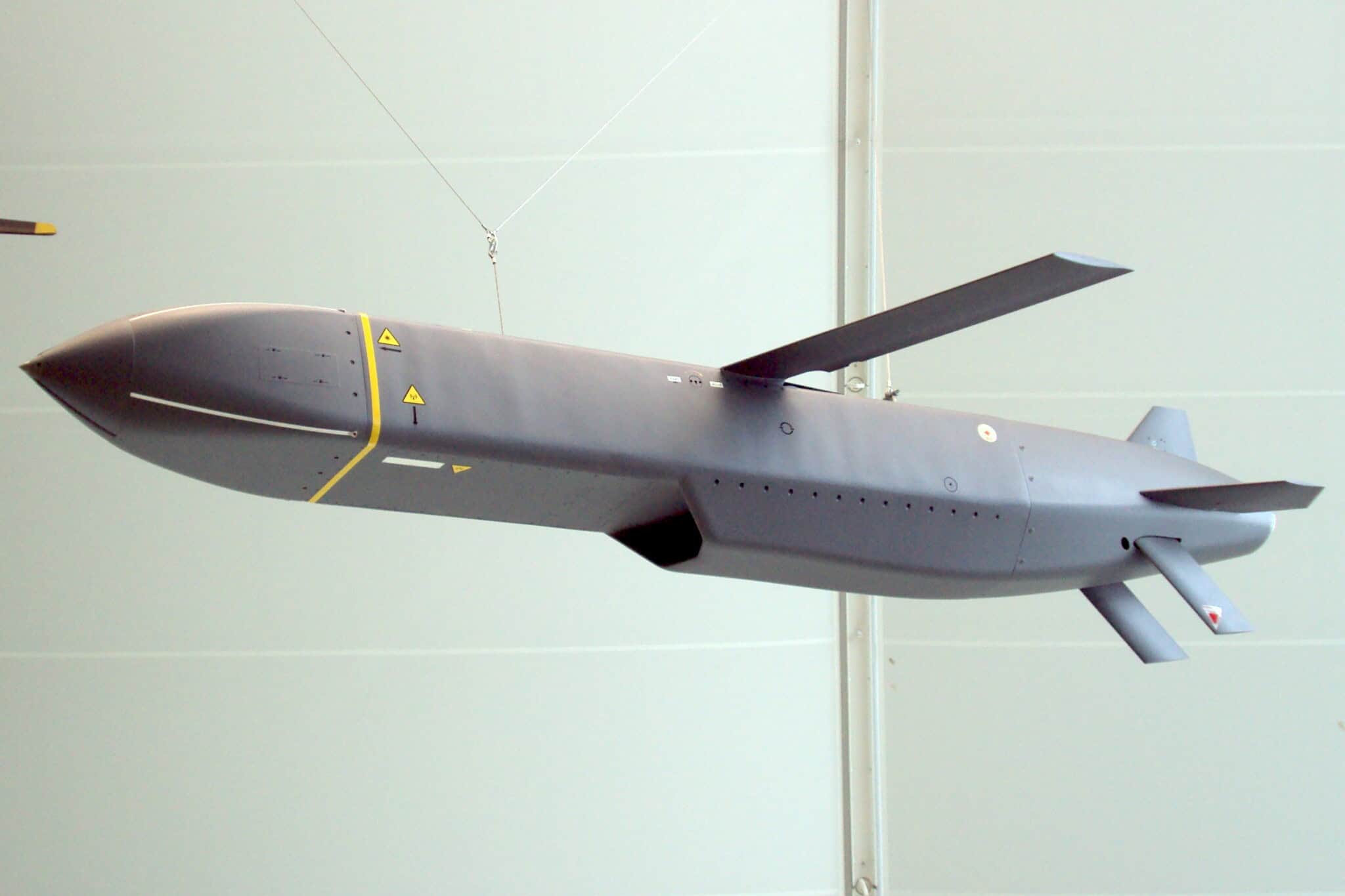
The British government announced on August 24, 2026 that it has authorised the missile maker MBDA to release classified technical information on UK-controlled components of the Storm Shadow cruise missile, clearing the way for local assembly lines in Ukraine. The announcement landed as Prime Minister Andy Burnham arrived in Kyiv on Ukraine’s Independence Day, his first foreign visit since taking office.
It did not come free. In the same package, Britain became the first international partner granted access to Ukraine’s Avengers AI Labs, a battlefield data platform built from years of front-line sensor collection.
Why London Had a Veto in the First Place
Storm Shadow and the French SCALP-EG are the same weapon under two national names, co-developed by Britain and France and built by MBDA. That shared parentage is precisely why the announcement mattered.
The two countries’ contributions are woven through the missile rather than bolted on, so France and Ukraine could not have stood up an assembly line without London agreeing to declassify the documentation for the British-origin parts. The UK statement frames the release as enabling exactly that, local assembly inside Ukraine.
Ukraine had asked for it directly. Burnham said President Volodymyr Zelenskyy had requested access to the technology so Ukraine could build the capability itself, according to Ukrainska Pravda.
The Aircraft Problem Underneath the Missile
Storm Shadow is an air-launched weapon, and that makes this an air force story as much as a munitions one. Ukraine has fired it almost entirely from the Su-24 Fencer, a Soviet-era swing-wing bomber that Ukrainian engineers adapted to carry a Western missile it was never designed for.
That fleet is finite and cannot be replaced. The War Zone reported that Mirage 2000 integration is expected but not yet confirmed, and that Ukraine’s planned Rafales would carry SCALP from the outset.
So a domestic missile supply solves only half the equation. Making more missiles does not by itself produce more airframes qualified to drop them, and the launch platform is the constraint that Ukraine cannot manufacture its way out of.
The missile itself is a low-observable, precision-guided cruise weapon designed to punch into hardened targets. The War Zone put its reach at over 300 nautical miles in British service and roughly half that in the export configuration supplied to Ukraine. The Aviationist reported that the cleared British content includes the BROACH tandem warhead developed by BAE Systems.
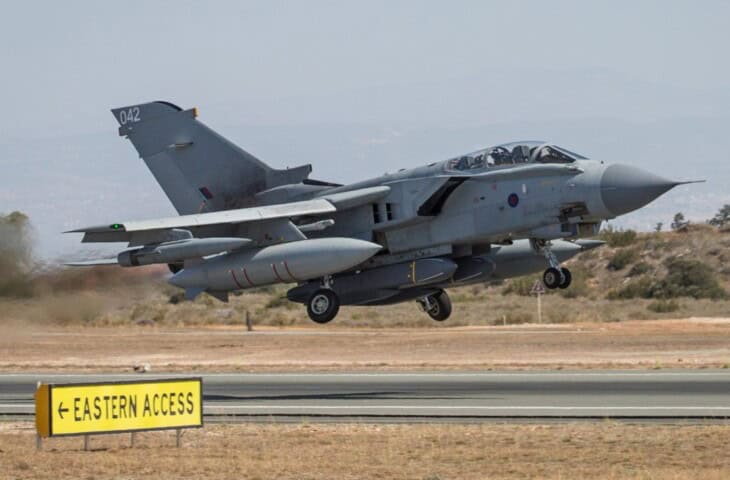
Storm Shadow first entered service on the RAF’s Panavia Tornado and later moved to the Typhoon. Ukraine’s Su-24 is by some distance the oldest and least likely platform ever to launch one operationally.
What Britain Took Back Across the Table
Avengers AI Labs pulls data from thousands of daylight cameras and infrared sensors across the Ukrainian front. The UK government said it captures millions of objects, including tanks, artillery, air defence systems, infantry, aerial targets, Shahed drones and reconnaissance UAVs, and feeds them back to train new AI models.
That is the part money cannot buy. Machine-vision models for target recognition are only as good as the labelled real-world imagery behind them, and no NATO member has anything comparable to four years of contested-airspace sensor data.
Two pilot projects were named. One turns buried fibre-optic cable into an AI-enabled sensor line for protecting defence sites, with possible extension to airports, railways and energy plants. The other looks at low-power AI chips for drones and autonomous systems.
Defence Secretary Wes Streeting said combining British scientists and tech companies with Ukraine’s battlefield experience and data would strengthen both nations’ security. Minister for AI Kanishka Narayan called it “AI sovereignty in practice.”
What has not been announced
This is an authorisation to share technical data, not a production line. The UK statement names no assembly site, no delivery timeline, no funding figure and no target output, and Ukraine has not said which of its facilities would do the work. Treat any published estimate of when a Ukrainian-assembled Storm Shadow might fly as speculation for now.
Britain was the first country to send Ukraine long-range cruise missiles, back in 2023. Three years on, the same weapon is the currency in a straight technology trade, and what Britain wanted in exchange was not cash but data.
Sources and references used for research and fact-checking.
Get the Newsletter
The latest aviation news and stories sent to your inbox.
About the Author

Tim is the owner and lead editor of AeroCorner since 2019, overseeing aviation content covering aircraft, airlines, airports, and the broader aviation industry. Through years of researching, writing, editing, and publishing aviation-focused content, he has developed extensive practical knowledge of commercial aviation and air travel. Based in Asia and a frequent traveler himself, Tim also brings firsthand passenger experience to AeroCorner’s coverage. Outside of publishing, he has also explored aviation firsthand through hands-on flight training in New Zealand.