

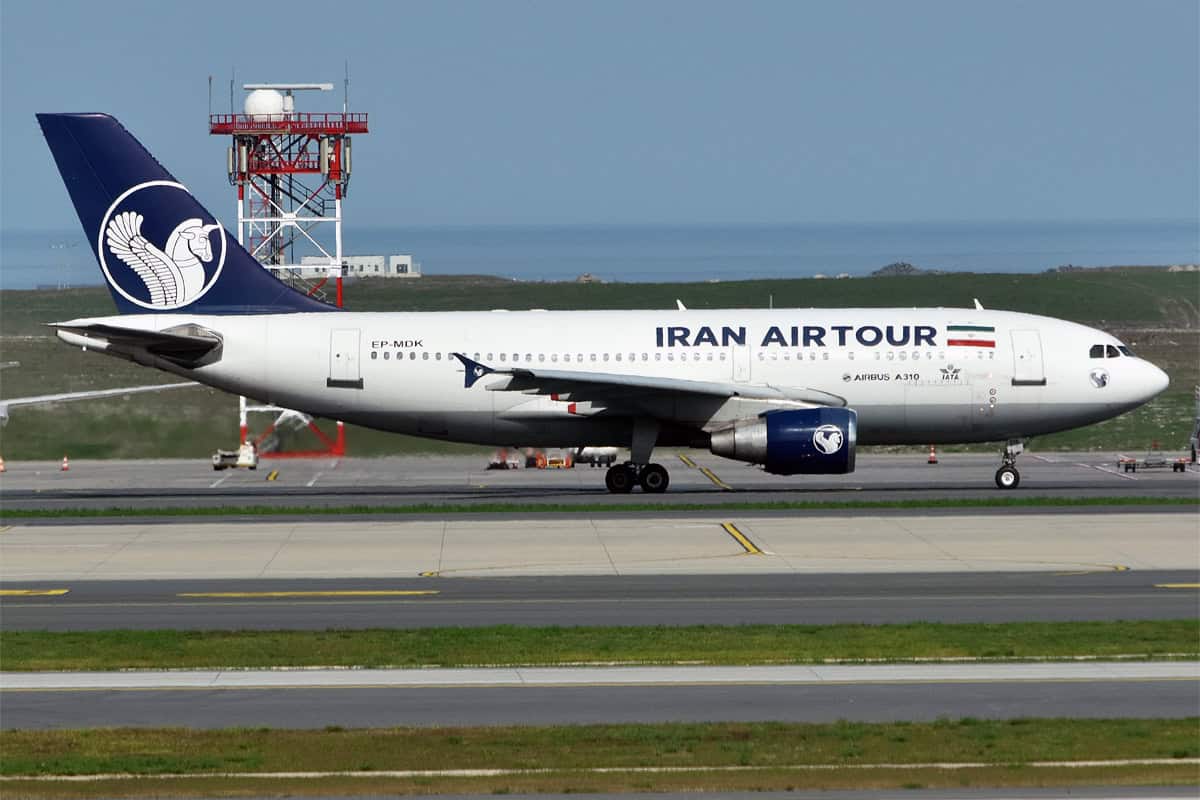
On September 24, 2026, the United Arab Emirates suspended every flight operated by Iranian airlines to and from the country, effective that day and until further notice. The order from the UAE’s General Civil Aviation Authority (GCAA) cuts Iran’s carriers off from Dubai, which has long been a major destination for them, with multiple flights a day.
The GCAA said the decision was made in light of the US ban on Iranian airlines using airports around the world. It added that it would keep the public informed pending a return to normal air traffic between the two countries, and gave no end date.
The cutoff was immediate for passengers. An Iran Airtour flight from Tehran to Dubai was canceled shortly before departure on Thursday morning, after tickets had already been issued, according to AFP reporting carried by Al Jazeera.
Iran’s reported answer: no overflights for UAE aircraft
Iran responded the same day by banning UAE flights from its airspace, AGBI reported. The Gulf business outlet said Flightradar24 data showed flydubai flights being diverted over Iraq and Turkey instead.
InsideFlyer described the measure as covering UAE-registered aircraft, which takes in Emirates, Etihad Airways and flydubai. AeroCorner could not find an official Iranian statement announcing the ban, and the Reuters and AFP reports on the UAE decision that it reviewed do not mention it.
Tehran had signaled a response in advance. A day before the UAE acted, a senior Iranian official threatened to make airports “unusable” in any regional country that complied with the US ban, Reuters reported.
Iran’s civil aviation authority has taken a softer public line. Its spokesman, Majid Akhavan, said diplomatic and aviation talks were under way to remove the restrictions and restore flights to the UAE.
What is confirmed
The UAE suspension is official: the GCAA announced it on September 24, 2026. Iran’s closure of its airspace to UAE aircraft rests on aviation press reports and flight-tracking data. As of September 26, AeroCorner had not found an Iranian statement or published notice confirming its scope or duration.
Why flydubai feels it and Emirates mostly does not
An airspace ban only costs an airline the routes that actually cross Iran. According to InsideFlyer, most Emirates and Etihad routes had already avoided Iranian airspace since the war began in February, so the big two see little immediate change.
Flydubai is the exception because it had only just gone back. On August 16, flight FZ709, a 737 MAX 8 bound for Baku, became the carrier’s first flight to cross Iran again since the rerouting began.
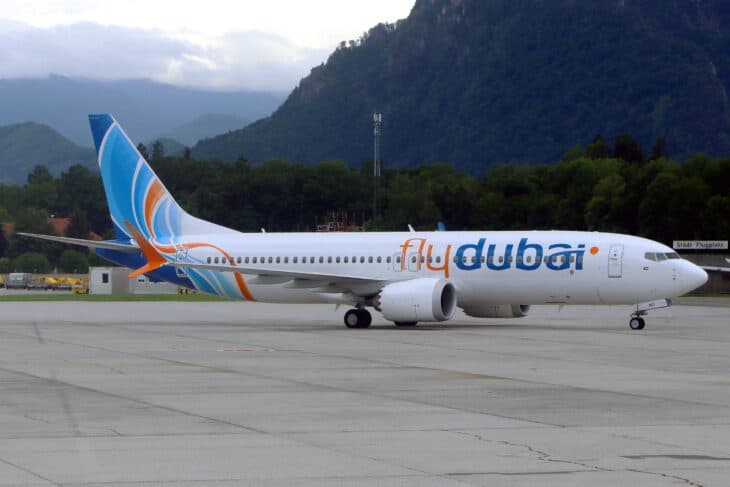
The geography explains why that mattered. Baku, the rest of the Caucasus and Russia lie north and northwest of Dubai International Airport, and the direct line to Baku runs straight across Iran.
Flying through Iran cut the Dubai to Baku trip to about 3 hours 10 minutes, against roughly 3 hours 50 minutes around Iran through Iraqi airspace, AIRLIVE reported in August. The ban puts that roughly 40-minute penalty, and the extra fuel it burns, back on the route.
On September 25, Gulf News said flydubai was running a reduced schedule and warning passengers that some flights would take longer because they were being rerouted.
Why Dubai chose the US over Iranian traffic
The pressure comes from the US Treasury. On September 8 it sanctioned 27 Iranian airlines, which Secretary Scott Bessent described as all of Iran’s remaining carriers, and warned anyone doing business with them that they risked being cut off from the global financial system.
Bessent made the aviation meaning explicit on September 21. Airports that fuel Iranian airlines, give them landing services or sell their tickets “will be knocked out of the dollar system,” he told CNBC, as quoted by The National.
That is a threat aimed at the airport and its suppliers, not at the Iranian airline. For a hub like Dubai, whose airline and banking industries trade heavily in dollars, the exposure outweighs what multiple daily Iranian flights bring in.
The wind-down period for companies still serving Iranian carriers expired on September 23, when Iranian airlines began losing foreign airports. A day later the rule reached the UAE, which Reuters calls the Middle East’s biggest travel hub.
The list of closed doors keeps growing
The UAE joined Oman, Iraq, Azerbaijan, Georgia and Turkmenistan in restricting or suspending Iranian airlines, according to Al Jazeera. On Thursday, Turkmenistan refused a Tehran to Dushanbe flight permission to cross its airspace and the aircraft had to turn back, Akhavan told Iranian media.
Iraq widened its own ban on Friday. Najaf, a major hub for Iranian flights that mostly carry Shia pilgrims, halted all Iranian flights on a directive from the prime minister’s office, its director told AFP, as reported by Al Arabiya.
On Saturday, Iraq’s government said it was in direct talks with Washington to exempt some Iraqi airports on humanitarian grounds, covering medical, education and religious travel, The National reported.
What remains open is short. Several smaller Iranian airlines are still flying to China and Armenia, according to Al Jazeera, and some routes to Turkey remain open for some carriers.
Sources and references used for research and fact-checking.
Get the Newsletter
The latest aviation news and stories sent to your inbox.
About the Author

Tim is the owner and lead editor of AeroCorner since 2019, overseeing aviation content covering aircraft, airlines, airports, and the broader aviation industry. Through years of researching, writing, editing, and publishing aviation-focused content, he has developed extensive practical knowledge of commercial aviation and air travel. Based in Asia and a frequent traveler himself, Tim also brings firsthand passenger experience to AeroCorner’s coverage. Outside of publishing, he has also explored aviation firsthand through hands-on flight training in New Zealand.