

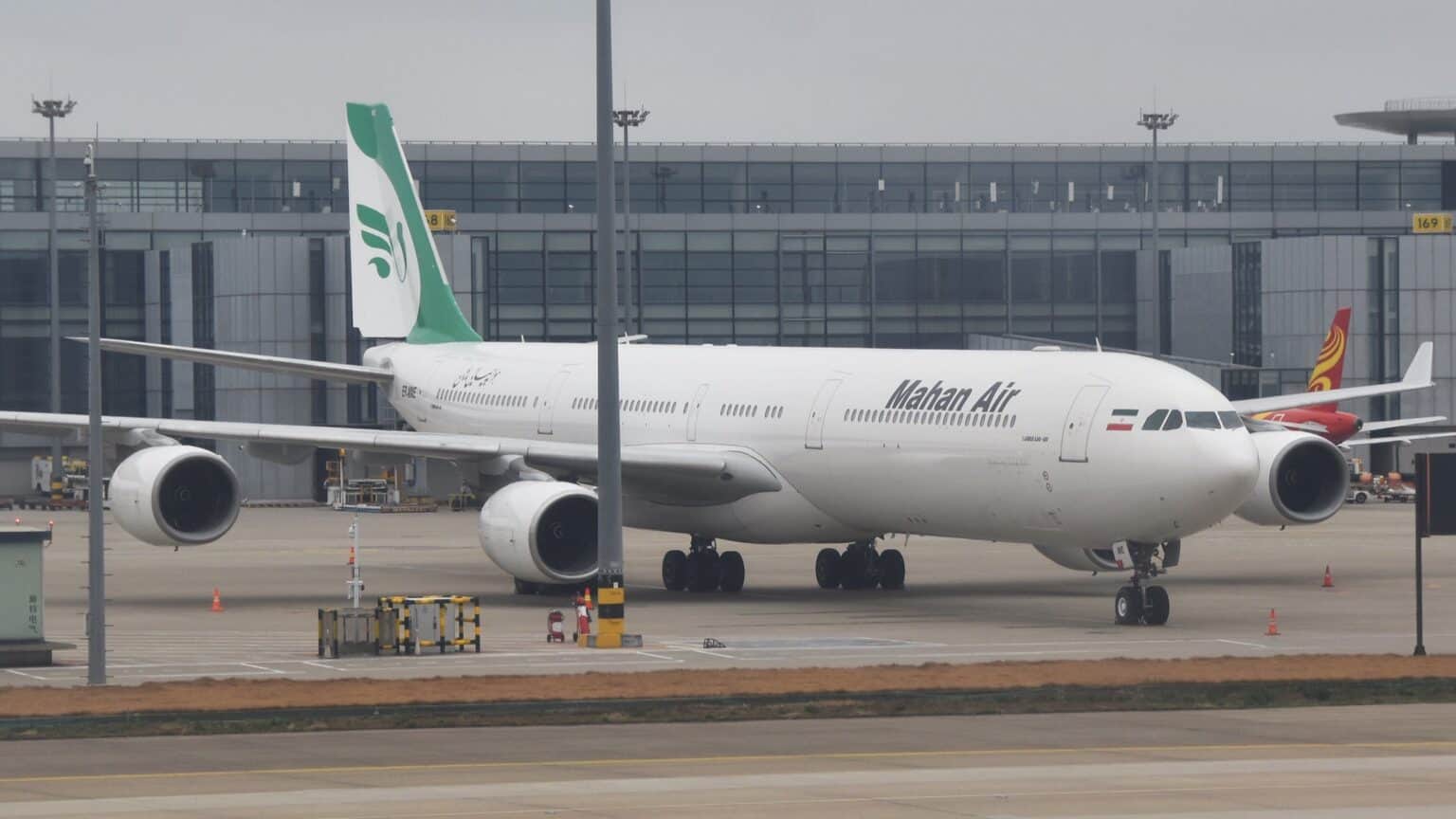
A US Treasury wind-down authorization covering Iran’s civil aviation sector expired on September 23, 2026. With it gone, foreign companies that fuel, handle, insure or sell tickets for Iran’s sanctioned airlines are exposed to US secondary sanctions, and several of Iran’s neighbors have already stopped waiting to find out how that is enforced.
Treasury Secretary Scott Bessent set the date publicly two days earlier. “On September 23, all the Iranian airlines will be shut down around the world,” he told CNBC on September 21, in remarks reported by Al Jazeera.
His warning was aimed past the airlines themselves. “If they land, you cannot provide them with fuel, you cannot provide them with landing services, you cannot sell them tickets, or you will be knocked out of the dollar system,” Bessent said.
What Actually Expired
The deadline comes from General License DD, issued by the Office of Foreign Assets Control on September 8 alongside sanctions on 36 targets, including 27 Iranian airlines, under Executive Orders 13902 and 13224.
That same day, OFAC’s own suspension notice says, the agency indefinitely suspended four long-standing authorizations: payments for overflights of Iranian airspace, aircraft safety, bunkering and emergency repairs, and General License J-1, which had authorized the reexportation of certain civil aircraft to Iran on temporary sojourn.
General License DD gave the industry 15 days to unwind existing business under three of those four. The aircraft safety authorization, which covered exports tied to the safe operation of civil aviation, is not one of the three the wind-down license names.
Reality check
Washington did not issue an aviation order. What expired is a US licensing permission, and the pressure lands on the foreign suppliers and banks that Iranian carriers need at every airport outside Iran. The visible enforcement comes from other governments.
This was the second round of the same mechanic. On August 24, OFAC suspended a separate set of Iran general licenses and gave the market until September 8 to wind down, which is the day the aviation action landed.
August 24, 2026
First suspension. OFAC suspends a group of Iran general licenses and issues General License BB, a wind-down running to September 8.
September 8, 2026
Aviation sector designated. Treasury sanctions 36 targets including 27 Iranian airlines, suspends the overflight, aircraft safety, bunkering and J-1 licenses, and issues General License DD.
September 17 to 21, 2026
Routes start falling. Mahan Air suspends Tehran to Muscat, then Tehran to Istanbul and Ankara, then Georgia.
September 23, 2026
Wind-down expires. General License DD lapses. Iraq’s suspension of Iranian flights to Baghdad takes effect the same day.
The Route Map Went First
Mahan Air, Iran’s largest private carrier and already under US sanctions before this month’s action, dropped its Tehran to Muscat service from September 17 and flew its last Istanbul and Ankara rotations on September 20, with Georgia following on September 21.
The airline blamed “instructions from the relevant aviation authorities in Turkey” rather than the sanctions themselves, according to the Oman Observer, which credited the Financial Times for the Turkey detail. AeroCorner covered the earlier round of sanctions on Mahan Air’s overseas sales agents in August.
Turkish Airlines has gone further in the other direction. A representative told Iran International that the carrier has no flights scheduled to Iran before March 2027, and no guarantee service resumes even then.
Iraq is the sharpest loss. Iranian flights into Baghdad are suspended from midnight on September 23, reported The Jerusalem Post, citing two sources who spoke to Reuters on condition of anonymity, with a shift to Najaf under discussion rather than agreed.
Why a Treasury Memo Closes a Gate in Baghdad
An airline away from its home base is a customer, not an operator. Every turn it makes abroad is bought from someone: fuel from an into-plane supplier, pushback and steps from a handling agent, a slot from the airport, cover from an insurer, and a bank to move the money.
Secondary sanctions work on that chain rather than on the aircraft. Treasury’s September 8 notice warns that foreign financial institutions knowingly handling significant transactions for designated persons risk losing their US correspondent and payable-through accounts.
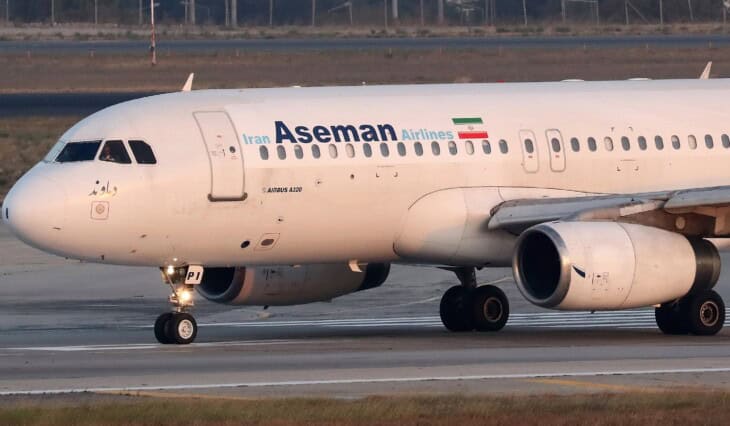
For a handler in Istanbul or a fueler in Baghdad, the arithmetic is one-sided. A few rotations a week from Imam Khomeini International are a small line of revenue set against access to dollar clearing, so the rational move is to decline the business before anyone tests whether a given transaction counts as significant.
That is why the visible enforcement is a national aviation authority telling a carrier to stop, not a US agency. It is also why the UK’s separate ban on Iranian cargo aircraft earlier this month looked like an outlier and now looks like an early move.
Watch the parts, not just the routes
The suspended aircraft safety authorization is the quieter half of this. Of the four permissions OFAC pulled on September 8, the one written around civil aircraft safety is the single one the wind-down license does not name.
This is a developing story. Which Iranian services still operate abroad after today depends on decisions being taken airport by airport, and several of the suspensions reported so far come from unnamed officials rather than published orders.
Sources and references used for research and fact-checking.
- U.S. Department of the Treasury, Treasury Grounds Iranian Airlines with Sweeping Sanctions Action
- Office of Foreign Assets Control, Suspension of Certain Iranian Transactions and Sanctions Regulations General Licenses (updated September 8, 2026)
- Office of Foreign Assets Control, Iran-related Designations; Counter Terrorism Designations; Updates to Iran-related General Licenses
Get the Newsletter
The latest aviation news and stories sent to your inbox.
About the Author

Tim is the owner and lead editor of AeroCorner since 2019, overseeing aviation content covering aircraft, airlines, airports, and the broader aviation industry. Through years of researching, writing, editing, and publishing aviation-focused content, he has developed extensive practical knowledge of commercial aviation and air travel. Based in Asia and a frequent traveler himself, Tim also brings firsthand passenger experience to AeroCorner’s coverage. Outside of publishing, he has also explored aviation firsthand through hands-on flight training in New Zealand.