

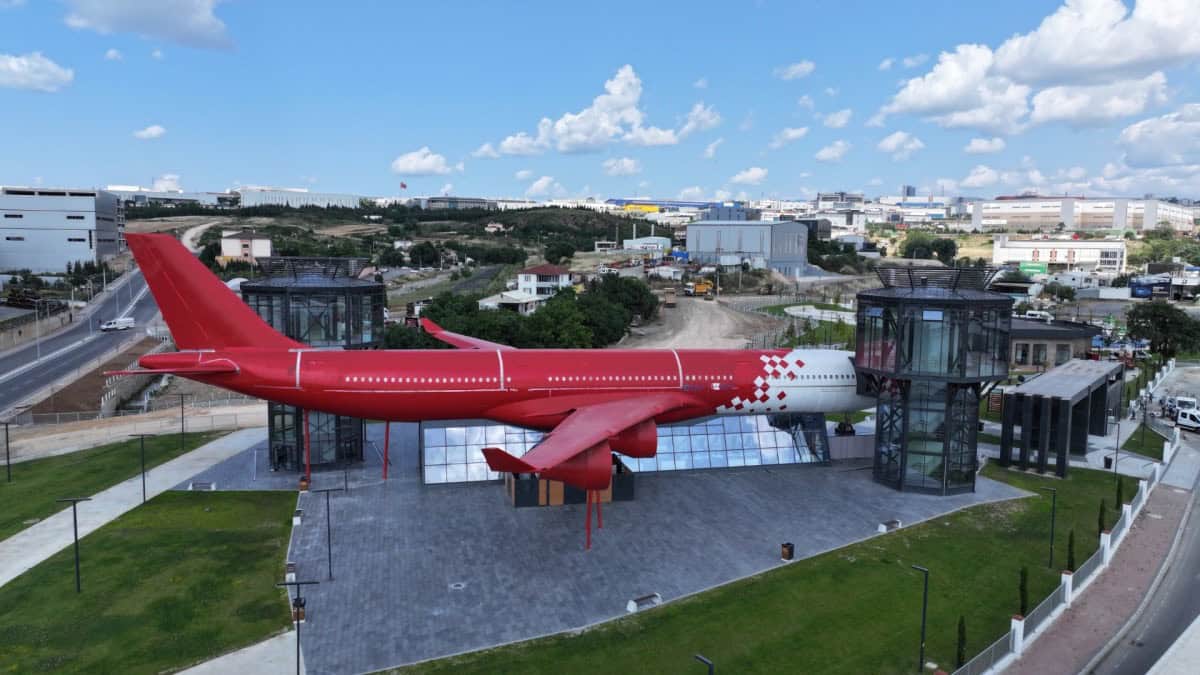
A fire on September 5, 2026, destroyed a retired Airbus A340 that served as the centrepiece of the UcakPark aviation and science centre in Cayirova, near Istanbul. The Kocaeli Metropolitan Municipality said the blaze broke out at about 3 p.m. local time and that no one was hurt. The aircraft, registered TC-JDL, flew for Turkish Airlines for more than 20 years before it was retired in 2015.
What happened
According to the municipality, the fire spread quickly through a large part of the four-engine widebody. Crews brought it under control, but during the response the tail section broke away and fell onto a fire truck, and the rear fuselage collapsed.
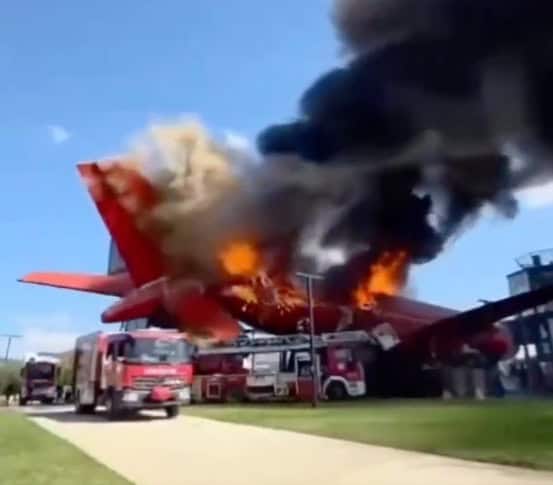
Officials said there was no loss of life or injury and that an examination has been opened to establish the cause. Local reports have pointed to a possible electrical fault, but no official cause has been announced. FlightGlobal reported that the centre had been open to the public for less than a year.
The airframe had been salvaged after Turkish Airlines withdrew it, trucked in sections to Cayirova, and rebuilt as a walk-through exhibit on flight and science for school groups and families.
🚨🔥🇹🇷 BREAKING: A retired Airbus A340 caught fire at the UçakPark Aviation Science Center in Turkey. The fire spread before being extinguished by firefighters. The aircraft suffered major damage, with its tail breaking off and falling onto a fire truck.@AirNavRadar pic.twitter.com/8Cp9bfdgOH
— Runway Report | Aviation News (@Runway_Report12) September 5, 2026
The aircraft, and why the type is now rare
TC-JDL was an A340-300, serial number 057, delivered new to Turkish Airlines on July 28, 1994, and named Ankara. It had four CFM56 engines. The airline retired it in March 2015, stored it at Istanbul Sabiha Gokcen airport, and had it dismantled the following year.
The A340 belongs to an era when twin-engine airliners were kept off long overwater routes without special approval, so a four-engine layout was the safe choice for intercontinental flying. As those rules loosened, twins such as the Boeing 777, and later the 787 and the Airbus A350, could fly the same routes while burning far less fuel.
Airbus ended A340 production in 2011, with 377 delivered, and airlines moved the type out of long-haul fleets over the following decade. Turkish Airlines was one of many carriers that swapped four-engine airliners for twins.
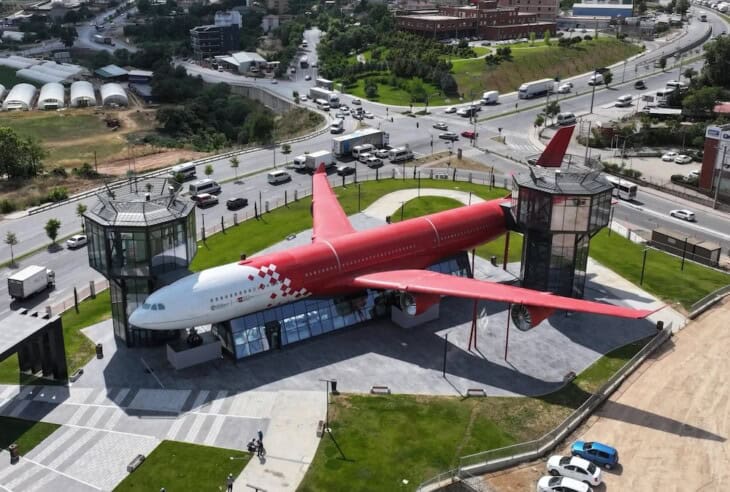
The A340-300 was the volume seller of the family, with 218 delivered out of 377. Carriers including Lufthansa, Air France, Cathay Pacific, and Turkish Airlines used it on long-haul routes through the 2000s. Almost all passenger examples have now been retired, with a few still flying for governments and private operators.
Retired widebodies rarely become museums. Most are broken up for parts and scrap, and only a handful survive as exhibits, training aids, cafes, or hotels. Converting one is costly, and once the airframe is a public building it still needs upkeep and fire protection, which is part of what makes this loss stand out.
What is confirmed
Kocaeli officials say there were no injuries and that an investigation into the cause is underway. Accounts of an electrical origin are unconfirmed. Airbus delivered 377 A340s before ending production in 2011.
Sources and references used for research and fact-checking.
Get the Newsletter
The latest aviation news and stories sent to your inbox.
About the Author

Tim is the owner and lead editor of AeroCorner since 2019, overseeing aviation content covering aircraft, airlines, airports, and the broader aviation industry. Through years of researching, writing, editing, and publishing aviation-focused content, he has developed extensive practical knowledge of commercial aviation and air travel. Based in Asia and a frequent traveler himself, Tim also brings firsthand passenger experience to AeroCorner’s coverage. Outside of publishing, he has also explored aviation firsthand through hands-on flight training in New Zealand.