

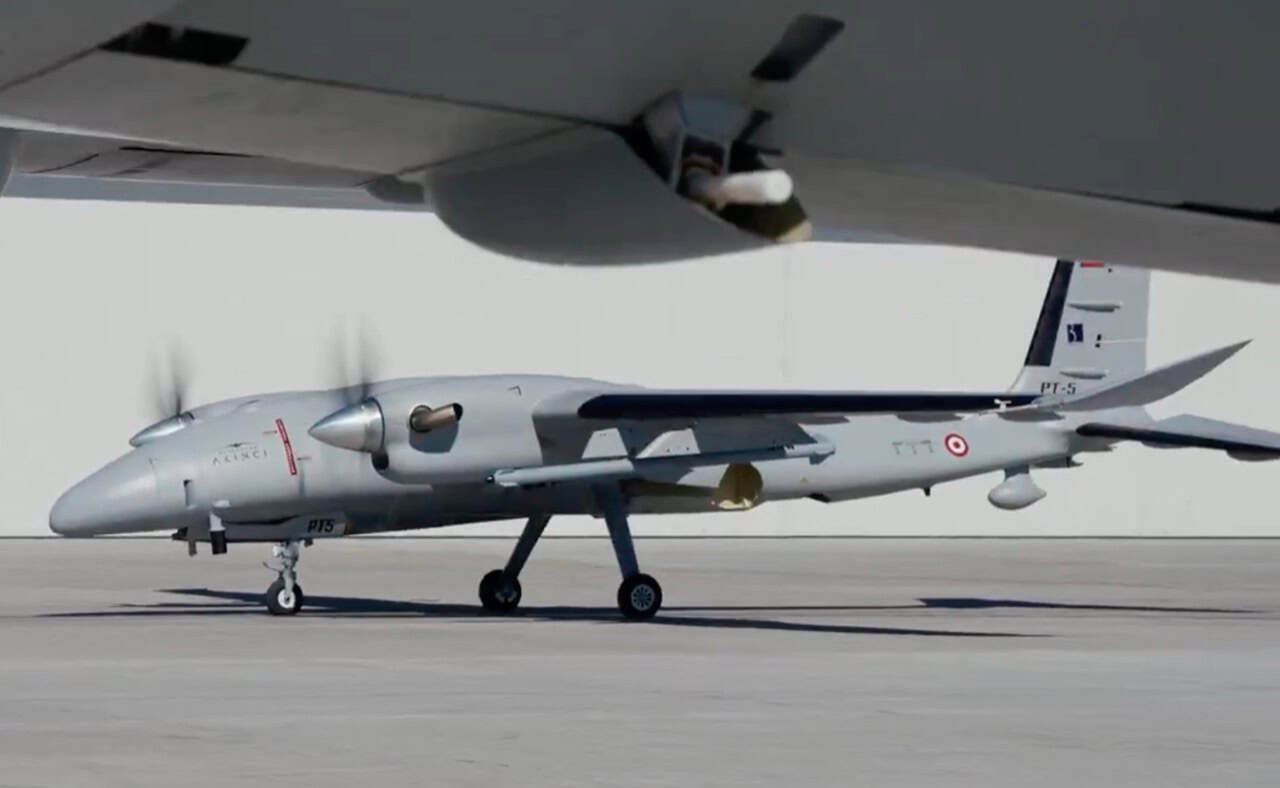
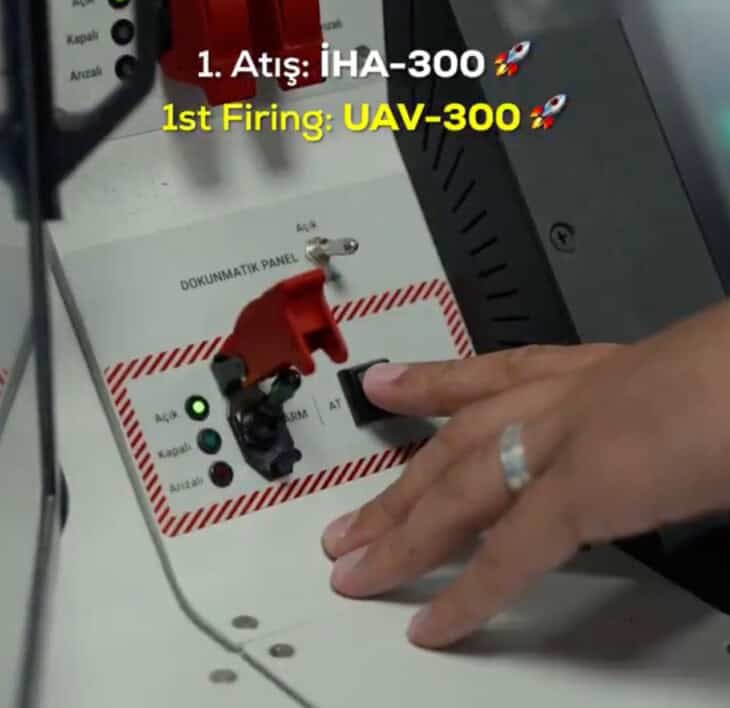
On September 11, 2026, Turkish drone maker Baykar released video of its Bayraktar Akinci unmanned combat aircraft firing a UAV-300 air-launched ballistic missile over the Black Sea. The missile, built by Roketsan, struck a maritime target off the coast of Sinop at a range of more than 155 miles (250 km), according to Baykar.
Roketsan general manager Murat İkinci called it the first live test of the UAV-300, The Aviationist reported. Baykar CEO Haluk Bayraktar described it as the longest-range domestically developed missile yet fired from a Turkish-built platform like the Akinci.
What was tested
The Akinci took off from Baykar’s flight training and test center at Çorlu, in Tekirdağ province, and flew to a test range off Sinop, Defensehere reported. The company’s footage shows the missile scoring a direct hit on the target at sea.
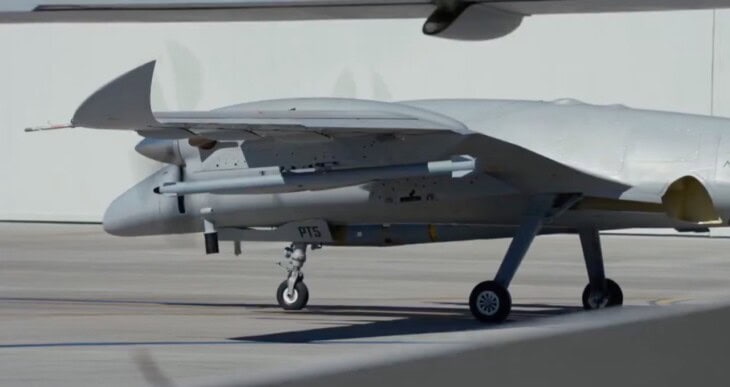
The aircraft was the prototype designated PT-5, carrying one UAV-300 alongside two smaller UAV-122 missiles, according to the same Aviationist report. Two days earlier, on September 9, a different Akinci prototype fired UAV-122s at a floating target.
Roketsan unveiled the missile, then called the 300 ER, at the IDEF defense exhibition in Istanbul in July 2025, as TURDEF reported at the time. It follows the company’s smaller UAV-122 and UAV-230 ballistic missiles, both already cleared for the Akinci.
📌 Bayraktar Akinci UCAV struck a target more than 250 km away using the UAV-300 supersonic ballistic missile.
— Defensehere (@defensehere_en) September 11, 2026
📌 Developed by @BaykarTech, Akinci has successfully completed the integration of the new munition.
🔗https://t.co/rxtdrxh73M pic.twitter.com/LgsKm2EmAo
| UAV-300 (300 ER) | Published figure |
|---|---|
| Maker | Roketsan |
| Length | About 16 feet (5 m) |
| Weight | About 2,000 pounds (900 kg) |
| Diameter | 14.6 inches (370 mm) |
| Range | More than 310 miles (500 km), depending on launch conditions |
| Guidance | Satellite and inertial navigation, with a TV camera seeker |
| Warhead | Estimated at about 230 to more than 330 pounds (105 to 150+ kg) |
Why put a ballistic missile on a drone
An air-launched ballistic missile drops from its carrier, lights its rocket motor, and climbs on a high, arcing path before diving onto the target. The speed of that final dive is what makes it hard to intercept. A cruise missile, by contrast, typically flies low and at subsonic speed for the whole trip.
The best-known example is Russia’s Kinzhal, which is launched from the MiG-31 interceptor in its MiG-31K version. A fast, high-flying jet hands the missile a head start in both speed and altitude, and that energy turns directly into range.
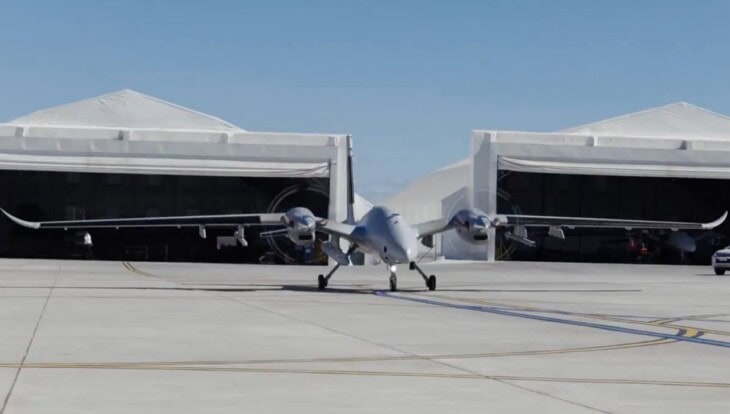
The Akinci offers no such head start. It is a twin-turboprop drone with a top speed of about 224 mph (361 km/h) and a service ceiling of 45,000 feet, so the UAV-300 has to supply nearly all of its own energy.
That is why Roketsan quotes the range as dependent on launch conditions. The Aviationist noted that Turkish reports put the missile’s reach between 186 and 310 miles (300 to 500 km), with the top end achievable only from fighters that fly higher and faster.
What the drone brings instead is persistence and cost. The Akinci can stay airborne for more than 24 hours, and TURDEF argued when the missile was unveiled that it should be cheaper than air-launched cruise missiles of similar reach.
A standoff range of 155 miles or more also lets a slow, non-stealthy aircraft stay well back from defended airspace. Turkish outlet UluSavunma lists the intended targets as radars, armored vehicles, air-defense systems, and command centers, exactly the sites that would otherwise threaten the drone.
What is still unconfirmed
Everything known about this test comes from Baykar, Roketsan, and the company video. They did not disclose the launch altitude, the missile’s measured speed, or the exact distance beyond more than 250 km, and the warhead weight has only been estimated by outside observers.
Why it matters beyond Turkey
The Akinci first flew in December 2019 and entered Turkish service in August 2021. Baykar has since signed export agreements for the type with 16 countries, according to company figures for 2025 cited by Defensehere, so the list of weapons cleared for it matters to air forces well outside Turkey.
The test also extends a shift that has turned medium-altitude drones from surveillance aircraft into long-range strike platforms, a trend reshaping the market for military drones worldwide.
It lands in a busy stretch for Turkey’s aerospace industry, which is pushing homegrown aircraft and weapons on several fronts. Only two weeks ago, the first Hürjet built for Turkey’s air force made its first flight.
Get the Newsletter
The latest aviation news and stories sent to your inbox.
About the Author

Tim is the owner and lead editor of AeroCorner since 2019, overseeing aviation content covering aircraft, airlines, airports, and the broader aviation industry. Through years of researching, writing, editing, and publishing aviation-focused content, he has developed extensive practical knowledge of commercial aviation and air travel. Based in Asia and a frequent traveler himself, Tim also brings firsthand passenger experience to AeroCorner’s coverage. Outside of publishing, he has also explored aviation firsthand through hands-on flight training in New Zealand.