

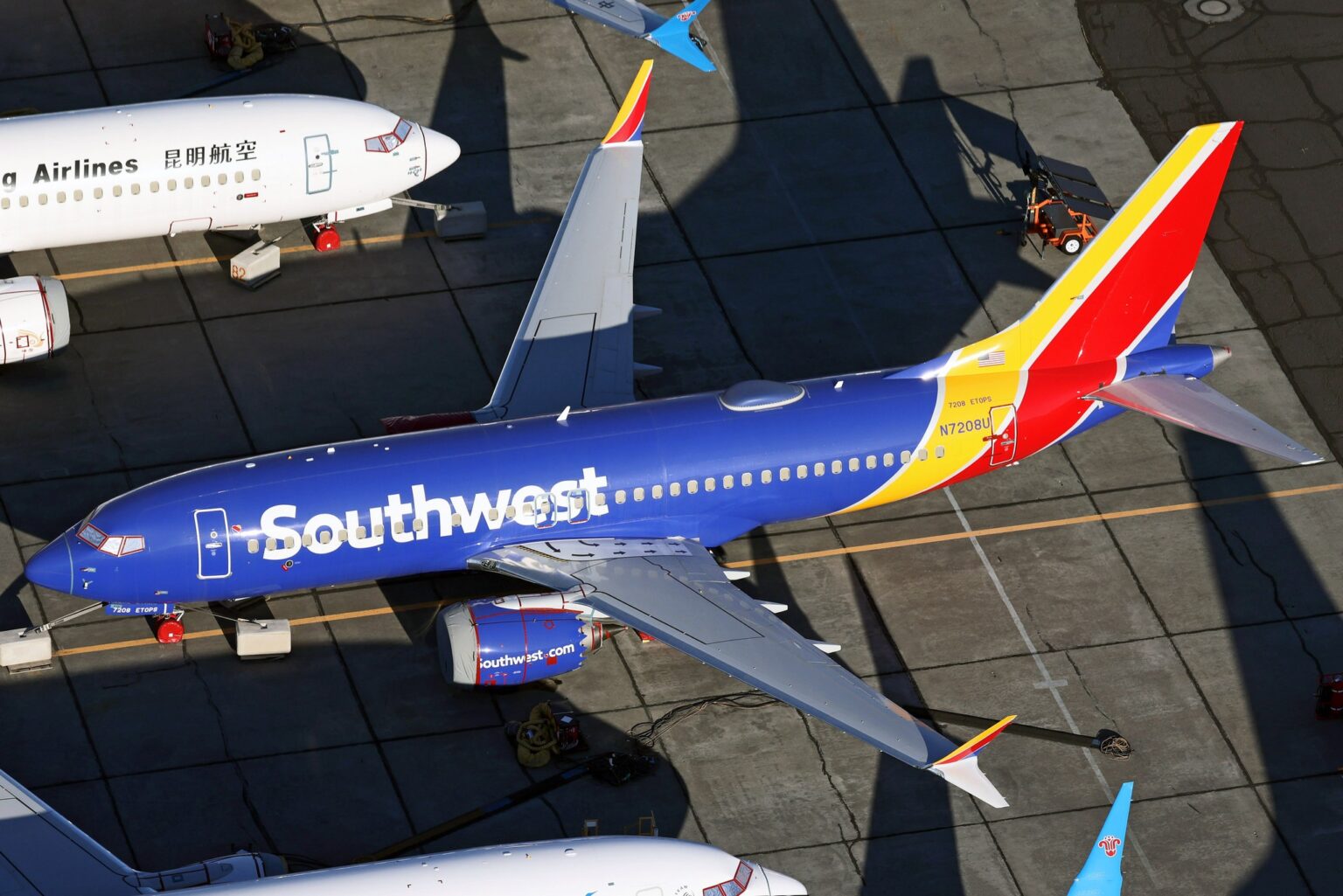
Southwest Airlines plans to carry its first passengers on the Boeing 737 MAX 7 in March 2027, according to an internal rollout document described on October 31 by View from the Wing. The document marks that date as subject to change, and AeroCorner found no public confirmation from Southwest as of November 1.
Writer Gary Leff says the document was shared with him, without saying by whom. AeroCorner has not seen it, so its details below rest on his report.
What the Document Shows
As Leff describes it, the cabin has 150 Recaro seats, Starlink Wi-Fi, in-seat power and larger overhead bins. It also lists two exit rows, three lavatories, markers for the extra-legroom seats and a secondary physical barrier for the flight deck.
Southwest would start accepting the 27 already-built jets in mid-to-late December, with newly built aircraft following in February 2027. Configuration and maintenance work is listed for Paine Field, Phoenix and Kansas City.
Each prebuilt jet would then make at least five flights, including a simulated overwater flight of more than 3.5 hours. The plan also calls for the MAX 7 to appear in published schedules by the end of 2026.
What Southwest Has Said on the Record
Southwest’s quarterly filing, published October 22, is less specific. It expects its first MAX 7 in late 2026 and entry into service in 2027, and it offers no assurances on those timelines.
The filing says the timing depends on FAA approvals issued to the airline, which are outside its control. The remaining work includes training updates, aircraft conformity inspections, scenario exercises and validation flights with FAA representatives, which Southwest expects to take about three to six months.
On the third-quarter earnings call, CFO Tom Doxey said “27 MAX 7s that were previously built” will start to deliver “at the tail end of this year” and enter service next year, according to a transcript. That backs the document’s count of 27, but not its dates.
The filing also lists in-seat power, larger bins, Recaro seats and Starlink, but as improvements to Southwest’s onboard product in general, with the Starlink rollout due to finish across the fleet in fall 2027. It does not tie them to the MAX 7.
| Detail | Southwest on the record | Internal document, as reported |
|---|---|---|
| First deliveries | Late 2026 | 27 prebuilt jets from mid-to-late December |
| First passenger flights | 2027 | March 2027, subject to change |
| Seats | 148 in a 2024 investor presentation | 150 |
| Cabin | Power, larger bins, Recaro seats and Starlink, not tied to the MAX 7 | All four specified for the MAX 7 |
Why 150 Seats Is the Number to Watch
Southwest’s September 2024 investor presentation showed the MAX 7 losing two seats to make room for extra legroom, leaving 148. A 150-seat layout would hand those two back, though the document as reported does not explain the change.
The number also sits on a regulatory line. FAA rules require three flight attendants on a jet with 150 passenger seats and four with 151, a point Leff makes too, and Beat of Hawaii reported in August that Southwest’s pilot contract caps the type at 150.
Southwest’s filing lists its 737-700s at 137 seats and its 737-8s at 175. A 150-seat MAX 7 would add 13 seats over the jet it is meant to replace, and sit 25 below the MAX 8.
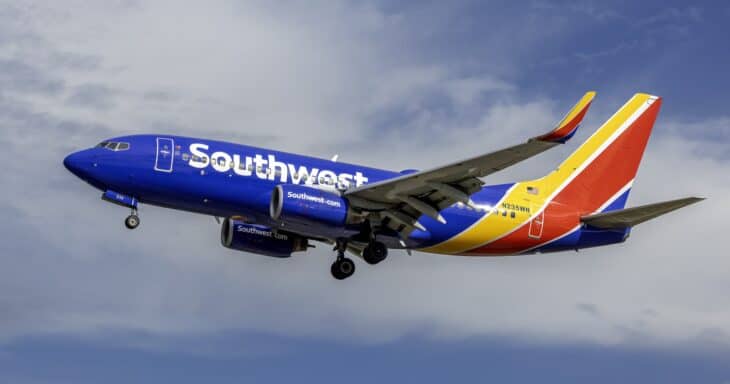

The larger jet keeps taking MAX 7 slots: the filing shows 61 of this year’s MAX 7 deliveries were converted to MAX 8s in the first nine months.
Extra-legroom seats are a recent product for Southwest, which moved to assigned seating for travel from January 27, 2026. The filing counted 271 737-700s on September 30, averaging 20 years old, after 17 retired in the third quarter.
How the March Date Fits, and What Could Move It
The FAA certified the MAX 7 on August 3, after a test program that Boeing says began in 2018. March would come about seven months later and about three months after the December deliveries in the document.
That timing sits within what Southwest has said publicly, and Leff notes that Chief Operating Officer Andrew Watterson had pointed to a spring break launch. It is still a plan rather than a commitment, because the FAA’s approvals for the airline come first.
The first public test is the schedule. Paddle Your Own Kanoo reported in August that the type did not appear in schedules through March 2027, so a listing by year’s end would be the clearest sign the document still holds.
Routes are not in the document as described. Leff says Watterson, in an August interview on The Air Show, named Burbank to Honolulu, hot-weather departures from Phoenix and Las Vegas to Hawaii, and interisland flying as uses for the type.
Hawaii carries its own hurdle. Beat of Hawaii reported in August that the separate ETOPS approval for long overwater flying had not been granted, and AeroCorner found no later report on its status.
Sources and references used for research and fact-checking.
Get the Newsletter
The latest aviation news and stories sent to your inbox.
About the Author

AeroCorner News is the aviation news desk of AeroCorner.com. It covers accidents and incidents, safety rulings, airline and airport disruption, and new aircraft. It works from primary sources such as the NTSB, FAA, EASA and the manufacturers' own announcements.