

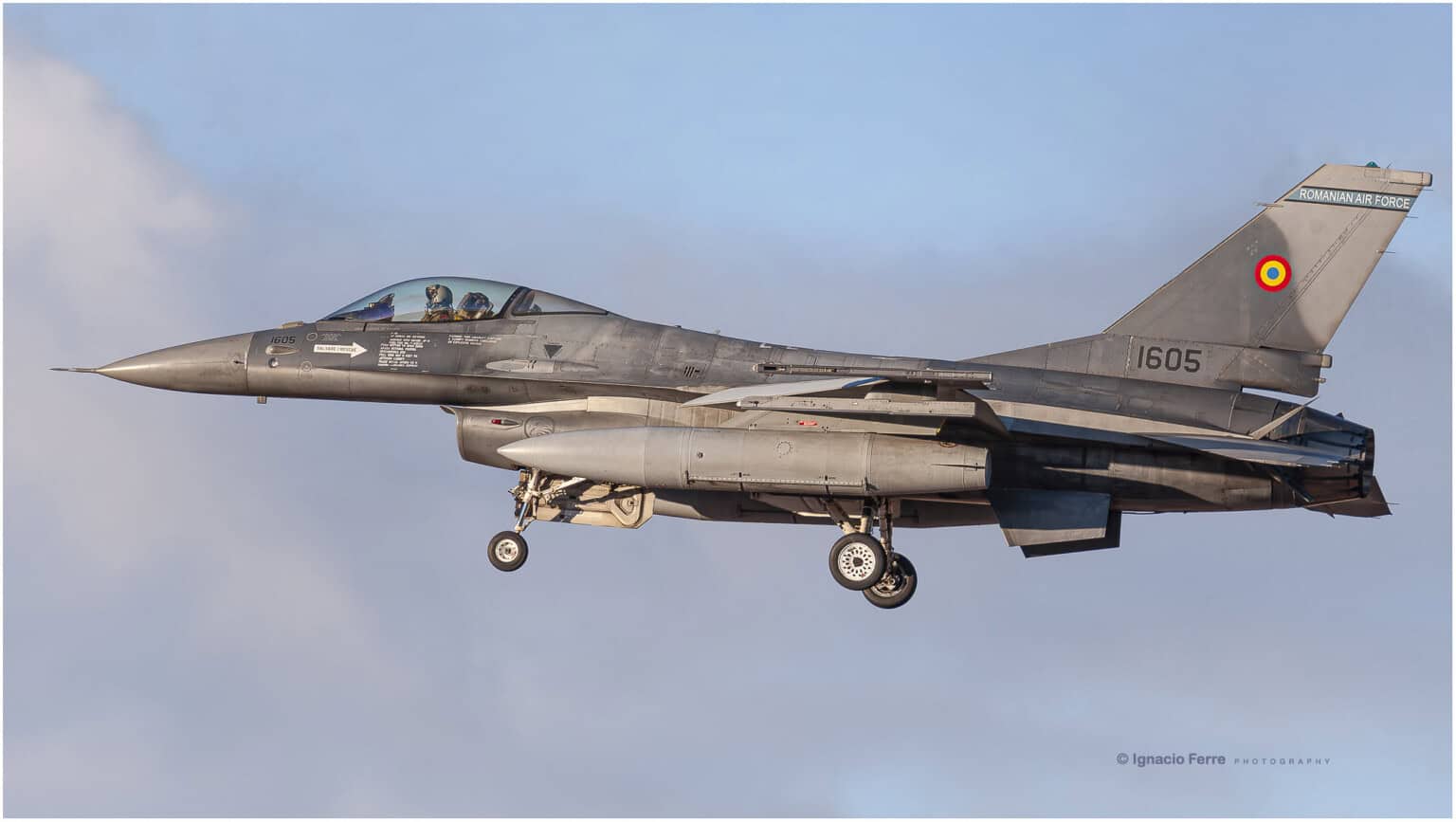
On August 20, 2026, a Romanian Air Force F-16 fired its onboard cannon at an explosive-laden maritime drone drifting toward the Neptun Deep gas platform in the Black Sea, the first time Romanian pilots have used cannon fire against a sea-based drone.
A commercial vessel reported the drone around 6:28 a.m. local time, several hundred meters from active work at the platform, roughly 80 miles (129 km) east of the port city of Constanța and inside Romania’s exclusive economic zone. Two F-16s scrambled with authorization to engage.
A cannon burst, then a Navy team finished the job
Around midday, one of the F-16s strafed the drone with its 20mm cannon. Romania’s interim defense minister, Radu Miruță, said in a follow-up statement that the gunfire hit the target but did not fully destroy it. A Coast Guard vessel carrying a Romanian Naval Forces explosive ordnance disposal team then moved in and neutralized what remained.
Inspection afterward confirmed the drone was carrying an explosive charge. Analysis of data pulled from the F-16s’ tracking systems confirmed only a single drone was involved, according to a Ministry of National Defence press release.
Why a cannon, not a missile
A slow-moving, drifting target close to a manned platform favors a low-collateral-damage weapon. A 20mm cannon lets a pilot make a low, precise pass without the blast radius or debris field of an air-to-air missile fired near people and equipment.
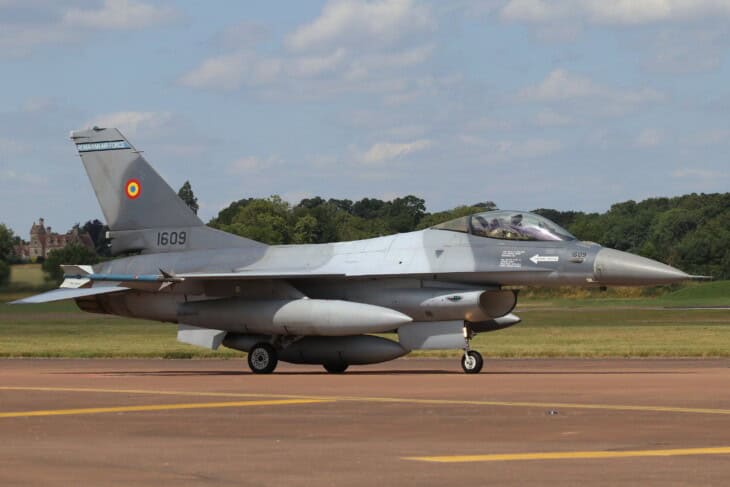
Romania’s Defence Ministry asked NATO to hand operational command of the response to Romanian national authority rather than run it through the alliance’s standing Black Sea air policing mission, allowing Bucharest to authorize the engagement directly. President Nicușor Dan said he had coordinated with the ministry on the decision and praised the pilots involved.
“I strongly condemn the intensification of these irresponsible incidents by the Russian Federation,” Dan said. Romanian officials have not formally named who built or launched the drone. Ukraine’s government confirmed through a direct communication channel that the device was not one of its own.
Why Neptun Deep is worth defending
Neptun Deep is the offshore gas project meant to make Romania the European Union’s largest natural gas producer once it starts flowing in 2027. Its platforms, developed by OMV Petrom and Romgaz, typically hold several hundred workers at a time.
A widening pattern
Romania has intercepted or tracked multiple suspected Russian drones over its territory and territorial waters this year. Neighboring Latvia’s air force has shot down drones twice this summer, and Poland and Germany have each reported drone incursions near sensitive sites.
That pattern is why this incident reads as more than an isolated event. NATO’s eastern members have spent 2026 responding to a steady stream of drones near military bases, airports, and now energy infrastructure.
A NATO shootdown over Latvia in August followed a nearly identical intercept there in June. Germany’s Leipzig/Halle Airport was shut down earlier this month after an explosive-rigged drone was found near a cargo jet on its ramp.
Each case has involved a different branch of response, from fighter jets to police counter-drone units to explosive ordnance teams. No single system currently covers airspace, ports, and offshore platforms at once.
Thursday’s engagement is the first time that gap was closed with a fighter’s gun instead of a missile, a drone-jamming system, or a wait for a bomb squad.
June 2026
First Latvia shootdown. NATO Baltic Air Policing fighters downed a drone over Latvia’s Latgale region.
Early August 2026
Leipzig Airport drone. An explosive-rigged drone was found near a Ukrainian cargo jet, shutting a runway.
August 14, 2026
Second Latvia shootdown. NATO fighters shot down another drone over the same Latvian region.
August 20, 2026
Neptun Deep intercept. A Romanian F-16 fired its cannon at an explosive maritime drone near the gas platform, the first Romanian engagement of a sea drone.
Sources and references used for research and fact-checking.
Get the Newsletter
The latest aviation news and stories sent to your inbox.
About the Author

Tim is the owner and lead editor of AeroCorner since 2019, overseeing aviation content covering aircraft, airlines, airports, and the broader aviation industry. Through years of researching, writing, editing, and publishing aviation-focused content, he has developed extensive practical knowledge of commercial aviation and air travel. Based in Asia and a frequent traveler himself, Tim also brings firsthand passenger experience to AeroCorner’s coverage. Outside of publishing, he has also explored aviation firsthand through hands-on flight training in New Zealand.