

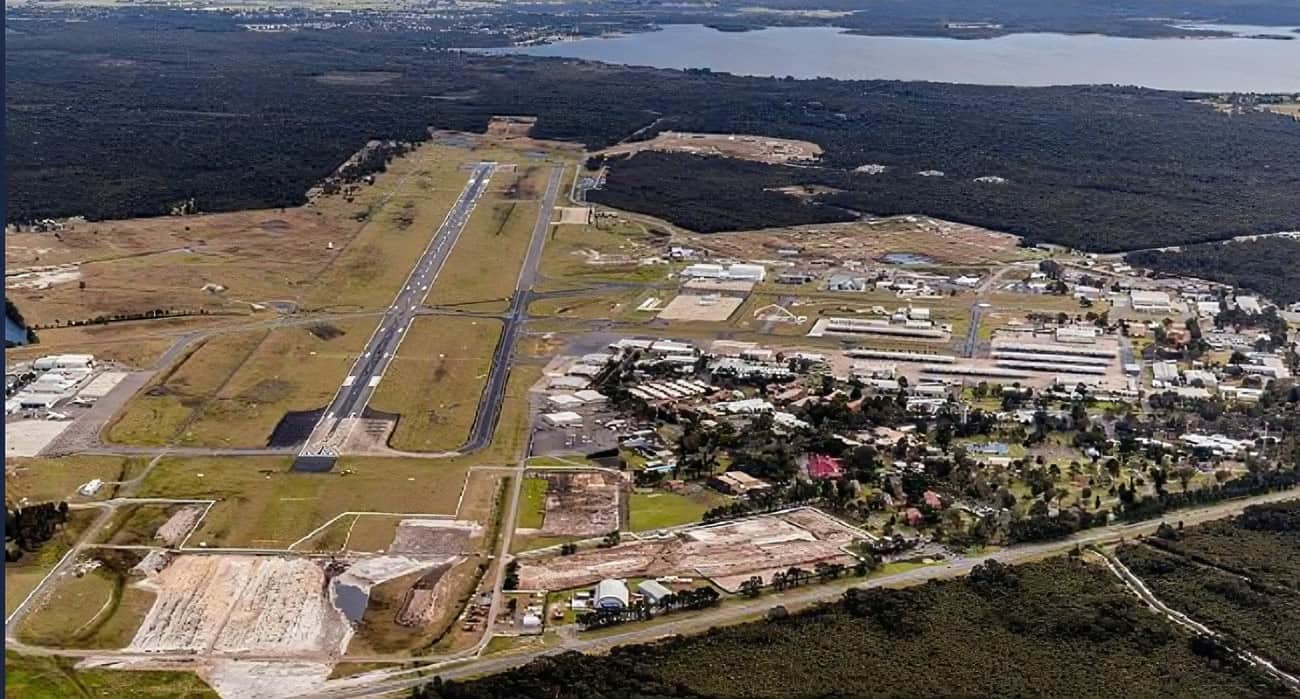
Between July 11 and July 13, 2026, multiple drones of unknown origin repeatedly entered restricted airspace over RAAF Base Williamtown in New South Wales, home to most of Australia’s F-35A fighters. Defence and the government only confirmed the incident publicly this week.
A Defence spokesperson said the department was “aware of reports of uncrewed aircraft systems operating in the vicinity of Newcastle Airport and RAAF Base Williamtown,” but declined to detail its response, citing operational security.
What Happened at Williamtown
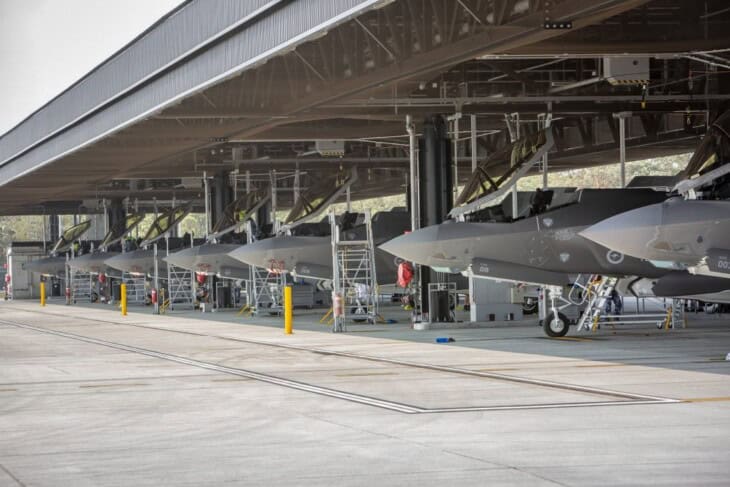
Williamtown, about 19 miles (30 km) north of Newcastle, is Australia’s premier fighter base and shares its runway with the civilian Newcastle Airport. It houses the bulk of the country’s F-35A Lightning II fleet alongside its E-7A Wedgetail radar aircraft.
Over the three nights, the drones were seen but never intercepted, identified, destroyed, or recovered. Defence referred the matter to the NSW Police Counter-UAS Unit rather than deploying a military counter-drone response.
Pat Conroy, the minister for defence industry, said on ABC Newcastle radio on August 10 that “the NSW Police Force conducted an investigation which is now complete,” but he did not say whether it identified who was flying the drones or why.
Still unresolved
Officials have not said whether the police investigation identified an operator, a motive, or even the type of drones involved. The purpose behind the flights, from surveillance to simple recklessness, remains unconfirmed.
A Response Built for Police, Not the Military
Conroy called the breaches part of a broader pattern, saying “this is sadly something we’re seeing more often, people operating drones near airports, both civilian and military.”
That framing understates what makes Williamtown different from a civilian airport drone sighting. Aviation security analyst Jennifer Parker noted that “whenever a drone enters a base, you should be highly concerned about what it is carrying,” since a base holding F-35s and Wedgetails is a far higher-value target than a passenger terminal.
Drone warfare researcher Oleksandra Molloy said the flights could reflect several possibilities: intelligence gathering, probing Australia’s detection capability, preparation for a future incident, or nothing more than recreational flying. She added a pointed caveat: “having the authority and having the capability are not necessarily the same thing.”
Why the Base Couldn’t Just Shoot Them Down
That capability gap is not new to Canberra. In April 2026, the government announced up to $7 billion over the next decade for systems to detect and disable drone threats, part of a wider $22 billion push into drone and counter-drone technology.
Early contracts have already gone out under that program, including a directed-energy laser system and an interceptor drone meant to bring down hostile UAS. But those systems are still prototypes, with delivery to military units not expected until the late 2020s.
The gap in one sentence
Australia had already funded a fix for exactly this scenario months before it happened. The hardware simply was not fielded yet, which is why a real breach at one of the country’s most sensitive bases fell to civilian police instead of a military countermeasure.
The incident echoes a separate case in Europe. In June, a drone rigged with explosives forced the shutdown of Leipzig Airport near a Ukrainian cargo aircraft, underscoring how drone incursions near aviation infrastructure have become a live security problem well beyond Australia.
Cyber security expert Robert Potter went further, arguing bases need to be able to neutralize drone threats themselves rather than relying on a police handoff after the fact. Until Australia’s counter-drone systems reach the field, that argument has no immediate answer.
Sources and references used for research and fact-checking.
Get the Newsletter
The latest aviation news and stories sent to your inbox.
About the Author

Tim is the owner and lead editor of AeroCorner since 2019, overseeing aviation content covering aircraft, airlines, airports, and the broader aviation industry. Through years of researching, writing, editing, and publishing aviation-focused content, he has developed extensive practical knowledge of commercial aviation and air travel. Based in Asia and a frequent traveler himself, Tim also brings firsthand passenger experience to AeroCorner’s coverage. Outside of publishing, he has also explored aviation firsthand through hands-on flight training in New Zealand.