

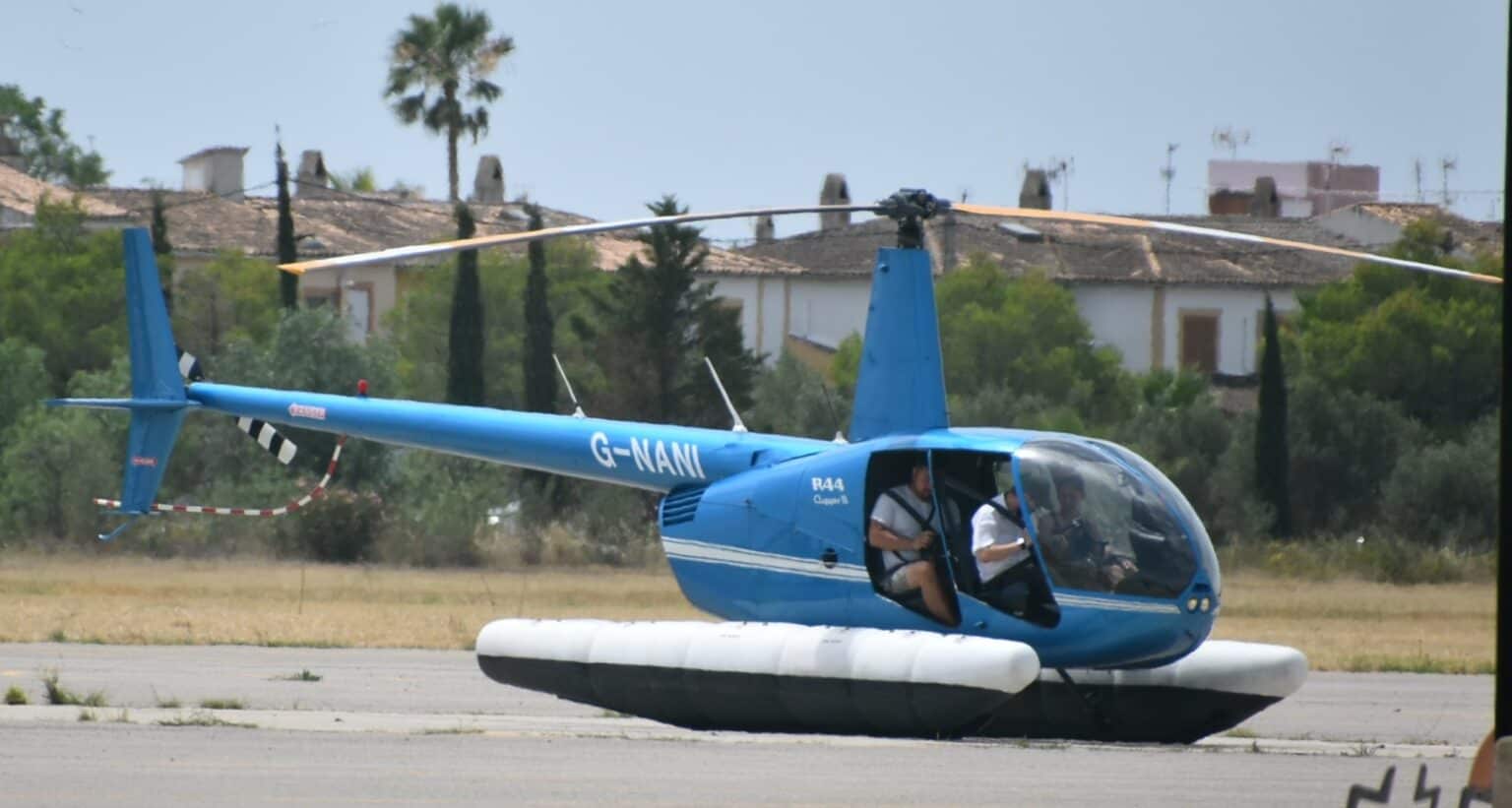
Robinson R44 II N272JW was banking low beside a powerboat over Biscayne Bay when its main rotor blades hit the water, according to the National Transportation Safety Board’s preliminary report. The November 4, 2026, crash off Key Biscayne, Florida, killed the commercial pilot and seriously injured his two passengers.
Witnesses on two boats told investigators the helicopter was making low-altitude turns “extremely” close to the surface. The report, filed under accident number ERA27FA034, gives no cause, and the NTSB says its contents are preliminary and subject to change.
What the preliminary report says
The two passengers, a photographer and a videographer, had hired the operator to shoot boats in a “Poker Run,” a high-performance offshore powerboat event. Both sat on the left side of the R44 with their doors removed for the cameras.
The helicopter left North Perry Airport at about 10:45 a.m. Eastern time. Preliminary ADS-B data from the FAA shows it flew about 20 miles (32 km) south-southeast to the bay west of Key Biscayne, where it maneuvered for about 15 minutes.
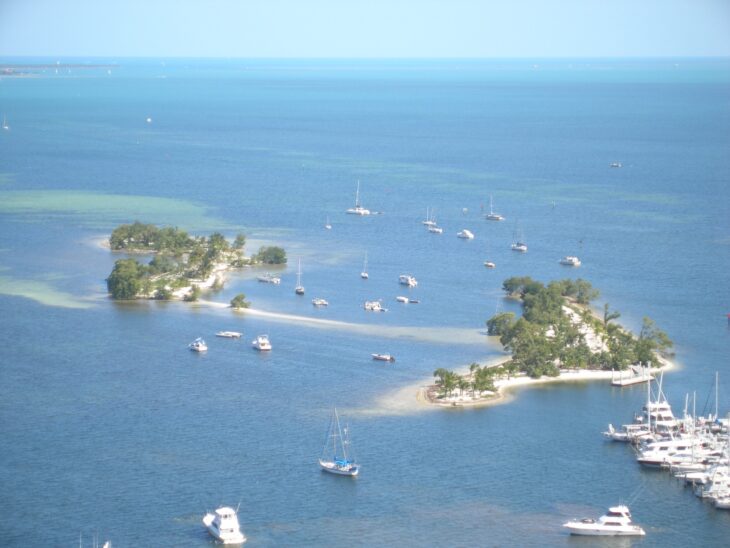

The photographer told investigators they usually stayed on each boat for 30 seconds to a minute. After the first boat, they turned north to find another. Once they had one, they flew low and parallel off its starboard side, then turned in at a 45-degree angle ahead of it so it would pass underneath for a good shot.
The videographer said the helicopter got very close to the boat as it passed below. Immediately afterward, he saw the rotor blades strike the water and felt the helicopter hit.
According to the boat witnesses, the R44 banked as it flew alongside a boat, and the blades touched the water just before the fuselage did. The emergency floats deployed, and the helicopter rolled over and came to rest upside down in about 10 feet (3 m) of water.
People on nearby boats called for help on the marine emergency channel and went straight to the wreck. The NTSB lists the pilot’s injuries as fatal and both passengers’ as serious.
The wreckage, the weather and the operator
The fuselage was split open and peeled back, exposing the whole cockpit. One main rotor blade was missing its outer 6 feet (1.8 m), and investigators found no sign of mast bumping, a known hazard of two-bladed teetering rotors like the R44’s.
Flight control continuity was confirmed throughout, and the engine turned freely with compression on all six cylinders. About 3 gallons (11 liters) of oil and seawater were drained from it.
The helicopter’s last 100-hour inspection was on August 5, 2026, when the airframe had about 2,500 hours and the engine about 400 hours since overhaul. The photo and video equipment was thrown clear in the crash and has not been recovered.
Thunderstorms were reported around Miami that morning, as our first report on the crash noted. The passengers told the NTSB they flew through a rain shower on the way and skirted a storm to the east, but the weather had cleared over the bay.
Miami International Airport, 9 nautical miles away, reported visual conditions at 11 a.m., with 6 miles of visibility and an 8-knot wind with no gusts. The lowest ceiling was broken cloud at 2,700 feet.
The report lists the operator as Global Aerials Inc., holding no operating certificate. The Miami-Dade Sheriff’s Office identified the pilot as Tomas Pendas, 63, the company’s president, NBC 6 reported.
Preliminary, not a finding
The NTSB’s preliminary report records facts gathered in the first weeks, including witness accounts. It does not say why the helicopter was flying so low or assign a cause. That comes in the final report, which the NTSB generally aims to finish within 12 to 24 months.
How low a helicopter may fly over water
Federal rules normally keep an aircraft over open water at least 500 feet from any person or vessel. Under 14 CFR 91.119, a helicopter may go lower, provided the flight creates no hazard to people or property on the surface.
Aerial photography is also classed as aerial work, which 14 CFR 119.1 excludes from the commercial operating certificate rules. That lets such flights run under Part 91, the general aviation rules, which is how the NTSB lists this one.
Photo work over moving boats leaves little margin. When a helicopter banks into a turn, the rotor disc tilts with it, so the low-side blade tips sweep far closer to the water than the skids.
The FAA, Robinson and engine maker Lycoming are parties to the NTSB’s investigation of the Robinson R44 II crash. The wreckage has been retained for further examination.
Sources and references used for research and fact-checking.
- NTSB, Aviation Investigation Preliminary Report ERA27FA034 (N272JW, Key Biscayne, FL, Nov. 4, 2026)
- Electronic Code of Federal Regulations (via Cornell LII), 14 CFR 91.119 Minimum safe altitudes: General
- Electronic Code of Federal Regulations (via Cornell LII), 14 CFR 119.1 Applicability
- NTSB, The Investigative Process
Get the Newsletter
The latest aviation news and stories sent to your inbox.
About the Author

AeroCorner News is the aviation news desk of AeroCorner.com. It covers accidents and incidents, safety rulings, airline and airport disruption, and new aircraft. It works from primary sources such as the NTSB, FAA, EASA and the manufacturers' own announcements.