

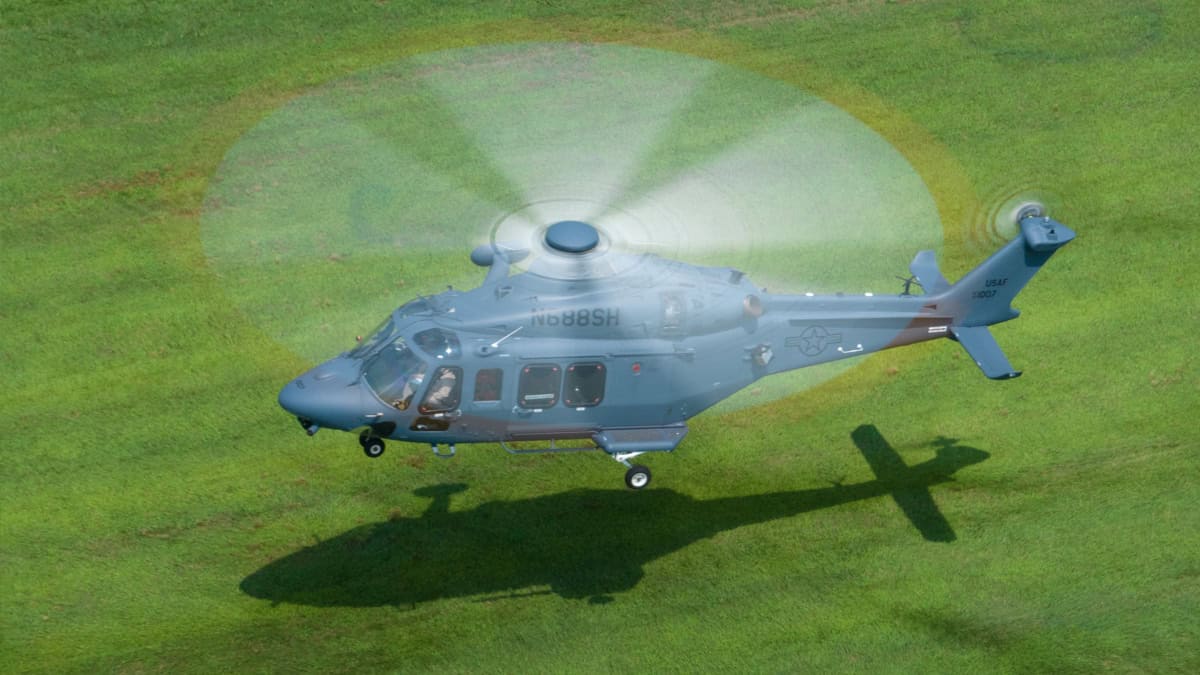
Air Force Global Strike Command announced on August 31, 2026, that Boeing’s MH-139A Grey Wolf has reached initial operational capability, a milestone the helicopter formally cleared on August 10. The declaration authorizes the aircraft for the job it was bought to do: patrolling and defending the intercontinental ballistic missile fields spread across the northern Plains.
It also starts the retirement clock on the UH-1N Huey, which has flown that mission for more than half a century.
What This Milestone Actually Certifies
Initial operational capability is neither a first flight nor a first delivery. It is the service’s own declaration that enough aircraft, crews, maintainers and spares exist in one place to fly the assigned mission on demand.
For the Grey Wolf, that mission is security across the Minuteman III complexes at F.E. Warren Air Force Base in Wyoming, Malmstrom Air Force Base in Montana and Minot Air Force Base in North Dakota. AFGSC describes the patrol area as roughly 33,600 square miles (87,000 sq km) of prairie, plains and mountains.
“For more than half a century, the UH-1N Huey has been a key element of our ICBM security, and we owe a debt of gratitude to the crews who flew and maintained it over all these years,” Gen. Stephen L. Davis, the AFGSC commander, said in the command’s announcement.
The type had already proven the core task. On January 8, 2026, two Grey Wolves of the 40th Helicopter Squadron at Malmstrom escorted a missile convoy more than 100 miles (160 km) and back over roughly six hours without refueling, the first such mission flown by the new aircraft.
Why Replacing a 1970s Huey Took Eight Years
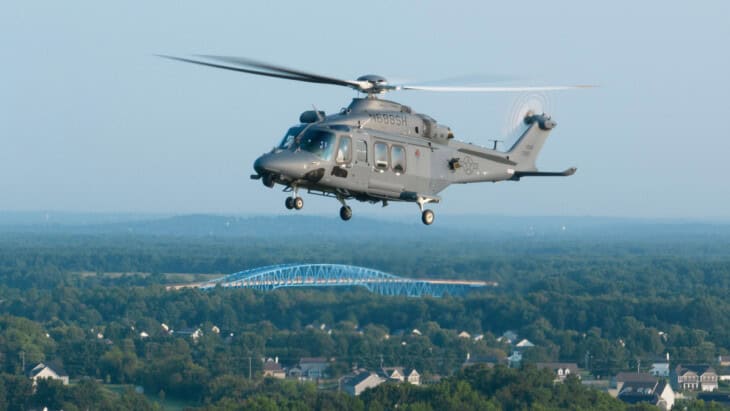
The Air Force awarded Boeing a $2.4 billion contract for the program in September 2018. The aircraft is not a clean-sheet design: it is a militarized Leonardo AW139, a commercial twin already flying in offshore and emergency-services fleets, adapted by Boeing’s rotorcraft division.
Buying a proven civil airframe was supposed to make this fast. A 2021 Government Accountability Office review projected initial operational capability in 2023, and as Breaking Defense notes, much of the slippage traced back to certification work, including crosswind and austere-field deficiencies that pushed FAA approval into 2022.
The buy itself moved almost as much as the schedule. Reporting by Air & Space Forces Magazine tracked the program from an original plan of about 80 helicopters down to 42 in April 2024, after the Air Force dropped the National Capital Region VIP airlift mission to meet budget caps, then back up to at least 56 following a Pentagon review that September.
Halving a program that way carries a cost of its own, because the same development bill then falls on fewer airframes. The first production helicopter did not reach Malmstrom until August 2024, six years after contract award.
Reality check
Initial operational capability is a floor, not a finish line. It confirms one unit can do the mission, not that the fleet is fielded. Deliveries to all three missile wings continue, and the Air Force has not published a date for full operational capability or for the Huey’s final retirement flight.
What the Grey Wolf Buys the Missile Fields
AFGSC credits the helicopter with being nearly 50 percent faster than the UH-1N, carrying twice as many security forces, and fitted with better defensive systems. Published figures put the MH-139 at about 167 mph (269 km/h) and a range near 890 miles (1,430 km).
Those numbers matter more in this mission than they would in most. Launch facilities sit alone at the end of gravel roads, sometimes an hour’s drive from the nearest gate, so the response time to a security alert is set almost entirely by how fast the helicopter gets there.
Capacity is the other half. A military helicopter in this role is a delivery vehicle for armed defenders, so doubling the number carried per sortie changes what one aircraft can do before reinforcements arrive.
The timing is not accidental. The Minuteman III is due to be replaced by the LGM-35A Sentinel, a decade-long swap that will move warheads, stages and construction crews across the same missile fields, and the Air Force wants the escort fleet modernized before that traffic starts.
It is the same pattern the service has run elsewhere this year, when it reshuffled fleets at Whiteman: the retirement date is set by the mission around the aircraft, not by the airframe’s own condition.
September 2018
Contract award. The Air Force selects Boeing and Leonardo for a $2.4 billion program to replace the UH-1N.
2022
Certification slips. FAA approval lands a year later than planned after crosswind and austere-field deficiencies.
April 2024
Fleet cut. The planned buy drops from about 80 helicopters to 42, before being restored to at least 56 that September.
August 2024
First production delivery. The first series aircraft arrives at Malmstrom Air Force Base, Montana.
January 8, 2026
First operational convoy. Two aircraft of the 40th Helicopter Squadron escort a Minuteman III movement over 100 miles.
August 10, 2026
Initial operational capability. The Grey Wolf is cleared for the ICBM security mission, announced by AFGSC on August 31.
Sources and references used for research and fact-checking.
Get the Newsletter
The latest aviation news and stories sent to your inbox.
About the Author

Tim is the owner and lead editor of AeroCorner since 2019, overseeing aviation content covering aircraft, airlines, airports, and the broader aviation industry. Through years of researching, writing, editing, and publishing aviation-focused content, he has developed extensive practical knowledge of commercial aviation and air travel. Based in Asia and a frequent traveler himself, Tim also brings firsthand passenger experience to AeroCorner’s coverage. Outside of publishing, he has also explored aviation firsthand through hands-on flight training in New Zealand.