

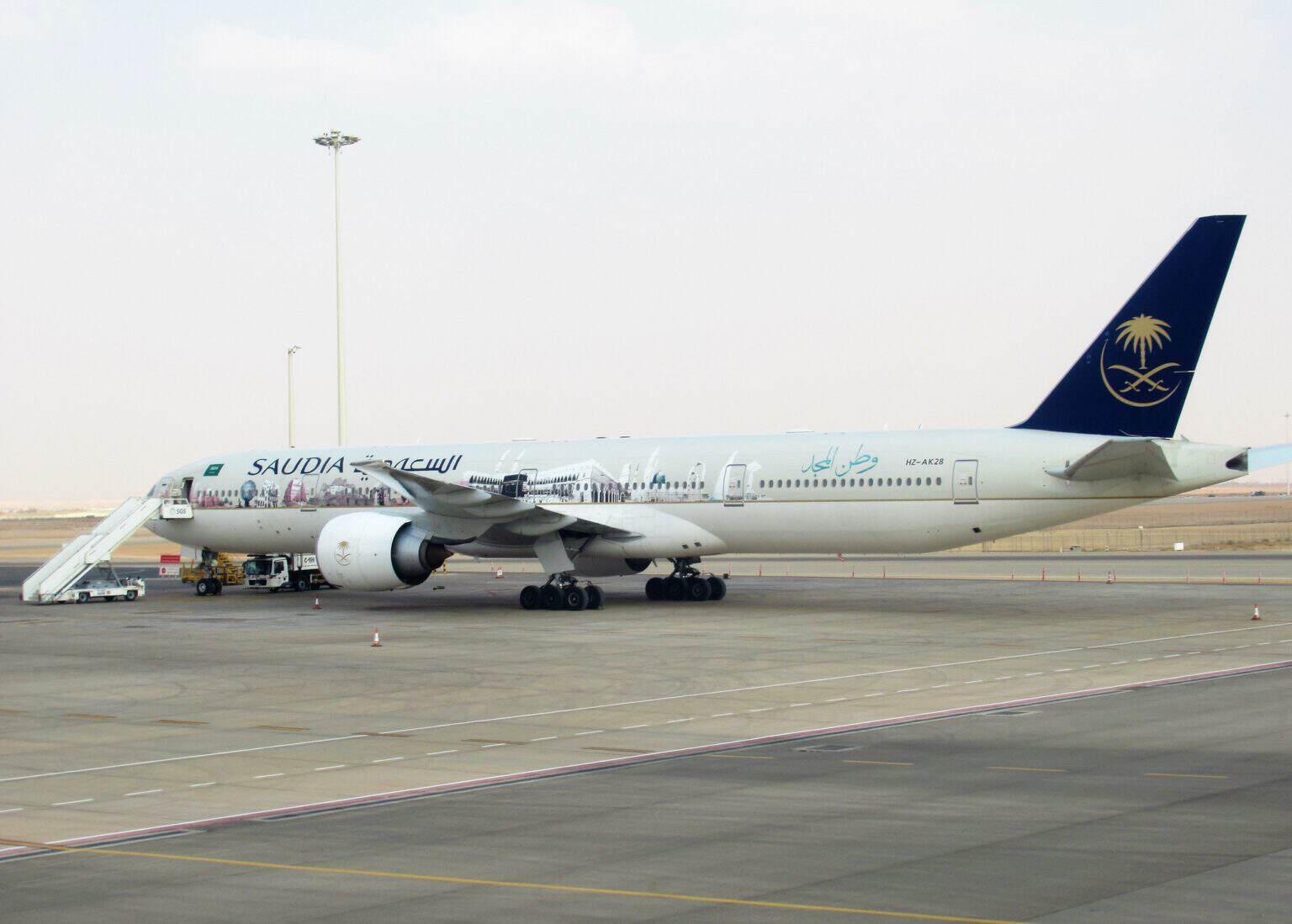
Attacks on two Saudi airports killed three people and injured 36 on Tuesday and Wednesday, October 6 and 7, 2026, Saudi Arabia’s General Authority of Civil Aviation (GACA) said. Abha International Airport in the south was hit on Tuesday and King Khalid International Airport in Riyadh on Wednesday, and Yemen’s Houthis claimed both.
Early on Thursday, October 8, the Houthis claimed another ballistic missile strike on the Riyadh airport and issued what they called a “final warning” to airlines flying in Saudi airspace. Saudi authorities did not immediately confirm the new claim, Xinhua reported.
What the Saudi authorities confirmed
At Abha, two women were killed, one Moroccan and one Algerian resident, and 28 people were injured, according to the GACA statement carried by the Saudi Press Agency and reported by the Saudi Gazette. The injured included Saudi citizens and residents from Bangladesh and the Philippines.
At King Khalid International Airport, a Sudanese resident was killed and eight people were injured: five Saudi citizens, two Egyptian residents and a Pakistani resident. GACA said the injuries ranged from minor to serious and that everyone hurt was taken to hospital.
The authority said both attacks also caused some property damage, and that it was working with other agencies to assess it and verify that the facilities were safe. The statement did not say where at either airport the strikes landed.
Houthi military spokesman Yahya Saree said ballistic missiles and drones were fired at Abha airport and the King Khalid Air Base near Khamis Mushait. Accounts of the Riyadh claim differ: Xinhua and The National say he cited drones, while CNN reports a ballistic missile.
Abha was not the only airport near the border to come under fire. On Tuesday, GACA said the airports at Jazan and Najran, both close to Yemen, had also been attacked, The National reported.
Confirmed and claimed
Confirmed by GACA: three dead and 36 injured in attacks on Abha (October 6) and Riyadh (October 7), plus some property damage. Claimed by the Houthis and not confirmed by Saudi authorities at the time of writing: a further ballistic missile hit on the Riyadh airport early on October 8.
How flights were affected
Flights to and from Riyadh were halted for more than an hour on Wednesday morning, after being held for a few hours on Tuesday, according to Flightradar24 data cited by The National. Departures stopped again early on Thursday after the new Houthi claim, and the last one Flightradar24 recorded left at 5:55 a.m. local time.
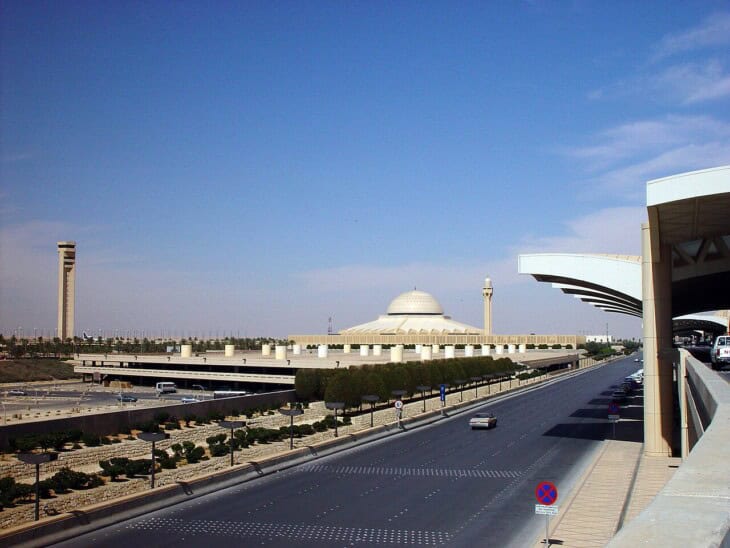
By Thursday morning, 58 departures from Riyadh, about 15% of the day’s schedule, were delayed and 11 were cancelled, The National reported from Flightradar24 figures. The average departure delay was 45 minutes.
Saudia flight SV562 to Dubai and Turkish Airlines flight TK145 to Istanbul were among the cancellations. Saudia’s SV311 to Cairo ran more than two hours late, and Yemenia’s IY533 to Aden more than three hours late.
Philippine Airlines cancelled PR654 from Manila to Riyadh on October 8 and the return PR655 on October 10 “in light of the developing situation in the region,” Gulf News reported. The airline had resumed Riyadh flights only days earlier.
Across the border in Yemen, Wednesday’s attacks reached Aden too. Yemen’s Transport Ministry said a missile landed near the runway minutes before Yemenia flight 603 from Cairo was due to land, and the jet diverted to Jeddah.
Why Saudi airports are in the line of fire
The Houthis, who hold Sanaa and much of northern Yemen, have fought a Saudi-led coalition since 2015. The fighting flared again in July after the US-Iran ceasefire unraveled, CNN reported, and a Saudi-backed government offensive is now pushing back against recent Houthi gains.
Abha has been a target before. In July, a Houthi attack closed the airport temporarily and forced a flydubai flight from Dubai to divert to Taif, Khaleej Times reported at the time.
Riyadh, deep inside the country, has come under fire more recently. A fuel tank burned beside the airport on September 19, and on October 5 the Houthis claimed a strike there that Saudi authorities had not confirmed when AeroCorner reported the claim.
A Houthi warning does not close any airspace on its own. Saudi Arabia controls its airspace, and airlines weigh regulator bulletins and their own risk assessments when they decide whether to fly.
Europe’s regulator already treats the threat as real. Its conflict zone bulletin for Saudi airspace, CZIB-2026-09, says the Houthis have shown they can strike as deep as the Riyadh, Tabuk and Yanbu areas, and lists the risk of a civil aircraft being misidentified by air defenses, plus falling debris from interceptions.
EASA tells operators to avoid one defined block of Saudi airspace entirely and to take care in the rest of it. It also asks them to keep contingency plans current and to be ready for short-notice instructions from Saudi authorities.
What travelers should know
The US Mission in Saudi Arabia issued a security alert on October 7 warning of “potential flight cancellations, airspace closures, and travel disruptions.” It advises travelers to check their departure status directly with both the airline and the airport.
The same alert bars US government employees from traveling within 20 miles (32 km) of the Yemen border, and requires special authorization for travel to Jizan, Asir and Najran provinces. Abha is the capital of Asir.
For US travelers, the next test is Delta’s planned Atlanta to Riyadh nonstop, scheduled to start on October 23 on the Airbus A350-900. At the time of writing, Delta’s newsroom still listed that start date.
Sources and references used for research and fact-checking.
Get the Newsletter
The latest aviation news and stories sent to your inbox.
About the Author

Tim is the owner and lead editor of AeroCorner since 2019, overseeing aviation content covering aircraft, airlines, airports, and the broader aviation industry. Through years of researching, writing, editing, and publishing aviation-focused content, he has developed extensive practical knowledge of commercial aviation and air travel. Based in Asia and a frequent traveler himself, Tim also brings firsthand passenger experience to AeroCorner’s coverage. Outside of publishing, he has also explored aviation firsthand through hands-on flight training in New Zealand.