

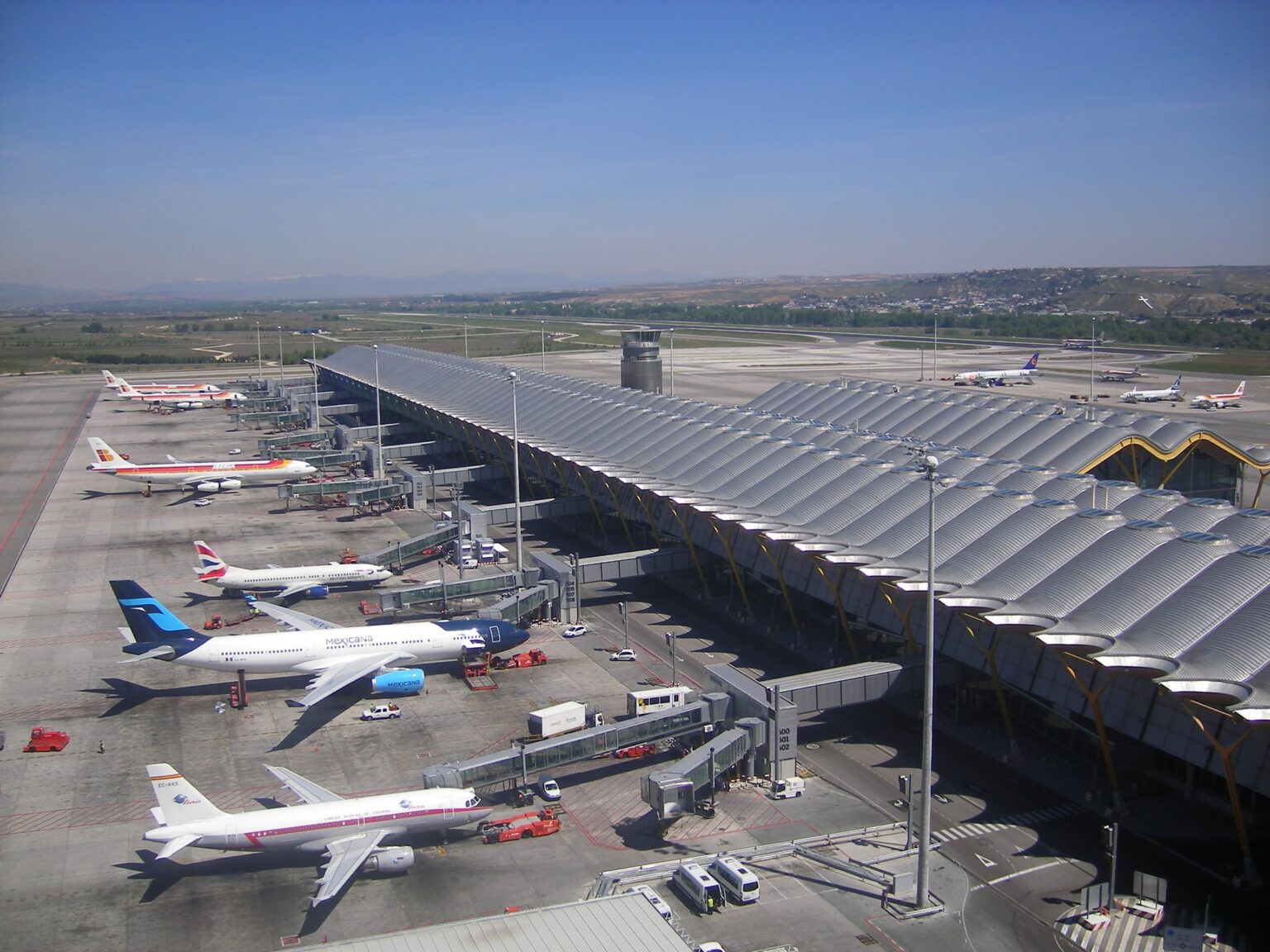
The automated train between Madrid-Barajas Airport’s Terminal 4 and its T4S satellite is running again after a technical failure on Sunday, November 22, 2026, forced passengers onto buses. Airport operator Aena announced at 2:13 p.m. local time (8:13 a.m. ET) that service was back to normal.
The failure caused long lines in both buildings, Infobae reported. Aena said airlines at the terminal were adjusting their operations to limit the effect on passengers, and it apologized for the disruption.
How the T4S train failure unfolded
Aena first warned of the problem on X at 12:02 p.m., describing it as a technical incident on the train, which is operated by Alstom. It said buses were providing the link and advised anyone taking an international flight from T4S to get to the airport early.
At 1:22 p.m., Aena reported that trains were moving in one direction while Alstom worked to restore the rest of the service. The all-clear followed 51 minutes later.
The trouble may have started well before that first public warning. A passenger bound for the United States told El País that the train already had problems when he arrived at 10 a.m., according to El Diario de Madrid.
Spanish outlet elDiario.es put the disruption at a little over two hours. None of Aena’s three posts gave a start time, a specific cause, or a count of passengers who missed flights.
Why one train matters so much at Madrid
T4 and T4S work as one terminal split between two buildings, and both opened in February 2006. Aena describes the main building as the place for check-in, security, baggage claim, and domestic and Schengen boarding, while the satellite serves the international hub operation.
The train runs 1.3 miles (2.1 km) between stations, through a tunnel. When the system was certified in 2009, Aena said it could move about 6,500 people an hour in each direction at 37 mph (60 km/h).
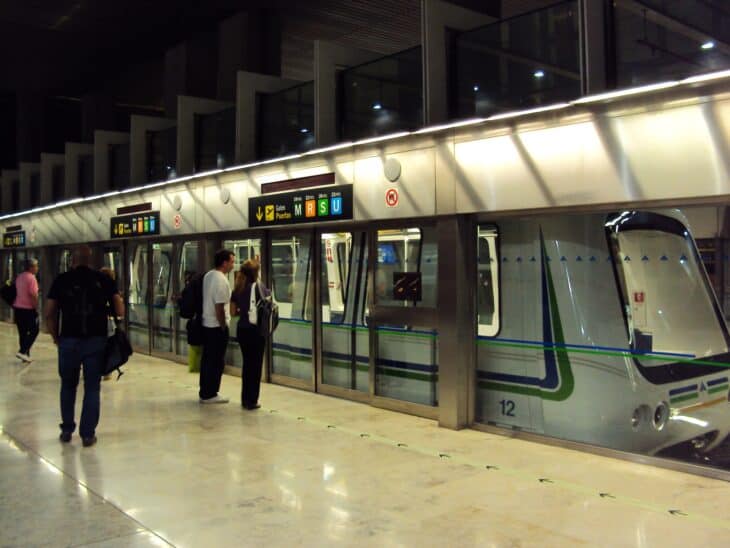

Buses are no easy substitute for that capacity. Paddle Your Own Kanoo, which reported the breakdown on Sunday, noted that there is no walkway between the buildings to fall back on.
For Iberia’s hub, the train is part of many connections. A passenger arriving at T4 from a Schengen country and leaving for a non-Schengen one from the satellite’s S gates has to ride the train and then clear passport control, according to Aena.
In the other direction, arrivals at the satellite’s S gates need the train for baggage claim or a flight from T4. Connections within T4S avoid it, including those to Iberia, Iberia Express, and Air Nostrum flights that use its M gates.
A stoppage can therefore hurt travelers whose own planes are on time. It can also spill into the schedule if airlines hold aircraft for passengers or crews, one of many reasons flights get delayed with nothing wrong on the aircraft.
What passengers who missed flights can claim
EU Regulation 261/2004 covers flights departing Madrid on any airline, but it is built around three events: denied boarding, cancellation, and delay. Missing a flight that left on time, because you could not reach the gate, does not fit neatly into any of them.
The European Commission’s guidelines say missed connections caused by long security delays, or by not reaching the gate in time at the transfer airport, do not earn compensation. They do not mention airport trains, but by analogy those examples suggest a weak claim.
Denied boarding generally requires that a passenger showed up on time and was refused. On separate tickets, the guidelines add, an airline owes no compensation when a late first flight makes someone miss check-in for the next.
The position is stronger if the flight itself was canceled or delayed. Passengers who reach their final destination three or more hours late because of it, including on connections under one booking, may be owed €250 to €600, depending on distance, although some long-haul payments can be halved.
The airline can refuse that payment if it proves extraordinary circumstances it could not have avoided with all reasonable measures, the same test that applies to the strike cancellations in Brussels. The guidelines accept that a general failure of an airport-run fuel system can qualify, but whether this train failure does would depend on each case.
Care for a delayed flight is owed even in extraordinary circumstances. Airlines must offer meals and refreshments once an expected departure delay reaches two to four hours, depending on the trip, plus a hotel and transfers if the new departure is the next day.
If the departure delay reaches five hours, passengers can drop the trip and get a refund for the unused part. Anyone facing an unplanned long layover should keep receipts and ask the airline to put the reason for the delay in writing.
Claims should go to the airline first. If it does not answer within one month, or the answer is unsatisfactory, passengers have a year from that complaint to go to Spain’s aviation safety agency, AESA, whose decision binds the airline.
If you were caught in Sunday's failure
A flight that was canceled or delayed may bring care, a refund, or compensation. A flight that left on time without you is a much harder claim, so ask your airline about rebooking under your ticket’s conditions and keep any evidence of when you reached the train.
Sources and references used for research and fact-checking.
- Aena, Post: technical incident on the T4-T4S train, buses in service (12:02 CET)
- Aena, Post: train operating in one direction (13:22 CET)
- Aena, Post: T4-T4S system operating normally (14:13 CET)
- Aena, Madrid-Barajas Terminal T4 turns 20 (February 3, 2026, in Spanish)
- Aena, Madrid-Barajas APM quality certification (February 10, 2009, in Spanish)
- Aena, Connecting flights at Madrid-Barajas (in Spanish)
- European Commission, Interpretative Guidelines on Regulation 261/2004, C/2024/5687 (Spanish edition)
- European Union, Your Europe: Air passenger rights
- European Parliament and Council, Regulation (EC) No 261/2004, as adopted
- AESA, How to file an air passenger claim (in Spanish)
Get the Newsletter
The latest aviation news and stories sent to your inbox.
About the Author

AeroCorner News is the aviation news desk of AeroCorner.com. It covers accidents and incidents, safety rulings, airline and airport disruption, and new aircraft. It works from primary sources such as the NTSB, FAA, EASA and the manufacturers' own announcements.