

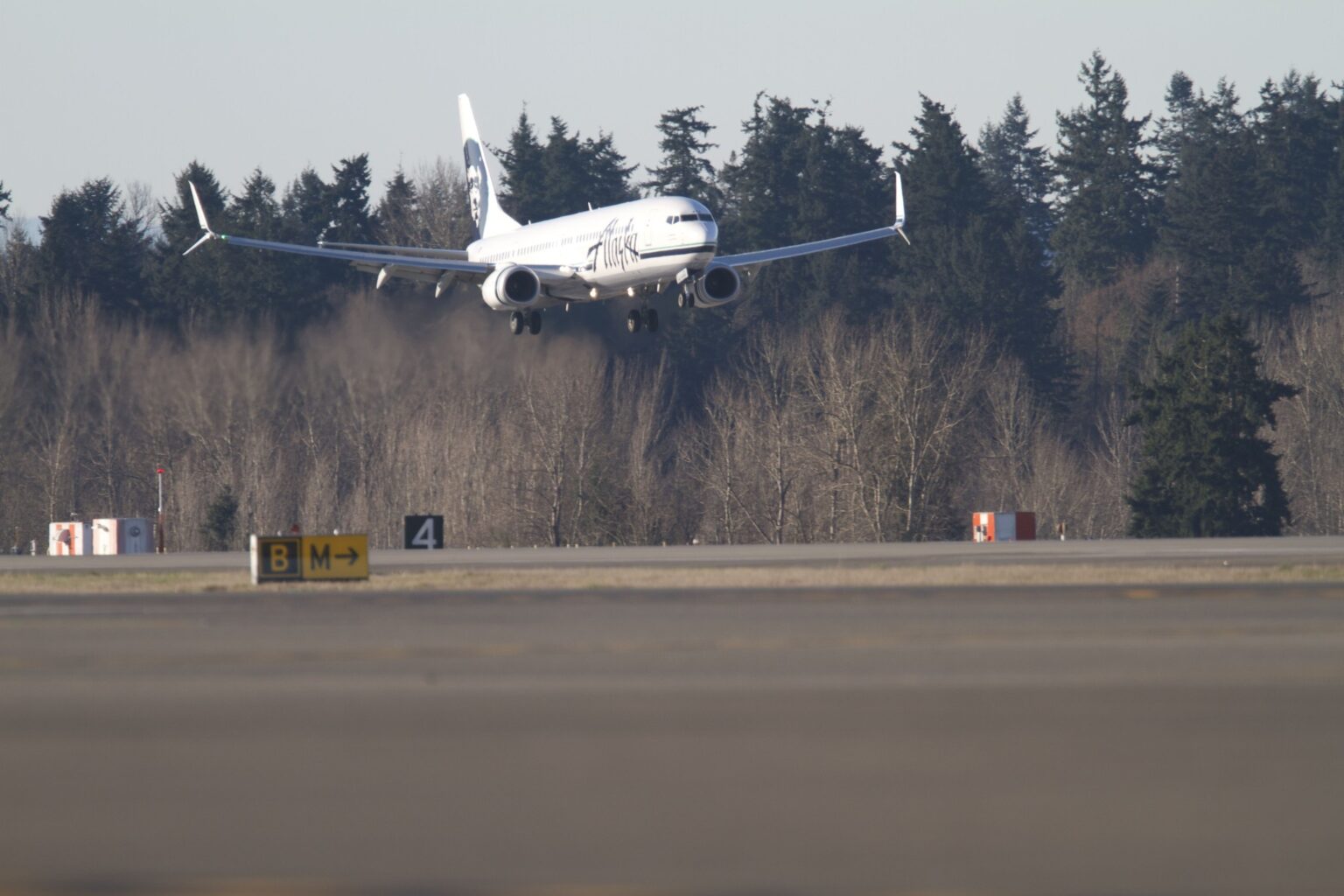
Alaska Airlines Flight 1306 (AS1306) to Los Angeles left Seattle-Tacoma International Airport nearly three hours late on Saturday, November 21, 2026, after US Immigration and Customs Enforcement (ICE) officers arrested two people on the jet bridge during boarding.
Alaska said it was given no advance notice. It and the Port of Seattle, which owns and operates the airport, are looking into whether protocols were followed.
The flight was scheduled out of gate N9 at 8:10 a.m. and departed at 11:03 a.m., according to FlightStats. The tracker lists a Boeing 737-800 and an arrival in Los Angeles at 1:48 p.m., 2 hours and 47 minutes late.
What happened during boarding
In a statement carried by KOMO, ICE said it was conducting a targeted operation to arrest a Mexican man who it said had overstayed his visa. It alleged that other travelers then obstructed and assaulted officers.
ICE accused a second passenger, a Mexican woman it also described as a visa overstay, of throwing hot coffee on the officers. It said she was arrested and would be charged with assaulting a federal officer.
Those are the agency’s allegations. ICE named both people, but AeroCorner is not naming them because they are private individuals.
Video showed masked officers in unmarked jackets struggling with a person on the ground as passengers looked on, the Associated Press reported. A passenger told KUOW that he saw officers pull a man through a side door.
KUOW also relayed an unconfirmed report that two flight attendants asked to be replaced. Alaska’s statement does not mention a crew change or give a reason for the length of the delay.
What Alaska and the Port say
In a statement timed at 3:30 p.m. Pacific, Alaska said it was concerned by the action and recognized it was distressing for employees and guests. “We do not direct or coordinate immigration enforcement activity,” the airline said.
Alaska added that it must comply with the law when dealing with law enforcement. It said it would work with the Port and government authorities so that the “collaborative standards and practices” behind a safe and secure air system are respected.
The Port said it was “outraged,” in a statement published by KOMO, and that immigration enforcement at the airport happens “without the Port’s participation or knowledge.” It said local federal immigration authorities had previously agreed to protocols, and that it was in talks with the Department of Homeland Security (DHS) on whether any were breached.
Who controls access to a jet bridge?
A jet bridge sits beyond the checkpoint, where several layers of security rules meet. Federal regulations define the “sterile area” as the screened zone that gives passengers access to boarding, and the “secured area” as where airlines board and unload passengers and handle bags, along with adjacent areas not otherwise separated.
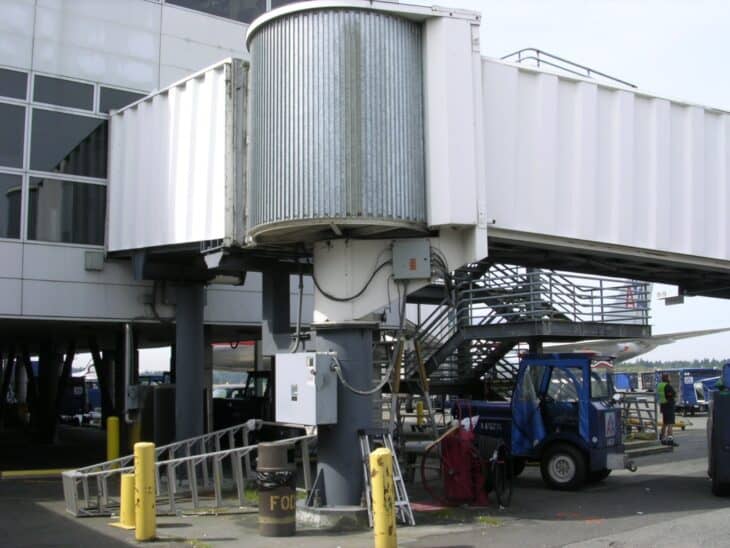

The airport operator must control entry to the secured area, though it can hand that job to an airline for specific areas under a written agreement approved by the Transportation Security Administration. Each airline must also prevent unauthorized access to its aircraft.
The rules say no person may enter or be in either zone without complying with its access controls. How those controls apply at a particular door is set out in security programs, which are sensitive security information and are not public.
The Port’s published guidance says federal agents have broad access to the airport, including the airfield and areas before and after security. It says the Port cannot interfere with their law enforcement operations.
The same guidance draws a line: areas restricted to Port employees, or to tenants and their employees, require “a judicial warrant or other authority to enter.” It does not say whether a jet bridge falls into that category.
What has not been established
The statements from Alaska, the Port and ICE reviewed by AeroCorner do not say how the officers reached the jet bridge, who, if anyone, let them in, or what authority they relied on. None of them establishes that an access rule was broken.
The governor’s claim and what happens next
Washington Gov. Bob Ferguson, a Democrat, called ICE “completely and totally out of control.” He later said he was looking into how officers got onto the jet bridge and believed they had violated a state face-covering law, the AP reported.
That law, signed on March 19, bars officers, including federal immigration agents, from covering their faces while interacting with the public, with exceptions such as undercover work and protective equipment. After it was signed, DHS said “we will not abide by this unconstitutional ban,” KPTV reported.
The delay came on a busy weekend before Thanksgiving, eight days after the nationwide FAA ground stop. As of Saturday evening in Seattle, the open questions included how officers reached the jet bridge, what the agreed protocols require, and whether DHS will say they were followed.
Sources and references used for research and fact-checking.
- Alaska Airlines, Alaska Airlines' statement regarding today's law enforcement activity at SEA
- Port of Seattle, Federal Immigration Enforcement at SEA Airport
- eCFR, 49 CFR 1540.5, Terms used in this subchapter
- eCFR, 49 CFR 1540.105, Security responsibilities of employees and other persons
- eCFR, 49 CFR 1542.207, Access control systems
- eCFR, 49 CFR 1542.111, Exclusive area agreements
- eCFR, 49 CFR 1544.225, Security of aircraft and facilities
- eCFR, 49 CFR 1520.5, Sensitive security information
- Washington State Legislature, Chapter 115, Laws of 2026 (SSB 5855), face coverings by law enforcement officers
Get the Newsletter
The latest aviation news and stories sent to your inbox.
About the Author

AeroCorner News is the aviation news desk of AeroCorner.com. It covers accidents and incidents, safety rulings, airline and airport disruption, and new aircraft. It works from primary sources such as the NTSB, FAA, EASA and the manufacturers' own announcements.