

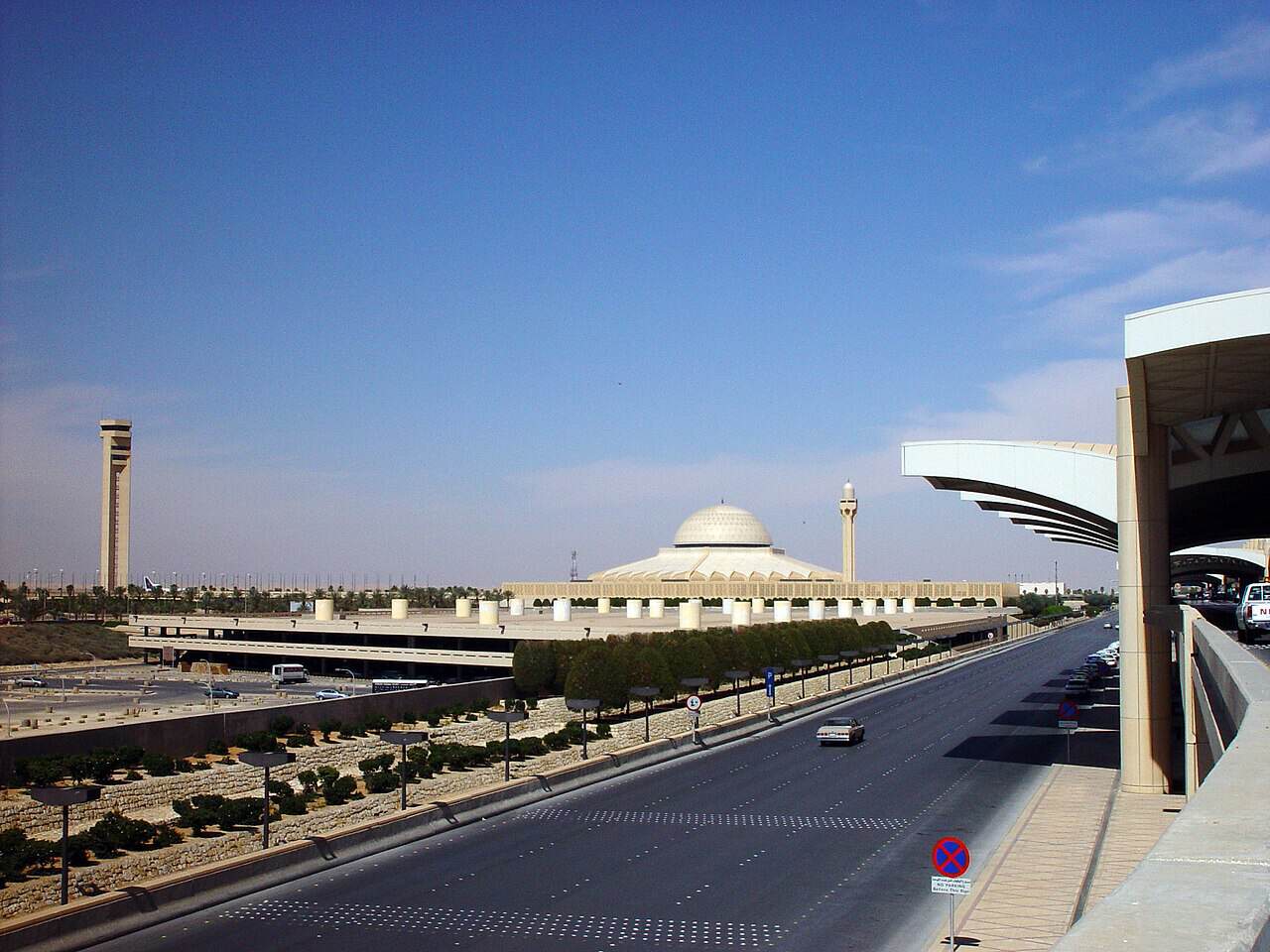
Firefighters extinguished a blaze on a fuel tank carrying the Saudi Aramco logo at a depot beside King Khalid International Airport in Riyadh on Saturday, September 19, 2026, hours after overnight air raid alerts sounded across the Saudi capital. Flight tracking service Flightradar24 placed the airport at 5.0, the maximum value on its disruption scale.
What the Coalition Confirmed, and What It Did Not
The Saudi led coalition said its air defenses intercepted and destroyed a ballistic missile fired toward Riyadh at dawn. Spokesman Major General Turki Al-Maliki said the interception followed the rules of engagement and that the missile was destroyed in the air “without causing damage,” in a statement carried by Arab News.
Al-Maliki added that air defenses also thwarted attempted attacks on Bisha, Taif, Farasan and Yanbu. Saudi authorities have reported no casualties.
That account sits awkwardly beside what people in Riyadh described seeing. Residents told Al Jazeera they watched a large plume of black smoke rise from the fuel storage area at the airport, and published photographs showed a scorched tank at the depot.
The Houthi movement claimed the attacks. Military spokesman Yahya Saree said Yemeni forces ran two operations using ballistic missiles, cruise missiles and drones, one against “sensitive sites” in Riyadh and one against Aramco facilities at Yanbu, which he presented as a response to Saudi strikes on Sanaa.
Reality check
Three accounts of the same morning do not line up yet. The coalition says a missile was destroyed in the air with no damage, residents and photographs show a burned fuel tank on the ground, and the Houthi spokesman claims a successful strike on sensitive sites. A belligerent’s claim of success is not evidence, and neither is an air defense claim of a clean intercept. Until Saudi authorities account for the fire itself, what damaged that tank is unresolved.
Why a Burning Fuel Farm Is an Airport Problem
An airport does not run on its runways alone. Jet fuel reaches King Khalid International Airport through Saudi Aramco, the field’s sole fuel supplier, and sits in storage tanks before moving under the apron through a buried hydrant system to the aircraft stands.
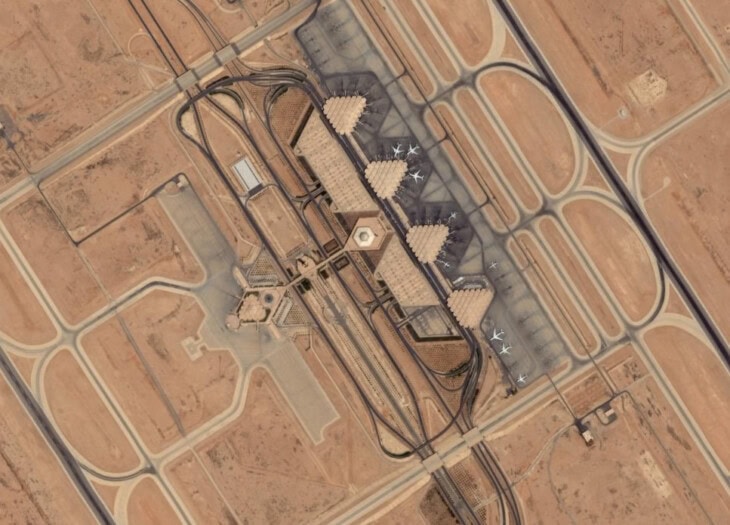
That design is fast and clean in normal operation. It is also a single point of failure: a fuel farm shut down for firefighting stops departures even when every runway, taxiway and radar on the field is working perfectly.
Airlines have one standard answer, called tankering. A crew uplifts extra jet fuel at the previous station so the aircraft can turn around without taking any on at the affected airport, accepting a higher burn to carry the weight.
Tankering works over a handful of rotations. It does not scale to a hub, because narrowbodies flying long sectors cannot carry a full round trip’s fuel and still take a full load of passengers.
Nothing published so far establishes that Riyadh actually lost fuel supply on Saturday. The Flightradar24 index reads delays and cancellations from airborne traffic, not the condition of the fuel farm, and the airport has not said which systems went offline or for how long.
Awkward Timing for a Growing Hub
Riyadh is in the middle of an aggressive aviation build out, which makes the disruption more than a one day inconvenience. Delta Air Lines is scheduled to launch nonstop Atlanta to Riyadh service on October 23, 2026, operated by an Airbus A350-900.
Official Saudi channels have stayed unusually quiet about the airport itself. Saudi government media offices did not answer questions about the smoke or the overnight alerts, France 24 reported.
Airports halted by an aerial threat rather than by weather or a technical fault are becoming a recurring story this month, after a suspected drone stopped every Heathrow departure on September 16. The common thread is that the aircraft are fine and the airspace is not.
Overnight, Sep 18 to 19
Air raid alerts. Saudi civil defense issues danger alerts for Riyadh and nearby Al-Kharj. Residents report that the all-clear does not follow quickly.
Dawn, Sep 19
Missile fired at Riyadh. The Saudi led coalition says air defenses intercept and destroy a ballistic missile aimed at the capital.
Saturday morning
Fuel depot fire. Black smoke rises from the fuel storage area beside King Khalid International Airport. Firefighters extinguish a blaze on a tank bearing the Aramco logo.
During Sep 19
Flightradar24 hits 5.0. The tracking service places the airport at the top of its disruption scale, defined as major problems with long delays and several cancelled flights.
Later Sep 19
Claim and counter-claim. Houthi spokesman Yahya Saree claims two operations against Riyadh and Yanbu. The coalition says the Riyadh missile was destroyed in the air “without causing damage.”
Get the Newsletter
The latest aviation news and stories sent to your inbox.
About the Author

Tim is the owner and lead editor of AeroCorner since 2019, overseeing aviation content covering aircraft, airlines, airports, and the broader aviation industry. Through years of researching, writing, editing, and publishing aviation-focused content, he has developed extensive practical knowledge of commercial aviation and air travel. Based in Asia and a frequent traveler himself, Tim also brings firsthand passenger experience to AeroCorner’s coverage. Outside of publishing, he has also explored aviation firsthand through hands-on flight training in New Zealand.