

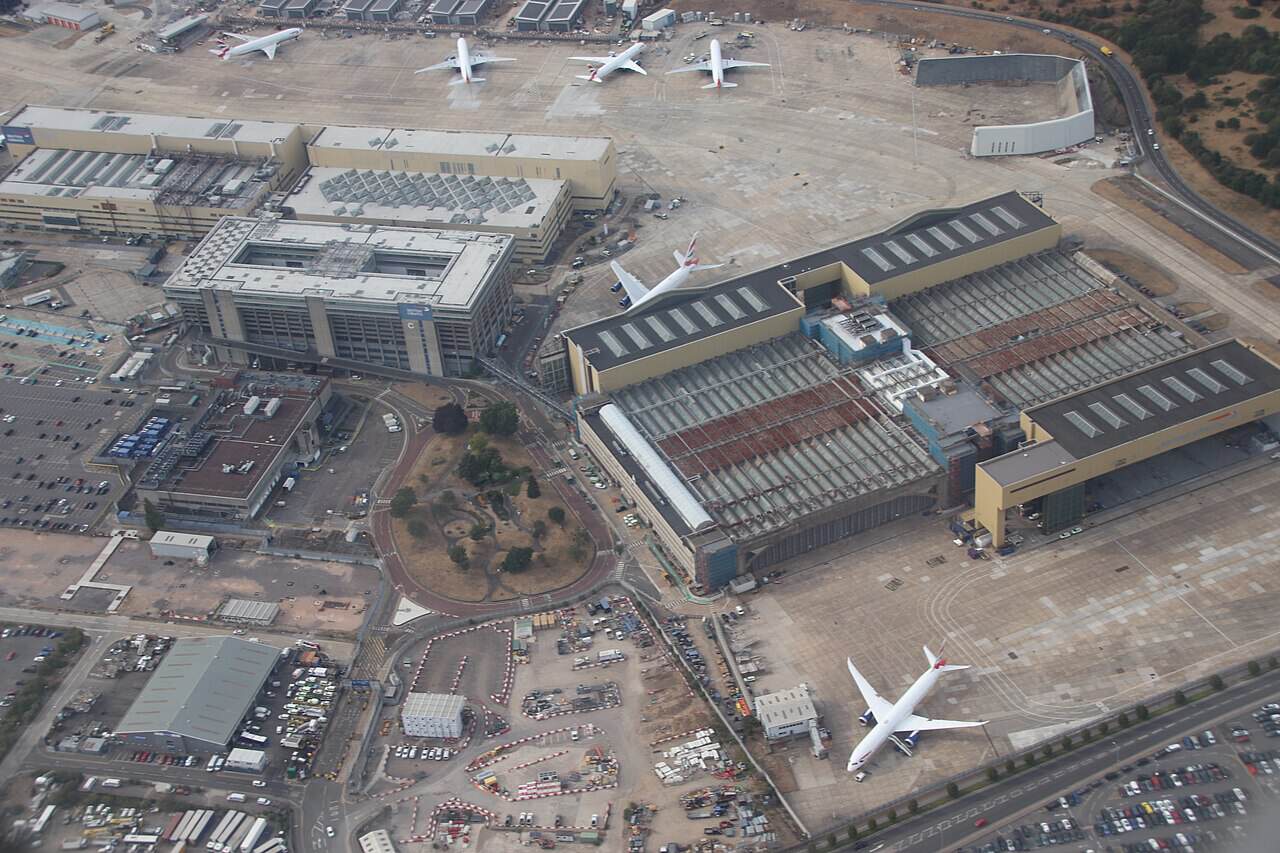
A suspected drone near Terminal 5 stopped every departure at London Heathrow on the morning of Wednesday, September 16, 2026. Takeoffs were halted at 10:07 BST and resumed at 10:19 BST, while arriving flights kept landing.
The pause was short, but it hit the UK’s busiest airport in the middle of its morning departure wave. Knock-on delays followed for flights waiting to leave.
What happened on the airfield
The stop was first reported by AIRLIVE, which tracked the traffic on either side of it. Loganair flight LM622 to Dundee was the last aircraft to take off before the halt, departing from runway 27R.
According to the same report, the airfield and the surrounding airspace were checked and nothing further was found. Departures restarted 12 minutes later, and British Airways flight BA570 to Milan was the first jet away.
Several details are still unknown. AeroCorner found no public statement from Heathrow Airport or the Metropolitan Police on the pause, and it has not been confirmed that a drone was actually present. It is also not known who made the report or how many flights were delayed.
Unconfirmed sighting
A departure stop follows a reported sighting, not a confirmed drone. Many airport drone reports are never verified, so treat the Terminal 5 sighting as unconfirmed unless the police or the airport say otherwise.
Why takeoffs stopped and landings did not
Heathrow normally runs its two runways in segregated mode. Heathrow says it uses one runway for takeoffs and the other for landings during the day, swapping them at 15:00.
That split lets controllers act on one side of the operation without touching the other. Stopping departures keeps new aircraft on the ground and out of the climb path. Aircraft already on approach cannot simply wait on the ground, so holding or diverting them is a much bigger step.
A departing jet also climbs away low and slow through the same airspace where small drones fly. That makes the first few miles after takeoff a sensitive place for an unidentified object.
The rules around Heathrow
Every UK airport sits inside a Flight Restriction Zone, and the Civil Aviation Authority requires permission from the airport before anyone flies a drone inside it. The zone covers a 2 or 2.5 nautical mile circle around the airport, depending on the site, up to 2,000 feet above the ground.
It also adds runway protection zones: strips 0.6 miles (1 km) wide that extend 3.1 miles (5 km) out from each runway end. At Heathrow, drone operators must apply for a permit through the NATS portal at least 14 days ahead.
Heathrow says endangering an aircraft is a criminal offense that carries up to five years in prison. The airport also says it uses radar and radio frequency detectors to spot drones, which ties in with the question of who can take one down.
Why a 12-minute pause is the good outcome
UK airports learned the cost of a drone scare at Gatwick. Between December 19 and 21, 2018, reported sightings closed its runway for well over a day, affecting about 1,000 flights and 140,000 passengers. No culprit was ever identified.
Heathrow had its own scare weeks later. On January 8, 2019, a reported drone suspended departures for about an hour, and the government said the military was ready to deploy the anti-drone equipment used at Gatwick.
Detection systems exist to shorten exactly this kind of event. They let an airport check a report and reopen quickly instead of shutting down on every sighting. Wednesday’s stop fits that pattern, much like the drone alert at Vilnius Airport that turned out to be a flock of birds.
It is the second time this month that Heathrow departures have been held on the ground. On September 8, a NATS system failure grounded flights at Heathrow, Gatwick and other UK airports for hours.
Sources and references used for research and fact-checking.
Get the Newsletter
The latest aviation news and stories sent to your inbox.
About the Author
Tim is the owner and lead editor of AeroCorner since 2019, overseeing aviation content covering aircraft, airlines, airports, and the broader aviation industry. Through years of researching, writing, editing, and publishing aviation-focused content, he has developed extensive practical knowledge of commercial aviation and air travel. Based in Asia and a frequent traveler himself, Tim also brings firsthand passenger experience to AeroCorner’s coverage. Outside of publishing, he has also explored aviation firsthand through hands-on flight training in New Zealand.