

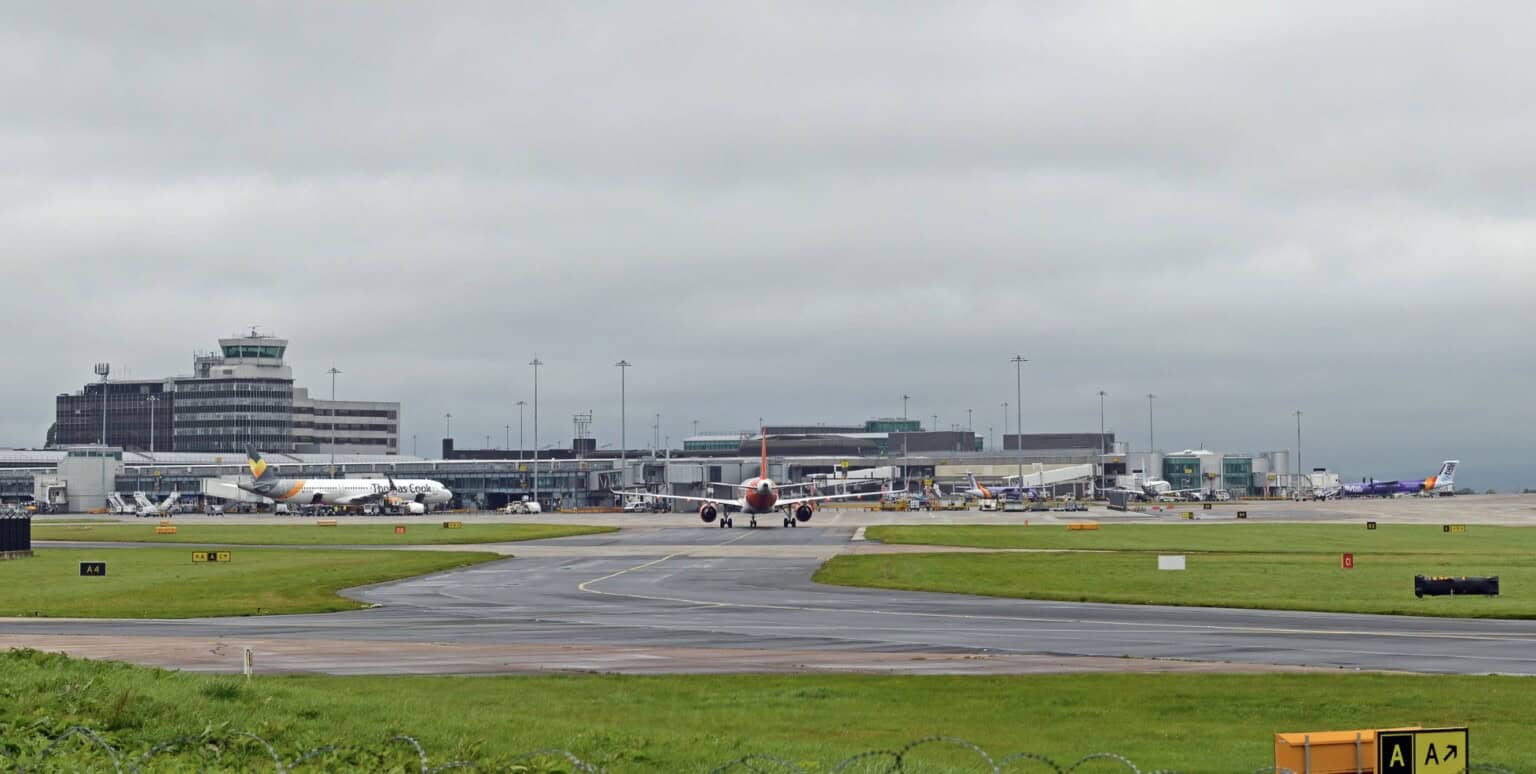
Just after 11:20 p.m. on Friday, August 21, 2026, a man got onto the active airfield at Manchester Airport, prompting Greater Manchester Police to halt arrivals while officers located him. Seven inbound flights diverted to other UK airports and roughly 17 more circled overhead before the airport reopened, according to AirLive.
A 15-minute breach with hours of knock-on delays
Police found and apprehended the man roughly 15 minutes after the first report, and he was taken to hospital for assessment. Manchester Airport said the incident was mental health-related rather than a security threat, and Brit Brief reported that operations were confirmed back to normal once officers cleared the airfield.
Seven flights that were due to land at Manchester were sent elsewhere while the airfield was closed: three TUI flights, from Boa Vista, Corfu, and Naples, diverted to East Midlands Airport; an easyJet flight from Zurich and a Ryanair flight from Agadir went to Birmingham; an easyJet flight from Barcelona landed at Liverpool John Lennon; and a Jet2 flight from Faro diverted to Leeds Bradford, per Brit Brief’s flight-by-flight breakdown.
Why the runway closes, not just one gate
An unauthorized person on an active airfield is treated as a collision risk for taxiing and landing aircraft, not just a terminal security matter. Air traffic control halts arrivals and departures on the affected runway until the area is confirmed clear, which is why one person on foot can ground an entire airport for several minutes.
Why one blocked runway grounds dozens of flights
The 17 aircraft held overhead illustrate how quickly a short ground stop compounds. Manchester’s controllers can only land one aircraft at a time, so each minute of closure pushes every inbound flight into a holding pattern, and some crews circled over the Peak District waiting for the airfield to reopen.
Every extra lap burns fuel that a crew budgeted for the original approach, not an unplanned delay, which is why controllers start diverting the aircraft lowest on fuel first rather than holding everyone equally. AeroCorner’s explainer on ground stops and flow control covers how a localized closure at one airport ripples through the wider network, often for far longer than the original incident lasted.
According to AirLive, TUI’s Boeing 737 MAX 8 from Boa Vista declared a general emergency, squawk 7700, for low fuel after circling and was given priority handling into East Midlands Airport to refuel. A fuel-priority declaration in that situation is a standard, non-catastrophic precaution: it tells controllers to move the aircraft to the front of the queue rather than signaling an emergency onboard.
Not the first Manchester diversion this month
AeroCorner covered a Hainan Airlines A330 diverting away from Manchester earlier in August after a mechanical fault. That event and this one are unrelated, but both show how a single disrupted arrival at a major UK hub cascades into diversions across the region’s smaller airports.
The disruption pushed some arrivals into the early hours of Saturday morning before Manchester Airport confirmed a full return to normal operations. No injuries or arrests connected to the airfield breach itself were reported.
Get the Newsletter
The latest aviation news and stories sent to your inbox.
About the Author

Tim is the owner and lead editor of AeroCorner since 2019, overseeing aviation content covering aircraft, airlines, airports, and the broader aviation industry. Through years of researching, writing, editing, and publishing aviation-focused content, he has developed extensive practical knowledge of commercial aviation and air travel. Based in Asia and a frequent traveler himself, Tim also brings firsthand passenger experience to AeroCorner’s coverage. Outside of publishing, he has also explored aviation firsthand through hands-on flight training in New Zealand.